Conditions · Face · Lines & Wrinkles

Nasolabial Folds

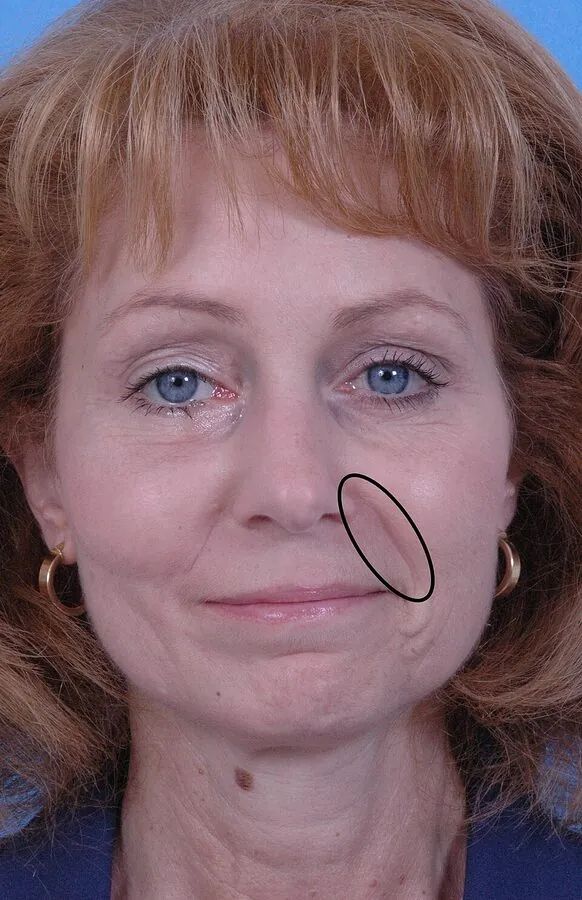
The nasolabial fold is the line running from each nostril to the corner of the mouth — present in every smiling face, and deepening at rest with age. Here is the counterintuitive truth of modern practice: the fold is usually the shadow of a problem happening above it, in the cheek — which is why the least sophisticated treatment is the one everyone asks for: filling the line itself.

WhatsApp Dr Sin Yong →
The Doctor Other Doctors Train With
International KOL & trainer for 14+ device brandsTrained 500+ doctors across AsiaMBBS (NUS) · MRCS (Edinburgh) · Dual UK Masters with DistinctionEvery assessment personally by Dr Sin Yong

Key Facts

What it is
The junction where mobile cheek tissue folds against the fixed upper lip — a structural crease, not a wrinkle
Why it deepens
Cheek fat compartments deflate and descend with age, piling tissue against the fold from above
The at-rest threshold
Visible in animation is normal at any age; carved-in at rest is the ageing change
The classic error
Volume injected into the fold itself — adding bulk where tissue is already piling up
The evidence
Meta-analysis of randomised trials supports HA filler for fold correction — technique and placement drive results
The overfill risk
A heavy, flattened mid-face — the pattern covered in the pillow face guide
Who assesses this
An aesthetic physician — reading the cheek above before the fold itself
Typical first step
Mid-face assessment; the fold is treated cause-first, not line-first
Why does the nasolabial fold deepen with age?

Every face has this fold — it is where the mobile cheek meets the fixed upper lip, and it creases every time you smile. What changes with age is the traffic arriving from above: the cheek's fat compartments — discrete, named structures in the anatomical literature [2] — deflate and slide downward, and the descending tissue piles up against the fold like snow against a fence. The fold does not so much deepen as become the collection point for everything the mid-face is losing. That is why it appears alongside cheek volume loss and early jowling — three symptoms of one descent.

Why filling the line itself is often the wrong move

The intuitive treatment — inject the crease — treats the shadow and ignores the object. Meta-analytic evidence supports hyaluronic-acid fillers for nasolabial fold correction [1], but modern technique reads that evidence anatomically: restoring the deflated cheek above often softens the fold more naturally than loading the fold itself, because it removes the tissue traffic rather than padding the collection point. Direct fold treatment still has a role — conservative, deep, and structural — but as the finishing move, not the opening one. Overfilled folds and cheeks are precisely how faces end up in pillow face territory, and unpicking that costs more than doing it right once.

What actually works for nasolabial folds?

Assessment starts above the fold: how much is cheek deflation (restore support at the cheek and mid-face), how much is descent (the lifting conversation — VF Lift, HIFU-class energy), and how much is the fold's own etching (conservative structural filler at the fold, supported by the trial literature [1]). Skin-quality work — bio-remodelling, polynucleotides — improves how the crease reflects light. Most faces need the sequence, not a syringe in the line.

What doesn't work for nasolabial folds?

Face yoga against a structural fold — the crease is anatomy, not weakness. 'Smile line' creams — no topical reaches the fold's depth. Aggressive filling of the fold alone — the classic route to a heavy, simian mid-face that reads worse than the line did. And treating the fold while ignoring the deflating cheek above it — the traffic keeps arriving, and so do the appointments.

“The nasolabial fold is usually the shadow of the cheek above it — fill the shadow and you've padded the collection point while the descent continues.”

— Dr Sin Yong

Dr Sin Yong’s Viewpoint

The nasolabial fold is where I most often decline the treatment a patient arrives asking for. Filling the line is intuitive, quick to sell, and frequently wrong — the fold is usually collecting what the cheek above is losing. I treat the cause first, the crease last, and conservatively. It takes longer to explain than to inject, which is exactly why the explanation matters.

Prefer Not to Use WhatsApp?

Leave your name and mobile number and the clinic will contact you directly. No obligation.

Your details are delivered directly to Dr Sin Yong's clinic team.

Thank you — your enquiry has been received. The clinic will contact you during opening hours (Mon–Sat, 10.30am–8pm).

Prefer a preliminary view first? You can also WhatsApp a photo of the area for Dr Sin Yong to review before you decide on a visit.

Questions Patients Actually Ask

Are nasolabial folds normal?+

Completely — every face makes them in animation at every age. The ageing change is when they carve in at rest. Treatment is elective aesthetics, never necessity.

Why did mine deepen after losing weight?+

Facial fat loss deflates the cheek compartments, and the deflating tissue settles against the fold. Significant weight loss commonly deepens nasolabial folds even as the body improves.

Is filler in the nasolabial fold safe?+

In experienced hands, with conservative technique, the trial evidence supports it — though this area contains the facial artery's path, which is exactly why anatomy-led injection matters here.

Why does my dentist's filler make faces look strange?+

Overfilled folds flatten the natural transition between cheek and lip, producing the heavy 'monkey mouth' look. Restraint and treating the cause above the fold is the difference.

Can HIFU or lifting treatments soften nasolabial folds?+

When descent is the driver, repositioning cheek tissue reduces what piles against the fold — often more naturally than any filler in the line.

Will the fold come back after treatment?+

The ageing process continues, so maintenance applies to every approach. Sequenced cause-first treatment tends to hold its result more gracefully than fold-stuffing.

References

  1. Tissue Fillers for the Nasolabial Fold Area: A Systematic Review and Meta-Analysis of Randomized Clinical Trials — Aesthetic Plastic Surgery (PubMed).
  2. The Fat Compartments of the Face: Anatomy and Clinical Implications for Cosmetic Surgery — Plastic and Reconstructive Surgery (PubMed).
Follow Dr Sin Yong
InstagramTikTokYouTubeThreadsXLinkedInFacebook
Dr Sin Yong · Every assessment personally performed
WhatsApp Enquiry