Key facts
- Shared physics
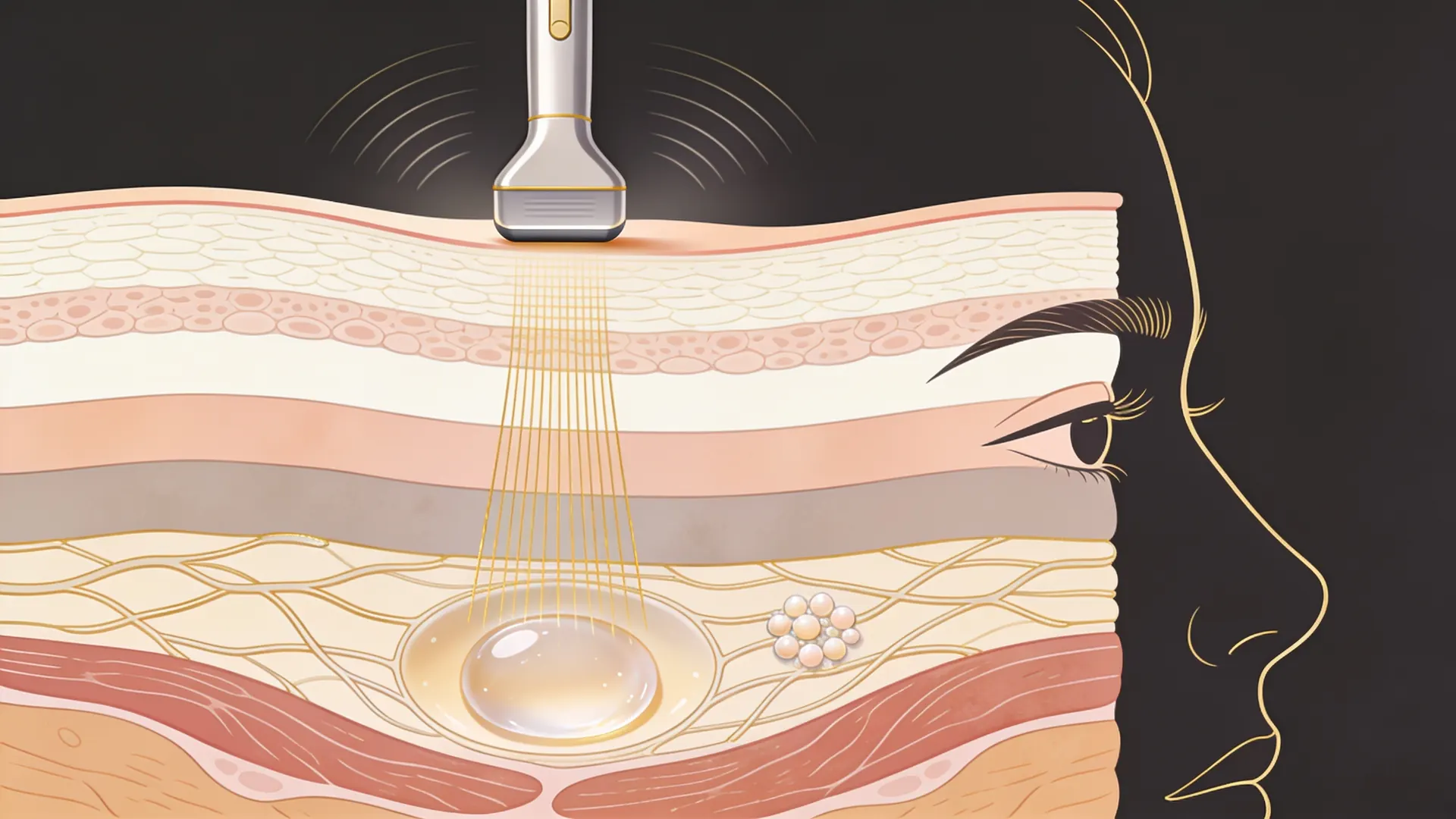
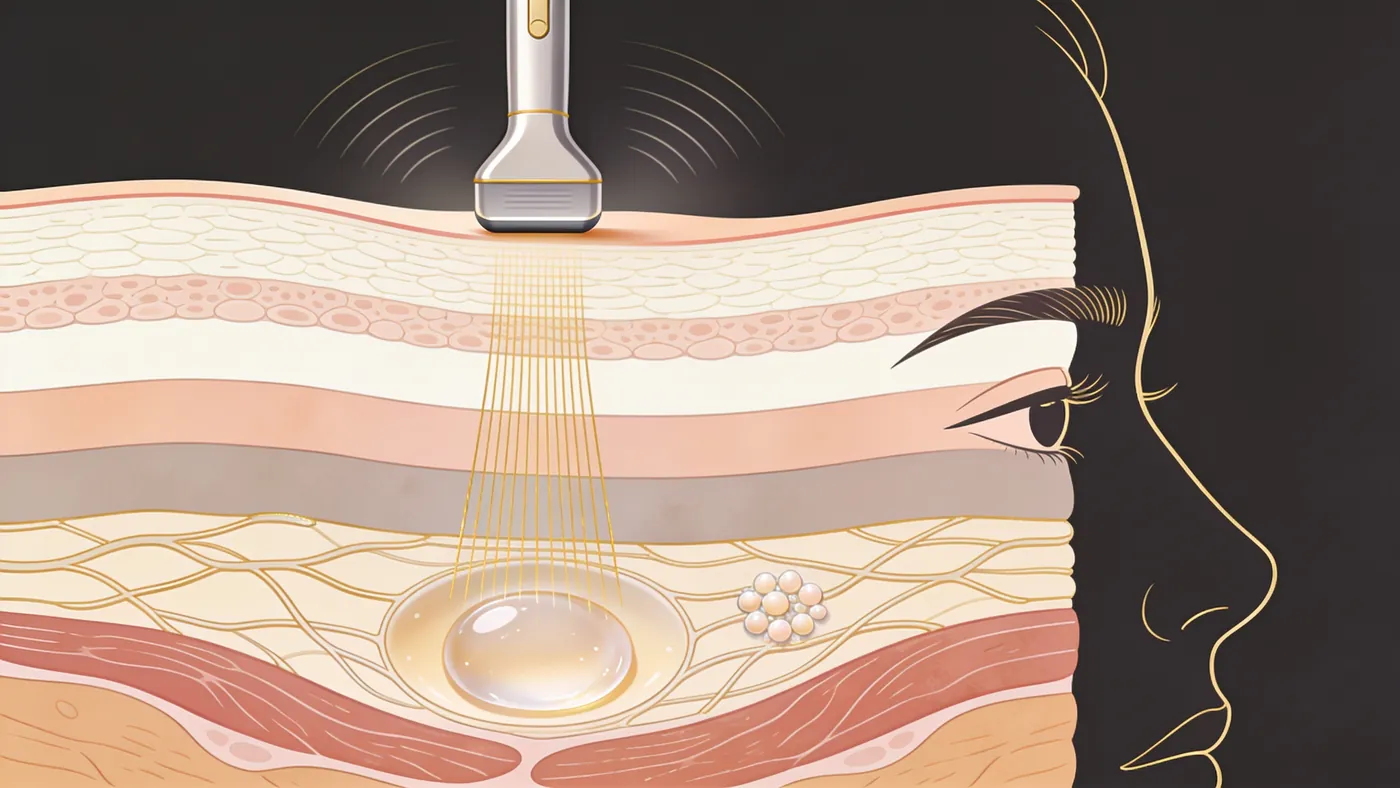
- Ultrasound converges to a point of roughly 60–70 °C, under 1 mm³ in size; the surface is spared
- Ultherapy Prime
- Merz; micro-focused ultrasound with visualisation (MFU-V); transducers at 1.5, 3.0 and 4.5 mm; real-time imaging
- Ultraformer MPT
- CLASSYS; micro-pulsed delivery along each line; cartridges at 1.5, 2.0, 3.0 and 4.5 mm; no imaging
- Shurink
- Hironic, Korea; cartridge-based HIFU at set depths without imaging; not offered here
- What none of them does
- Add volume, remove fat or skin excess, or replace a surgical facelift
- Decided by
- Palpation of tissue depth over each zone, by Dr Sin Yong, before any cartridge is chosen
Are Ultherapy, Ultraformer and Shurink the same technology?
Yes in physics, no in engineering. All three converge ultrasound to a focal point beneath the skin, where tissue is heated to roughly 60 to 70 degrees Celsius and a tiny coagulation point forms; the body repairs each point with new collagen and the tissue tightens as it remodels. Ultherapy is the original platform of the category, and the HIFU page explains the category as a whole and how Dr Sin Yong plans a treatment around what the examination finds.
What separates the three names is how the energy is delivered and whether the layer is seen before it is treated. Ultherapy Prime is micro-focused ultrasound with visualisation, so the handpiece images the tissue to about 8 mm before each line. Ultraformer MPT and Shurink are Korean platforms that fix the depth by cartridge and rely on the physician's knowledge of anatomy and palpation; Ultraformer MPT adds micro-pulsed delivery along each line. None of them is a different treatment; each is an instrument for the same one.
What does real-time imaging change, and what does it not?
Imaging changes what the physician can confirm, not what the ultrasound does. On Ultherapy Prime the transducer displays the dermis, fat and SMAS before a line is fired, so the operator can see whether the 4.5 mm focus is sitting in the SMAS or in fat above bone. In a thin temple or a lean lower face, where tissue depth varies within a centimetre, that confirmation is the reason the Ultherapy page describes it as fitting faces where seeing the fat depth matters.
Imaging does not make heat placed into fat harmless, and it does not plan the treatment. A device without imaging is not blind; the depth is set by cartridge choice after the tissue has been palpated, and the same anatomical knowledge is required whichever console is in the room. The honest statement is that imaging removes one source of guesswork, while cartridge depth, energy and line placement remain decisions a doctor makes on every platform.
“The device is the instrument, not the treatment — two clinics with identical Ultraformers can deliver entirely different results, because the lift is in the mapping.”
Dr Sin YongOn why the map matters more than the machine
How do cartridge depths and pulse modes differ between the three?
All three reach the SMAS at about 4.5 mm and the dermis at 1.5 mm; the differences are in the intermediate depths and in how each line is laid. Ultherapy Prime uses transducers at 1.5, 3.0 and 4.5 mm, with the frequency falling as depth increases. Ultraformer MPT uses cartridges at 1.5, 2.0, 3.0 and 4.5 mm for the face, and separate deeper cartridges for the body, so the 2.0 mm step gives one more option over thinner zones.
MPT stands for micro-pulsed technology: instead of discrete shots fired point by point, the transducer glides while emitting rapid micro-pulses, laying energy in a denser, more even line. Shurink's current generation is also marketed with a pulsed mode and pen-type handpieces for small areas; it is described here as a name people compare, since Dr Sin Yong does not use it. The guide to HIFU shots explains why a quoted shot count is not comparable between any two of these devices.
Comfort follows delivery. Discrete, higher-energy shots at the SMAS are felt as a brief deep ache along each line, which is why the Ultherapy page discusses analgesia at consultation. Micro-pulsed delivery spreads the same energy along the line and is commonly reported as easier to tolerate, although tolerance varies widely between people and between zones; the jaw and bony areas are felt more than the cheek on every device.
Ultherapy Prime, Ultraformer MPT and Shurink compared by feature| Feature | Ultherapy Prime | Ultraformer MPT | Shurink |
|---|
| Maker and delivery | Merz; discrete coagulation points in lines | CLASSYS; micro-pulsed trains along each line | Hironic; cartridge-based lines, pulsed mode marketed |
| Imaging | Real-time view of dermis, fat and SMAS before each line | None; depth judged from anatomy and palpation | None; depth judged from anatomy and palpation |
| Face depths | 1.5, 3.0 and 4.5 mm transducers | 1.5, 2.0, 3.0 and 4.5 mm cartridges | Set-depth cartridges including 1.5, 3.0 and 4.5 mm |
| Comfort profile | Deep ache along each SMAS line; analgesia discussed | Energy spread along the line; often reported as easier | Varies by setting and operator; not assessed here |
| Tends to fit | Thin or uncertain tissue depth where seeing the layer matters | Denser coverage where depth can be judged clinically | Not offered here; described as a name people compare |
| Operator dependence | High: zones, depths, lines and exclusions are mapped by the doctor | High: the same map decides the result | High: the same map decides the result |
How much depends on the operator rather than the machine?
Most of it. The device fixes the physics; the physician decides the map. Which zones are treated, which depth goes where, how many lines, what energy, and where no energy is placed at all, over the thyroid, the orbital rim and the marginal mandibular nerve, are decisions made from palpation of skin and fat thickness over each zone. Two clinics with the same console can deliver different treatments, which is why the Ultraformer MPT page describes the lift as being in the mapping.
That is also why a device name is not a plan. Someone who asks for Ultherapy because it has imaging, or for Ultraformer because a friend found it comfortable, has chosen a tool before the problem has been examined. The problem may be laxity that focused ultrasound reaches; it may be volume loss or fat, which it does not; or it may be heavy redundancy that no energy device contracts. The comparison of Ultherapy with VF Lift and Time Freeze sets focused ultrasound beside radiofrequency and laser lifting for faces where tightening alone is not the answer.
Who suits which, and who should wait?
Focused ultrasound of any brand suits mild to moderate laxity of the brow, lower face and neck in a face that has kept its volume. Imaging tends to be chosen where tissue is thin or depth is uncertain; micro-pulsed delivery where denser coverage is planned and depth can be judged clinically. Both are deferred in pregnancy, with active infection or inflammatory acne in the field, with pacemakers or metal implants near the field, and over recent filler or threads, which are timed around.
A very thin or hollow face is a reason for caution on every platform, because heat placed into subcutaneous fat can read as further hollowing. Heaviness that is fat rather than loose skin, and marked skin excess, are sent elsewhere: to a different mechanism or, where the excess is beyond what energy can contract, to a plastic surgery specialist. Dr Sin Yong assesses in person, states which instrument was chosen and why the others were set aside, and sets the fee out in writing afterwards; how fees are quoted explains what that document contains.