Published 26 October 2026 · Reviewed by Dr Sin Yong
The Sculpting mode of Time Freeze Laser LCLR® is the part of Dr Sin Yong's own laser protocol that he uses on material that cannot be dissolved: filler nodules large and small, excess collagen stimulator, layered products and excess fat graft. It is planned from an ultrasound map and performed without an incision. How each person responds varies.
Short answerTime Freeze Laser LCLR® (Laser Collagen Lipo Remodelling) is a protocol Dr Sin Yong developed on a long-pulsed 755 nm and 1064 nm laser platform. Its Sculpting mode is built to target excess material. He uses it for nodules large and small from polycaprolactone, poly-L-lactic acid, poly-D,L-lactic acid and calcium hydroxylapatite, for layered products and for excess fat graft, after mapping with ultrasound (Wortsman 2015). Hyaluronic acid is usually dissolved instead. There is no incision, and how each person responds varies.
What the Sculpting mode of Time Freeze Laser LCLR® is
LCLR® stands for Laser Collagen Lipo Remodelling. It is a proprietary protocol developed by Dr Sin Yong on a long-pulsed 755 nm and 1064 nm laser platform, and he performs every treatment himself. The protocol has lifting and tightening applications, described on Time Freeze Laser LCLR®. Its Sculpting mode is the part built to target excess material.
Motion graphic, not to scale: how a hard lump forms after filler and skin boosters, how ultrasound maps it, and how the Sculpting mode of Time Freeze Laser LCLR® targets the excess.Video transcript
How a hard lump forms after filler and skin boosters. Diagram, not to scale.
A cross-section of facial tissue builds up layer by layer: skin, fat, muscle and bone.
Different products, same area: hyaluronic acid filler, skin booster and collagen stimulator, placed at different times.
They merge into one firm lump with a thin capsule, pressing on surrounding tissue. Small red vessels can show above it.
An ultrasound probe glides across the skin, mapping the material and its depth; the lump outline is traced in gold.
Time Freeze Laser LCLR®, Sculpting mode: laser energy is directed at the mapped area, built to target the excess material.
Ultrasound first. No incision. Response varies from person to person. Dr Sin Yong, Orchard Road, Singapore.
In filler correction, that excess is material hyaluronidase cannot dissolve: collagen-stimulating fillers, products layered over years, and fat graft that has grown more than intended. Because the Sculpting mode does not depend on the material being hyaluronic acid, the same approach can be used where several materials sit together.
60-second filler nodule check
Answer three questions and send them straight to the clinic on WhatsApp. Dr Sin Yong will let you know whether an ultrasound assessment is worthwhile. No obligation.
1 · When was the filler done?
2 · What bothers you most?
3 · Have you already tried other treatments for this?
Your answers open in your own WhatsApp app; nothing is stored on this page.
Filler nodules, large and small
A nodule is a firm lump that can be felt and sometimes seen. After collagen-stimulating fillers, nodules were the most common problem in a published series of 55 complications and usually appeared more than a month after treatment (Ianhez 2024). Rarely, a lump is a foreign-body reaction rather than product alone (Wang 2025).
Dr Sin Yong uses the Sculpting mode for nodules large and small. The size of a lump does not decide the plan on its own; the material, how deep it sits and what lies around it do, and that comes from the scan. A lump that is red, hot, tender or quickly growing is treated medically first, before any device is considered.
“No redness and no downtime is this protocol's own position. It is not a claim I make for every laser, and I do not borrow it for other treatments.”
Dr Sin YongOn what the Time Freeze Laser LCLR® protocol does and does not claim
What the Sculpting mode is used for
The table sets out where the Sculpting mode fits, material by material.
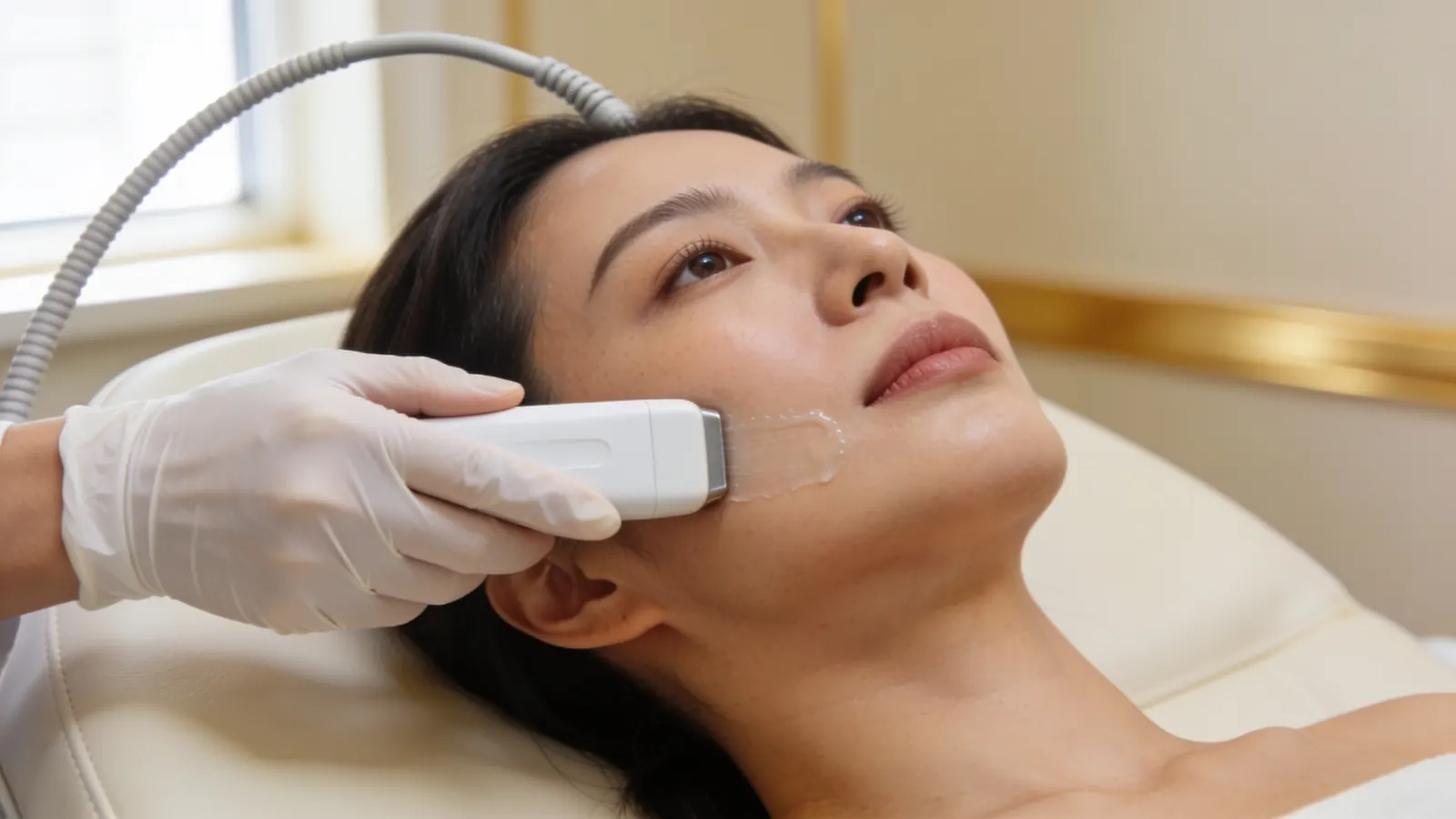
High-frequency ultrasound helps show what a lump is likely to be made of, how deep it sits and how far it spreads. Different fillers tend to look different on the scan (Wortsman 2015), and polycaprolactone has a described appearance of its own (Wortsman 2017). Imaging work on non-inflammatory nodules has also looked at the tissue layer in which filler sits when nodules form (Schelke, Dermatol Surg 2023).
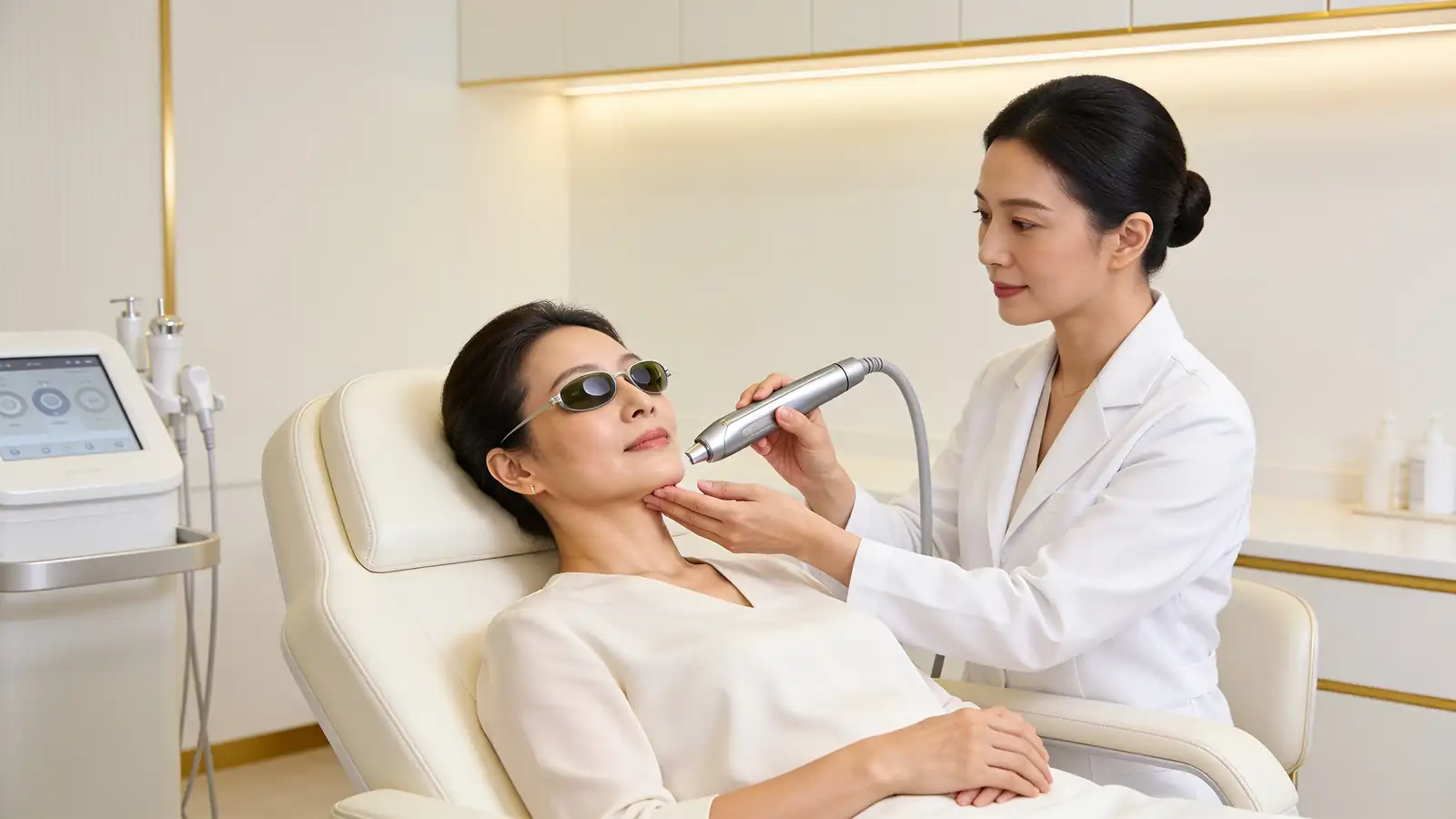
Illustrative image — not a patient.
The map decides whether the Sculpting mode is the right tool, where the energy is directed and what is left alone. Dr Sin Yong performs the scan himself.
What happens at a Sculpting mode visit
History: what was injected, where and when, and any treatment since.
Examination and ultrasound mapping of each lump or area of excess.
A plan that sets out what the Sculpting mode is aiming at, and what is better left or treated another way.
The treatment, performed by Dr Sin Yong.
Reassessment of the treated area before you leave; any further visit is planned from what is seen.
There is no incision and no stitches. No redness, no downtime is this protocol's own position, and it is not a claim made for other treatments on this site. How each lump responds varies, which is why the plan is set from what is seen at review rather than fixed in advance.
When the Sculpting mode is not used
Hyaluronic acid that can be dissolved. Ultrasound-guided hyaluronidase is usually the simpler route; see filler dissolving in Singapore.
A red, hot, tender or rapidly growing lump. This may be inflammation or infection and is treated medically first (Urdiales-Gálvez 2018).
Fullness that is not material. Swelling, fluid, fat or loose skin are assessed differently.
Anything urgent. Signs of a blocked blood vessel need emergency care, not a planned visit.
Urgent: a change in vision or eye pain after filler means calling 995 or going to the nearest emergency department now. Skin that turns pale, dusky or mottled, or pain that is getting worse, needs urgent assessment by the doctor who injected you, or at A&E. See the warning signs of a blocked blood vessel after filler.
Sculpting mode or dissolving?
Swipe sideways to see the whole table.
Hyaluronidase
Sculpting mode of Time Freeze Laser LCLR®
Aimed at
Hyaluronic acid only
Excess material, including products that cannot be dissolved
Used for
Hyaluronic acid filler that is lumpy, puffy, misplaced or too much
Nodules large and small and excess from collagen stimulators, layered products and fat graft
Planned by
Ultrasound mapping
Ultrasound mapping
Incision
None; fine-needle injection
None
Afterwards
Swelling and sometimes bruising, which settle; review at about 48 hours (King 2018)
Like any medical treatment, laser has its own risks and limits. Warmth over the treated area is expected. Less commonly, a laser can cause blistering or a change in skin colour, which is one reason settings are chosen for the skin being treated and the area is checked during and after treatment. A response cannot be promised for any individual lump, and some lumps need more than one visit, judged at review.
Dr Sin Yong explains these risks at the assessment alongside the alternatives, including waiting where that is reasonable.
Tried other treatments and almost given up?
Many patients who come to see Dr Sin Yong about filler nodules tell him they have tried almost everything else and had given up hope. Having tried other treatments does not, on its own, rule out further options; what can be done depends on what the scan shows.
That history is useful. Knowing what was injected, when, and what has already been tried often explains why a problem has stayed: hyaluronidase acts only on hyaluronic acid and only where it reaches, some fillers are not hyaluronic acid at all, and swelling or fluid can look like filler. Ultrasound helps show which of these applies, and the plan starts from there. For material that cannot be dissolved, Dr Sin Yong uses the Sculpting mode of Time Freeze Laser LCLR® for nodules large and small, without an incision. How each person responds varies.
If you have been told nothing more can be done, it is still worth having the area scanned: ultrasound helps show what is there, and what, if anything, can be done is discussed from that. Bring any records of past treatments, product names and dates if you have them. More on this is in when filler dissolving has not worked.
How Dr Sin Yong uses the Sculpting mode
Dr Sin Yong developed the LCLR® protocol himself and performs every treatment himself on Orchard Road. He has been invited to share his clinical expertise in Seoul, Dubai, Bangkok and São Paulo, including as a Global Key Opinion Leader.
He does not add more product to hide a lump. Where the face has lost shape because of the lumps, that is considered only after they have been addressed, so that new material is not placed on top of old.
Your next step
1. MessageWhatsApp +65 8023 7170 with what is bothering you. A reply comes from the clinic, not a bot.
2. AssessmentDr Sin Yong examines you himself on Orchard Road, with ultrasound where earlier filler is involved.
3. A plan in writingWhat he would do, what he would not, the fee factors, and the option of no treatment.
Every treatment is performed by Dr Sin Yong personally. Singapore Medical Council registered · invited to share his clinical expertise internationally for CLASSYS, DEKA, Fotona, Hironic and Ilooda.
Book a filler nodule assessment with Dr Sin Yong on Orchard Road. How consultations work.
It is the part of Dr Sin Yong's Time Freeze Laser LCLR® protocol that is built to target excess material. He uses it for filler nodules large and small, excess collagen stimulator, layered products and excess fat graft, after mapping them with ultrasound. There is no incision, and how each person responds varies.
Many of the patients Dr Sin Yong sees have tried other treatments first. A treatment that did not help can still leave options open: hyaluronidase may not have reached the filler, the filler may not be hyaluronic acid, or what looks like filler may be swelling or fluid. Ultrasound helps show which applies, and the plan follows what it finds. What can be done varies from person to person.
Yes. Ellansé is polycaprolactone and hyaluronidase does not dissolve it. Dr Sin Yong maps Ellansé nodules with ultrasound and uses the Sculpting mode for nodules large and small, without an incision. The steps are set out in the Ellansé removal and correction guide.
Yes. Sculptra is poly-L-lactic acid, which hyaluronidase does not dissolve. Nodules and migrated product are mapped with ultrasound first, and the Sculpting mode is directed at what the scan shows. A lump that is inflamed is treated medically first.
Hyaluronic acid can usually be dissolved with hyaluronidase, which is the simpler route. The Sculpting mode is considered where hyaluronic acid sits together with other materials that cannot be dissolved, or where dissolving alone has not been enough.
Dr Sin Yong's approach does not start with an incision. He uses the Sculpting mode of Time Freeze Laser LCLR® for nodules large and small after mapping them with ultrasound. Surgery carries its own risks, including nerve injury, scarring and contour change, and laser has its own risks too; both are part of the discussion at the assessment. How each nodule responds varies.
No redness, no downtime is this protocol's own position, and it is not a claim made for any other treatment on this site. There is no incision and no stitches. The treated area is reassessed before you leave.
This is not set in advance. Each lump responds differently, so the area is reassessed after treatment and any further visit is planned from what is seen. You will know at each review what is being considered next and why.
Size alone does not decide the plan. The material, its depth and what lies around it matter more, and that comes from the ultrasound scan. Dr Sin Yong uses the Sculpting mode for nodules large and small.
Where fat graft has grown more than intended, the Sculpting mode is one of the options Dr Sin Yong considers after assessment. Fat grafts cannot be dissolved. More detail is in the guide to correction after fat grafting.
Dr Sin Yong performs the ultrasound scan and every Sculpting mode treatment himself, on Orchard Road. It is not delegated to another doctor, a nurse or a therapist. He also reviews the treated area before you leave and plans any further visit himself, so the same doctor follows each lump from the first scan to the last review.
That can be inflammation or infection and needs prompt medical review, not a planned laser visit. A change in vision or eye pain after filler is an emergency: call 995. Skin that turns pale, dusky or mottled, or pain that is getting worse, needs urgent assessment by the doctor who injected you, or at A&E.
References
Identification and Complications of Cosmetic Fillers: Sonography First. Journal of Ultrasound in Medicine, 2015. source
Ultrasound Morphology of Polycaprolactone Filler. Journal of Ultrasound in Medicine, 2017. source
Investigating the anatomic location of soft tissue fillers in noninflammatory nodule formation: an ultrasound-imaging-based analysis. Dermatologic Surgery, 2023. source
Complications of collagen biostimulators in Brazil: Description of products, treatments, and evolution of 55 cases. Journal of Cosmetic Dermatology, 2024. source
Foreign Body Granulomas Reaction Related to Collagen Stimulatory Cosmetic Fillers: A Systematic Review. Journal of Cosmetic Dermatology, 2025. source
The Use of Hyaluronidase in Aesthetic Practice (v2.4). Journal of Clinical and Aesthetic Dermatology, 2018. source
About this page: written and medically reviewed by Dr Sin Yong, MBBS (NUS), MRCS (Edinburgh) · Last reviewed 26 October 2026 · Illustrative images only, not patients · Editorial policy