What does the receding hairline look like?
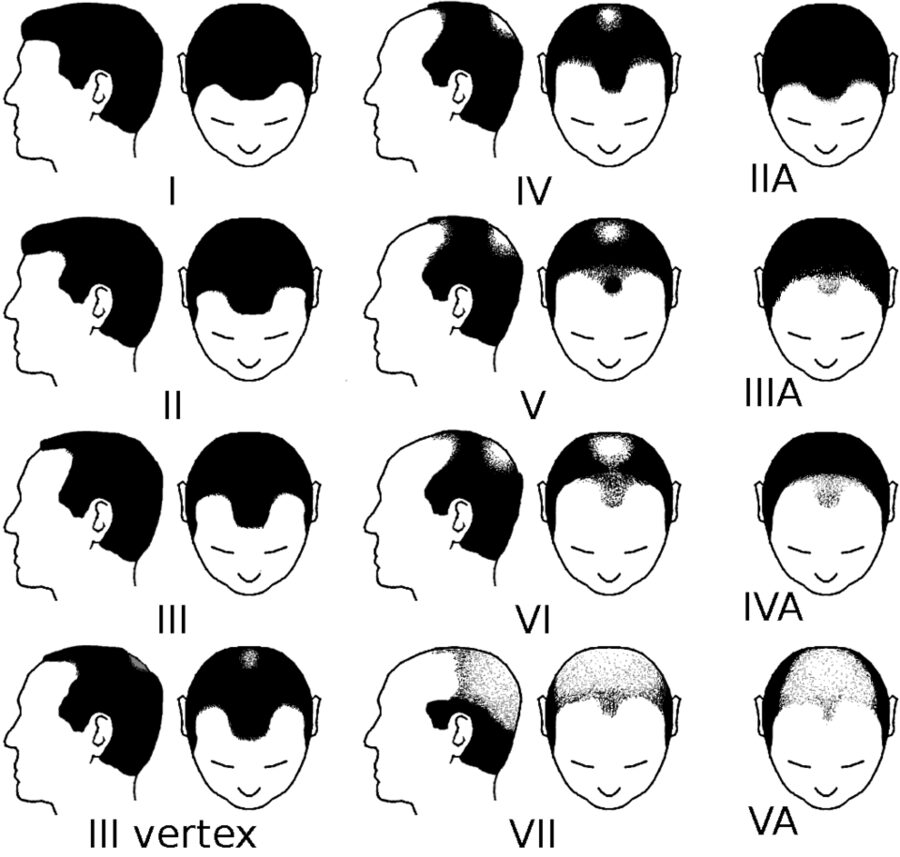
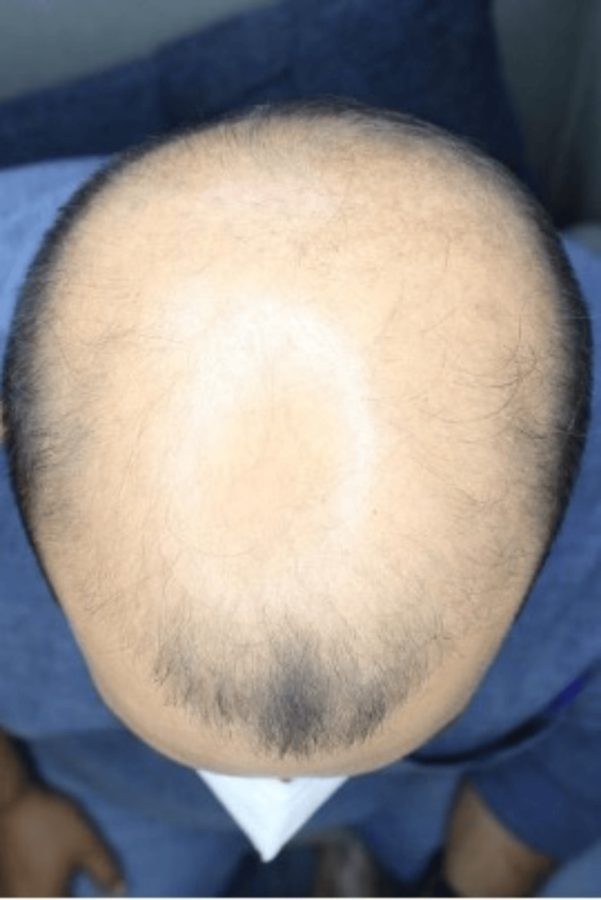
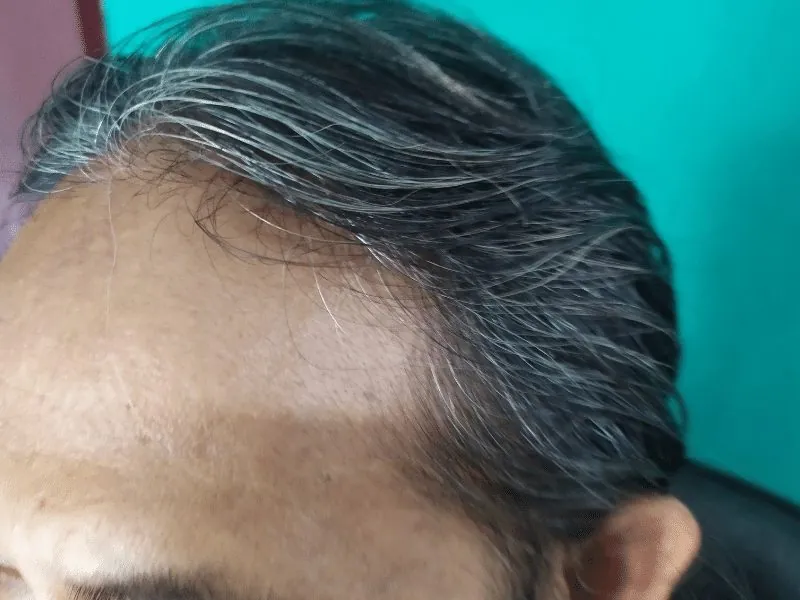
What is actually happening at a receding hairline?
Testosterone converts to DHT via 5-alpha-reductase; in men with the inherited sensitivity, DHT progressively miniaturises follicles at the temples and crown — the Hamilton–Norwood map. Each growth cycle the affected follicle produces a finer, shorter hair, until it is a barely-visible vellus hair, and finally silent. Clinical reviews frame it plainly: pattern loss is treatable and worth treating, and treatment acts on follicles that are miniaturising, not on those that are gone [1]. The occipital fringe is DHT-resistant — the biology behind both the pattern and transplantation.
What actually works for a receding hairline?
Two pharmacological anchors carry decades of randomised evidence: finasteride, which lowers DHT at its source, and minoxidil, which supports follicle activity — reviewed as first-line in pattern hair loss [1]. Dr Sin Yong's male programme and medication page cover suitability and side-effect counselling honestly; adjuncts — Regenera Activa micrografting, the H2LT laser protocol — build on that base, not instead of it. A hairline held for a decade is a treatment success even if the mirror never changes: in this disease, unchanged is the win.
What doesn't work for a receding hairline?
Caffeine shampoos and biotin (without deficiency) have marketing, not trial evidence. “Waiting to see how bad it gets” is the costliest strategy in the field — every year of DHT exposure retires more follicles beyond rescue. And a transplant into an untreated scalp relocates hairs onto a battlefield where the native loss continues around them: medical control first is the honest sequence.
“A hairline is easier to hold than to reverse — the earlier it is defended, the more survives.”
— Dr Sin Yong
Dr Sin Yong’s Viewpoint
Every month a man waits to 'see how bad it gets', the answer arrives with fewer follicles left to save. Pattern loss treatment defends hair that still exists — miniaturised is recoverable, bare is mostly not. The most useful consult I do is the one that happens two years earlier than the patient planned.
Prefer Not to Use WhatsApp?
Use the short enquiry form instead →
Leave your name, mobile number and email and the clinic will contact you directly. No obligation.
Prefer a preliminary view first? You can also WhatsApp a photo of the area for Dr Sin Yong to review before you decide on a visit.