Jaw reduction with masseter anti-wrinkle injection: how does it work?
Anti-wrinkle injection into the masseter muscles relaxes them, and with less use the muscle bulk reduces over about four to eight weeks, narrowing the lower face. It works when the width comes from muscle; bone or fat need other approaches, so the jaw is examined first.
What affects the price of jaw slimming injections?
The product used, the number of units per side, whether other areas such as the forehead or neck are treated at the same visit, and whether a review top-up is included.
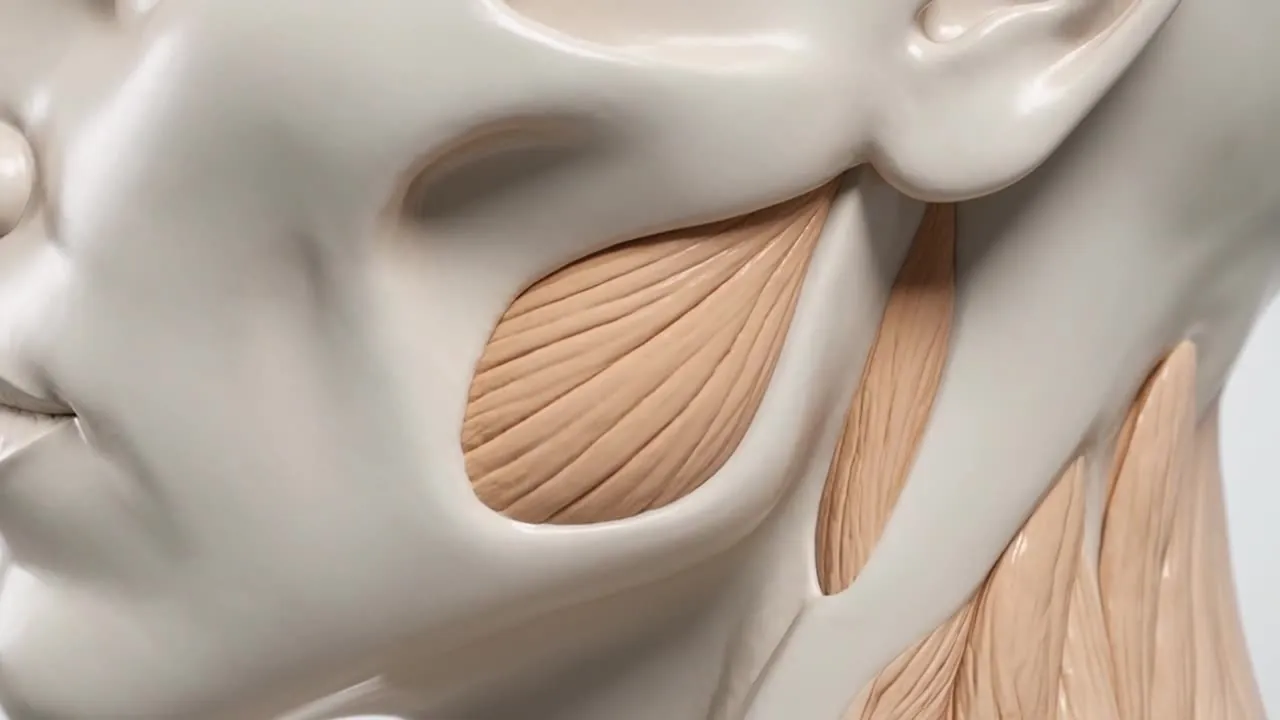
Jaw slimming: the masseter muscle relaxing. Illustrative animation, not a patient. Dr Sin Yong assesses every case in person before recommending treatment.
Dr Sin Yong · MBBS (NUS) · MRCS (Edin) · MSc Aesthetic Medicine with Distinction (Queen Mary, London) · MSc Practical Dermatology (Cardiff) · Global Key Opinion Leader
A wide lower face has four possible causes — masseter hypertrophy, buccal fat, skin laxity, or the jaw bone itself. Only one of them responds to BTX, and telling them apart takes about a minute.
Jaw BTX in Singapore means injecting botulinum toxin into the masseter, the chewing muscle at the angle of the jaw, so it contracts less and gradually reduces in bulk. It slims the lower face only when that muscle is the cause of the width; buccal fat, skin laxity and bone width need different approaches, identified at assessment.
Key takeaways
Jaw BTX injects botulinum toxin into the masseter so it contracts less and gradually reduces in bulk.
It slims the lower face only where an enlarged masseter is the cause of the width.
Buccal fat, skin laxity and bone width need different approaches; no injectable changes bone.
A clench test and profile assessment come first, and potency units are not interchangeable between products.
Dr Sin Yong, an aesthetic physician, assesses and performs the treatment personally.
Jaw anti-wrinkle injection is the everyday name for masseter botulinum toxin injections in Singapore: the medicine is placed into the chewing muscle at the angle of the jaw, so it contracts less and its bulk reduces gradually. It can slim the lower face when the masseter, not fat or bone, causes the width. Dr Sin Yong tests the clench first.
Masseter botulinum toxin in Singapore
People often search for this under a brand name; the medicine is botulinum toxin and it is injected into the masseter, the chewing muscle at the angle of the jaw, so the muscle contracts less and slowly reduces in bulk. It slims the lower face only when that muscle is the cause of the width, which the clench test shows at the first visit. Buccal fat, skin laxity and bone width need different approaches. Dr Sin Yong doses by the size of the muscle and reviews at two weeks; jaw clenching and grinding often ease as a secondary effect.
Searching for masseter toxin injections in Singapore? The clench test, the safe zone and how the dose is mapped are in the jaw slimming injections Singapore guide.
Four Causes, One Treatment
Patients ask for jaw BTX having decided the answer before the question. Sometimes they are right. Often they are not.
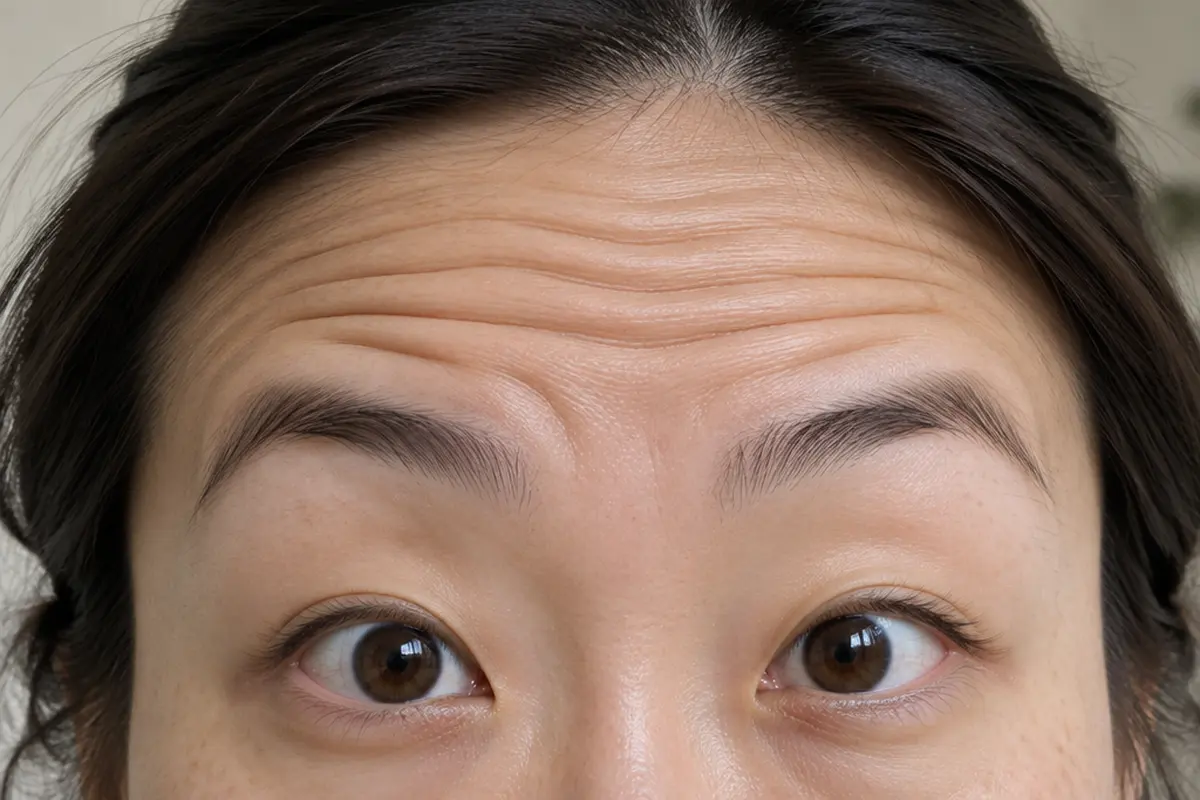
Lines that appear with movement are from the muscle underneath. Illustrative image, not a patient.
Masseter hypertrophy is muscle. The masseter sits at the angle of the jaw and, like any muscle, enlarges with use. Habitual clenching, nocturnal bruxism and a preference for firm foods all build it. This is the presentation that responds to masseter BTX.
Buccal fat sits in the cheek, higher and more forward. It is fat, not muscle, and treating the muscle does nothing for it.
Skin laxity blurs the jawline rather than widening the face. Here the outline has softened; nothing has grown.
Mandibular width is skeletal. A wide bony angle produces a wide lower face, and no injectable changes bone. Saying so plainly is more useful than treating and hoping.
The Test That Settles It
Clench your teeth firmly and place your fingers at the angle of the jaw, just in front of and below the ear.
If a firm bulge appears under your fingers, the masseter is enlarged and part of the picture. If nothing much changes, the width is coming from somewhere else — and BTX jaw reduction would be treating the wrong structure.
It takes a minute, it is done at every consultation, and it is the difference between a plan and a guess.
“That bulge has a name, it's predictable, and it's usually an examination that didn't happen.”
Dr Sin YongOn uneven results after masseter treatment · from his Instagram explainer series
How It Works, and What It Does Not Do
BTX blocks acetylcholine release at the neuromuscular junction. The masseter contracts less; with reduced use it undergoes disuse atrophy over the weeks that follow. The change is muscular, and it is gradual.
Dr Sin Yong's primary approach uses a formulation requiring assessment. Its potency units are specific to its own assay and are not interchangeable with other BTX products — a unit figure quoted from another clinic using a different formulation is not comparable.
Where the cause is fat or laxity rather than muscle, other approaches apply — submental assessment for the area below the jaw, or focused ultrasound where the jawline has lost definition rather than gained width.
Response varies with muscle bulk, the degree of hypertrophy, and individual anatomy. BTX suitability, risks and side effects are discussed at consultation, and it is not appropriate for every patient.
Key Facts
At a glance
The four causes
Masseter hypertrophy; buccal fat; skin laxity; the width of the mandibular angle
What responds to BTX
Masseter hypertrophy only. The other three do not
Mechanism
BTX blocks acetylcholine release at the neuromuscular junction; reduced contraction leads to disuse atrophy of the muscle over the following weeks
Approach
BTX, a muscle-relaxing injectable technique
Units are not interchangeable
Potency units are specific to each formulation's own assay and cannot be converted between different formulations
The bedside test
Clench the jaw. If the angle visibly bulges and firms, the masseter is involved. If it does not, something else is
Common driver
Nocturnal bruxism and habitual clenching. The muscle enlarges with use, like any muscle
Not changed by injection
Mandibular bone width. That is skeletal, and no injectable alters it
“Clench your jaw. If it bulges, the muscle is part of the picture. If it doesn't, no amount of BTX will change your face shape.”
Dr Sin YongOn assessing a wide jaw
What Determines the Cost
Treatment is planned individually, so cost follows the plan rather than a fixed list. Four things shape it:
Factors discussed at consultation
The area treated. A single zone differs from several, and surface area drives the work involved.
What the assessment finds. The same appearance can have different causes, and the cause decides the approach.
Whether one modality or several. Some presentations are addressed by a single approach; others are not.
How the plan is staged. Work spread over time is planned differently from work done in one visit.
A figure quoted before assessment would not reflect your presentation. Cost is set out clearly at consultation, before anything is agreed.
“Clench your jaw. If it bulges, the muscle is part of the picture. If it doesn't, no amount of BTX will change your face shape.”
Dr Sin YongOn assessing a wide jaw
References
Peer-reviewed pharmacology literature on formulation-specific dosing units. Toxins, 2024. source
Efficacy of botulinum toxin for masseter muscle hypertrophy: a systematic review and meta-analysis. Journal of Plastic, Reconstructive & Aesthetic Surgery, 2026. pubmed.ncbi.nlm.nih.gov
Botulinum toxin type A injections for masticatory muscles hypertrophy: a systematic review. Journal of Cranio-Maxillofacial Surgery, 2022. pubmed.ncbi.nlm.nih.gov
The Anatomical Basis of Paradoxical Masseteric Bulging after Botulinum Neurotoxin Type A Injection (Lee HJ et al.). Toxins (Basel), 2016. pubmed.ncbi.nlm.nih.gov
Botulinum toxin for masseter hypertrophy (Fedorowicz Z et al.). Cochrane Database of Systematic Reviews, 2013. pubmed.ncbi.nlm.nih.gov
Watch
Dr Sin Yong explains
Why a jaw can look wider from night-time clenching rather than weight gain. A short video from Dr Sin Yong’s Instagram, with captions.
The chin and jawline are assessed in profile. Illustrative image, not a patient.
Jaw BTX can narrow the lower face only where the masseter is enlarged; a V shape usually depends on more than the jaw angle.
Illustrative image — not a patient.
The V shape is read from three things together: the width at the angle of the jaw, the length and projection of the chin, and how cleanly the jawline runs between them. Masseter BTX works on the first of these. When the muscle is the main source of width, reducing its bulk narrows the angle, and the face can taper more towards the chin.
When the chin is short or set back, the lower face can look square or round even with a modest jaw. Chin filler adds projection and length, which changes the taper without touching width. When the jawline has softened from laxity, focused ultrasound addresses the envelope. When the fullness is in the cheeks rather than the jaw, the frame around it — cheek structure, chin and jawline — is defined rather than emptied.
This is why the clench test and a profile view come first. A plan built on the wrong structure changes little; a plan that ranks the contributors in order is the one that respects the face you have.
What happens during and after jaw BTX?
Jaw BTX is a short in-clinic procedure: a few small injections into the lower part of the masseter on each side, placed after the muscle has been mapped with the jaw clenched.
Afterwards there may be small injection marks or a bruise. Common advice is to avoid massaging or pressing on the area and to skip strenuous exercise for the rest of the day. The visible change is not immediate: the muscle contracts less first, and the slimming follows gradually as its bulk reduces over the following weeks.
Some people notice chewing firm or chewy food feels weaker for a period. Less commonly, the product can affect a neighbouring muscle and make the smile look uneven, or a part of the masseter that was not treated can bulge on clenching; both are reasons for a review appointment. Where skin laxity is already present, reducing muscle bulk can make the soft tissue look less supported, which is assessed before treatment.
Effects are temporary as the muscle regains activity, and the decision about whether and when to repeat is made at review rather than in advance.
Does jaw BTX help with teeth grinding?
Masseter BTX can reduce the force of clenching while it is active, but it is not a cure for bruxism and does not replace dental care.
Night-time grinding and daytime clenching are among the most common reasons a masseter enlarges. Relaxing the muscle lowers the force it can generate, and some people notice less jaw tension or morning tightness as a result. The cause of the habit — stress, sleep, the bite or other factors — is unchanged, and the muscle regains activity over time.
Protecting the teeth remains a dental matter. A dentist's assessment and, where advised, a night guard address tooth wear in a way an injection cannot. Jaw pain, clicking, locking or limited opening suggest a problem with the jaw joint itself and deserve their own assessment before anything cosmetic is planned.
At consultation, a history of clenching or grinding is part of the picture rather than an afterthought: it helps explain why the muscle has enlarged, and it shapes realistic expectations about how the area behaves over time.
Illustrative image — not a patient.
Jaw BTX compared with other options for a wide lower face
Option
What it does
What it cannot do
Typical recovery
Who it tends to suit
Jaw BTX (masseter BTX)
Relaxes an enlarged masseter so it reduces in bulk over the following weeks, narrowing the angle of the jaw
Reduce fat, tighten skin, add chin projection or change bone
Small injection marks or a bruise; chewing firm food may feel weaker for a while
A wide jaw angle that bulges and firms on clenching, often with clenching or bruxism
Frame-first approach for buccal and soft-tissue fullness
Defines the jawline, chin and cheek structure around lower-cheek fullness, with energy-based contouring where the fullness is subcutaneous
Remove the deep buccal fat pad, which energy devices do not reach
Depends on the components chosen; usually transient redness, swelling or bruising
A round lower face in a lean person, where the fullness is fat rather than muscle
Chin filler (hyaluronic acid)
Adds projection and length to the chin, which tapers the lower face towards a V shape in profile and from the front
Narrow the jaw angle or reduce fat
Possible swelling and bruising that settle
A short or recessed chin that makes the lower face read wide or round
Energy-based fat reduction (microwave or radiofrequency)
Acts on subcutaneous fat along the jawline and under the chin
Reduce muscle bulk or bone width
Transient redness, warmth or tenderness
Pinchable fat along the jaw or under the chin with reasonable skin quality
Focused ultrasound (HIFU)
Addresses laxity at SMAS depth where the jawline has lost definition
Reduce width from muscle or bone
Transient redness, swelling or tenderness
A jawline that has softened rather than widened
Mandibular angle reduction or buccal fat excision — referred to a plastic or maxillofacial surgery specialist
Changes bone width or removes the buccal fat pad surgically
Be reversed easily; buccal fat that is removed does not return
Surgical recovery with swelling, guided by the operating team
Width that is skeletal, or carefully selected buccal fullness, after a full discussion of the trade-offs
Who should not have jaw BTX?
Botulinum toxin is not used in anyone with a disorder of the junction between nerve and muscle, such as myasthenia gravis or Lambert-Eaton syndrome, or with a known allergy to any component of the product. It is deferred in pregnancy and while breastfeeding, and where there is infection or inflammation at the injection site.
Some medicines and conditions call for caution: aminoglycoside antibiotics and other drugs that affect nerve-to-muscle transmission, a bleeding tendency or blood-thinning medicines, and any existing difficulty swallowing or breathing. Jaw pain, clicking, locking or limited opening suggest a problem with the jaw joint and are assessed before anything cosmetic is planned, and active dental problems go to a dentist first.
Others are poor candidates for anatomical reasons: where the width is buccal fat, skin laxity or bone rather than muscle, or where the face is already lean and the soft tissue over the jaw would look less supported. The clench test and examination at consultation decide whether botulinum toxin is appropriate at all.
Is jaw BTX safe? The risks to know
Botulinum toxin in the masseter is widely used, but it has recognised side effects that are discussed before injection. Common, short-lived effects are tenderness, small marks or a bruise at the injection points, and chewing that tires more quickly for a period.
Less common effects relate to where the product acts. Spread to a neighbouring smile muscle can make the smile uneven; untreated fibres can bulge on clenching, known as paradoxical bulging; and reduced bulk can leave the area below the cheekbone looking hollow or the soft tissue less supported. Effects away from the injection site, such as difficulty swallowing, are rare and need urgent review. A 2024 review of 46,250 patients treated in one clinic group recorded 223 with a doctor-diagnosed adverse event who were followed up, most often paradoxical bulging, and all of these resolved; it counted only events seen at a return visit.
These risks are reduced by mapping the muscle with the jaw clenched, injecting the lower masseter away from the smile muscles, dosing to the degree of enlargement, and review.
What recovery looks like after jaw BTX
The sequence below describes phases, not a timetable: how quickly each passes depends on the settings used, the area and the person, and is discussed at consultation.
Excessive sweating is a medical condition with medical treatments. Illustrative image, not a patient.
Immediately afterSmall injection marks and possibly a bruise over the lower masseter; ordinary activity continues straight away.
The first eveningAvoid rubbing or massaging the jaw, lying face-down, heavy exercise and alcohol while the toxin binds.
The following daysNothing visible changes yet; chewing may begin to tire more quickly as the muscle relaxes.
As the skin settlesThe masseter reduces in bulk gradually, so the lower face narrows over the following weeks rather than immediately.
Follow-upReview checks symmetry and any residual bulge; the effect wears off as the muscle recovers, and repeat timing is set by assessment.
Who it suits, who should wait, who is referred on
The lower face is judged as a whole, not one point. Illustrative image, not a patient.
Tends to suit
Masseter hypertrophy confirmed by the clench test
A wide lower face with habitual clenching or night-time bruxism
A square jaw angle driven by muscle rather than bone
People who understand that change is gradual and varies
Better to wait
Pregnancy or breastfeeding
Active infection or skin disease at the injection sites
Expecting a V shape that depends on chin or bone structure
Referred on
Width from the bony jaw angle → surgical assessment
Marked laxity or fullness from fat → another approach or a surgical opinion
Who should not have this treatment
Pregnancy or breastfeeding
Neuromuscular conditions such as myasthenia gravis
Allergy to botulinum toxin or any component of the product
Infection at the injection sites
Medicines that can affect neuromuscular transmission, which need review first
Fullness from fat, laxity or bone, where treating the muscle would be the wrong structure
People whose wide lower face comes from bone, buccal fat or skin laxity, or who expect a V shape from the jaw alone, tend to respond poorly, because no injection into the masseter changes those structures.
Before you book
Declare all medications, especially blood thinners and any antibiotics, and mention neuromuscular conditions
Tell the clinic about previous botulinum toxin or filler, including the product used and when
Mention clenching, night-time grinding, jaw pain or dental treatment
Say if you are pregnant, planning a pregnancy or breastfeeding
Bring photos of your face in profile and from the front, and avoid alcohol and strenuous exercise beforehand if advised
What determines the fee
The fee depends on the area treated and on what the assessment finds, since a wide jaw can be caused by muscle, fat, laxity or bone. It also depends on the product and amount used, which is judged on masseter bulk, and whether jaw BTX is combined with another treatment. A written quote is given at consultation after examination, and the consultation decides whether treatment is advised at all.
It works only where an enlarged masseter is the cause; it does nothing for buccal fat, skin laxity or bone width.
“Units from one clinic can be compared with another clinic's.”
Potency units are specific to each product's own assay and are not interchangeable, so a quoted unit figure is not comparable.
How is the masseter assessed before jaw-slimming injections?
The assessment starts with one question: what, exactly, is wide? You are examined at rest and then with the teeth clenched, from the front, from three-quarter view and in profile, with fingers resting at the angle of the jaw. What is looked at is the bulk and firmness of the muscle on each side, whether the two sides match, how thick and soft the tissue over the muscle is, where the lower face is widest, and how the chin and jawline sit in profile. Side-to-side difference matters, because many people chew or clench more on one side and the muscle that works harder is often the larger one. Soft tissue that can be pinched and does not firm on clenching points towards fat or skin rather than muscle.
History is part of the examination. Daytime clenching, night-time grinding, firm or chewy food, jaw ache on waking, clicking or locking of the joint and recent dental work all change the plan. Pain, clicking or limited opening are reasons to have the joint assessed before anything cosmetic is planned. Where botulinum toxin is suitable, the muscle is mapped with the jaw clenched, so that the lower part of the masseter is identified and the smile muscles are kept clear. The purpose of all this is a plan that matches the structure causing the width, which is why some consultations end with the advice that botulinum toxin is the wrong tool.
Can jaw botulinum toxin help with clenching and bruxism?
Botulinum toxin in the masseter lowers the force the muscle can generate, so clenching has less power behind it while the effect lasts. It does not change why a person clenches. Daytime clenching is often noticed as teeth touching or a tight jaw during concentration or stress. Bruxism happens in sleep and is usually found from its marks, such as worn or flattened teeth, jaw ache on waking, or a partner who hears grinding. Both build the masseter over time, which is why a wide jaw angle and a clenching habit so often arrive together.
Lifting is judged along the jawline and neck. Illustrative image, not a patient.
Treating the muscle is one part of a wider approach. A dentist can assess tooth wear and advise on a night guard, and sleep and stress deserve attention in their own right. Jaw pain, clicking, locking or limited opening suggest a problem in the joint and are assessed before any cosmetic plan. As the effect wears off the muscle regains activity, and the habit that built it is still there, so any decision to repeat is made at review rather than in advance. For the longer explanation of the muscle, the clench test and face shape, read the guide to jaw clenching, bruxism and face shape.
Jaw-slimming injections: during, after and suitability
What to expect during and after
The masseter is felt while you clench and the injection points are marked. A few small injections are given on each side in about 10 minutes. You can return to work straight away; avoid massaging the jaw, lying flat and strenuous exercise for the rest of the day.
Results timeline
Chewing may feel weaker within 1 to 2 weeks. The jawline slims gradually over 4 to 8 weeks as the muscle shrinks. The effect usually lasts 4 to 6 months at first and can last longer with repeat treatments.
Are you a suitable candidate?
Suitable: a square jaw from a thick masseter, clenching or grinding. Less suitable: width from fat, loose skin or bone, pregnancy, breastfeeding and some neuromuscular conditions.
Jaw slimming options compared
Table: Jaw slimming options compared
Option
Treats
Notes
Jaw-slimming injection
Enlarged masseter muscle
Slims over 4 to 8 weeks
Time Freeze Laser LCLR®
Loose fat at the jawline
Results from the first session
HIFU
Mild sagging and fat
Gradual over months
Chin filler
Short chin
Balances a wide jaw
How to choose a clinic for jaw slimming injections in Singapore
A brand page or an overseas clinic cannot tell you how jaw slimming injections is delivered here. These are the points worth checking with any clinic in Singapore.
Who performs it. Ask who will carry out jaw slimming injections. Medical treatments here are performed by Dr Sin Yong himself and are not delegated.
What is used. Ask for the name of the device or product, and whether it is registered with the Health Sciences Authority.
Assessment first. The plan should follow an in-person assessment, not a package chosen in advance.
The fee in writing. Fees are quoted in Singapore dollars, in writing, before any treatment starts.
Review. Ask when you will be seen again after the treatment, and by whom.
Surgery. If an operation would serve you better, you should be told so and referred to a plastic surgery specialist.
Consultations with Dr Sin Yong are at 9 Scotts Road, Pacific Plaza #12-01, Singapore 228210.
Jaw slimming injections: more questions people ask
What happens if I stop jaw slimming injections?
The effect fades gradually as the nerve signal to the masseter recovers, and the muscle regains bulk with use, so the jaw returns towards its earlier width rather than becoming wider than before. How quickly that happens differs between people and with chewing and clenching habits. There is no rebound from stopping, and many people simply review the shape with Dr Sin Yong and then decide whether to repeat.
Why does my jaw bulge when I clench after the injection?
A small bulge at the jaw angle on clenching, called paradoxical masseteric bulging, can appear when part of the muscle, often a deeper layer, was not reached by the medicine and works harder while the treated part rests. An anatomical study traced it to a tendon that separates the superficial and deep parts of the masseter. It is checked at the review and usually addressed with a small balancing dose placed in the right layer.
Why do jaw slimming injection prices in Singapore vary between clinics?
Quotes differ because they describe different things. The formulation, a dose set by the size and strength of your masseter rather than a standard figure, the number of points, whether a doctor performs the injection, and whether a review and any balancing dose are included all move the price. A lower figure for a fixed dose may not match your muscle. Dr Sin Yong gives a written quote after the clench test.
Can just one side of the jaw be treated?
Yes, where one masseter is clearly larger, usually from chewing or clenching more on one side, the dose can be weighted to that side or, occasionally, given to one side only. Asymmetry that comes from the bone, the chin or the teeth is not changed by injections, so both sides are examined at rest and on clenching before anything is marked, and the match is checked again at the review.
What does jaw botulinum toxin change, and what does it leave alone?
Jawline botulinum toxin acts on muscle, and on muscle alone. Where the masseter is the main source of width, the muscle contracts less and, with reduced use, gradually loses bulk, so the angle of the jaw can look less prominent. That is the whole mechanism, and it is why the plan begins by finding out which structure is responsible. Response varies with muscle bulk and individual anatomy, and the effect is temporary as the muscle regains activity. Nothing about the bone, the fat or the skin is altered by it.
Fat, skin and bone are different problems with different routes. Buccal fat sits higher and further forward in the cheek and is not affected by treating the muscle; a frame-first approach to the cheek, chin and jawline is considered instead. Skin that has softened along the jawline is a laxity problem, where focused ultrasound at SMAS depth is the relevant category. A wide bony angle is skeletal, no injection changes bone, and the realistic route is assessment by a plastic or maxillofacial surgery specialist. In a face that is already lean, reducing muscle bulk can leave the tissue over the jaw looking less supported, so that possibility is weighed before treatment rather than after.
Not sure a wide jaw is the right concern to treat? See which treatment fits which cause, a one-page guide to ten common concerns.
1. MessageWhatsApp +65 8023 7170 with what is bothering you. A reply comes from the clinic, not a bot.
2. AssessmentDr Sin Yong examines you himself on Orchard Road, with ultrasound where earlier filler is involved.
3. A plan in writingWhat he would do, what he would not, the fee factors, and the option of no treatment.
Every treatment is performed by Dr Sin Yong personally. Singapore Medical Council registered · invited to share his clinical expertise internationally as a Key Opinion Leader for CLASSYS, DEKA, HIRONIC, FOTONA, ALMA, LUTRONIC and ILOODA · HSA-registered devices · ultrasound-guided correction
Masseter anti-wrinkle injections: benefits, the procedure, and how long the result lasts
Masseter anti-wrinkle injections relax an enlarged chewing muscle so the lower face looks slimmer over several weeks; they do not change bone or fat.
Benefits of masseter injections
A softer, slimmer jawline where the muscle is the cause, and often less clenching and grinding at night, which some people also feel as less jaw tension.
How the procedure works
The muscle is felt while you clench, the injection points are marked, and a few small injections are placed on each side. It takes about 10 to 15 minutes, with no need for numbing for most people.
When results show, and how long they last
Slimming appears from about two to six weeks as the muscle shrinks, and lasts around three to six months; with regular treatment the muscle often stays smaller for longer.
Illustration of the face showing the masseter muscle at the angle of the jaw. Illustrative, not a patient.
Keeping the jaw slimming effect
Habits
Chewing gum, hard foods and night-time grinding keep the muscle active and can shorten the effect; a night guard may help people who grind.
Repeat timing
Repeating every four to six months for the first year helps the muscle stay smaller, after which intervals can often lengthen.
Who carries out jaw slimming injections here
Dr Sin Yong carries out jaw slimming injections himself, from the assessment to the treatment and the review visit. He holds an MBBS (Singapore), MRCS (Edinburgh), an MSc in Practical Dermatology (Cardiff) and an MSc in Aesthetic Medicine (University of London), has more than 15 years of clinical practice, and is invited to share his clinical expertise internationally as a global key opinion leader for aesthetic device makers. The clinic is at 9 Scotts Road, Pacific Plaza #12-01, Singapore 228210, a short walk from Orchard MRT.
Jaw slimming: dose and price · Dr Sin Yong · reviewed 20 November 2026
Jaw slimming injection price and dosage: units, how long it lasts, and what decides the fee
The price of a jaw slimming injection follows the dose, and the dose follows the muscle: a large, strong masseter needs more than a small one. Here is how dosage is decided, how long the effect lasts, and why prices you see vary.
The dose your muscles need, which depends on their size and strength, the product used and whether the two sides differ. It is confirmed after the clench test and examination.
02
How many units
Doses vary with muscle size and product: commonly around 20 to 50 units per side for products measured in the same units as the original toxin. Units are not interchangeable between brands, so doses cannot be compared directly.
03
How long it lasts
Usually four to six months. With repeated treatment the muscle often stays slimmer for longer, so sessions can be spaced further apart.
04
A square jaw from clenching or grinding
Clenching and grinding enlarge the masseter. The injection eases grinding as well as slimming the jaw, and a night guard from a dentist protects the teeth.
05
What makes a jawline look defined
A clear angle, a smooth line from ear to chin and balance with the chin's projection. Jaw slimming addresses width; chin projection or lifting may complete the line.
Jaw BTX & Face Slimming — Frequently Asked Questions
Chewing tough food may feel tiring for a few weeks, but normal eating is not affected.
Tenderness and small bruises are common. Uncommon effects include an uneven smile, cheek hollowing or a visible bulge when clenching, which settle as the effect wears off.
It relaxes the masseter muscle, which slims the lower face over 4 to 8 weeks and can ease teeth clenching.
It is a low-risk treatment in trained hands. Possible effects include bruising, temporary chewing fatigue, an uneven smile and a hollow look if too much is given.
The result is temporary, so it needs repeating every 4 to 6 months at first. Chewing can feel weaker for a few weeks, and the effect is small if the width is from fat or bone.
Yes. They are often planned with chin filler for a V-shape, or with skin tightening when the lower face is also lax. The order is set at the assessment.
The muscle usually stays slimmer for about four to six months, and repeated sessions can extend this. The muscle recovers if treatment stops.
A good candidate has a square lower face caused by an enlarged chewing muscle, which can be felt bulging when the teeth are clenched. Where the width comes from bone, fat or loose skin, injections into the muscle will not change the shape.
Avoid rubbing or massaging the jaw, lying flat for a few hours, and strenuous exercise for the rest of the day. Chewing may feel slightly weaker for a few weeks. The effect on the muscle develops over several weeks, and a review is arranged.
Masseter injections for jaw reduction have trial evidence behind them, with limits. A 2026 meta-analysis of five randomised placebo-controlled trials, with 536 participants, found botulinum toxin type A was associated with improved masseter prominence scores compared with placebo, although results varied widely between trials. A 2022 systematic review of 28 studies found injection techniques too varied to compare reliably. Neither changes the need to confirm the muscle is the cause.
Jaw reduction injections are usually felt as a few brief pricks and some pressure, because only a few small injections are placed into the lower part of the masseter on each side. Sensitivity varies between people. Afterwards the area can feel tender, and a small mark or bruise may appear at an injection point; both settle on their own and are covered at the review.
It depends on the cause found at examination. Pinchable fat along the jaw or under the chin may suit energy-based fat reduction; lower-cheek fullness in a lean face is usually approached by defining the jawline, chin and cheek structure around it; a jawline that has softened may suit focused ultrasound. No injectable changes bone width, and surgical options are referred to a plastic or maxillofacial surgery specialist.
Jaw BTX refers to injecting BTX into the masseter muscle at the angle of the jaw. It blocks acetylcholine release at the neuromuscular junction, so the muscle contracts less and undergoes disuse atrophy over the following weeks. It addresses muscle bulk only, not fat, skin laxity or bone.
Clench your teeth firmly and feel the angle of the jaw, just in front of and below the ear. If a firm bulge appears, the masseter is enlarged and involved. If little changes, the width is coming from buccal fat, skin laxity or the width of the jaw bone itself. This is checked at consultation before any plan is made.
No. It addresses masseter hypertrophy. Where the lower face is wide because of buccal fat, skin laxity or the shape of the mandible, BTX treats the wrong structure and the appearance does not change. Establishing which applies is the purpose of assessment.
The masseter enlarges with use, like any muscle. Habitual clenching, nocturnal bruxism and a preference for firm or chewy foods are common drivers. Many patients are unaware they clench at night, and a dental history is part of the assessment.
Dr Sin Yong's primary approach uses a formulation whose potency units are specific to its own preparation and assay method and are not interchangeable with other BTX products, so unit figures quoted between clinics using different formulations are not comparable.
No. Mandibular width is skeletal, and no injectable changes bone. Where the bony angle is the cause, that is discussed honestly at consultation rather than treated in the hope of a result.
Suitability is assessed in person. Neuromuscular conditions, pregnancy and breastfeeding, certain medications, and known sensitivity to any component are among the things considered. BTX requires medical assessment before use.
Not immediately. The muscle begins to contract less first, and the slimming follows gradually as its bulk reduces over the following weeks. Response varies with the degree of hypertrophy and individual anatomy, and it is reviewed rather than predicted.
Where skin laxity is already present, reducing the bulk of the masseter can make the soft tissue over it look less supported. This is one reason laxity is checked at the same assessment, and why focused ultrasound or another approach may be discussed instead of, or alongside, BTX.
瘦脸针, literally 'face-slimming injection', is the Chinese term most often used for botulinum toxin injected into the masseter, the treatment described on this page. The term is sometimes used loosely for other injections marketed for face slimming, including fat-dissolving injections, which act on fat rather than muscle. Because the right approach depends on whether the width is muscle, fat, laxity or bone, it is worth asking exactly what is being injected and why; the clench test at consultation answers the first part.
The cost of jaw BTX in Singapore depends on the area treated, the product and amount used, which is judged on masseter bulk, and whether it is combined with another treatment. Potency units differ between products and cannot be compared across clinics. Dr Sin Yong gives a written quote at consultation after examining you, because the assessment decides whether treatment is advised at all. No figure is quoted beforehand.
Jaw BTX is worth considering when the clench test shows an enlarged masseter and the lower face is wide because of muscle, in someone who accepts that change is gradual and varies. It is a poor fit when the width comes from buccal fat, skin laxity or the jaw bone, or when a V shape depends on chin projection, because treating the muscle would not change those structures.
How long jaw BTX lasts depends on masseter bulk, the product and amount used, your metabolism, and whether clenching or grinding continues. The muscle can regain use over time once the effect wears off, so no duration can be promised. Review timing is set with Dr Sin Yong at consultation and adjusted to how you respond.
It works only on muscle, so it does not change fat, laxity or bone, and change is gradual. Injection marks and bruising are expected; weaker chewing for a period, an uneven smile, an asymmetric bulge on clenching and headache are possible. It is unsuitable in pregnancy and with neuromuscular conditions, and repeat treatment is usually needed to maintain any change.
By palpating the muscle while you clench: its bulk, its lower border and how much of it sits below the jawline. The first dose is conservative, placed in two or three points in the lower part of the muscle, and reviewed at two weeks.
A heavy-chewing feeling for a few weeks is common and settles. Over-dosing can make chewing tiring or alter the smile, which is why the dose is matched to the muscle and reviewed.
A wide lower face that is bone or fat rather than muscle; pregnancy and breastfeeding; neuromuscular conditions; and anyone wanting a change on a timescale the muscle cannot deliver, since reduction in bulk takes weeks.
The effect lasts a few months; as the muscle is used less, intervals often lengthen. Dr Sin Yong sets the next review by how the muscle has responded, not a fixed package.
They can reduce clenching and grinding by relaxing the masseter. A dentist may also advise a night guard.
Relaxing the masseter muscle so it shrinks over weeks.
Often muscle; a doctor checks by feeling the jaw while you clench.
Four to eight weeks.
Mild chewing fatigue can occur for a few weeks.
The fee depends on the dose needed for the size and strength of the masseter muscles on both sides, which is judged when the muscle is examined at assessment. A review at about four weeks checks the balance between the two sides before any top-up is planned.
The muscle relaxes over the first two weeks, and the change in jaw width develops gradually over about four to eight weeks as the muscle bulk reduces.
If the muscle is over-treated or the face is very lean, the area below the cheekbones can look hollow. The dose is planned for your face, and the effect wears off as the muscle recovers.
Clinics price it per area or per unit, so the cost depends on the product and the units each side needs. The fee here is confirmed after Dr Sin Yong assesses the size and strength of the muscle.
It varies with muscle size and strength: smaller muscles need fewer units, and large, strong muscles often need more. Too few units can give a weak result, so the dose is set after examination.
Usually four to six months. After several treatments the muscle often stays slimmer for longer, so many people can space their sessions further apart.
Because the dose varies with muscle size, and products differ in price and in how their units are measured. Compare the dose and product used, not just the headline price.
Anti-wrinkle injection at this practice is from $388 per area; the fee for your plan is confirmed in writing after assessment.
Where Dr Sin Yong consults: 9 Scotts Road, Pacific Plaza #12-01, Singapore 228210 · Orchard MRT · Mon–Fri 10am–8pm, Sat 11am–3pm · WhatsApp +65 8023 7170 · Getting here · How fees are quoted
Your jaw might be your bite. You think your jaw got wider from weight gain? Often it's because you clench in your sleep. The chewing muscle at the jaw angle grows with use like any muscle. Grinding builds it, that changes your face shape, and it has nothing to do with fat. The treatment is completely different. Have someone actually examine the muscle before you assume. It takes a minute.
Transcript of Dr Sin Yong's video, lightly edited for reading.
Medically reviewed by Dr Sin Yong, MBBS (NUS), MRCS (Edinburgh) · Last updated 5 November 2026 · Editorial policy
Related reading
Face Slimming Singapore — Face slimming Singapore: masseter botulinum toxin vs buccal fat options vs filler contouring, what each changes, and how…
Pillow Face: How It Happens & Correction — Pillow face rarely arrives in one visit. How faces become overfilled gradually, and how correction is sequenced, by Dr S…
Coelho MS, Oliveira JMD, Polmann H, et al. Botulinum Toxin for Bruxism: An Overview. Toxins (Basel). 2025;17(5). PubMed 40423331 · DOI
Small R. Botulinum toxin injection for facial wrinkles. Am Fam Physician. 2014;90(3):168-75. PubMed 25077722
Yacoub S, Ons G, Khemiss M. Efficacy of botulinum toxin type A in bruxism management: A systematic review. Dent Med Probl. 2025;62(1):145-160. PubMed 40035138 · DOI