FSX Laser in Singapore is Dr Sin Yong's Flawless Smooth Skin protocol, a combination laser treatment using 1540 nm erbium glass and 1927 nm thulium wavelengths. The 1540 nm wavelength reaches the dermis for collagen work; 1927 nm acts more superficially on pigment and texture. It is directed at fine lines, pores, superficial scars, redness and early laxity; settings follow assessment.
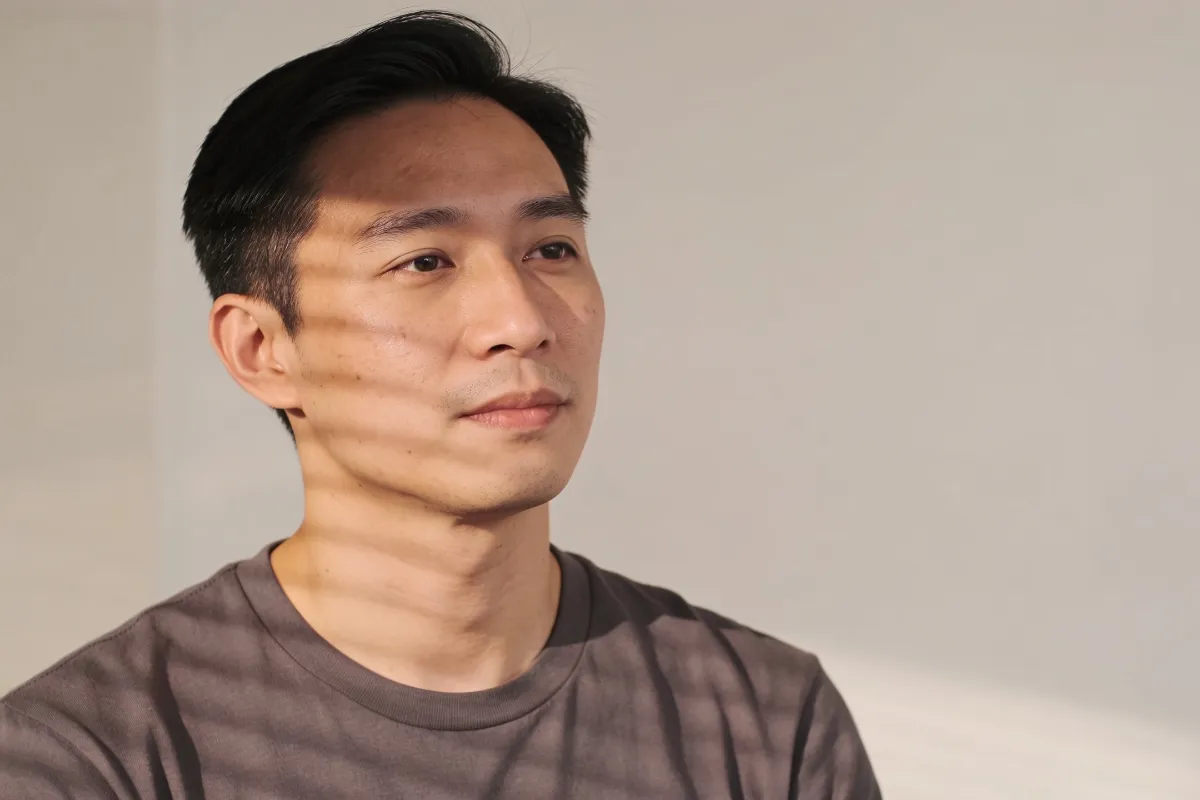
What FSX Laser is and how it works: two wavelengths, two depths
FSX Laser, from Flawless Smooth Skin, is Dr Sin Yong's signature LCLR® (Laser Collagen Lipo Remodelling) protocol using thulium laser energy and erbium glass laser energy. It is a non-ablative fractional laser: the 1540 nm erbium glass wavelength heats narrow columns of dermis to prompt collagen remodelling while the skin between them stays intact, and the 1927 nm thulium wavelength works more superficially, where pigment and surface texture sit. Neither vaporises the surface. Unlike conventional laser toning, FSX is not a single-pass brightening treatment; it is a multi-target protocol addressing several concerns in one coordinated session, with energy parameters calibrated by Dr Sin Yong in real time and adjusted zone by zone according to the tissue response he sees during the session.
Six clinical targets in one session
- Heavy or droopy upper eyelid skin. Thulium energy delivered along the upper periorbital zone causes collagen contraction in the eyelid skin and the underlying fibrous septum, as a non-surgical option for mild lid skin laxity. How much change is seen varies between people.
- Fine wrinkles. Erbium glass energy stimulates collagen neogenesis in the mid-dermis around the eyes, mouth and cheeks, without surface trauma; any change develops gradually as new collagen forms.
- Active acne inflammation. Specific thulium parameters deliver anti-inflammatory thermal energy to inflammatory papules and pustules, alongside medical treatment where the acne calls for it. See acne treatment.
- Post-acne redness. Post-inflammatory erythema, the red or pink marks left after acne, is addressed by controlled heating of the superficial dermis to help the redness settle; fading is gradual.
- Superficial scars. The superficial dermis is targeted to stimulate collagen beneath shallow acne scars, surgical marks and stretch lines.
- Early skin laxity. Laser energy causes collagen contraction in the treated zones, with remodelling continuing afterwards, directed at early-to-moderate looseness across the face, jowl area and neck as part of skin tightening.
FSX is also used for pigmentation, including melasma with its own conservative parameters, and to make enlarged pores less visible. It is applied on the face, neck and periorbital region and on the body, including in stretch mark treatment.
The FSX multi-pass protocol
Unlike single-pass treatments aimed at one concern, FSX applies multiple calibrated passes at different energy levels, each addressing a different skin layer and concern within the same session.
- Pass 1, surface brightening: low-energy thulium passes target surface melanin without ablating the surface, with settings chosen to keep the risk of post-inflammatory hyperpigmentation low.
- Pass 2, pore refinement: targeted thermal energy around the pilosebaceous unit, directed at the collagen around enlarged pores.
- Pass 3, dermal remodelling: higher-fluence passes deliver deeper heating to stimulate fibroblast activity and new collagen synthesis.
- Pass 4, refinement sweep: a final low-fluence smoothing pass evens out the treatment effect across the zone.
“Texture is not a filter problem. Pores, fine lines and roughness are structural. Treat the structure.”
Dr Sin Yong
Every zone FSX Laser is directed at
FSX addresses loose skin across the face, neck, eyelids and body, and separately targets scars, redness and stretch marks. Select a category then hover any dot to explore what the FSX protocol is directed at in that zone.

FSX Laser: Flawless Smooth Skin
Skin Tightening & Scar Treatment Zones
Select Skin Tightening to see loose skin zones across the face, neck, eyelids and body, or Scars & Redness for acne scars, burn scars, surgical scar redness and stretch marks. Hover any dot to explore.
← HOVER A ZONE TO EXPLORE
For redness rather than texture, what a yellow laser does and what is used instead is explained separately.
Shallow boxes suit FSX Laser and deep ones the S3 Resurfacing Lift; see the page for boxcar scars.
Hooding and lid laxity are covered on non-surgical eyelid lift in Singapore.
Who FSX Laser suits, and who should wait
FSX settings are adjusted for every skin type, including the darker Fitzpatrick types common in Singapore, after assessment, because the risk of post-inflammatory hyperpigmentation rises when settings are too strong for the skin. Suitability is decided at consultation, after Dr Sin Yong has examined your skin and taken a medical history.
| Group | Typical situation | What usually happens |
|---|---|---|
| Tends to suit | Fine lines, enlarged pores and uneven texture; superficial scars and post-acne redness; early laxity on the face and neck; lax, textured upper-lid skin; pigmentation that has been assessed | Settings planned zone by zone |
| Better to wait | Pregnancy or breastfeeding; sunburnt or freshly tanned skin; an active infection such as a cold sore or impetigo; current or recent isotretinoin | Treatment postponed |
| Discussed first | Cold sores (antiviral cover may be advised); photosensitising medicines; light-sensitive conditions such as lupus; melasma | Timing and settings adjusted, or a different plan |
| Caution, or a different plan | Keloid tendency; active vitiligo; poorly controlled diabetes or other causes of slow healing | Weighed at assessment |
| Referred on, or another protocol | Deep ice-pick, boxcar or rolling scars; heavy upper eyelid or neck skin excess; true ptosis; lost volume | S3 Resurfacing Lift or subcision for deep scars; surgical assessment for skin excess or ptosis |
People with deep acne scars, heavy skin excess, recent tans, or who cannot avoid the sun tend to respond poorly, because FSX is the wrong tool or the wrong moment for them.
FSX Laser, chemical peels and other skin-quality options compared
A chemical peel and FSX both aim at the quality of the skin's surface, but they reach it differently. A peel applies an acid that loosens and removes surface cells to a depth set by the acid and its strength. FSX treats the dermis in a fractional pattern while leaving most of the surface undisturbed, which is why it is used for pores, fine lines and shallow scars. The practical difference is control over depth: a light peel brightens the surface but does little for dermal collagen, and a deeper peel carries more peeling and, in darker skin, a greater risk of post-inflammatory hyperpigmentation. Neither lifts sagging tissue.
| Option | What it does | What it cannot do | Who it tends to suit |
|---|---|---|---|
| FSX Laser (1540 nm and 1927 nm) | Non-ablative fractional laser: 1540 nm heats the dermis to prompt collagen remodelling, while 1927 nm acts superficially on pigment and surface texture | Replace lost volume, lift descended tissue or release deep tethered scars | Fine lines, pores, superficial scars, uneven tone and early laxity, with settings adjusted for darker skin |
| Chemical peel | An acid solution loosens and removes surface layers to a chosen depth | Treat the dermis in a fractional pattern while leaving the surface intact; deeper peels carry more pigment risk in darker skin | Mild dullness, superficial pigment and comedonal acne, at a depth chosen for the skin type |
| Skin booster injection | Places hyaluronic acid or polynucleotides in the dermis to act on hydration and skin quality | Treat pigment, resurface texture or lift tissue | Dehydrated, dull or crepey skin, often planned alongside laser |
| Picosecond laser | Fragments pigment mainly by a pressure effect; in fractional mode prompts fine dermal remodelling | Treat laxity or the hormonal drivers of melasma | Discrete pigment such as sun spots and freckles, and fine texture |
| Fractional CO2 resurfacing (S3 Resurfacing Lift) | Ablative fractional laser that removes microscopic columns of tissue to rebuild dermal collagen | Avoid visible recovery; it is not a light maintenance treatment | Deeper acne scars and etched lines where non-ablative treatment is not enough |
Where FSX sits against the non-ablative brands is set out in Clear + Brilliant vs Fraxel vs Tetra Pro, and the 1927 nm wavelength is compared in LaseMD vs pico vs R2 Glow.
Korean glass skin: what laser can and cannot do
Glass skin is a K-beauty term for skin that looks clear, even and smooth enough to reflect light uniformly. It depends on even pigment, fine texture with less visible pores, little redness and good hydration, and no single treatment supplies all of them. FSX is directed at several within one plan; hydration is a separate job, where a skin booster may sit alongside it, and daily sun protection keeps pigment from returning. The full plan by component is on the glass skin treatment Singapore page.
Laser skin rejuvenation: what to look for
Common problems with poorly planned laser toning include post-inflammatory hyperpigmentation from aggressive Q-switched settings on darker skin, and rebound pigmentation when melasma is stimulated. FSX is planned around these pitfalls: it uses thulium and erbium glass energy rather than a Q-switched toning pass, Fitzpatrick skin type is assessed at every session, and melasma is managed with a specific conservative protocol.
What FSX Laser cannot do, and the alternatives
- It is not a CO2 laser. FSX is non-ablative. Deep ice-pick and boxcar scars need the S3 Resurfacing Lift, which resurfaces at multiple depths; tethered scars get subcision first, as in 4D Scar Reconstruction, and ice-pick scars get TCA CROSS. The acne scar treatment guide sets out the order.
- It is not laser toning. FSX is a multi-pass protocol, not single-pass 1064 nm brightening; see laser toning.
- It does not move a descended brow. Where the heaviness comes from brow position, the VF Lift – Vertical Facelift is used instead, and true ptosis is a surgical question; see non-surgical eyelid lift.
- It does not replace lost volume or lift descended tissue, and heavy skin excess is referred for surgical assessment.
- It does not shrink pores. Pores can be made less visible but not smaller, and naturally textured or scarred skin will not look like a filtered image.
Two myths we hear in clinic
It is a multi-pass protocol with settings adjusted per zone, directed at several concerns.
Laser aims to refine texture gradually, and the extent varies between people.
Is FSX Laser safe? The risks to know
The expected effects are redness, warmth and mild swelling, which settle on their own, sometimes with fine scabbing in treated zones that should be left to shed. Less common effects include acne-like breakouts, a cold sore outbreak, redness that lingers, and temporary darkening of the skin.
A retrospective study of 961 consecutive treatments with a 1,550 nm non-ablative fractional laser recorded complications after 7.6% of treatments, most often acne-like eruptions and cold sore outbreaks, with post-inflammatory hyperpigmentation more frequent in darker skin types. FSX uses a closely related 1540 nm erbium glass wavelength alongside 1927 nm thulium, so the same kinds of risk apply. Risk is reduced by assessing skin type at every session, matching settings to the concern and the skin, antiviral cover where there is a history of cold sores, gentle skincare and strict sun protection afterwards, and leaving any scabs to fall away naturally. Anything unexpected is reviewed by Dr Sin Yong; see what to do if something feels wrong after a treatment.
What to expect: before, on the day and recovery
Before you book
- Declare isotretinoin, photosensitising medicines and any recent laser or peel.
- Tell the clinic about pregnancy, breastfeeding, cold sores and keloid history.
- Avoid sun exposure and tanning before the visit, and pause retinoids, acids and exfoliants if advised.
- Bring photographs of your skin, a list of your skincare products and any records of past laser treatment.
On the day
Numbing cream is applied before the session for comfort. Dr Sin Yong performs every session personally, working through the passes and adjusting energy per zone as the skin responds.
What recovery looks like
The sequence below describes phases, not a timetable: how quickly each passes depends on the settings used, the area and the person, and is discussed at consultation.
- Immediately after. Redness, warmth and mild swelling across the treated zones; the skin may feel tight and look flushed.
- The first evening. Gentle skincare only; a cool compress eases warmth, and make-up is usually possible once the skin is calm.
- The following days. Redness settles on its own; after higher-intensity passes fine scabs can form and should be left to shed naturally.
- As the skin settles. Collagen remodelling develops gradually, and post-acne redness fades over a course planned individually; diligent sun protection continues.
- Follow-up. Any lingering redness, acne-like breakout or darkening is reviewed, and settings for the next visit are adjusted to the skin's response.
What determines the cost of FSX Laser
The fee for FSX Laser depends on the areas treated, the concerns being addressed, the number of passes and zones, the consumables used, and whether it is combined with another treatment. Settings are tailored to your skin at consultation. A written quote is given after assessment, and the consultation also decides whether treatment is advised at all, since pigment, melasma or active acne may call for a different or preceding plan. How quotes work at this practice is explained on how we quote.
FSX Laser Singapore: two more questions
Is FSX Laser the same as pico laser?
No. FSX Laser uses 1540 nm erbium glass and 1927 nm thulium energy in fractional columns that heat the skin without removing its surface, which suits texture, pores, fine lines and superficial scars. Pico laser fires very short picosecond pulses at one wavelength, mainly to break up pigment. Some plans use both, in sequence, because they work on different targets.
Where on the face and body can FSX Laser be used?
FSX Laser is directed at loose skin and texture across the face, eyelids, neck and body, and separately at scars, red acne marks and stretch marks. Settings follow the zone, because eyelid skin is far thinner than the cheek or the body. Dr Sin Yong sets the wavelengths, density and passes for each zone after examining the skin, and adjusts them for darker skin types.
How Dr Sin Yong approaches FSX Laser
All FSX sessions are performed personally by Dr Sin Yong, not by therapists or nurses. He chooses FSX by target and by skin. For droopy or hooded eyelids, two protocols do most of the work in his practice: FSX where the heaviness comes from the texture and laxity of the upper-lid and brow skin, and the VF Lift – Vertical Facelift where the brow and upper face need lifting along vertical vectors. A pinch test of the lid skin and a fingertip lift of the brow show which applies, and true ptosis, a weak levator muscle, is screened for so the right person is referred rather than treated; see FSX Laser vs VF Lift for droopy eyelids. Where FSX Laser fits among the options is set out under hooded eyelids treatment.
For scars, it is the scar map, not the device, that decides: FSX for superficial acne scars and fine textural scarring, where it has a shorter recovery than the S3 Resurfacing Lift, and S3 for deeper ice-pick and boxcar scars, with FSX used later for surface refinement if at all. For pigment, the type is named first, and melasma starts with sun protection and medical treatment before any laser.
FSX in Dr Sin Yong’s words: five main targets
Dr Sin Yong sums FSX up as five main targets: redness; pores and oiliness; loose skin; pigmentation, including the dark marks acne leaves behind (post-inflammatory hyperpigmentation); and active acne, which he uses it for often. He also uses it on the neck for tightening, and on droopy upper eyelids as a non-surgical option directed at firming loose lid skin and evening out the two sides.
FSX Laser or S3 resurfacing: choosing by downtime
Both are scar treatments Dr Sin Yong performs himself. S3 resurfacing on the Tetra Pro reaches deeper and has more downtime, with darker areas while the skin heals. FSX leaves less visible scabbing, so recovery is easier to manage around work and social life. Which one suits is decided at examination, by the depth of the scars and how much visible recovery you can accept.
“Nothing shrinks a pore. Less visible is achievable. Smaller is not.”Dr Sin Yong
Dr Sin Yong explains: nothing shrinks a pore
Watch on YouTube: Enlarged Pores Treatment: Can You Actually Shrink a Pore?
Read the transcript
You cannot shrink a pore. Nothing shrinks a pore; anything claiming to is selling you the appearance of one. Pore size is largely genetic. What changes is how pores are stretched by oil, debris and loss of support in the surrounding skin. Firmer skin holds them tighter. That's the honest mechanism. Less visible is achievable. Smaller isn't. Anyone promising smaller is overselling.
Transcript of Dr Sin Yong's video, lightly edited for reading.
FSX Laser: questions patients ask
Question not answered here? Ask on WhatsApp, use the enquiry form, or browse 100 questions patients ask.
Medically reviewed by Dr Sin Yong, MBBS (NUS), MRCS (Edinburgh) · Last updated 5 November 2026 · Editorial policy
Book Your FSX Laser Consultation
Every session personally performed by Dr Sin Yong · Orchard Road, Singapore · recovery discussed at consultation
- 1WhatsApp a short note on your concern
- 2Consultation and assessment with Dr Sin Yong
- 3Options explained, including no treatment
Replies within clinic hours: Mon–Fri 10am–8pm, Sat 11am–3pm · How consultations work · Prefer not to use WhatsApp? · Treatment finder · Call +65 8023 7170 · Map
WhatsApp Dr Sin YongRelated Treatments
For deeper or treatment-resistant acne scars.
For shallower scars, melasma and body firming.
Multi-depth resurfacing for deeper scars.
The July 2026 clinical exchange and the platforms behind these protocols.
Brightening and pigmentation protocol calibrated for Asian skin.
Invited expertise-sharing and symposium work across seven manufacturers.