Key facts
- Tone
- Pigment, redness and inflammatory dullness, the most superficial part of the picture
- Texture
- Pores, fine lines, roughness and shallow scars in the surface and upper dermis
- Laxity
- Loss of dermal collagen and elastin, with weakening of deeper support
- Volume
- Deflating fat compartments and bone change beneath the skin
- Foundation
- Daily broad-spectrum sunscreen and barrier care, under every plan
- Sequence
- Active acne, rosacea or unstable melasma first; structure before surface detail
- Limits
- Marked skin excess is referred to a plastic surgery specialist
What does skin rejuvenation actually mean?
Skin rejuvenation means improving how skin looks and behaves across four distinct dimensions, tone, texture, laxity and volume, rather than applying one treatment to make skin look younger. The word appears on menus for everything from a facial to an ablative laser, which is why on its own it says very little about what is being done.
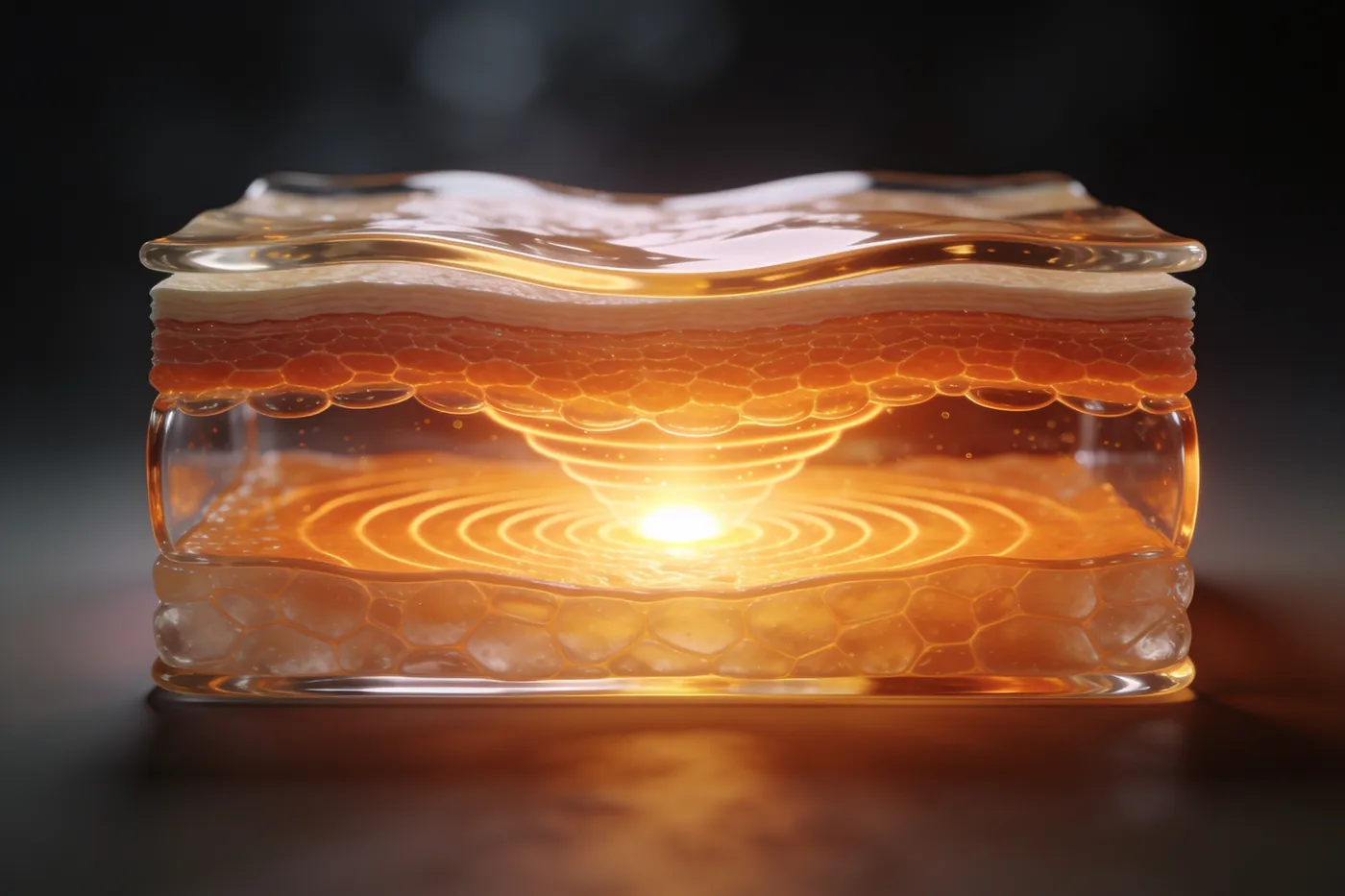
Each of the four sits at a different depth. Tone is about the surface and upper dermis: pigment, redness and the low-grade inflammation that reads as dullness. Texture also lives near the surface: pores, fine lines, roughness and shallow scars, all rooted in the collagen of the upper dermis. Laxity is a loss of dermal collagen and elastin combined with weakening of the deeper support. Volume loss happens beneath the skin altogether, as fat compartments deflate and the facial skeleton remodels.
A treatment that works at one depth does little at another. A pigment laser does not lift; a filler does not even out tone; a skin booster does not clear a sun spot. Most faces asking for rejuvenation show more than one of the four, which is why the useful first step is naming them rather than choosing a device.
It also explains why a treatment that disappointed someone may simply have been aimed at the wrong layer. A course of laser facials for what was really volume loss, or filler for what was really pigment and dullness, does not show that treatment fails; it shows that the plan answered a question the skin was not asking.
How is uneven tone matched to treatment?
Uneven tone is treated according to its cause, whether deposited pigment, inflammation or redness, because each answers to a different laser and the wrong match can make tone worse. The diagnosis comes before the device.
Where pigment has already been deposited, as in sun spots, freckles and some post-inflammatory marks, a picosecond laser such as the T2 Frax Radiance pico laser fragments it with a pressure effect rather than heat. Laser toning delivers low-fluence 1064 nm energy in gentle, repeated passes for more diffuse pigment. Where dullness is driven by low-grade inflammation, the R2 Glow Laser works upstream, calming the inflammatory activity that stimulates melanocytes rather than breaking up pigment that is already there.
Redness is a vessel problem rather than a pigment one. The 少女光 laser uses a 675 nm wavelength directed at facial redness, pores and laxity, working deeper in the dermis. Melasma is its own category: it is hormonally influenced and sensitive to heat, so it is managed conservatively with a specific protocol rather than with aggressive settings.
In Fitzpatrick III to V skin, which covers most of Singapore, the main risk in tone work is post-inflammatory hyperpigmentation from too much heat. Conservative settings and daily sunscreen matter more than the intensity of any single visit.
“A face does not age in one plane, so it cannot be corrected in one. That is the whole reason a single device is never a plan.”
Dr Sin YongOn why rejuvenation is planned in layers
What treats rough texture, pores and fine lines?
Texture is a dermal problem that shows at the surface, so it is treated with collagen-remodelling energy placed into the dermis: non-ablative fractional laser, RF microneedling or, for deeper change, ablative fractional resurfacing.
FSX Laser combines 1540 nm erbium glass, which reaches the dermis for collagen work, with 1927 nm thulium, which acts more superficially on pigment and surface texture; it is directed at fine lines, pores, superficial scars and early laxity, with settings adjusted for darker skin types. RF microneedling releases radiofrequency energy at the tips of fine needles set to a chosen depth, which suits enlarged pores, uneven texture and rolling acne scars, including in skin types where some lasers need more caution.
Where texture change is deeper, such as etched lines or established acne scars, the S3 Resurfacing Lift uses a fractional CO2 platform to remove microscopic columns of tissue so that the dermis rebuilds its collagen. It involves visible redness, crusting and peeling while the skin renews, and it is planned as a resurfacing treatment rather than light maintenance.
One honest limit applies throughout: nothing shrinks a pore. Remodelling the collagen around it makes it less visible, and that is the realistic aim of texture work.
What can be done about loosening skin?
Laxity is addressed with energy-based treatments that heat dermal and deeper tissue, making collagen contract and prompting new collagen to form. The choice depends on where the laxity sits and what else the face carries, not on the name of the device.
The VF Lift – Vertical Facelift is Dr Sin Yong's protocol on Volnewmer monopolar radiofrequency, heating the dermis and subcutaneous layer to tighten and lift along vertical vectors. Time Freeze Laser LCLR® uses a long-pulsed 755 nm and 1064 nm laser platform for diffuse tightening where the lower face carries compact fat as well as laxity. Focused ultrasound, or HIFU, delivers heat to a set depth that can include the SMAS layer, and is a different mechanism again.
Collagen remodelling after heating develops gradually over the following weeks rather than appearing on the day, so lifting is judged at review rather than in the mirror that evening. Where the jawline carries compact fat as well as laxity, the choice shifts, because Time Freeze Laser LCLR® includes a lipo-modelling arm directed at that fat, which a purely tightening approach does not address.
These approaches suit mild to moderate laxity. They do not remove skin, so marked skin excess, for example after major weight loss or with heavy jowls and loose neck skin, is referred to a plastic surgery specialist for an opinion. Tightening also does not replace lost volume, and a face tightened without volume to spare can look drawn rather than refreshed.
Where do injectables fit in skin rejuvenation?
Injectables answer two different questions: skin boosters act on the quality of the skin itself, while fillers and collagen biostimulators restore volume beneath it. Confusing the two is a common reason people end up looking fuller rather than fresher.
Skin boosters add no volume and do not change facial shape. Hyaluronic acid boosters hydrate and support the dermis; Profhilo is a thermally stabilised hybrid hyaluronic acid that spreads through the tissue; Rejuran delivers polynucleotides directed at fibroblast activity. They suit dull, dehydrated or crepey skin that a sensible routine has not shifted, and they are often planned alongside laser rather than instead of it.
Volume loss, such as hollow temples or a deflated midface, is a separate problem. Hyaluronic acid fillers replace volume directly and can be dissolved. Collagen biostimulators such as Sculptra and Ellansé prompt the skin to build its own collagen gradually and cannot be dissolved, which is why conservative dosing and correct depth matter so much with them. In both cases, restraint does more for a face than quantity.
In what order should it be done?
The usual order is to control active skin disease, protect the barrier, address structure, and then refine the surface, reviewing each step before the next. Sequencing often matters more than the choice of any single device.
Active acne, rosacea flares and unstable melasma come first, because resurfacing or heating skin that is still inflamed adds injury to inflammation and, in pigment-prone skin, invites rebound darkening. Barrier repair and daily broad-spectrum sunscreen run underneath everything: ultraviolet exposure induces enzymes that break down dermal collagen, so rebuilding collagen without protecting it is working against yourself.
Structure generally comes before detail. Lifting descended tissue first can reduce how much volume a face appears to need, so energy-based lifting is usually planned ahead of fillers or biostimulators, and volume is then added with restraint once position has been addressed. Texture and tone work refines the surface last, with pigment treatments timed around resurfacing so that skin is not heated again while it is still settling.
Not every face needs all four. Someone in their thirties with dullness and visible pores may need only tone and texture work and better sun protection, while someone with jowling and hollow cheeks needs structure addressed first. The plan is set at examination, and response varies between individuals.