Sculptra nodules and lumps: can Sculptra be dissolved, and how are they managed?
Medically reviewed by Dr Sin Yong · Last reviewed · 3 min read
Quick answers
Sculptra lumps: how are they treated without surgery?
Sculptra (PLLA) does not dissolve with hyaluronidase, and Dr Sin Yong does not inject steroid into the lumps. After ultrasound confirms them, he uses Time Freeze Laser LCLR® to reduce Sculptra nodules and excess gradually, with change over about four weeks and a review at four to five weeks.
How does Sculptra work?
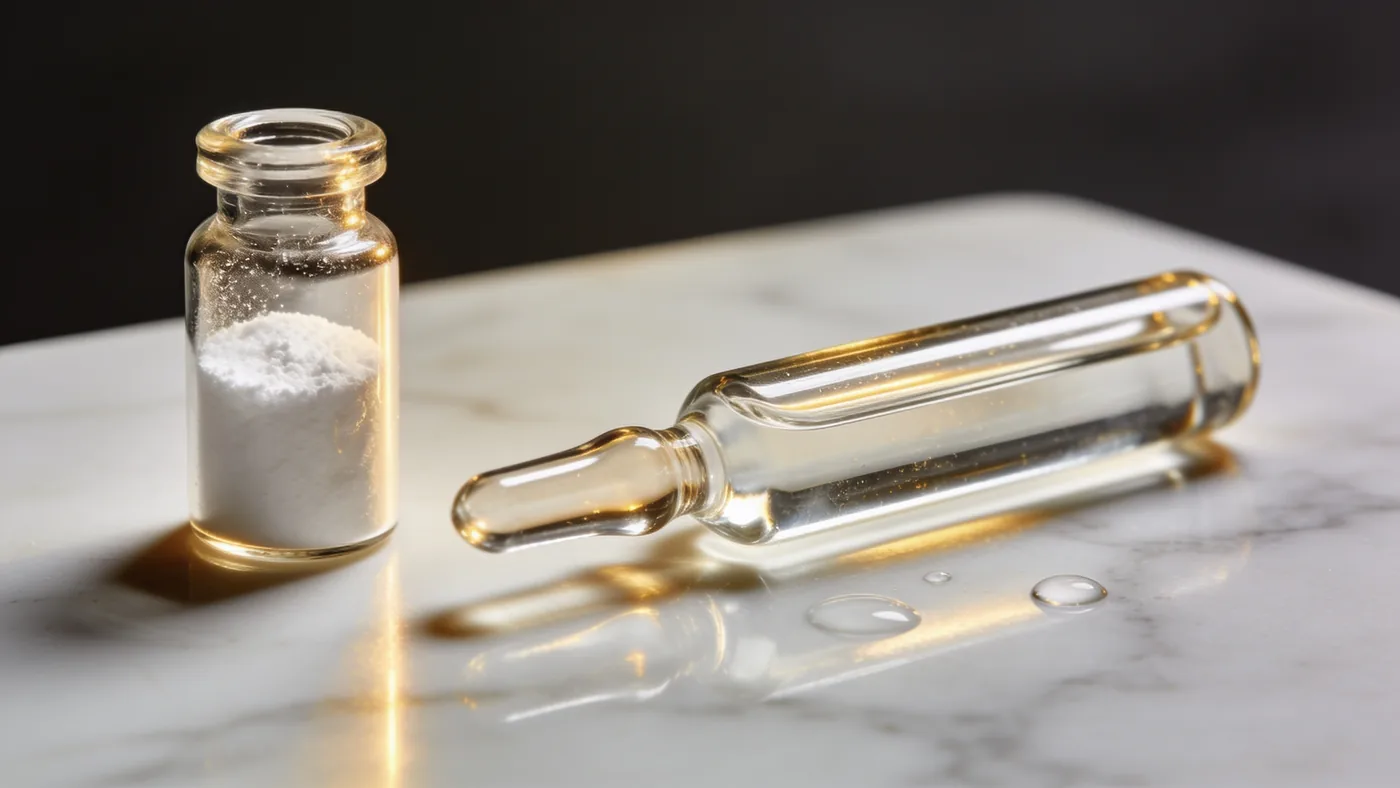
Sculptra is poly-L-lactic acid (PLLA). The particles trigger the body to lay down collagen around them over two to three months, then gradually break down, leaving the new collagen behind.
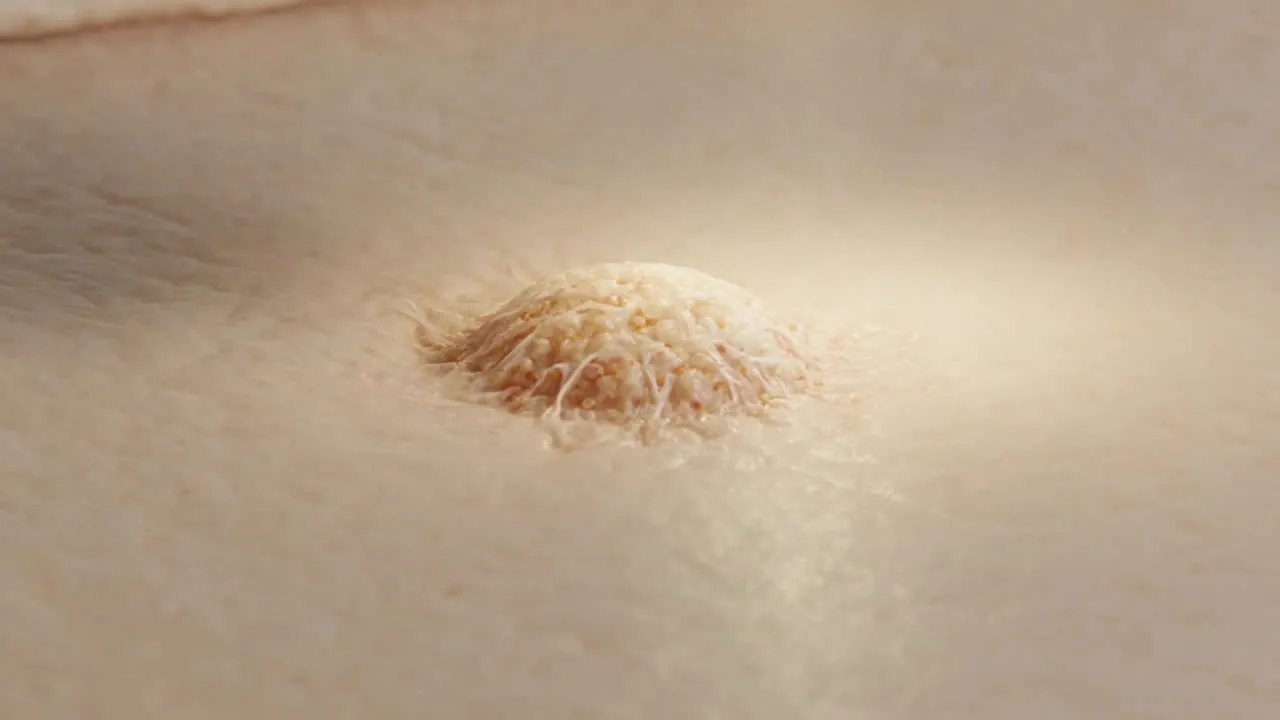
Sculptra nodules: clumped particles in fibrous tissue. Illustrative animation, not a patient. Dr Sin Yong assesses every case in person before recommending treatment.
Main guideSculptra — what it treats, who it suits, sessions, downtime and what decides the cost, by Dr Sin Yong.
Time Freeze Laser LCLR®
In brief
Sculptra nodules are firm lumps that can form after poly-L-lactic acid injections, early where product has gathered or later around the particles. Can Sculptra be dissolved? No: hyaluronidase does not act on poly-L-lactic acid. Dr Sin Yong maps the lump with ultrasound, treats inflammation medically first, and treats nodules with the Sculpting mode of Time Freeze Laser LCLR®.
I want to see the Time Freeze before and after
Singapore's advertising rules do not allow before-and-after photos on a clinic website, so they are not shown here. Tap the button and a WhatsApp message to the clinic opens with the request already written; send it and the team will reply with the Time Freeze Laser LCLR® before-and-after PDF.
WhatsApp +65 8023 7170 · replies within clinic hours · results vary and are assessed in person
Sculptra nodules are small firm lumps that can form after poly-L-lactic acid injections. Sculptra is poly-L-lactic acid, a collagen stimulator rather than a gel filler. Small lumps can appear after it: some are felt early, when product has gathered, and others appear months later as firm nodules around the particles. Unlike hyaluronic acid filler, Sculptra cannot be dissolved with hyaluronidase. Management depends on whether the lump is product, inflammation or overcorrection, which is why assessment, often with ultrasound, comes first.
Short answerSculptra (poly-L-lactic acid) cannot be dissolved with hyaluronidase, which acts only on hyaluronic acid. Sculptra nodules are small collections of the particles and the collagen that forms around them, and are more likely when the product is placed too close to the surface or unevenly. Each lump is examined and mapped with ultrasound first; some settle with time, and firm nodules are managed according to what the scan shows. Get assessed before you agree to surgery.
Sculptra lump types compared: early papule, late nodule, inflamed nodule or overall heaviness
Not every lump after Sculptra is the same problem. The types differ in when they appear, what they are made of and what can be done, and none can be dissolved with hyaluronidase. The table sets each type against its phase and the management route that follows assessment.
The aim of volume is support, not a new shape. Illustrative image, not a patient.
Table: Sculptra lump types compared: early papule, late nodule, inflamed nodule or overall heaviness
Lump type
When it tends to be noticed
What it is
Management route
What is not done
Early papule
Early phase after treatment, felt more than seen
Product gathered in one place, often from a concentrated suspension or a superficial plane
Time and the massage routine advised after treatment; review
Injecting more product nearby to even it out
Late nodule
Later, sometimes long after treatment
A firm collagen and inflammatory response around concentrated particles
Ultrasound to show depth and size; the Sculpting mode of Time Freeze Laser LCLR® for nodules large and small, or injection management chosen case by case; some small nodules are left alone
Hyaluronidase, which does not act on poly-L-lactic acid
Inflamed or infected nodule
Any phase; red, warm or tender
Infection or an inflammatory reaction
A doctor the same day (A&E if no doctor can see you today); medical management first, after examination; the lump is reassessed once settled
Medicines injected into the nodule before infection is excluded; massage
Migrated product
Later, away from the injected zone, often in mobile areas
Particles that have tracked along tissue planes
Ultrasound mapping, then Time Freeze Laser LCLR® in its Sculpting mode where it suits
Treating by feel without imaging
Overall heaviness
Settling and later phases, as collagen forms
Overcorrection rather than a discrete lump
Assessed separately; energy-based protocols such as Time Freeze Laser LCLR® and VF Lift – Vertical Facelift are built to target the excess
PLLA particles are suspended in water when Sculptra is reconstituted. If the suspension is too concentrated, if product is placed too superficially or in mobile areas such as around the mouth and eyes, or if it collects after injection, particles can gather. The body forms collagen and a mild inflammatory response around particles, which is how Sculptra works, but where particles are concentrated the response can become a palpable lump.
Early papules are often noticed within weeks and are usually small and non-tender. Later nodules can appear many months after treatment. Massage after treatment, often described as five minutes, five times a day, for five days, is advised to spread product evenly, although it does not remove every risk.
Illustrative image — not a patient.
How common are Sculptra lumps? What published studies found
Figures vary with technique and with the era of the study. In a three-year review from one practice, 221 patients answered a questionnaire and 41 reported papules or nodules. Of those, 14 were slightly palpable and not visible, 15 were palpable and slightly visible, and 12 were easily felt and clearly visible. All of the first two groups resolved without treatment. Of the 12 visible nodules, five resolved on their own and seven were treated, five with steroid injections and two with surgery. The clearly visible nodules occurred around the mouth, the eyes and the temples.
A 2025 meta-analysis of collagen-stimulating fillers put nodule development at about 5%. A review of adverse events distinguishes these lumps from true inflammatory granulomas, which it describes as very rare, at 0.01% to 0.1%, and which can appear months or years later. The distinction decides how a Sculptra lump is managed.
How lumps are assessed
Assessment separates three things: lumps of product, inflammatory nodules, and overcorrection, where the face looks heavier overall rather than lumpy. History matters: when it was injected, how much, and where. Ultrasound shows the depth and size of a lump and whether it is product or something else. Infection is uncommon but is considered if a lump is red, warm or tender, and such a lump needs a doctor the same day; if no doctor can see you today, A&E.
Illustration. Ultrasound shows depth and size before anything is planned.
Sculptra removal surgery: what it involves, and why to get assessed first
Some people with Sculptra lumps are told they must be cut out. But Sculptra is not a gel sitting in a pocket: its particles are walled off inside collagen and fibrous tissue the body has made around them, so cutting a nodule out, through the skin or inside the mouth, takes your own tissue with it. Before you agree, know what that means: a scar; a possible dent where tissue is removed; possible injury to the nerves that give the face feeling and movement; product left behind; and no way back.
In Dr Sin Yong's practice, almost every hard lump is treated without surgery. If yours is one of the few that needs surgery, you are told plainly, and why. Sculptra cannot be dissolved, but it can still be treated without an incision: Dr Sin Yong maps each lump with ultrasound and treats nodules and granulomas with the Sculpting mode of Time Freeze Laser LCLR®. A red, hot, painful, swollen or draining lump, or a fever: a doctor the same day; if no doctor can see you today, A&E. Such a lump is treated medically first.
Surgery has a place: a review of granulomas after collagen stimulators, Sculptra among them, reports that surgical removal often resolved symptoms. The point is the order: scan first, decide after. See Sculptra gone wrong for the evidence both ways, and filler removal surgery for what an operation involves.
Sculptra nodules, large and small: the Sculpting mode
Poly-L-lactic acid does not respond to hyaluronidase, so a Sculptra nodule cannot be dissolved. For nodules large and small, Dr Sin Yong uses the Sculpting mode of Time Freeze Laser LCLR®, without an incision, once ultrasound has helped show where the nodule sits and what it is likely to be. A nodule that is red, warm, tender or rapidly growing needs a doctor the same day (A&E if no doctor can see you today) and is treated medically first, and some small nodules are left alone.
How each person responds varies, and like any medical treatment the laser has its own risks and limits, which are explained at the assessment. Lumps after other collagen stimulators are covered in Radiesse lumps and Ellansé removal.
Tried other treatments and almost given up?
Many patients who come to see Dr Sin Yong about Sculptra lumps tell him they have tried almost everything else and had given up hope. Having tried other treatments does not mean nothing more can be done: what is done next depends on what the scan shows.
That history is useful. Knowing what was injected, when, and what has already been tried often explains why a problem has stayed: hyaluronidase acts only on hyaluronic acid and only where it reaches, some fillers are not hyaluronic acid at all, and swelling or fluid can look like filler. Ultrasound helps show which of these applies, and the plan starts from there. For material that cannot be dissolved, Dr Sin Yong uses the Sculpting mode of Time Freeze Laser LCLR® for nodules large and small, without an incision.
If you have been told nothing more can be done, it is still worth having the area scanned: ultrasound helps show what is there, and the plan is made from that. Bring any records of past treatments, product names and dates if you have them. More on this is in when filler dissolving has not worked.
How they are managed
Small early papules often soften with time and massage. Persistent nodules may be treated with injections that reduce inflammation or break up the collagen response, chosen case by case after assessment. Because PLLA does not dissolve with hyaluronidase, expectations need to be realistic, and some small nodules are best left alone.
The options described for Sculptra nodules, side by side:
Table: How they are managed
Option
What it does
Where it is used
Drawbacks
Time and massage
Lets early papules soften as swelling settles
Small, early papules
Does little for established nodules; massage cannot break up particles walled off in collagen
Steroid injection, sometimes with 5-fluorouracil
Calms the inflammatory reaction around the particles
Inflamed or growing nodules
Can thin the skin or leave a dent; may need repeating; the particles stay
Subcision
Releases and spreads a nodule under the skin with a needle
Some small, superficial nodules
Results vary; bruising
Surgical excision
Cuts the nodule out
A few large or recurrent nodules
A scar, a possible dent, possible nerve injury, product left behind
Sculpting mode of Time Freeze Laser LCLR®
Treats the nodule without an incision, after ultrasound mapping
Nodules large and small, and migrated product
Inflammation is treated medically first; suitability is decided in person
Where the problem is excess fullness rather than discrete lumps, energy-based protocols such as Time Freeze Laser LCLR® and VF Lift – Vertical Facelift are built to target Sculptra and Ellansé. Whether they suit your face is decided at assessment.
“Sculptra is not a gel you can simply take out. The first job is to work out what the lump actually is.”
Dr Sin YongOn lumps after collagen stimulators
What laser treatment for Sculptra problems involves, step by step
Dr Sin Yong's practice is built around lasers and energy-based devices. Filler problems are approached without incisions, so without the scars, dents, nerve risk and downtime that come with surgical removal. Here is what treatment with the Time Freeze Laser LCLR® in Sculpting mode involves for Sculptra problems.
Scan first. Before anything is done, the area is examined and scanned to see where each lump sits, how deep it is, and whether it is product, scar tissue or a reaction. The full history matters too: what was injected, how much, when, and whether other products were placed in the same area.
On the day. The skin is numbed for about 45 minutes, then the laser takes about 45 minutes. Nothing is cut and no cannula is passed under the skin to pull product out.
Hard lumps. Patients with lumps that feel as hard as rock are sometimes told that surgery is the only option. Cutting them out carries a risk of nerve injury, dents and scars. The laser route is discussed first, and in some patients hard lumps soften on the same day.
After treatment. Some change is often visible on the same day. The body then clears the broken-down material over about four to five weeks, which is when the area is reviewed. Usually some Sculptra remains after one session, so any further session is planned from the review rather than promised in advance.
Hair-bearing areas. The laser works on skin without hair, because hair absorbs the energy. The temples can be treated; just above the eyebrows is harder. Where you want to keep hair, such as the eyebrows or a beard, Dr Sin Yong uses VF Lift instead. It reduces volume more gently than the laser, but it can be used over hair.
Tightening as well as reducing. The same laser also tightens and lifts the skin, which matters when volume comes down, so the area does not look loose afterwards.
Mixed products. When Sculptra has been mixed with hyaluronic acid filler, collagen, polynucleotides or other stimulators in the same area, lumps tend to be firmer and more uneven. That is why the history and the scan come first.
Related on this site
Overcorrection, unevenness and other problems after Sculptra: see Sculptra gone wrong.
If Sculptra cannot be dissolved, what can be done about too much of it?
Excess poly-L-lactic acid is reduced rather than dissolved. The first step is an ultrasound scan to see where the material sits, how deep, and whether older filler is also present. Inflamed areas are treated medically. Firm nodules and overall heaviness are treated by Dr Sin Yong with the Sculpting mode of Time Freeze Laser LCLR®, which is built to target the excess, without an incision. Adding more product to disguise it is avoided.
Are Sculptra nodules dangerous?
Most are a nuisance rather than a danger: firm lumps that can be felt or seen, often where product was placed too superficially or gathered in one spot. A lump that is red, hot, painful or growing is different, because it may be inflammation or infection, and it needs a doctor the same day. Skin that turns pale, dusky or mottled after any injection, or a change in vision, is an emergency.
Can massage get rid of Sculptra nodules?
Massage instructions after treatment are given by the injecting doctor, and they aim to spread product evenly early on. An established nodule is a different matter: rubbing it does not dissolve poly-L-lactic acid and can inflame it. A lump that persists or grows is examined, usually with ultrasound, rather than massaged on faith, and treatment is planned from what the scan shows.
Non-hyaluronic-acid excess: the Sculpting mode of Time Freeze Laser LCLR®
Because this product does not dissolve, the question is how to take away the excess without an incision. Dr Sin Yong uses the Sculpting mode of the Time Freeze Laser LCLR® for exactly this: the overfilled or nodular area is mapped on ultrasound, the excess is reduced in the same session, and the skin over it is lifted and tightened rather than left slack. Patients travel from Dubai, South Africa, Hong Kong and elsewhere for this correction. Suitability and the number of sessions are decided at the assessment; results vary.
Time Freeze Laser LCLR®, in one line. Dr Sin Yong uses it to lift every zone of the face and neck, to take away excess filler in the same session, and to reduce loose fat in sagging areas while the skin tightens. The three uses, explained · Sculpting mode for excess filler.
Sculptra: risks and benefits, recovery, and when to call the doctor
Sculptra is poly-L-lactic acid, a collagen stimulator injected in diluted form, so its effect builds over months and it cannot be dissolved with hyaluronidase.
Sculptra risks and benefits
The benefit is a gradual, natural-looking return of volume from your own collagen. The risks are bruising and swelling, small papules, and visible or firm nodules, more likely where it is placed too superficially, too concentrated or in thin areas such as around the eyes and lips.
Recovery after Sculptra
Swelling settles over a few days and the early fullness fades, then volume returns gradually over the next two to three months. Massaging as instructed in the first days helps spread the product evenly.
When to call the doctor about Sculptra
See a doctor for a lump that is growing, hard, red, painful or visible weeks after treatment, or any sign of infection. Dr Sin Yong scans it with ultrasound and, where it is excess product, treats it with Time Freeze Laser LCLR®; he does not inject steroid into these lumps.
Illustration of a small firm nodule beneath the skin surface, as can form after Sculptra. Illustrative, not a patient.
Preventing Sculptra lumps
Dilution and depth
Proper dilution and placement in the correct layer reduce clumping.
Massage
Following the five-five-five massage advice, when it is given, helps spread the product.
Areas to avoid
Thin, mobile areas such as the lips and around the eyes are prone to nodules.
Sculptra, explained · Dr Sin Yong · reviewed 20 November 2026
Sculptra explained: what it is, how it works, how a course is given and why lumps form
Sculptra is poly-L-lactic acid (PLLA), a collagen stimulator made by Galderma. It does not fill like a gel; it prompts your own collagen to form over weeks to months, which is why it is given as a course, why results build slowly and why too much in one spot can form lumps.
4–6 weeksusual spacing between sessions in a course
Monthsfor results to build as collagen forms
Not HAso hyaluronidase cannot dissolve it
01
How it works
Sculptra comes as a powder that is mixed with sterile water before injection. The water is absorbed within days, so the early fullness fades; the PLLA particles then stimulate collagen around them over the following months.
02
How a course is given
Treatment is usually given as a series of sessions spaced about four to six weeks apart, with the number decided by how much volume has been lost. Massage after treatment is often advised to spread the product evenly; follow the instructions given on the day.
03
How long it lasts
Collagen formed after a full course has lasted around two years in the manufacturer's studies, longer than most hyaluronic acid fillers, although the face continues to age.
04
Why lumps happen
Lumps usually come from the product being too concentrated, placed too superficially, or gathered in an area of movement, such as around the eyes or lips. Small papules can appear early; larger nodules may appear months later, and because PLLA is not hyaluronic acid they cannot be dissolved.
05
If you have lumps now
Ultrasound helps show where a nodule sits and what it is likely to be. For nodules large and small, Dr Sin Yong uses the Sculpting mode of Time Freeze Laser LCLR®, without an incision, rather than injecting steroid into the lump.
Frequently Asked Questions
Sculptra lumps are small collections of the particles and the collagen that forms around them. They cannot be dissolved with hyaluronidase, which acts only on hyaluronic acid. Each lump is examined and mapped with ultrasound before a plan is made.
Usually not. Get assessed first. Sculptra cannot be dissolved, but it can still be treated without an incision: Dr Sin Yong maps each lump with ultrasound and treats nodules and granulomas with the Sculpting mode of Time Freeze Laser LCLR®. In his practice, almost every hard lump is treated without surgery; if yours is one of the few that needs it, you are told plainly, and why. Cutting Sculptra out leaves a scar, can cause a dent or nerve injury, can leave product behind, and cannot be undone.
They can, but it is not like taking out a gel. Sculptra particles are walled off inside collagen and fibrous tissue the body has made around them, so cutting a nodule out, through the skin or from inside the mouth, takes your own tissue with it. That is why a dent is a real risk, along with a scar, nerve injury and product left behind. Surgery has a place for a few lumps; an ultrasound scan comes first and helps decide which.
After ultrasound has helped show where a nodule sits and what it is likely to be, Dr Sin Yong uses the Sculpting mode of Time Freeze Laser LCLR® for Sculptra nodules large and small, without an incision. A red, warm, tender or rapidly growing nodule needs a doctor the same day (A&E if no doctor can see you today) and is treated medically first, small early papules often soften with time and massage, and some small nodules are left alone.
Usually not. Most lumps after Sculptra are papules or nodules where particles have gathered, with a collagen response around them. A granuloma is an uncommon inflammatory reaction to the particles that can appear months or years after treatment, tends to be firmer and can be red, tender or growing. Examination and ultrasound help tell them apart, and an inflamed lump needs a doctor the same day (A&E if no doctor can see you today) and is treated medically first.
No. Hyaluronidase breaks down hyaluronic acid, not poly-L-lactic acid. Lumps are managed according to what they are: Dr Sin Yong treats Sculptra nodules with the Sculpting mode of Time Freeze Laser LCLR®, without an incision.
Small early papules often soften over time with massage. Later nodules may persist and are assessed individually; Dr Sin Yong treats them with the Sculpting mode of Time Freeze Laser LCLR®, without an incision.
Some lumps are felt within weeks; nodules can appear many months after treatment.
A common instruction to massage the treated area for five minutes, five times a day, for five days, to help spread product evenly.
No. Overall heaviness is overcorrection, a different problem with different options, assessed separately.
Some doctors inject a diluted steroid, sometimes with 5-fluorouracil, into inflamed Sculptra nodules to calm the reaction and soften them. Steroid placed in the skin can thin it or leave a dent, and it does not remove the particles. Dr Sin Yong maps the nodule with ultrasound, treats inflammation medically first, and treats the nodule itself with the Sculpting mode of Time Freeze Laser LCLR®.
Often, yes. Treatment is directed at the specific area that the ultrasound shows, rather than the whole face. Hyaluronic acid filler can be dissolved in a targeted way; products that cannot be dissolved are managed area by area. What suits your case is decided at the assessment.
Yes. A small bump may be product, swelling or a nodule, and each is managed differently. Dr Sin Yong examines it himself, with ultrasound, before anything is done.
Numbing takes about 45 minutes and the Time Freeze Laser LCLR® about 45 minutes. Nothing is cut, and no cannula is passed under the skin.
At about four to five weeks, once the body has cleared the broken-down material. Some change is often visible on the same day, and usually some product remains after one session.
The Time Freeze Laser LCLR® works on skin without hair, because hair absorbs the energy. Over the eyebrows or a beard, Dr Sin Yong uses VF Lift, which is gentler but can be used over hair.
To see where the product sits, how deep it is, and which areas are worst, so that treatment is aimed where it is needed.
Sculptra (PLLA) is absorbed over about two years, and the collagen it prompts can last two years or more, which is also why lumps and overfilling from it are slow to settle on their own.
Commonly the temples, cheeks, jawline and lower face, placed deep in diluted form over several sessions. It is avoided in the lips and close around the eyes, where nodules are more likely.
Occasionally, nodules appear months or even years after treatment. A late lump should be examined and scanned, because its type decides the treatment.
It works differently: Sculptra stimulates your own collagen gradually over months, while hyaluronic acid filler gives immediate volume that can be dissolved. Sculptra suits broad, gradual volume restoration, and filler suits precise shaping.
Results take months, several sessions are usually needed, and it cannot be dissolved; lumps or nodules can form if it is diluted, placed or massaged incorrectly.
They treat different problems: Sculptra restores lost volume and skin thickness, while anti-wrinkle injections soften lines from muscle movement.
The new collagen gradually reduces over about two years or more, so the face slowly returns towards how it would have aged. Lumps do not usually resolve on their own and may need treatment.
Sculptra is poly-L-lactic acid (PLLA), a biocompatible material supplied as a powder that is mixed with sterile water before injection. It works by stimulating your own collagen rather than by filling with a gel.
Most courses involve several sessions spaced about four to six weeks apart; the number depends on how much volume has been lost. Results build as collagen forms, so the final effect is judged a few months after the last session.
Wang H, Wu D, Lo C, et al. Foreign Body Granulomas Reaction Related to Collagen Stimulatory Cosmetic Fillers: A Systematic Review. Journal of Cosmetic Dermatology, 2025. pubmed.ncbi.nlm.nih.gov
Wollina U, Goldman A. Spontaneous and induced degradation of dermal fillers: A review. Journal of Cutaneous and Aesthetic Surgery, 2024. pubmed.ncbi.nlm.nih.gov
Lowe NJ, Maxwell CA, Lowe P, Shah A, Patnaik R. Injectable poly-l-lactic acid: 3 years of aesthetic experience. Dermatologic Surgery, 2009. doi.org
Smith L, Rahmati M, Pizzol D, López-Sánchez GF, Boyer L, Fond G, et al. Biostimulants in Aesthetic Medicine: A Systematic Review and Meta-analysis of Efficacy, Safety, and Patient Satisfaction. Aesthetic Surgery Journal, 2025. doi.org
Vleggaar D, Fitzgerald R, Lorenc ZP. Understanding, avoiding, and treating potential adverse events following the use of injectable poly-L-lactic acid for facial and nonfacial volumization. Journal of Drugs in Dermatology, 2014. pubmed.ncbi.nlm.nih.gov
Haddad A, Avelar L, Fabi SG, et al. Injectable Poly-L-Lactic Acid for Body Aesthetic Treatments: An International Consensus on Evidence Assessment and Practical Recommendations. Aesthetic Plast Surg. 2025;49(5):1507-1517. PubMed 39592491 · DOI
Trinh LN, McGuigan KC, Gupta A. Delayed Complications following Dermal Filler for Tear Trough Augmentation: A Systematic Review. Facial Plast Surg. 2022;38(3):250-259. PubMed 34666405 · DOI
Ferreira ACM, Silva LR, Espasandin I, et al. Efficacy, Durability, and Safety of Collagen Biostimulators Based on Poly-L-Lactic Acid (PLLA) and Calcium Hydroxyapatite (CaHA) in the Face: A Systematic Review. Aesthetic Plast Surg. 2026;50(3):1291-1300. PubMed 41184662 · DOI