Filler done overseas: assessment and correction in Singapore
Medically reviewed by Dr Sin Yong · Last reviewed · 3 min read
When filler was done in another country, the first problem is often not knowing what is there. The product name, the depth and the date decide what can be done, and they are frequently missing from the records people bring home. Assessment in Singapore starts with that history, then examination and, where it helps, ultrasound to see where product sits. Hyaluronic acid can be dissolved; other fillers cannot, and are managed differently. Correction is often staged over more than one visit.
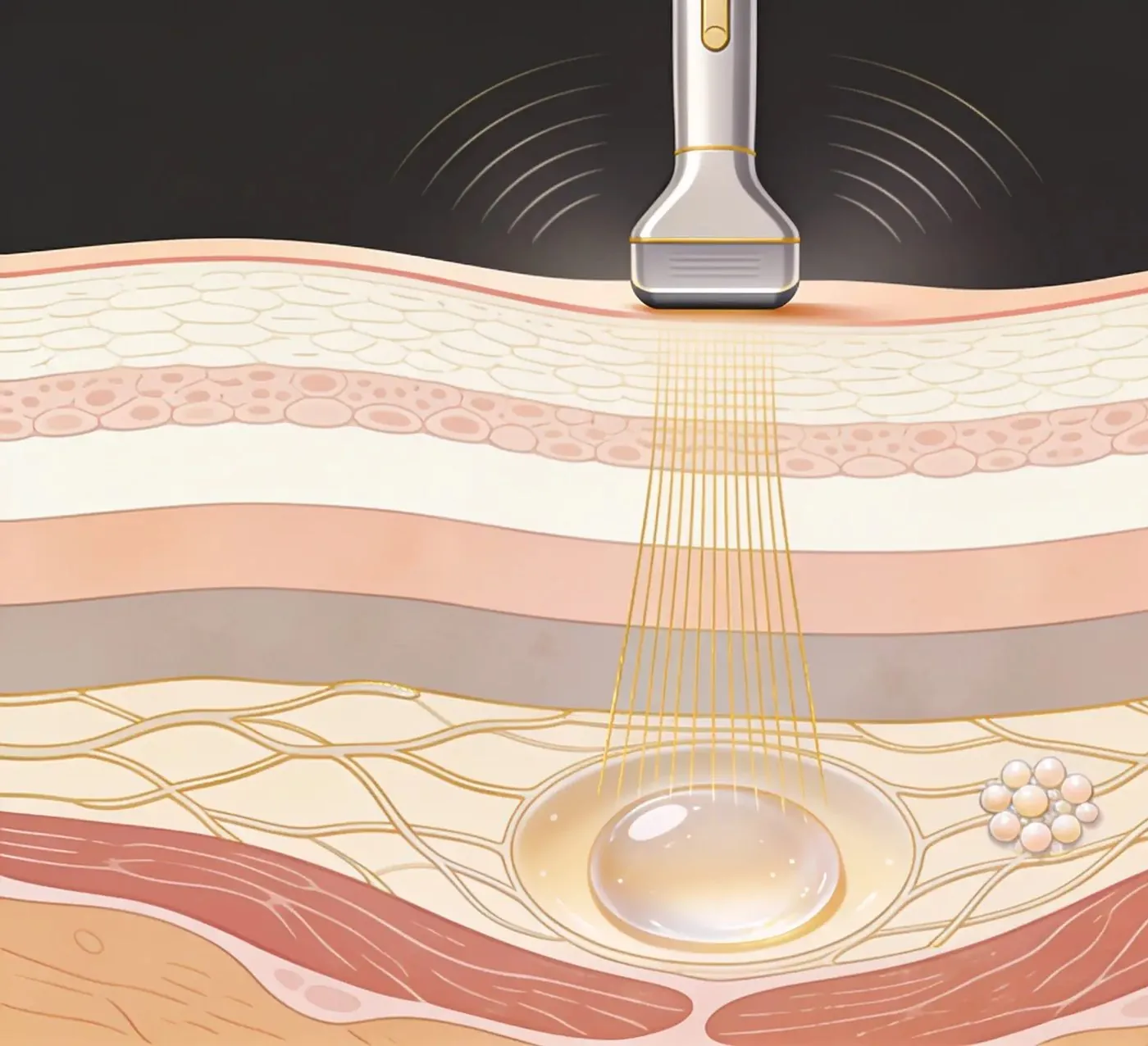
Illustration. Heaviness after filler can come from product, fluid or the face’s own tissue.
Key facts
First step
History: product, date, areas and number of sessions, from any records you have
Examination
In person, with ultrasound mapping where it changes the plan
Hyaluronic acid
Can be dissolved with hyaluronidase, often over more than one session
Other fillers
PLLA, CaHA, PCL and permanent fillers are not dissolved; management differs
Trips
First visit: assessment and first stage; review after about two weeks
Without records
Assessment still goes ahead; ultrasound helps identify product
Why filler from another country is assessed differently
Across Asia and beyond, people have filler on holiday, at a friend’s recommendation or as part of a package, and come home without the product name. That matters because fillers behave differently. Hyaluronic acid gels can be broken down with an enzyme. Collagen stimulators such as poly-L-lactic acid, calcium hydroxylapatite and polycaprolactone are designed to stay and work for months, and cannot be dissolved. Some products used in some markets are not registered in Singapore at all, and a few are permanent.
None of this is a judgement on where you were treated. It simply means the first appointment is spent finding out what is there before deciding what, if anything, should be done. The general approach is set out on the filler correction page; this page covers what is different when the treatment was abroad.
What to bring, and what to ask your previous clinic for
Ask the clinic that treated you for a copy of your record: the product name and batch where available, the volume used, the areas and the dates. A message or photograph of the box label is often enough. Bring any aftercare sheets, receipts and photographs from before treatment, which help separate what the filler changed from how your face looked before.
If you cannot get records, the assessment still proceeds. Ultrasound can show where product sits and how it looks, which narrows down what it is likely to be, although it cannot always name a brand. Mention any lumps that appeared weeks or months later, any infection or antibiotics after treatment, and any treatment to dissolve filler you have already had.
Illustration. Ultrasound shows depth and spread of product before any correction is planned.
What can be done, by type of filler
Correction options by filler type
Filler type
Can it be dissolved?
Usual approach
Hyaluronic acid
Yes, with hyaluronidase
Targeted dissolving, ultrasound-guided where useful; review after about two weeks
Poly-L-lactic acid (PLLA)
No
Time, massage in early cases, and selected treatments for nodules after assessment
Calcium hydroxylapatite (CaHA)
No
Assessment of whether it is product or tissue; options discussed case by case
Polycaprolactone (PCL)
No
As for other collagen stimulators; staged and conservative
Unknown or permanent product
Often not
Mapping first; some problems are best left alone, and that is said plainly
Heaviness in the midface after filler is not always filler. Fluid that collects around product, and the face’s own ageing tissue, can look the same, and dissolving will not help those. That is why the assessment separates the three before anything is injected. Energy-based treatments such as Time Freeze Laser LCLR® and VF Lift – Vertical Facelift are built to target Sculptra and Ellansé and take away the excess; whether they suit you is decided at assessment.
Planning the trips
A first visit usually covers assessment and, where it is agreed, a first stage of correction. Hyaluronidase acts within hours to a day or two, but swelling takes time to settle, so the face is reviewed after about two weeks before deciding whether more is needed. For many visitors that review is a second short trip; for some it can be done by photographs first. Nothing new is added until the face has settled.
If you notice skin turning white or mottled, worsening pain or any change in vision after any filler, wherever it was done, that is an emergency and needs care immediately. The warning signs page sets out what to look for.
“Find out what is there before deciding what to take away. Sometimes the right answer is to leave it.”
Dr Sin YongOn correcting filler done elsewhere
Frequently Asked Questions
Yes. The assessment goes ahead without records. Ultrasound shows where product sits and how it looks, which helps narrow down what it is, although it cannot always identify a brand.
No. Hyaluronic acid can be dissolved with hyaluronidase. Collagen stimulators such as PLLA, CaHA and PCL, and permanent fillers, cannot, and are managed differently.
Often two: assessment and a first stage, then a review after about two weeks. Some cases need more, and some are best left alone.
No. Fluid around product and the face’s own tissue can look similar. The cause is separated at assessment before any dissolving is planned.
Photos help plan the visit and decide whether it is likely to be worthwhile. They cannot replace examination, so plans and quotes follow an in-person assessment.
References
King M, Walker L, Convery C, Davies E. Management of a vascular occlusion associated with cosmetic injections. J Clin Aesthet Dermatol. 2020;13(1):E53-E58. source
Health Sciences Authority: medical device registration overview. source