Dermal fillers are injectable gels, registered as medical devices, placed under the skin to restore volume or structure in the cheeks, chin, temples, lips, nose and tear troughs. Hyaluronic acid can be dissolved; calcium hydroxylapatite and polycaprolactone cannot. Dr Sin Yong lifts first where tissue has dropped, scans earlier filler with ultrasound, and uses filler sparingly.
Much of Dr Sin Yong’s work is filler placed elsewhere that has become overfilled, lumpy or has moved. He assesses it with ultrasound and dissolves hyaluronic acid filler where it is the cause; after dissolving he does not usually recommend refilling, and the VF Lift is the usual route to restore shape without more filler. See filler dissolving in Singapore.
Dermal fillers in Singapore: what they treat, and what they do not
Treats
Volume loss in the cheeks, temples and chin
Nose bridge and chin definition
Lips, kept in proportion
Tear-trough hollows, on the bone
Jawline definition in selected faces
Not the right tool for
A face that has dropped (lifted first, filler later if at all)
Filler into a true eye bag
Repeat filler over earlier filler that has migrated
Large volumes to “fill” sagging
What Dr Sin Yong checks first
Filler is a tool, like a suture: placement, depth, amount and sequence decide the result, not the brand. I map earlier filler on ultrasound before adding anything, and I decline filler when the face has dropped, because weight added to a dropped face makes it heavier. Most of the filler problems I correct were caused by amount and placement, not the product.
Dermal fillers in Singapore are injectable gels registered with the Health Sciences Authority and placed by a doctor. They fall into four materials. Hyaluronic acid occupies space and can be dissolved. Calcium hydroxylapatite and polycaprolactone give early volume and then support collagen, but cannot be dissolved. Poly-L-lactic acid works through collagen alone. A 2022 review of PLLA, CaHA, PCL and hyaluronic acid described this collagen response as a controlled foreign-body reaction, and noted that little research compares how much new collagen each material forms. A filler adds volume; it does not lift or tighten. Material, area and tissue plane are chosen after examination.
Also called: hyaluronic acid filler, 玻尿酸填充, ヒアルロン酸注入
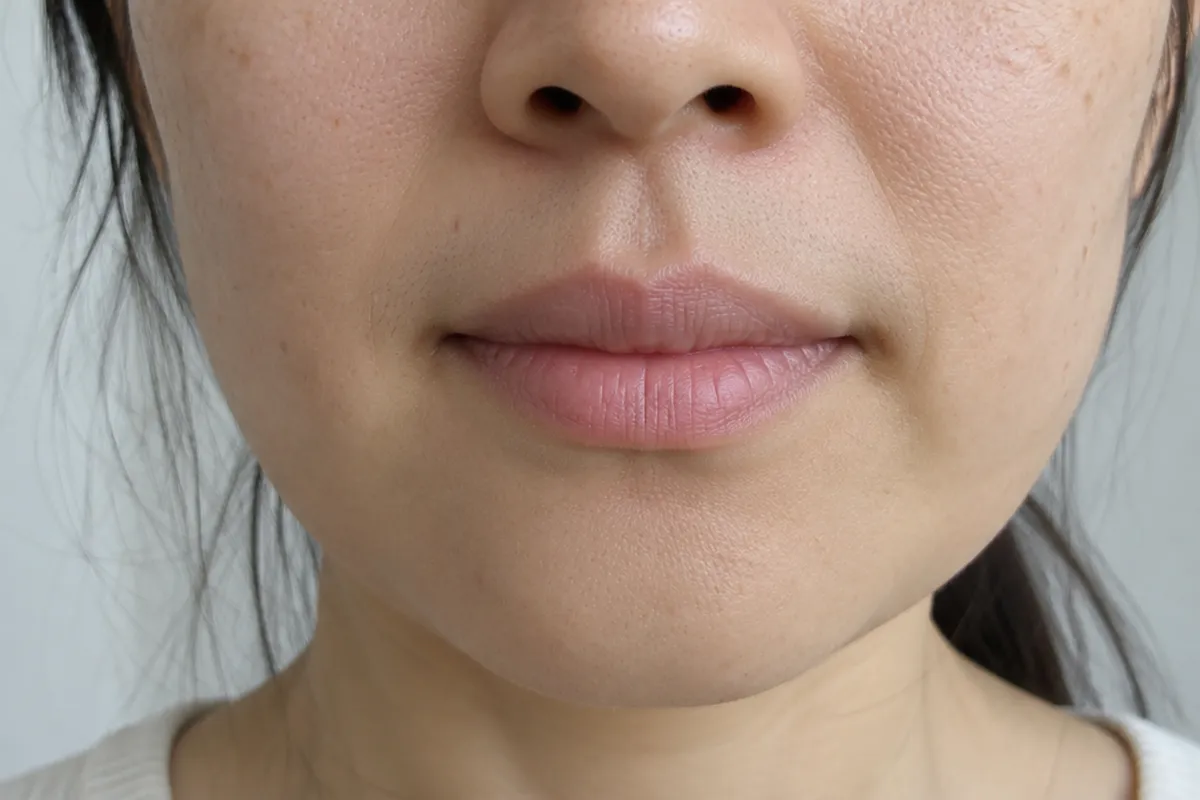
Illustrative image. The material, the area and the tissue plane are decided at examination, not by brand.
Where HA fillers and biostimulators are commonly placed, from superficial dermis to bone, with the arterial anatomy that drives the vascular caution.
What are the four types of dermal filler?
Dermal fillers in Singapore come in four materials, and the material decides what can be undone. Hyaluronic acid (HA) is a sugar already present in the skin; in a filler it is cross-linked into a gel that holds its shape. Calcium hydroxylapatite (CaHA, as in Radiesse) and polycaprolactone (PCL, as in Ellansé) are microspheres suspended in a carrier gel. Poly-L-lactic acid (PLLA, as in Sculptra) is a biodegradable polymer that is a biostimulator rather than a filler in the strict sense.
With hyaluronic acid the volume is the product itself, so what you see on the day is largely what is there. With CaHA and PCL the carrier gives early volume and is absorbed, and the microspheres remain for a time as a scaffold on which the body lays down its own collagen. With PLLA there is no lasting volume from the product on the day; the change comes from the collagen it prompts.
Hyaluronidase dissolves hyaluronic acid and nothing else. That single fact shapes where each material is used, how much is placed, and how cautiously a first treatment is planned.
Illustrative image — not a patient.
What can a dermal filler not do?
A dermal filler cannot lift tissue, tighten loose skin or act on a muscle. It is not a skin booster, which acts within the skin on hydration and quality without projecting or contouring, and it is not botulinum toxin, which relaxes muscle. Which of the three fits depends on which tissue is responsible for what you see. The three are compared side by side under botulinum toxin vs dermal fillers and VF Lift vs fillers.
Loss of cheek support changes the folds below it. Illustrative image, not a patient.
The commonest mistake is to ask a filler to do the work of a lift. Facial ageing is volume loss, laxity and declining skin quality arriving together, and a filler acts only on the first. Given to a face whose main change is descent, it produces a heavier lower face with the same sag. Filler is declined where the expectation is something it cannot do, such as lifting a jowl, tightening skin or making a nose smaller.
Because a filler restores structure, the first question is always what is missing: structure before volume, bone before soft tissue, and a plan for the whole face rather than a count of syringes. Over-filling is avoided by asking what is missing before asking what to add, and by checking what earlier treatment is already present.
“A filler adds volume. It does not lift, and it does not tighten. Asking it to do either is how faces end up over-filled.”
Dr Sin YongOn what a filler cannot do
Face fillers in Singapore: which material goes in which area?
Which material goes where depends on what the area has to do: project against bone, soften a hollow, or move with expression. The cheek, chin and jawline need support on bone, so a firmer hyaluronic acid or, where reversibility is not the priority, CaHA or PCL is placed deep. The cheek filler and chin filler pages set out how each area is planned.
The aim of volume is support, not a new shape. Illustrative image, not a patient.
The nose is a special case. Here the nose bridge is usually treated with CaHA or PCL for the support they give, with hyaluronic acid where a dissolvable option is preferred. Filler can straighten or raise a bridge but cannot make a nose smaller. The nose filler page covers the limits and the vascular risk.
Lips and tear troughs take soft hyaluronic acid in small amounts. These areas move constantly and sit close to the surface, so they benefit from a material that can be dissolved. Diffuse volume loss across the mid-face and temples is often better suited to a collagen biostimulator, such as Sculptra or Ellansé, than to filler placed point by point. The Radiesse, Ellansé and Sculptra pages describe each one. Each area has its own guide: under-eye filler, lip fillers, temple filler, nasolabial fold filler, forehead filler and hand filler.
Dermal filler materials compared
Material
What it is
How it persists in tissue
Can it be dissolved?
Typical areas
Who should avoid it
Hyaluronic acid
Cross-linked gel that occupies space
Broken down gradually by the body; can remain after the visible effect fades
Carrier absorbed first; microspheres break down slowly while collagen forms
No
Chin, jawline, cheek, nose bridge, hands
Not for lips, tear troughs or glabella; allergy; bleeding disorder
Polycaprolactone (Ellansé)
Microspheres in a carrier gel
Carrier absorbed first; microspheres are metabolised slowly
No
Chin, jawline, temples, backs of hands
Autoimmune disease; severe allergy; not for lips or tear troughs
Poly-L-lactic acid (Sculptra)
Biodegradable polymer that prompts collagen
Works through the collagen it stimulates, not the product itself
No
Diffuse volume loss in mid-face, temples, lower face
Not for lips, tear troughs or fine lines; keloid tendency
Who suits fillers, and who should wait?
Filler suits a change that is truly about volume, in a face whose skin and ligaments still give support. Examples are deflated cheeks or temples, a hollow tear trough, or shapes that were never age-related, such as a short chin, a low nasal bridge or thin lips. Someone new to injectables is often better starting with a reversible hyaluronic acid filler than with a material that cannot be dissolved. Where the main change is heavy, excess skin, filler is not the first answer. Laxity is assessed for lifting, and marked excess is referred to a plastic surgery specialist.
Proportion is judged with the face at rest and in movement. Illustrative image, not a patient.
Treatment is deferred in pregnancy and breastfeeding. It is also deferred where there is an active infection, a cold sore or inflamed skin near the site. Some things are discussed first: a known allergy to a component or to lidocaine, a bleeding tendency or blood-thinning medicine, autoimmune conditions and a keloid tendency. Earlier non-resorbable fillers, which the body does not break down, such as silicone, must be declared. Layering new product over them raises the risk of nodules. Where the history is unclear, previous filler of any type is scanned with ultrasound.
How safe are dermal fillers? What the published evidence shows
The most serious filler complication is loss of vision, caused when filler enters or blocks a blood vessel. A review of the world literature found 48 newly reported cases between January 2015 and September 2018. The highest-risk sites were the nose (56.3% of cases), the area between the eyebrows (27.1%), the forehead (18.8%) and the nose-to-mouth fold (14.6%). Hyaluronic acid filler was involved in 81.3% of cases, and vision recovered completely in 10 of the 48. The authors describe the complication as rare, and stress that anyone injecting filler needs to know the anatomy and how to manage it.
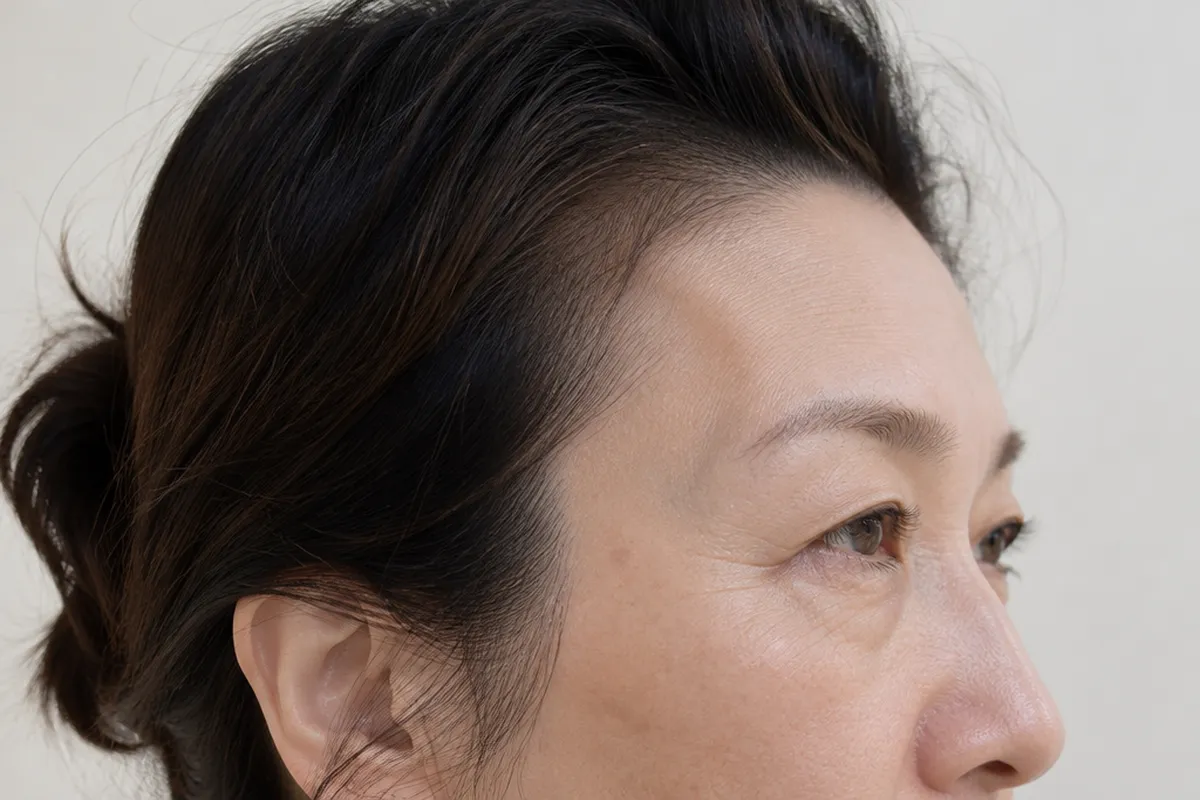
Hollowing at the temple is part of how the upper face ages. Illustrative image, not a patient.
Lumps that appear weeks or months later are more common. In one centre's review of 1,029 patients, delayed nodules developed in 1.0% of those given one newer type of hyaluronic acid gel, and in none given two related gels. All were treated with a steroid injection and hyaluronidase. These figures are why the material, the area and the depth are decided before any dermal filler is placed.
What are the risks, and when should you call?
The serious risk of any filler is vascular occlusion, in which product enters or presses on an artery and the tissue it supplies loses its blood flow. Warning signs are skin that blanches white or turns dusky, purple or net-like, and pain out of proportion to the injection. These need urgent assessment by the doctor who injected you, or at A&E, now. A change in vision or eye pain after filler: call 995 now, rather than travelling to a clinic first.
The aim of volume is support, not a new shape. Illustrative image, not a patient.
Occlusion is rare, and the highest-risk zones are the nose, the glabella, the forehead and the tear trough. For hyaluronic acid it is treated with urgent, high-dose hyaluronidase, which is kept in the room wherever hyaluronic acid is injected. CaHA, PCL and PLLA have no dissolving option, which is why they are placed conservatively and why the nose, where Dr Sin Yong usually works with CaHA or PCL, is planned with particular care.
Other risks are bruising and swelling, lumps, product that migrates, a bluish tint where hyaluronic acid sits too close to the surface, and inflammatory nodules that can appear months or years later. Filler that looks heavy, has moved or feels lumpy is assessed under filler correction, and the signs that need urgent attention are set out under complication care.
What happens, step by step?
The first visit is an assessment, not a treatment. Dr Sin Yong takes the history, including any earlier filler and where it was given, examines the whole face at rest and in movement, and may photograph it for your medical record. Ultrasound can show where existing product sits. You then receive a written plan naming the areas, the material, the plane and the fee, and you can take it away; you are not expected to decide on the day.
A cool pack is commonly used for swelling in the first day. Illustrative image, not a patient.
On treatment day the skin is cleaned and a topical anaesthetic is applied, and most hyaluronic acid fillers also contain lidocaine. Product is placed with a needle or a blunt cannula, chosen area by area, in small amounts that are checked against the other side before more is added. Written aftercare explains what is expected and which signs to report, and the result is reviewed once swelling has settled.
Swelling, tenderness and some bruising at the entry points are expected, and lips and tear troughs swell more than bony areas. Temporary asymmetry while swelling settles at different rates is common and is not a reason to add more product. Recovery is covered day by day on the aftercare page and under dermal filler downtime.
Questions to ask before dermal fillers in Singapore
These questions help you understand the plan before any filler is placed.
Who examines my face, and is the doctor who assesses me the one who injects?
Which filler would be used, can it be dissolved, and why that material for this area?
What can filler not do for my face?
What are the risks in this area, and is hyaluronidase kept on hand?
What aftercare is advised, and how do I reach the doctor urgently if I need to?
Which alternatives, including assessing earlier filler first, were considered?
How much do dermal fillers cost in Singapore, and what determines the fee?
The fee depends on the areas treated and how many there are, and on what the examination finds in each. It also depends on the material chosen and the quantity the anatomy calls for. Other factors are whether filler is used alone or with botulinum toxin or a biostimulator, and whether the plan is staged across more than one visit. Correcting earlier filler is costed separately from new treatment.
Treatment
Price
Dermal filler, per syringe
From $1,100
Radiesse
From $1,200
Prices are nett. Each figure is a starting price; the fee for your plan depends on the area treated and what the assessment finds, and is confirmed in writing before any treatment.
Dermal filler at this practice is from $1,100 per syringe; the fee for your plan is confirmed in writing after assessment. A written, itemised quote is given after the consultation, and how fees are quoted sets out what it contains. The factors are set out one by one under filler price in Singapore.
Watch
In his words
“A real part of my week is dissolving filler someone else put in.”Dr Sin Yong
If you're looking in the mirror now and regretting it, you have more options than you think, and panic is the worst one. Going back to the same person who over-filled you and asking for more to balance it is the most common mistake. So is demanding that everything be dissolved at once. Get a second opinion from someone who isn't invested in the original plan. That's not disloyal; that's the sensible choice.
Transcript of Dr Sin Yong's video, lightly edited for reading.
Dermal fillers: how many sessions, how much downtime and how long does it last?
Dermal fillers in Singapore at a glance
How many sessions
One session, with a review at 2–4 weeks; top-ups only where the plan calls for them.
Downtime
Swelling for 1–3 days; bruising for up to a week; lips swell most.
How long it lasts
Hyaluronic acid fillers last 6–18 months depending on the area and product; cheeks and chin longest, lips shortest.
Figures are typical ranges from Dr Sin Yong's practice and the published literature; your plan, including the number of sessions, is set after the assessment and may differ. Fees are given in writing after the assessment: see how we quote.
Dermal fillers by area, types and downtime
Fillers by treatment area
Chin: projection and a sharper profile. Nose: bridge height and smoothing a bump. Lips: shape and hydration. Cheeks and temples: lost volume. Nasolabial folds and marionette lines: softening, often after lifting. Under-eye hollows: carefully, with hyaluronic acid only. Each area uses a different product and depth.
Types of fillers
Hyaluronic acid fillers are the most used and can be dissolved. Calcium hydroxylapatite (CaHA) and poly-L-lactic acid (PLLA) stimulate collagen and last longer but cannot be dissolved in the same way. Non-dissolvable fillers such as liquid silicone are not used, because their complications are hard to treat.
Downtime, work and exercise
Most people return to work the next day. Swelling and bruising usually settle in 3 to 7 days, lips and under-eyes take longer. Avoid strenuous exercise, saunas and facials for 24 to 48 hours.
After any filler injection, severe or increasing pain, skin that turns white, blotchy or dusky, or any change in vision is an emergency: contact the treating doctor at once or go to an emergency department, the same day.
Lumps, redness, warmth or swelling that appear weeks or months after filler should also be reviewed, since delayed reactions and infection are treated differently from simple swelling.
Frequently Asked Questions
They treat different things: fillers restore volume and shape; anti-wrinkle injections relax muscles that cause expression lines. Many faces need a combination.
For lost volume or shape in the right place, filler gives a visible change on the day. It lasts months to a couple of years and needs maintenance.
One syringe is enough for subtle lip enhancement or one area of the chin, but usually not for full cheeks. The face is assessed to plan the amount.
Most hyaluronic acid fillers come in 1 ml syringes, and at this practice they start from $1,100 per syringe. How many syringes you need depends on the area and the result planned, so the total is confirmed at the assessment.
There is no fixed age. Younger adults usually choose filler for shape, such as the chin or lips, and people from their 30s onwards for lost volume. Filler is only given to adults, and the face is assessed first so the result looks natural.
It is done in a clinic visit, the change is seen on the day, the amount can be adjusted in stages, and hyaluronic acid filler can be dissolved if needed.
Seek urgent review for increasing pain, pale or mottled skin, or any change in vision, as these can indicate a blocked blood vessel. Also return for lumps, persistent swelling or signs of infection.
Hyaluronic acid fillers can be dissolved with hyaluronidase, an enzyme injected into the area. Fillers made of calcium hydroxylapatite or polycaprolactone cannot be dissolved in the same way, so placement and amount matter more. Which material is used is discussed before treatment.
As hyaluronic acid filler is broken down by the body, the treated area gradually returns towards how it looked before. It does not leave the skin stretched when a suitable amount was placed. How long this takes depends on the product, the area and the individual.
Avoid pressing or massaging the area unless told to, and avoid strenuous exercise, alcohol, saunas and facials for a day or two. Mild swelling and bruising are common and settle within days. Severe pain, blanching or a change in vision needs urgent review.
Face fillers in Singapore are most often placed in the cheeks, chin, nose, lips, temples and tear troughs. Each area suits a different filler firmness and depth. Dr Sin Yong assesses facial support and lifts first where needed, then fills only what remains. Dermal filler is from $1,100 per syringe. Prices are nett, and the fee for your plan is confirmed in writing after assessment.
Only hyaluronic acid filler can be dissolved, with an enzyme called hyaluronidase. Radiesse, Ellansé and Sculptra do not respond to it and are managed case by case if a problem arises. This is why hyaluronic acid is the usual first choice, and the only choice in the tear trough. Dr Sin Yong treats lumps from Radiesse, Ellansé and Sculptra with the Sculpting mode of Time Freeze Laser LCLR®, without an incision.
The fee depends on the areas treated, what the examination finds, the material and quantity, whether filler is combined with botulinum toxin or a biostimulator, and whether the plan is staged. Dermal filler at this practice is from $1,100 per syringe; the fee for your plan is confirmed in writing after assessment.
They can be worth it where volume is genuinely missing, such as a deflated cheek, a short chin or a hollow temple, in a face with supportive skin. They are not worth it as a substitute for a lift or for tightening loose skin. The examination decides which problem you have.
No duration can be promised. It depends on the material, how it is cross-linked, where it is placed and your own metabolism. Hyaluronic acid can remain in tissue after its visible effect has faded, so existing product is assessed, with ultrasound if needed, before anything is added.
Most people describe pressure, tightness and brief stinging rather than sharp pain. Many hyaluronic acid fillers contain lidocaine, a local anaesthetic, and numbing cream or a cannula can reduce discomfort further. The lips are usually the most sensitive area. Tell Dr Sin Yong at any point and the pace is adjusted.
Yes, often. Filler restores volume or structure; anti-wrinkle injections relax movement; skin boosters and lasers treat skin quality; energy-based lifting treats laxity. Dr Sin Yong prefers energy-based treatment where it can do the job: FSX Laser for the skin, and the VF Lift for lifting and hollow areas. It adds no product. Filler is reserved for what only volume can correct, and the order is decided at consultation.
An overfilled look comes from too much product, the wrong layer, or treating a problem that filler does not fix. Dr Sin Yong assesses the whole face, uses conservative amounts, reviews before adding more, and says so when energy-based treatment, or no treatment, suits better.
No. As hyaluronic acid breaks down, the area returns towards how it would look untreated. Ageing continues in the meantime, so it may not look exactly as it did before, but filler does not make the area worse.
On the day, avoid rubbing or massaging the area, make-up over the injection points, strenuous exercise, saunas, steam and alcohol. In the following days, avoid facial massage, firm pressure on the area and heat treatments until Dr Sin Yong advises otherwise. Pain that is getting worse, or skin that turns pale, dusky or mottled, needs same-day review; a change in vision is an emergency: call 995.
No. Treatment for appearance is not claimable under MediSave or MediShield Life, and most private insurance plans exclude it. If you have a question about your own policy, check with your insurer before booking.
Most dermal fillers are hyaluronic acid, which can be dissolved, with calcium hydroxylapatite and polycaprolactone used where firmer support is wanted and dissolving is not expected to be needed. Dr Sin Yong explains which product suits which area and keeps reversible filler as the default.
Common areas are the chin, nose, lips, cheeks, temples, nasolabial folds, marionette lines and under-eye hollows. Each area needs a filler with the right firmness and depth.
Hyaluronic acid fillers can be dissolved with hyaluronidase. Non-HA fillers such as PCL or calcium hydroxylapatite cannot, so they are chosen with more care.
Adults with volume loss, hollows or folds who want a non-surgical change and have no active skin infection or pregnancy.
Immediate results, little downtime, adjustability, and they can be dissolved if needed.
A firmer filler that holds shape, placed deep on the bone.
A softer filler that moves naturally.
References
Dermal Fillers (Soft Tissue Fillers). U.S. Food and Drug Administration. source
Medical devices: regulatory overview. Health Sciences Authority, Singapore. source
Update on Avoiding and Treating Blindness From Fillers: A Recent Review of the World Literature. Aesthetic Surgery Journal (Beleznay K, Carruthers JDA, Humphrey S et al.), 2019. source
New High Dose Pulsed Hyaluronidase Protocol for Hyaluronic Acid Filler Vascular Adverse Events. Aesthetic Surgery Journal (DeLorenzi C), 2017. source
Evaluation of the biostimulatory effects and the level of neocollagenesis of dermal fillers: a review. International Journal of Dermatology, 2022. pubmed.ncbi.nlm.nih.gov
Facial Overfilled Syndrome: A Narrative Clinical Review. Clinical, Cosmetic and Investigational Dermatology, 2026. pubmed.ncbi.nlm.nih.gov
Global Aesthetics Consensus: Avoidance and Management of Complications from Hyaluronic Acid Fillers. Evidence- and Opinion-Based Review and Consensus Recommendations. Plastic and Reconstructive Surgery, 2016. pubmed.ncbi.nlm.nih.gov
Dermal fillers in aesthetics: an overview of adverse events and treatment approaches. Clinical, Cosmetic and Investigational Dermatology, 2013. pubmed.ncbi.nlm.nih.gov
Sadeghpour M, Quatrano NA, Bonati LM, Arndt KA, Dover JS, Kaminer MS. Delayed-Onset Nodules to Differentially Crosslinked Hyaluronic Acids: Comparative Incidence and Risk Assessment. Dermatologic Surgery, 2019. doi.org