Acne treatment in Singapore starts by grading the acne, then treats it with medicines, isotretinoin where appropriate and laser protocols alongside, so active acne settles and fewer new scars form. Dr Sin Yong plans the sequence for Asian skin, including back and body acne.
Dr Sin Yong · MBBS (NUS) · MRCS (Edin) · MSc Aesthetic Medicine with Distinction (Queen Mary, London) · MSc Practical Dermatology (Cardiff) · Global Key Opinion Leader
Acne is a disorder of the pilosebaceous unit with four interacting drivers — not a hygiene problem. What grade you have, and whether it is acne at all, decides everything that follows.
Acne treatment in Singapore starts with grading the acne as comedonal, papulopustular or nodulocystic, and ruling out look-alikes such as fungal folliculitis. Medical management with topical and oral agents is first-line; lasers such as R2 Glow and 少女光 are directed at the inflammatory component alongside it. Dr Sin Yong assesses and plans each case personally at the clinic on Orchard Road, Singapore.
Effective acne treatment in Singapore begins with what acne actually is, because the popular account of it is wrong. It is not caused by poor hygiene, and washing more often addresses none of the mechanisms involved.
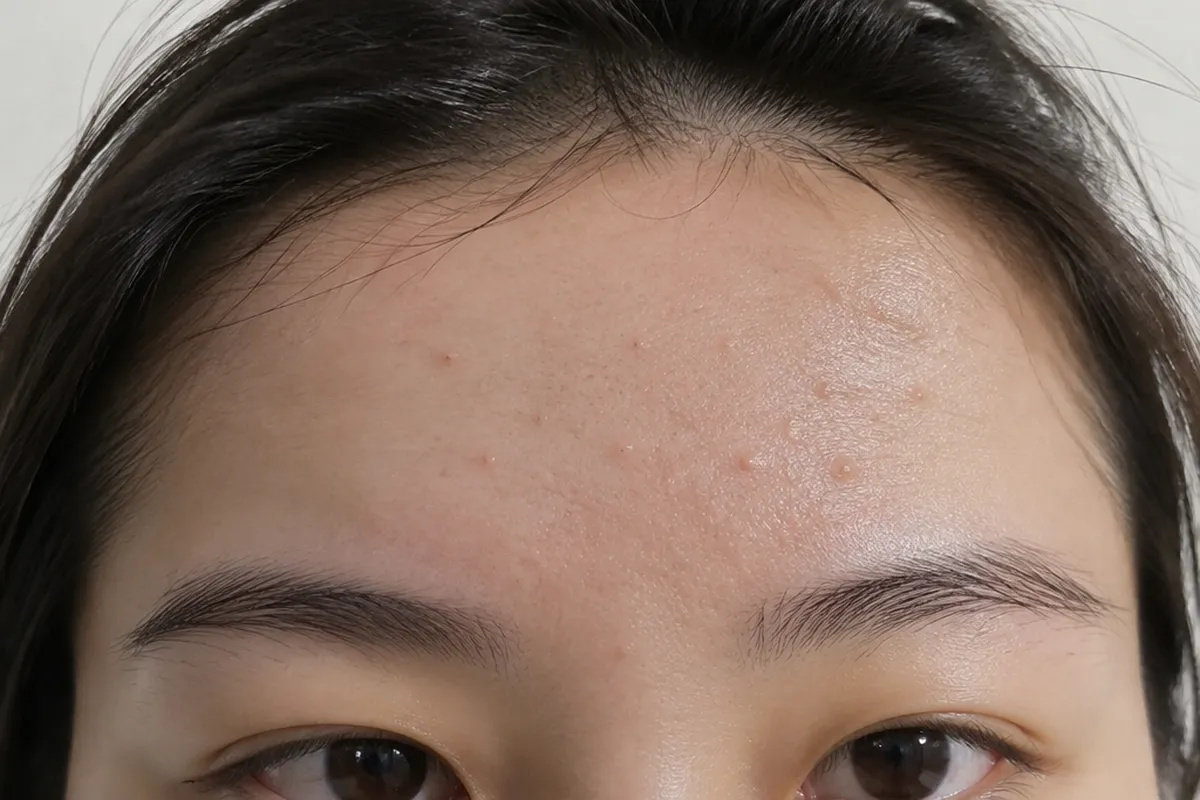
Blocked pores are the first step in every type of acne. Illustrative image, not a patient.
Four factors interact within the pilosebaceous unit:
The four drivers of acne
Factor
What happens
Follicular hyperkeratinisation
Cells lining the follicle fail to shed normally and accumulate, obstructing the opening.
Sebum production
Androgen-driven. This is why acne often tracks with hormonal change and why it can persist well into adulthood.
Cutibacterium acnes
A commensal organism that proliferates in the obstructed, sebum-rich follicle. It is not an infection in the ordinary sense — the organism is normally present.
Inflammation
The immune response to the above. Inflammation is what turns a comedone into a papule, and what drives both scarring and post-inflammatory pigment change.
A treatment addressing one of these while ignoring the others produces a partial result. This is the usual reason a regimen that seemed promising stops working. Each grade, with what it looks like, is described on acne types and severity.
“Acne is not a hygiene problem. Four things are happening in the follicle at once, and washing your face addresses none of them.”
Dr Sin YongOn what acne actually is
Acne Medication, and Where Laser Acne Treatment Sits
Acne medication, topical or oral, remains first-line. Topical and oral agents act on follicular keratinisation, on sebum production, on bacterial proliferation, or on more than one. Some require assessment and monitoring, and carry side-effect profiles that are discussed before any course begins. Acne along the jaw and chin in adult women, and the hormonal options for it, are covered in hormonal acne in adult women.
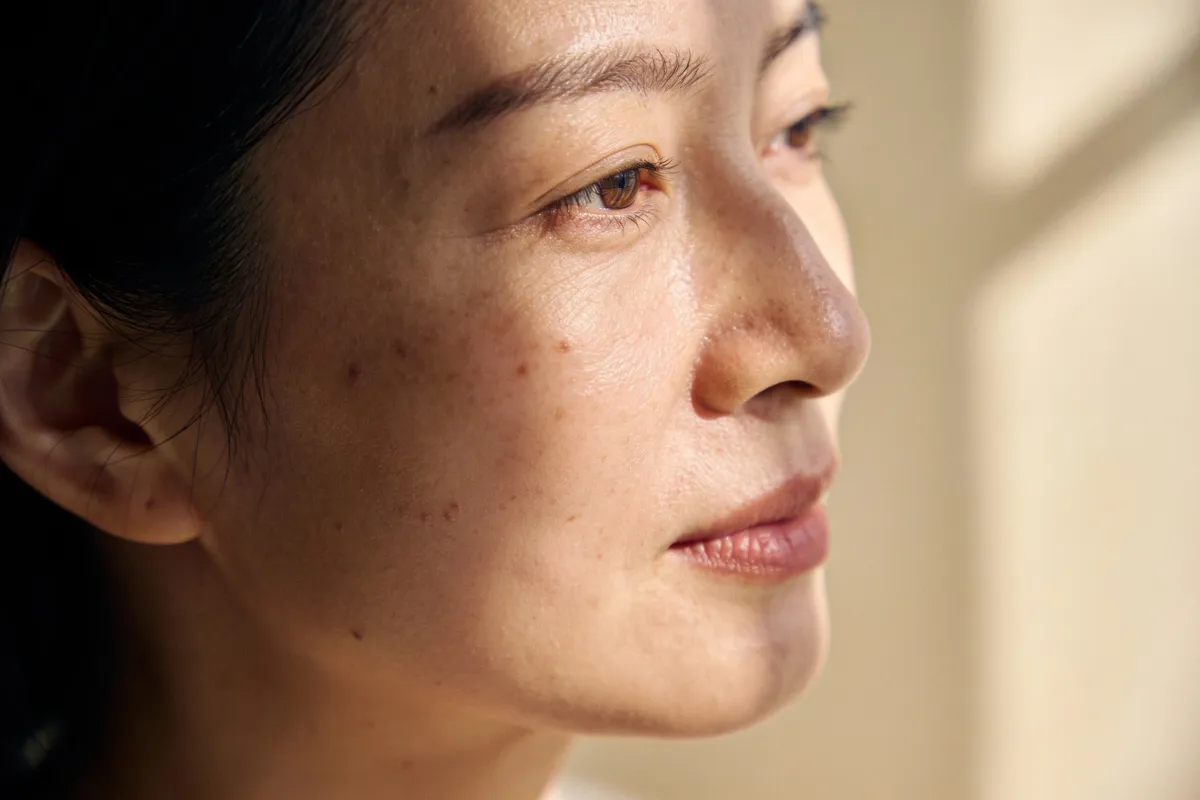
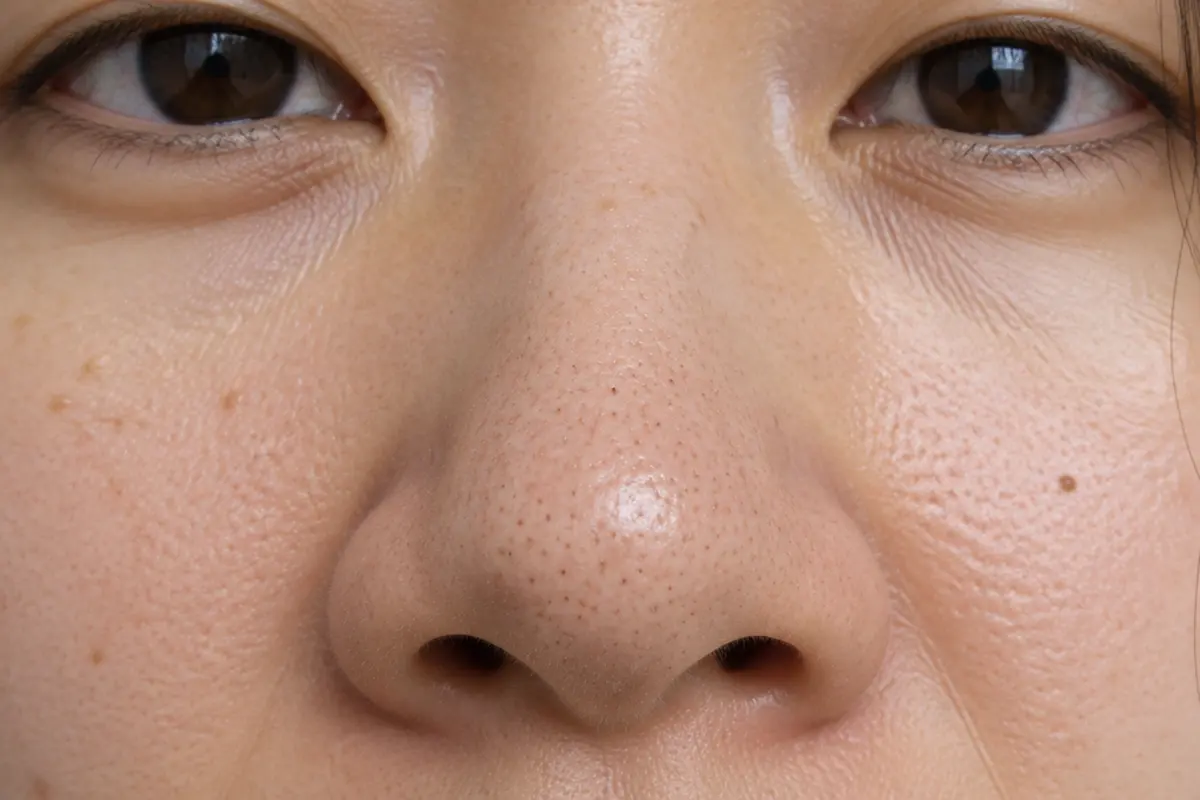
Side light shows the depth and shape of acne scars. Illustrative image, not a patient.Dark dots on the nose are often normal sebaceous filaments. Illustrative image, not a patient.
Laser acne treatment is directed at a different part of the picture: the inflammatory component. R2 Glow works on inflammatory activity within the skin rather than on pigment. 少女光 uses a 675 nm wavelength directed at the inflammatory activity around the follicular unit, as well as at the vascular component.
Neither replaces medical management. A laser does not act on androgen-driven sebum production or on follicular hyperkeratinisation, and a plan relying on light alone is treating one factor of four.
The published evidence follows the same order. The 2024 American Academy of Dermatology guideline, built on a systematic review, makes strong recommendations for benzoyl peroxide, topical retinoids, topical antibiotics and oral doxycycline. It also recommends oral isotretinoin where acne is severe, scarring or not responding to standard treatment. Light-based treatment rests on weaker ground: a 2016 Cochrane review of 71 trials with 4,211 participants concluded that high-quality evidence for light therapies in acne is lacking. A 2025 systematic review of 32 studies of vascular lasers, including Nd:YAG, for inflammatory acne found side effects were mostly mild and short-lived, but called for standardised protocols and well-designed trials.
Acne treatment options compared by what each acts on
Option
What it does
What it cannot do
Typical recovery
Who it tends to suit
Topical retinoids (for example tretinoin or adapalene)
Normalise follicular shedding, clearing comedones and helping prevent new ones
Do not reduce androgen-driven sebum production; irritation can limit use
Dryness, peeling and sometimes an early flare (purging) while the skin adjusts
Comedonal and mild inflammatory acne, and long-term maintenance
Reduce Cutibacterium acnes and inflammation within the follicle
Limited effect on deep nodules; topical antibiotics are paired with benzoyl peroxide to limit resistance
Possible dryness or irritation
Papulopustular acne on the face or body
Oral antibiotics (for example doxycycline)
Reduce inflammation and bacterial load in moderate to severe inflammatory acne
Not a long-term treatment on their own, and can worsen fungal folliculitis
A time-limited prescribed course, with side effects discussed beforehand
Moderate inflammatory acne, including widespread back and chest acne
Hormonal therapy (for example spironolactone or certain oral contraceptives)
Reduces the effect of androgens on sebum production
Not used in men, and not suitable in pregnancy
Requires medical assessment and, where indicated, blood tests
Adult women whose acne flares along the jawline or around periods
Oral isotretinoin
Reduces sebaceous gland activity and acts on several of the four acne drivers at once
Requires strict pregnancy prevention and monitoring, and is not suitable for everyone
Dry lips and skin are expected through the course
Nodulocystic or scarring acne, or acne that has not responded to other treatment
Laser (R2 Glow, 少女光)
Directed at inflammatory activity and redness around the follicle
Does not act on sebum production or follicular hyperkeratinisation
Usually transient redness
Inflammatory acne alongside medical management, or where some oral agents are unsuitable
When should you see a doctor for acne?
See a doctor when acne is painful, leaving marks or scars, or not improving after a few months of consistent over-the-counter care. Deep, tender lumps that last for weeks are nodules or cysts, the grade most associated with scarring, and they do not respond to skincare. Medical treatment at that stage is about prevention as much as clearance. How marks and scars are sequenced once the acne settles is set out in the acne-to-scar pathway.
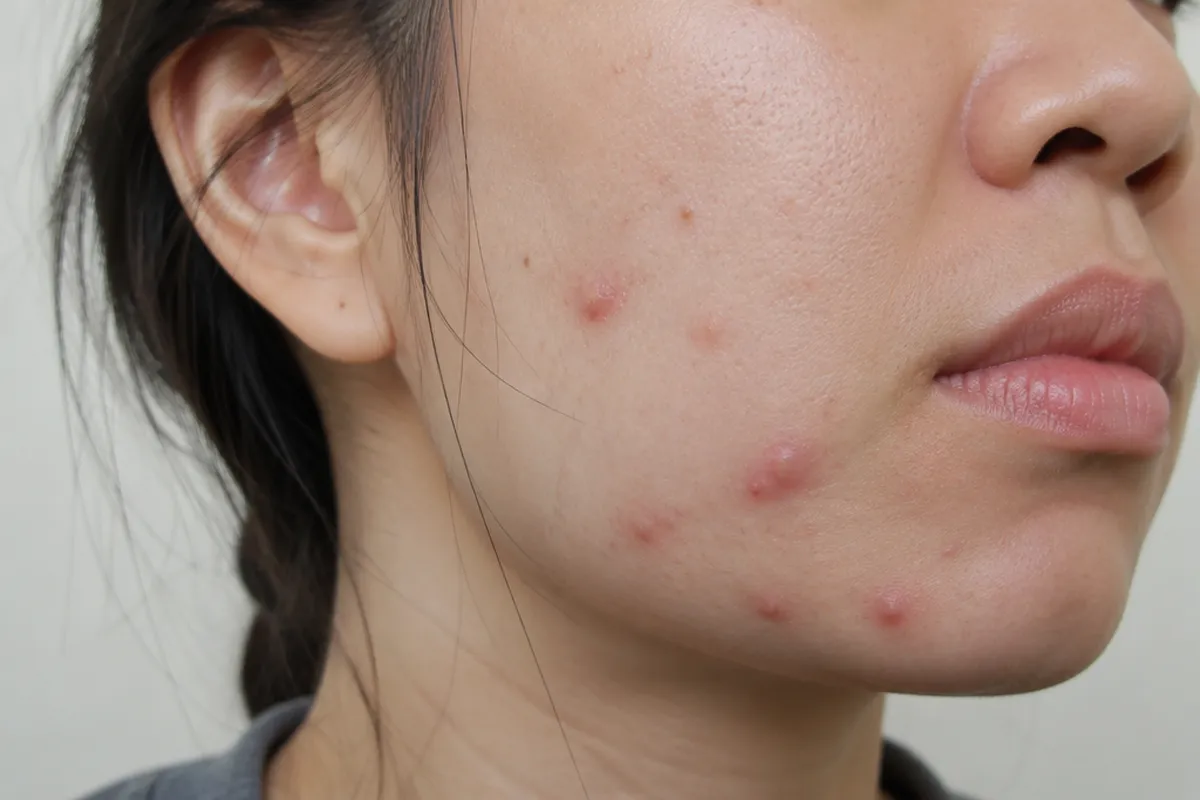
Deep, tender spots along the jaw are a reason to see a doctor early. Illustrative image, not a patient.
There are other reasons to book an assessment. Acne that starts suddenly in adulthood, especially with irregular periods, excess hair growth or scalp thinning, raises the question of a hormonal cause. Spots that are uniform and itchy may not be acne at all. Acne that flares after starting a new medicine or supplement, or that is affecting confidence, work or sleep, is also worth a visit. A doctor can grade the acne, confirm the diagnosis and prescribe treatments that are not available over the counter, with their side effects discussed beforehand. Dr Sin Yong prescribes these at the clinic, including isotretinoin and spironolactone where they suit. Where acne is very severe, unusual or linked to another medical condition, referral to a dermatologist is appropriate.
What a course of isotretinoin involves, from how it is taken to monitoring and timing aesthetic treatment around it, is set out in the isotretinoin guide.
“If your acne is still active, you're resurfacing a moving target.”
Dr Sin YongOn treating acne before scars · from his Instagram explainer series
Acne treatment: what the 2024 guidelines and trials recommend
The American Academy of Dermatology's 2024 guidelines make 18 evidence-based recommendations. The strong ones are for benzoyl peroxide, topical retinoids, topical antibiotics and oral doxycycline. Oral isotretinoin is strongly recommended for acne that is severe, is causing scarring or distress, or has not responded to standard treatment. The guidelines also advise combining topical treatments that work in different ways and limiting how long oral antibiotics are used.
A network meta-analysis in the British Journal of Dermatology compared treatments across trials. For mild to moderate acne, topical combinations, chemical peels and blue or red light ranked as most effective. For moderate to severe acne, topical combinations, oral antibiotics with topical treatment, oral isotretinoin and photodynamic therapy ranked highest. Prescription medicines are prescribed only after a medical consultation, and the choice depends on the type of acne and the person.
Who does it suit, who should wait and who is referred on?
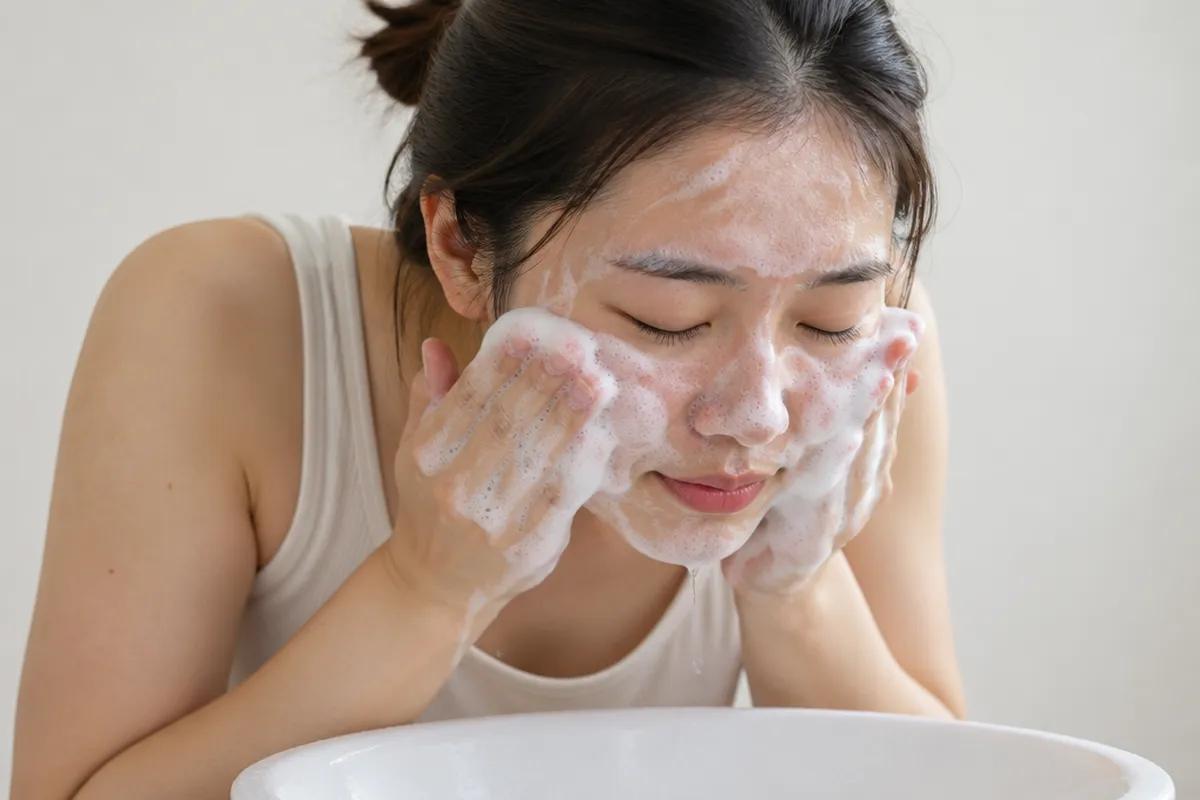
Side light shows the depth and shape of acne scars. Illustrative image, not a patient.A gentle cleanser twice a day is enough; scrubbing makes acne worse. Illustrative image, not a patient.
Tends to suit
Comedonal, papulopustular or nodulocystic acne that has been graded
Acne that has not responded to over-the-counter products
Persistent inflammatory acne where a laser may be added to medical care
Back, chest or shoulder acne once look-alikes are excluded; the guide to back acne treatment in Singapore covers the acne-versus-folliculitis check
Better to wait
Pregnancy or breastfeeding, when some acne medicines are unsuitable
Laser treatment within a recent course of isotretinoin
Active infection or a cold sore in the area to be treated
Referred on
Suspected hormonal or endocrine cause such as irregular cycles → medical review
Severe nodulocystic disease not responding to the plan → dermatology opinion
Who should not have this treatment
Pregnancy or breastfeeding, for medicines such as oral retinoids and some others
Allergy to a prescribed medicine or product
Recent isotretinoin use, for laser treatment
Active infection, cold sore or open wound in a laser area
A tendency to keloid or abnormal scarring
Look-alike conditions such as fungal folliculitis, which do not respond to acne therapy and need a different plan
People who expect a laser alone to clear acne, or who stop medical management early, tend to respond poorly, because a laser acts on only one of the four drivers. Parents of a teenager can start with the guide to teen acne treatment in Singapore, which covers what is normal and how consultations for under-18s work. What changes in pregnancy or breastfeeding is on acne in pregnancy.
What happens, step by step
Consultation and examination to grade the acne and exclude look-alikes
Written plan and quote, covering medical management and whether a laser is advised
Treatment day or start of therapy: medicines explained and, where planned, laser delivered at calibrated settings
Review and adjustment, with maintenance considered separately
What are the risks and side effects, and when should you call?
Dryness, peeling and irritation are expected with topical retinoids, and acne can appear to flare early before it settles, which is called retinoid purging. How to tell purging from a breakout is on retinol purging or a breakout. Oral agents carry side effects that are discussed before any course begins, and some need monitoring. After a laser, mild redness and warmth are expected. Less commonly, lasers can cause post-inflammatory pigment change, blistering or infection, particularly in Fitzpatrick III to V skin. Untreated nodulocystic acne risks scarring. Response varies and no outcome can be promised.
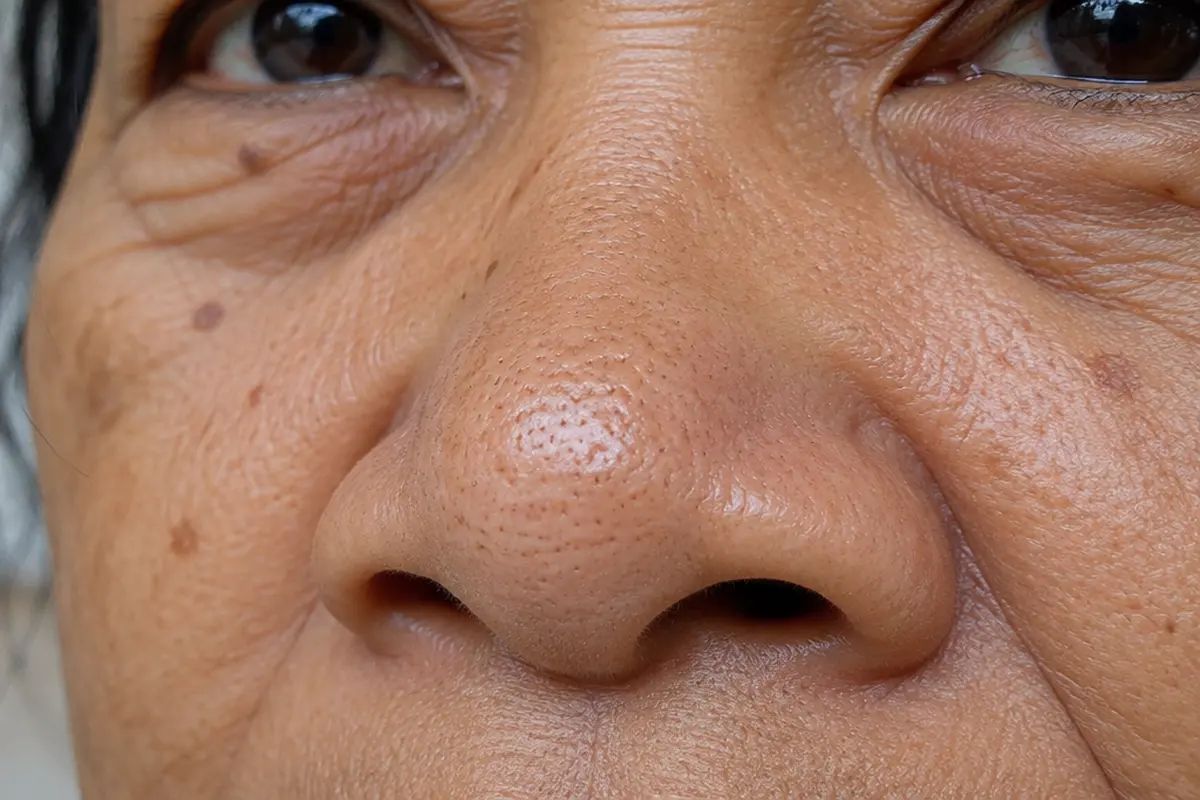
Dark dots on the nose are often normal sebaceous filaments. Illustrative image, not a patient.
Contact the clinic the same day if
A sudden severe flare, or deep painful nodules spreading
Spreading redness, warmth, pus or fever
Blistering or crusting after a laser
Rash, severe headache or visual change while taking an oral medicine
Scar type is identified before a method is chosen. Illustrative image, not a patient.Simple habits support treatment but do not replace it. Illustrative image, not a patient.
First 24 hours
After a laser, expect mild redness and warmth; cool the skin and use a bland moisturiser
Use no strong actives that evening unless told to
First week
Do not pick or squeeze lesions, and cleanse gently
Introduce prescribed topical medicines as instructed and report any marked irritation
Sun
Use a broad-spectrum, non-comedogenic sunscreen daily, as treatment can make skin more sun-sensitive
Skincare
Use a gentle cleanser and non-comedogenic moisturiser, and add actives only as advised
When to call
A severe flare, spreading redness, pus or fever
Blistering after a laser, or rash, severe headache or visual change on an oral medicine
Acne treatment in Singapore in one minute
Acne is a disorder of the follicle with four interacting drivers, not a hygiene problem. Treatment starts with grading the acne and ruling out look-alikes such as fungal folliculitis. Topical and oral medicines remain first line; a laser such as R2 Glow can sit alongside them but does not clear acne on its own. Progress is judged at planned reviews, and marks and scars are treated once the acne is controlled. Painful lumps, scarring or acne that does not improve are reasons to see a doctor.
Acne treatment: how long it takes, downtime and how long it lasts
Acne treatment at a glance
How many sessions
Topicals and oral medicines: 8–12 weeks to judge; isotretinoin courses run 5–8 months. Laser alongside: 4–6 sessions.
Downtime
Dryness and peeling in the first weeks of retinoids or isotretinoin; a day of redness after laser.
How long it lasts
Acne controlled with isotretinoin often stays controlled; other regimes need maintenance until the acne settles with age.
Figures are typical ranges from Dr Sin Yong's practice and the published literature; your plan, including the number of sessions, is set after the assessment and may differ. Fees are given in writing after the assessment: see how we quote.
Acne treatment: how acne develops, and treatment by severity
How acne develops in four steps
Acne forms when oil production rises, dead skin cells block the follicle, Cutibacterium acnes bacteria multiply, and inflammation follows. Treatments target one or more of these steps, which is why combinations work better than a single product.
Treatment by severity
Mild comedonal acne: topical retinoids and benzoyl peroxide. Mild to moderate inflammatory acne: add topical antibiotics or azelaic acid, sometimes a short course of oral antibiotics, and laser such as R2 to calm inflammation. Severe or scarring acne: oral isotretinoin is considered, with blood tests and contraception counselling.
Will my skin get worse before it gets better?
Retinoids can cause a mild purge in the first 4 to 6 weeks as blocked pores come to the surface. This settles. A severe flare is not expected and should be reviewed.
How much does acne treatment cost in Singapore at this practice?
Treatment
Price
Acne cyst injection, including consultation
From $150
Prices are nett. Each figure is a starting price; the fee for your plan depends on the area treated and what the assessment finds, and is confirmed in writing before any treatment.
Acne Treatment — Frequently Asked Questions
Acne is often chronic. Stopping maintenance, hormonal changes, new skincare or stress can bring it back. A maintenance plan, usually a topical retinoid, lowers the risk.
Often yes, with care. Inflammation is brought under control first, and some scar treatments can then be started while maintenance continues.
It depends on the type and severity. Mild acne usually responds to creams such as retinoids and benzoyl peroxide. Moderate to severe acne may need oral medicine, and laser such as R2 can calm active acne. Treating early also lowers the risk of scarring.
Yes. Polyclinics manage mild to moderate acne and can refer you to the National Skin Centre. Private aesthetic and dermatology clinics offer lasers and faster appointments. Severe, cystic or scarring acne needs a doctor promptly in either setting.
Korean routines focus on gentle cleansing, barrier repair and sun protection, with clinic treatments such as extraction, lasers and peels. The medical principle is the same anywhere: control oil, keep pores clear and calm inflammation, with prescription treatment when needed.
For a single painful spot, a small cortisone injection by a doctor can settle it within a day or two. For ongoing acne there is no overnight fix: prescription treatment usually takes 6 to 12 weeks to show its full effect.
Use a gentle cleanser, a non-comedogenic moisturiser and daily sunscreen, and add benzoyl peroxide or adapalene for mild acne. Avoid picking. If acne persists after 2 to 3 months, scars or is painful, see a doctor for prescription treatment or laser.
Fewer new spots are usually seen within six to eight weeks, and a full course takes about three to four months. Dark and red marks fade more slowly, and results vary with the type of acne.
Acne develops in four steps: oil glands make more sebum, dead skin cells block the pore, bacteria multiply in the blocked pore, and the body responds with inflammation. Treatment is chosen according to which of these steps is driving your acne.
Prescription oral medicine is considered for severe, cystic or scarring acne, or acne that has not settled with creams. It needs a doctor’s assessment, blood tests in some cases and strict pregnancy precautions for certain medicines. Dr Sin Yong prescribes and monitors these in the clinic.
Acne treatment in an aesthetic setting is generally paid for by the patient, and MediSave does not cover it. Some private or company outpatient plans reimburse consultations and prescribed medicine, so check your own policy wording.
Acne vulgaris shows as blackheads and whiteheads, red bumps, pus-filled spots and, in more severe cases, deep tender nodules or cysts. It appears mainly on the face, chest, shoulders and back, and can leave dark marks or scars once it settles.
Alongside medical treatment, use a gentle cleanser twice a day, choose non-comedogenic moisturiser and sunscreen, avoid squeezing spots, wash after sweating, and keep hair products off the face. Give any treatment six to eight weeks before judging it, and return for review if scars are forming.
An acne cyst injection at this practice is from $150 including consultation. Prices are nett, and the fee for your plan is confirmed in writing after assessment.
Isotretinoin is a prescription medicine in Singapore, given after a doctor has examined the acne and checked whether it suits you. It is used for severe, scarring or treatment-resistant acne, with strict pregnancy prevention for anyone who could become pregnant and monitoring during the course. Dr Sin Yong prescribes it where appropriate after an examination, and refers severe or unusual acne to dermatology.
Either can treat common acne. A dermatology specialist is the right first step for severe, unusual or resistant acne, or a rash whose diagnosis is uncertain. An aesthetic physician such as Dr Sin Yong grades acne, prescribes topical and oral treatment, including isotretinoin where appropriate, uses laser protocols alongside, and treats marks and scars once the acne is controlled. He refers to dermatology where the acne needs it.
Not always. Oral antibiotics are used as time-limited courses for inflamed acne, alongside a topical retinoid or benzoyl peroxide, rather than on their own or for long periods, because acne bacteria can become resistant. Many people do well on topical treatment alone, and severe or scarring acne may need isotretinoin instead. Itchy, uniform bumps that worsen on antibiotics may be fungal acne, which needs an antifungal.
They are separate problems addressed in sequence. Treating active acne reduces the ongoing formation of new scars, but it does not remodel scarring that has already formed. Scar revision is generally planned once active acne is under control, and is covered on the acne scar treatment page.
This varies with grade, cause and the approach taken, and honest expectation-setting is part of consultation. Acne is generally managed over a period rather than resolved in a single visit, and plans usually include a maintenance phase. What is realistic in your case is discussed at assessment rather than quoted in advance.
The cost of acne treatment in Singapore depends on the grade identified at assessment, whether medical management alone is appropriate or a laser is added, the areas involved, and how the plan is staged. Dr Sin Yong gives a written quote at consultation after examining your skin, because the assessment decides whether treatment is advised. The fee for your plan is confirmed after assessment.
A medical facial such as a Hydrafacial, or careful comedone extraction, can clear blocked pores at the surface, but neither treats the processes that cause acne. They are used, if at all, alongside medical treatment, and are avoided over inflamed or cystic spots, where squeezing and suction can worsen inflammation and marking.
For some people it can contribute. Studies link high-glycaemic diets, rich in sugary drinks and refined carbohydrates, and in some people milk, with more acne, and whey protein supplements have been linked with flares. Diet is rarely the whole cause, so cutting foods alone seldom clears moderate or severe acne. Dr Sin Yong asks about diet and supplements at the assessment and suggests changes alongside treatment, not instead of it.
Because treatment controls acne rather than switching it off. The drivers, oil production, blocked follicles, bacteria and inflammation, are still there when a course ends, and hormones, stress, skincare, sweat and some supplements can set them going again. That is why a plan includes maintenance, often a topical retinoid, and a review. Acne that keeps returning after several courses may be a reason to discuss isotretinoin, or to check for a hormonal cause or a look-alike such as fungal acne.
The principles are the same, but the emphasis shifts. Teenage acne is often widespread across the face, chest and back and follows the rise in hormones at puberty. Adult acne, especially in women, tends to sit along the jaw and chin, may flare with the menstrual cycle and can point to a hormonal cause worth checking. Adult skin is often less oily and more easily irritated, so strengths are adjusted, and pregnancy plans are discussed before any medicine is chosen.
Acne comes from excess oil, blocked pores, the bacterium C. acnes and inflammation. Hormones, genetics, some medicines, heavy skincare and stress add to the risk.
For severe, scarring or persistent acne that has not responded to other treatment. It needs a doctor's prescription, blood tests and strict pregnancy prevention for women.
Acne is inflammation of the oil glands and hair follicles. Mild acne often responds to good skincare, but moderate, painful or scarring acne needs medical treatment to stop scars forming.
Mild acne made up of blackheads and whiteheads without much inflammation. It responds to retinoids, salicylic acid and extraction.
Red papules and pustules caused by inflammation around blocked pores. It usually needs topical antibiotics or benzoyl peroxide, and sometimes oral medicines.
Yes, as add-ons. Chemical peels and some lasers reduce oil, inflammation and red marks, but they work best combined with medical treatment.
Most treatments take six to twelve weeks to show clear improvement. Changing products too often prevents any of them from working.
High-glycaemic foods and dairy may worsen acne in some people, but diet alone rarely causes it. Medical treatment is still the mainstay.
Active acne is controlled first, because new spots keep forming scars and inflamed skin heals less predictably. Gentle treatments for marks can start earlier.
Stress can worsen acne through hormones and picking, but it is rarely the only cause.
No. Squeezing pushes inflammation deeper and increases the risk of scars and dark marks. A doctor can treat a painful cyst with an injection.
Adult acne, especially in women, is often around the jaw and linked to hormones. It may respond to hormonal treatment as well as standard acne medicines.
Use gentle, non-comedogenic cleansers and moisturisers and daily sunscreen; avoid harsh scrubs that irritate skin already treated with retinoids.
When there are nodules or cysts, scarring, or acne that does not respond to standard treatment.
Hormones, stress, cosmetics, certain medicines and genetics.
It can be controlled well; some people need maintenance treatment.
Guidelines of care for the management of acne vulgaris (Reynolds RV, Yeung H, Cheng CE, et al.). Journal of the American Academy of Dermatology, 2024. pubmed.ncbi.nlm.nih.gov
Light therapies for acne (Barbaric J, Abbott R, Posadzki P, et al.). Cochrane Database of Systematic Reviews, 2016. pubmed.ncbi.nlm.nih.gov
Systematic review of vascular lasers for the treatment of inflammatory active acne vulgaris (Jafarzadeh A, Heidari S, Omid R, Goodarzi A). Lasers in Medical Science, 2025. pubmed.ncbi.nlm.nih.gov
Reynolds RV, Yeung H, Cheng CE, Cook-Bolden F, Desai SR, Druby KM, et al. Guidelines of care for the management of acne vulgaris. Journal of the American Academy of Dermatology, 2024. doi.org
Mavranezouli I, Daly CH, Welton NJ, Deshpande S, Berg L, Bromham N, et al. A systematic review and network meta-analysis of topical pharmacological, oral pharmacological, physical and combined treatments for acne vulgaris. The British Journal of Dermatology, 2022. doi.org