What does cystic acne look like?
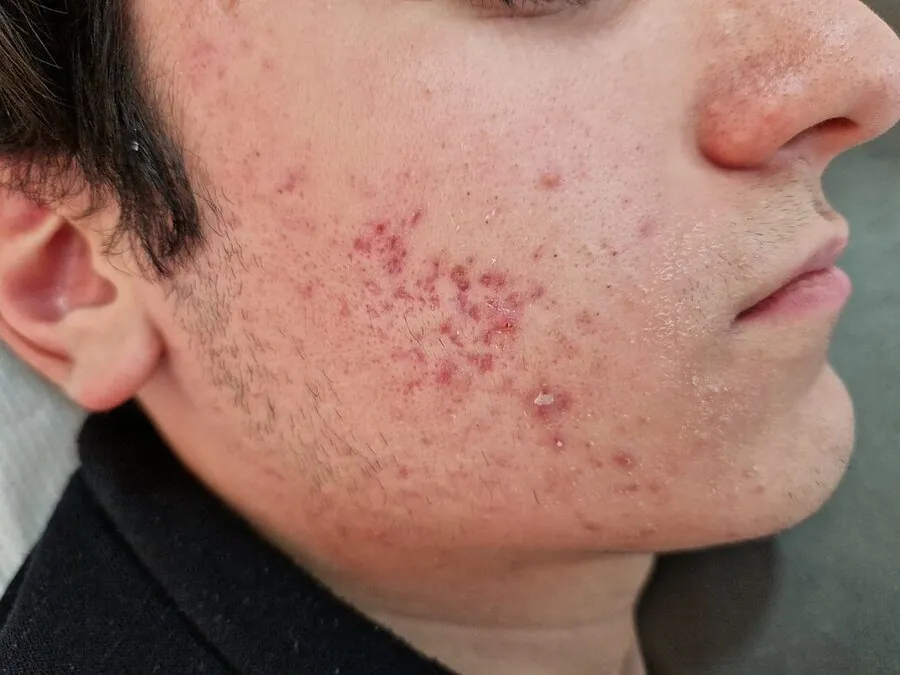
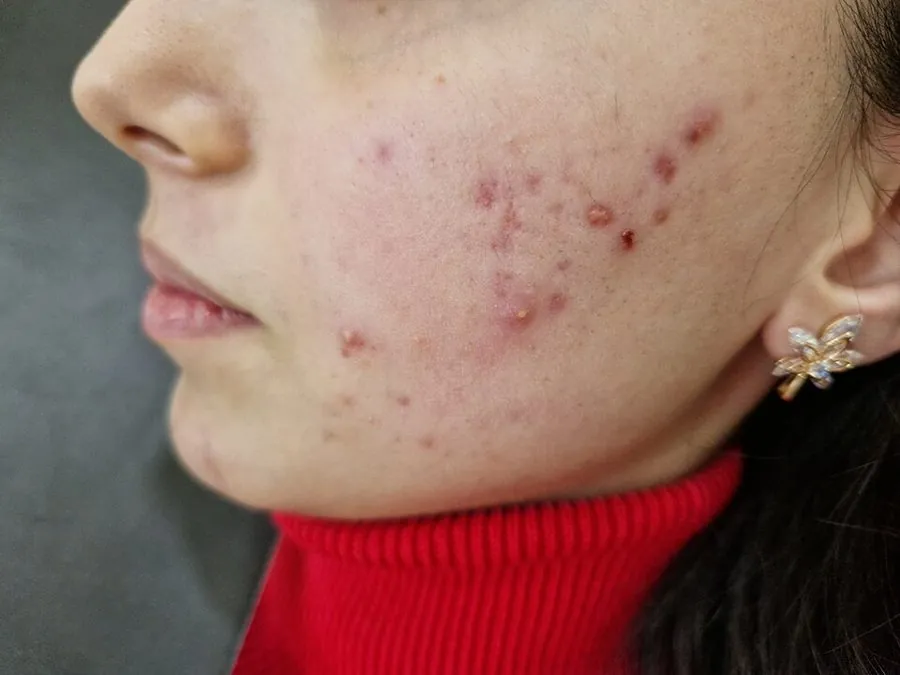
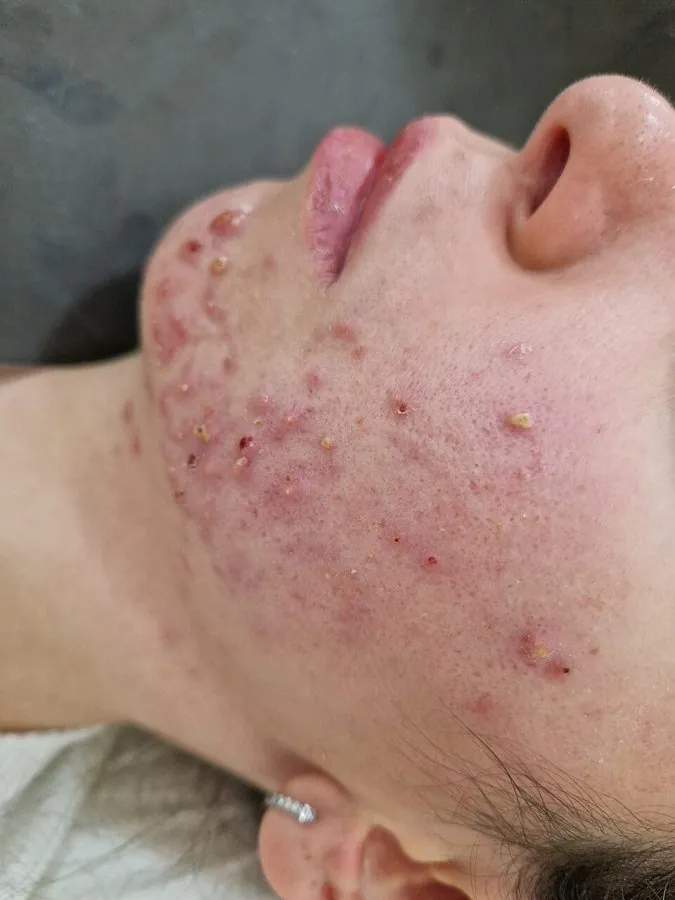
What makes an acne lesion cystic?
Ordinary pimples are shallow: inflammation near the surface, resolving in days. In nodulocystic acne the follicular wall ruptures deep, spilling its contents into the dermis, and the immune response walls off an inflamed nodule far below the surface. That depth explains everything patients notice — the pain (pressure on deep nerve endings), the duration (deep inflammation resolves slowly), the fact that squeezing produces nothing but more damage, and the scarring, because the battle is fought inside the skin's structural layer itself [1].
Why routines fail and time is the enemy
Topicals matter in mild and moderate acne, but a cream cannot reach a lesion seated millimetres down — which is why cystic acne shrugs off skincare that works for everyone else. Meanwhile the clock runs: each deep lesion that flares and subsides can take collagen with it, and scar revision is always harder than scar prevention. Current guidelines are unambiguous that severe acne warrants escalation to systemic therapy rather than prolonged topical experimentation [1]. In adult women, a cyclical jawline pattern overlaps with hormonal acne, and the hormonal arm changes the plan.
What actually works for cystic acne?
Medical treatment, matched to severity. Guidelines support oral therapy for nodulocystic disease — antibiotic courses in defined roles, hormonal therapy in women where indicated, and oral isotretinoin as the established option for severe or scarring acne, prescribed and monitored by a physician [1,2]. In-clinic procedures support the medical arm: intralesional treatment can settle an acute cyst, and laser-based protocols in the acne programme target inflammation and oil output. Once disease is controlled, the Tetra Pro scar programme and 4D scar reconstruction address what past cysts left behind — but control comes first; scar treatment during active cystic acne is building on a battlefield.
What doesn't work for cystic acne?
Squeezing — a deep cyst has no exit; pressure ruptures it sideways into more dermis and doubles the scar. Drying toothpaste-style spot hacks on a lesion seated beyond their reach. Serial facials for a medical-grade condition. And the costliest mistake: waiting a year to see a doctor, then spending far longer treating scars that earlier treatment might have prevented.
“You cannot pop a cyst that has no exit — pressure just moves the rupture sideways, and the scar is the receipt.”
— Dr Sin Yong
Dr Sin Yong’s Viewpoint
Cystic acne is the one form of acne where I get openly urgent with patients. Every month of deep, active inflammation is billed later in scar tissue, and scar revision costs multiples of acne control — in money, sessions and time. Acne that hurts is acne that scars. Treat it now.
Prefer Not to Use WhatsApp?
Use the short enquiry form instead →
Leave your name, mobile number and email and the clinic will contact you directly. No obligation.
Prefer a preliminary view first? You can also WhatsApp a photo of the area for Dr Sin Yong to review before you decide on a visit.