Medically reviewed by Dr Sin Yong · Last reviewed · 9 min read
Volnewmer: the short answer
Volnewmer is a monopolar radiofrequency device that heats the dermis as a volume so collagen contracts and remodels over months, for early laxity of the mid-face, jawline and neck. It does not add volume or lift descended tissue. Dr Sin Yong uses Volnewmer within his VF Lift – Vertical Facelift, combined with Time Freeze Laser LCLR® where needed.
Published 7 October 2026 · Reviewed by Dr Sin Yong
Volnewmer is a monopolar radiofrequency platform made by CLASSYS that heats the dermis and the fibrous tissue beneath it as a volume, with continuous water cooling of the skin surface, to prompt collagen contraction and remodelling. It is the device behind Dr Sin Yong's VF Lift – Vertical Facelift. It is not focused ultrasound, and it is not a HIFU machine. The protocol, the vectors and who it suits are set out on vertical facelift.
This topic is part of the main guide to radiofrequency treatment, which covers what it treats, who it suits, the risks and how Dr Sin Yong approaches it.
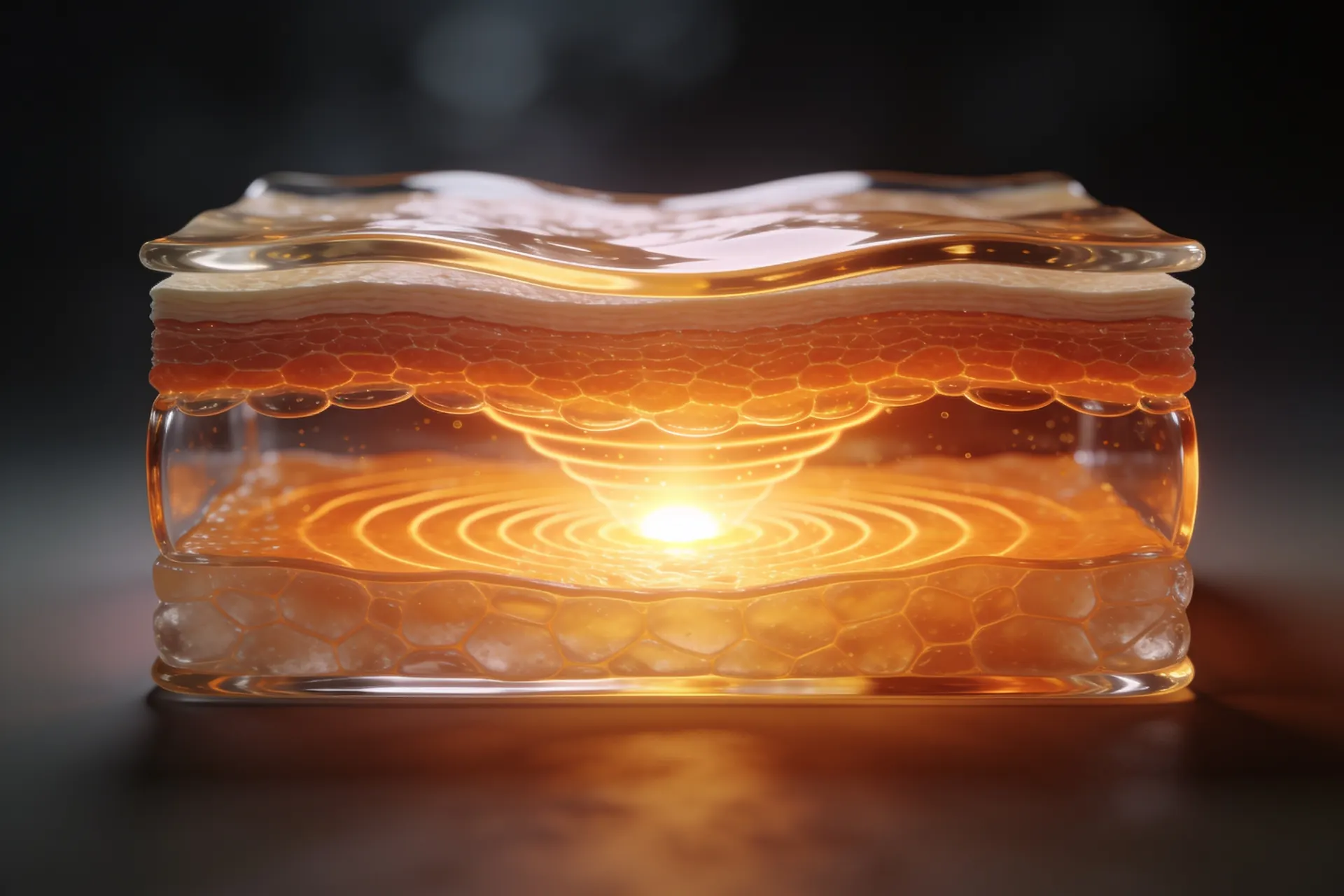
Illustrative image. Monopolar radiofrequency conditions the dermis as a layer rather than at a set of points.
Your assessment
What happens at your assessment
Dr Sin Yong examines you himselfHe looks at and feels the area, and goes through what was done and when.
You hear what he findsHe explains what has happened in the skin and tissue, in plain words.
You decideHe sets out the options: treat, monitor or leave alone. Nothing is done on the day unless you choose it.
Who you will see: Dr Sin Yong. He performs every assessment and treatment himself.
Volnewmer in Singapore answers a skin-and-septa question rather than a deep-layer one: it warms a whole treatment zone with radiofrequency while water cools the surface. It is the platform for Dr Sin Yong's VF Lift – Vertical Facelift, planned with Lift, Reduce and Restore aims. An implanted electronic device, metal in the field, pregnancy or infection in the area rules it out.
Comparing lifting options beyond Volnewmer? For most sagging, Dr Sin Yong leads with his own protocols, the VF Lift – Vertical Facelift (monopolar radiofrequency on Volnewmer) and Time Freeze Laser LCLR® (dual-wavelength laser). Both work on your own tissue. Nothing is injected, so there is no filler to overfill, migrate or form lumps. Which one suits you, if either, is decided at assessment.
What does Volnewmer do to the skin?
Volnewmer delivers monopolar radiofrequency: an alternating electrical current at 6.78 MHz flows from a single treatment tip, through the tissue beneath it, to a return pad placed elsewhere on the body. Tissue resists the current, and resistance generates heat within the dermis and the fibrous septa that run down into the fat beneath it. Because the current must pass through the whole depth of tissue under the tip, the heat is produced as a volume rather than at a point, and the entire treatment zone warms together. Water cooling runs continuously across the skin surface so the epidermis stays protected while the layer beneath is heated. It is the platform on which the VF Lift – Vertical Facelift is built.
Heated collagen fibres contract, and fibroblasts then respond by laying down new collagen, which is the remodelling monopolar radiofrequency relies on. The glossary entry on monopolar radiofrequency explains the circuit and the terms; the point for a patient is that this is bulk conditioning of the dermal envelope, not a lift of a deeper structural layer.
Illustrative image — not a patient.
How does Volnewmer differ from Thermage?
Volnewmer and Thermage FLX belong to the same family: both are monopolar radiofrequency at 6.78 MHz, both heat the dermis and septa volumetrically, both use a return pad, and both protect the surface with cooling. They differ in generation, in how the surface is cooled, with Volnewmer using continuous water cooling and Thermage FLX using bursts of cryogen before, during and after each pulse, and in how the energy is delivered and tuned across a zone. The Thermage page describes how that device is planned and who it suits.
The practical difference for a patient is less the badge than the protocol around it. On Volnewmer the treatment here is the VF Lift – Vertical Facelift: zones are heated along vertical vectors, with the energy in each calibrated toward one of three aims, Lift for laxity, Reduce for excess puffiness and Restore where the face is deflating, so that a slim face is not treated the way a fuller one is. The ultherapy, VF Lift and Time Freeze comparison explains why facial shape decides which energy helps and which can hollow.
“HIFU or radiofrequency is the wrong question. They do not do the same job.”
Dr Sin YongOn the commonest comparison request
Does Volnewmer work? What the published studies show
One published clinical study names the device. Fifty people were treated with the 6.78 MHz Volnewmer system and 45 completed follow-up. Skin roughness measured on three-dimensional scans improved by 28.42% immediately after treatment and by 26.23% at one month. The study had a single author, no comparison group and one month of follow-up.
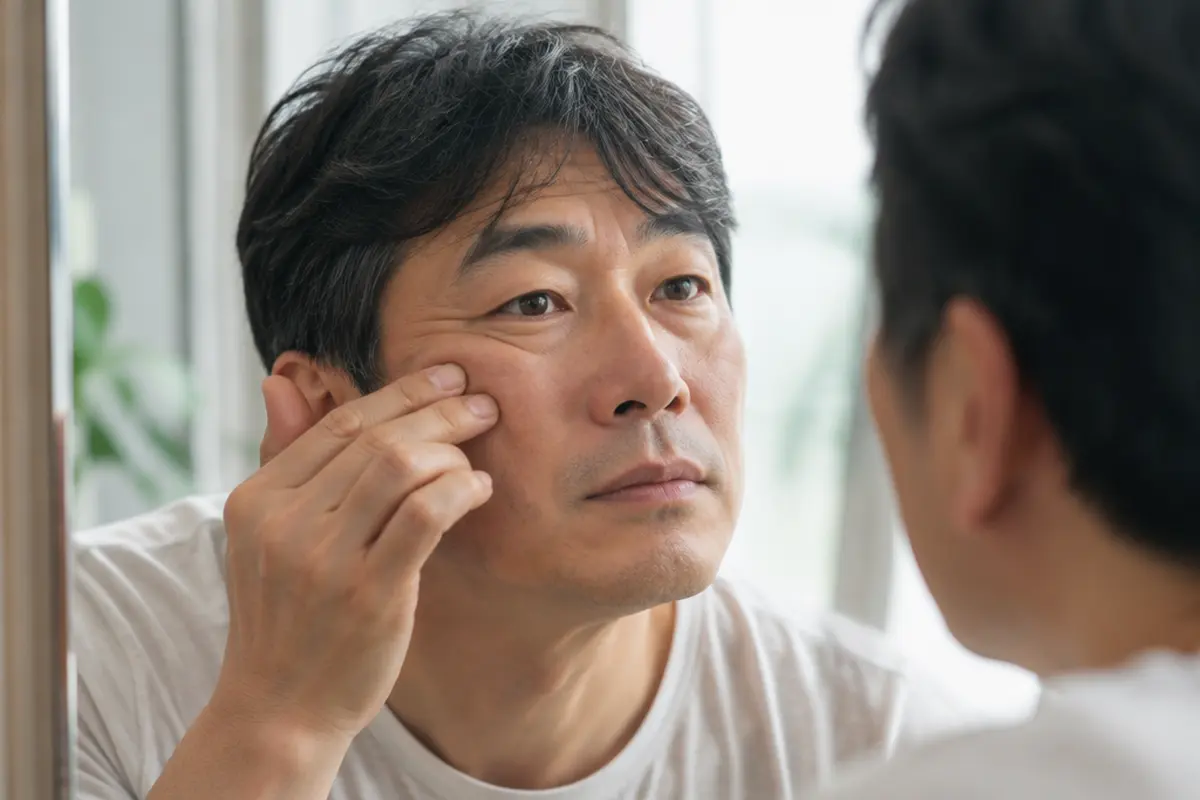
Lifting the skin by hand shows the direction of change being discussed. Illustrative image, not a patient.
For monopolar radiofrequency as a class, the first multicentre study found at least a one-point wrinkle improvement in 83.2% of treated areas around the eyes after one treatment with an earlier device. These studies support a measurable change in skin texture and tightness. They do not show how long the effect of Volnewmer lasts, which is a reason to review the result before repeating treatment.
How does Volnewmer differ from HIFU?
Volnewmer and HIFU use different energy placed in different ways. High-intensity focused ultrasound converges sound energy to small focal points at set depths, including the SMAS layer at around 4.5 mm that a surgical facelift tightens, and leaves the tissue between those points largely unheated. Monopolar radiofrequency heats the dermis and the fibrous septa broadly, as a volume, and does not place points at the SMAS. Dr Sin Yong uses the Ultraformer MPT for focused ultrasound, and the HIFU page sets out how cartridge depths are mapped to each zone.
They are not rivals for the same job, which is why the comparison of Thermage, HIFU and Volnewmer on this site names no winner. Laxity concentrated at the structural layer argues for focused ultrasound; dermal thinning, crepey or loosely draped skin argues for volumetric radiofrequency; many faces show both and are planned in stages. Where both appear in a plan they are separate treatments on separate days, and the VF Lift – Vertical Facelift itself never uses focused ultrasound or the Ultraformer.
Volnewmer, Thermage FLX and HIFU compared by mechanism
Feature
Volnewmer
Thermage FLX
HIFU (Ultraformer MPT)
Energy
Monopolar radiofrequency, 6.78 MHz
Monopolar radiofrequency, 6.78 MHz
Micro-pulsed focused ultrasound
Heating pattern
Volumetric: whole zone heated through dermis and septa
Volumetric: bulk dermal heating pulse by pulse
Discrete coagulation points at set depths
Layer reached
Dermis and subdermal fibrous septa
Dermis and subdermal fibrous septa
Superficial dermis, dermis or SMAS by cartridge
Surface protection
Continuous water cooling
Cryogen cooling before, during and after each pulse
Surface not heated; energy converges below it
Protocol here
VF Lift – Vertical Facelift, zone by zone along vertical vectors
Thermage FLX treatment with face, eye or body tips
HIFU programme mapped cartridge by cartridge; kept separate from the VF Lift
Not for
Implanted electronic devices, metal in the field, pregnancy
Implanted electronic devices, metal in the field, pregnancy
Pregnancy, infection, and zones over nerves, thyroid or orbital rim
Volnewmer by zone: mid-face, jawline, neck and body
Volnewmer in Singapore is planned zone by zone, because the same monopolar radiofrequency behaves differently over a thick cheek, a thin neck and a large area of abdominal skin. The manufacturer supplies four tips for that reason: a 0.25 cm² I tip for the eyes, nose and marionette lines, a 3.0 cm² F tip for the jawline and chin, a 4.0 cm² V tip for the face, and a 16.0 cm² S tip for the abdomen, arms and thighs. On Volnewmer the protocol here is the VF Lift – Vertical Facelift, with energy in each zone calibrated to one of three aims, Lift for laxity, Reduce for excess fullness and Restore where the face is deflating; on the body the same protocol is called the VF Lift – Vertical Figure Lift. Before any energy is planned, Dr Sin Yong palpates the thickness of skin and fat in each zone, and where earlier filler is suspected he maps it with ultrasound first.
Illustrative image — not a patient.
Zone
Manufacturer tip for the zone
What is assessed
How it pairs with the VF Lift – Vertical Facelift
Page
Mid-face
V tip (4.0 cm²), with the I tip for the fine zones near the eye
Whether the cheek has descended, is puffy from fat or filler, or has hollowed; profile and animation, a pinch of the cheek, earlier photographs, ultrasound where filler is suspected
Set to Lift for descent, Reduce for puffiness or Restore for hollowing; hyaluronic acid filler causing puffiness is dissolved before any heat
Which layer leads: a pinchable jowl fat pad, loose skin at the jaw edge, or a heavy mobile jowl; the marginal mandibular nerve and thin skin over the mandible are kept in mind
Lift zones over the lower cheek and jaw edge along vertical vectors; Reduce over the jowl fat pad; heavy, mobile jowls are referred rather than heated harder
Whether lax skin still has reasonable recoil, how thick the dermis and fat are in each area, and whether skin hangs as a fold, which is referred
The VF Lift – Vertical Figure Lift: larger zones, vectors set to each limb, more conservative heating over thin or bony areas; not fat removal and not the 4K Body Lift
The tip decides the footprint of each pulse; the assessment decides the energy. Monopolar radiofrequency at 6.78 MHz passes from the tip through the full depth of tissue to a return pad, so the whole zone under the tip warms as a volume while continuous water cooling protects the surface. That is why the neck, where the dermis is thinner than on the face, is heated more conservatively, and why a face in which heating carelessly would spend volume is set to Restore rather than treated like a fuller one. Where laxity sits at the structural SMAS layer rather than in the dermis, the plan moves to focused ultrasound on the HIFU programme, planned as a separate treatment on a separate day; Volnewmer and VF Lift – Vertical Facelift never use focused ultrasound.
Illustrative image — not a patient.
Illustrative diagram, not to scale.Use this diagram on your site
Free to use with credit and a link. Copy this code:
Who suits Volnewmer, and who should not have it?
Volnewmer suits skin whose problem is distributed through the dermal layer: early to moderate laxity of the cheeks, jawline and neck, crepey or thinning skin, softening of the lower face where the deeper structures are not yet markedly descended, and faces in which heating tissue carelessly would spend volume that cannot be spared, since the Restore arm of the VF Lift is calibrated for exactly that case. Assessment palpates the thickness of skin and fat in each zone before any energy is planned.
It is not used in anyone with a cardiac pacemaker, implantable defibrillator or other implanted electronic device, because the current passes through the body to a return pad, and metal implants in or near the treatment field change the plan. It is postponed in pregnancy and over skin that is infected, broken or inflamed, including an active cold sore or an eczema flare. A face whose real problem is volume loss is not helped by heating it harder, and established descent with skin excess is a surgical problem referred to a plastic surgery specialist.
What a Volnewmer treatment involves, step by step
A Volnewmer treatment in Singapore follows the same sequence whichever zone is planned, and each step exists because of how monopolar radiofrequency works.
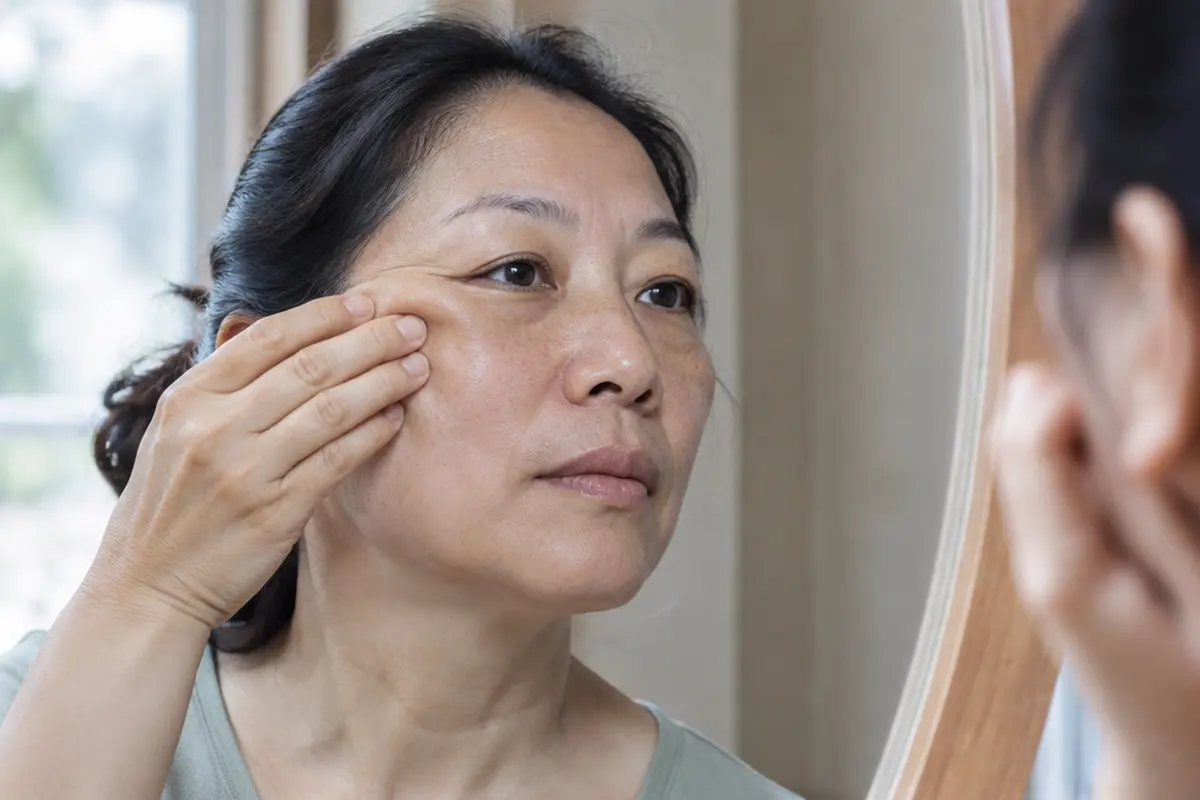
Lifting the skin by hand shows the direction of change being discussed. Illustrative image, not a patient.
Consultation and examination. Dr Sin Yong examines the face or body area in profile and three-quarter view and in animation, pinches the skin to judge fat against skin, and palpates the thickness of each zone. Where earlier filler is suspected, ultrasound maps it first. A pacemaker, an implanted electronic device, metal in the field, pregnancy or active infection in the area rules treatment out or changes the plan.
A written plan. The zones, the aim set for each (Lift, Reduce or Restore), what is kept out of the field, the fee factors and the option of no treatment are set out in writing, as the consultation process page describes.
Treatment day. A return pad is placed on the body, because the current must complete a circuit. The tip performs an impedance check before each pulse, energy is delivered zone by zone along the planned vectors, and the skin surface is cooled continuously by water. The heat the patient reports is used to adjust the energy in real time.
Immediately after. Redness and warmth as the skin cools, and sometimes mild swelling or tenderness; ordinary activity usually resumes. A blister, increasing pain, or numbness or weakness in the face is reported the same day, and the complication care page lists what to do.
Review. Collagen contracts first and remodels over the following weeks, so the response is judged at a planned review rather than on the day, and any further zone or a staged combination with focused ultrasound is decided then.
Where the question is whether radiofrequency or focused ultrasound suits a particular face, the Ultherapy vs VF Lift vs Time Freeze comparison explains why facial shape, not preference, decides.
HIFU or radiofrequency? Everyone asks me which is better. Wrong question: they don't do the same job. Focused ultrasound delivers energy to specific depths, including the deeper support layers. Radiofrequency heats a broader volume more diffusely. Different tissue, different problems. I'm a key opinion leader for platforms in both categories, and I use both because neither replaces the other. The right question is what's actually loose on your face. The device follows from that, never the other way around.
Transcript of Dr Sin Yong's video, lightly edited for reading.
Volnewmer: more questions people ask
How many Volnewmer sessions are needed?
There is no fixed number. Monopolar radiofrequency works through gradual collagen remodelling, so the plan depends on how lax the skin is, its thickness, the zones treated and how the skin responds. Some plans use a single treatment and review it; others are staged. Dr Sin Yong sets the plan after examining the face and revises it at review, and no number of sessions is promised beforehand.
When do Volnewmer results show?
Some firmness may be felt soon after treatment as heated collagen contracts, but most of the change comes from remodelling, which develops gradually and varies between people. Age, skin quality, weight change and sun exposure all affect the response. That is why the result is judged at review, against how the face looked at assessment, rather than on the day of treatment.
What is the difference between Volnewmer and the VF Lift?
Volnewmer is the device: a CLASSYS monopolar radiofrequency platform with water cooling at the tip. The VF Lift – Vertical Facelift is Dr Sin Yong's protocol on that device, in which the face is divided into zones and each is treated with a Lift, Reduce or Restore aim along a vertical vector. The same machine can be used in many ways; the protocol is the plan he runs on it.
Is Volnewmer suitable for a lean face?
Often, with planning. Heat that reaches fat which is not the target can make a slim face look more hollow, and that risk applies to any monopolar or focused-ultrasound device. Dr Sin Yong does not use HIFU or Ultherapy on lean faces. On Volnewmer, his VF Lift – Vertical Facelift uses a Restore setting over hollow areas and keeps energy away from zones that cannot spare volume.
Can Volnewmer be used on the neck?
Yes, with settings for thinner, more mobile neck skin. Crepey skin and early laxity can respond; vertical platysma bands and marked excess skin do not. For the neck Dr Sin Yong usually uses the VF Lift – Vertical Facelift on Volnewmer and Time Freeze Laser LCLR®, rather than Thermage, and refers for a surgical opinion where the skin is beyond what a device reaches.
What are the risks, and what determines the fee?
The common effects are redness and warmth as the skin cools, and mild swelling or tenderness that settles. Less commonly, too much heat in one spot can cause a blister, a crust or a small burn, a patch of altered sensation, or a dent where fat beneath thin skin has been over-heated, and in darker skin any surface injury can be followed by temporary pigment change. Zone-by-zone mapping, surface cooling and energy calibrated to tissue thickness reduce these risks without removing them. Contact the clinic for a blister, increasing pain, or numbness or weakness in the face; the complication care page explains what to do.
Singapore's rules prevent clinics from advertising prices, so this page gives the factors. The fee depends on the area treated, such as full face, lower face or neck, on what the assessment finds the laxity and volume to be, on whether radiofrequency alone or a staged combination is indicated, and on the single-use components involved. A written quote is given after consultation, as the fee page explains.
1. MessageWhatsApp +65 8023 7170 with what is bothering you. A reply comes from the clinic, not a bot.
2. AssessmentDr Sin Yong examines you himself on Orchard Road, with ultrasound where earlier filler is involved.
3. A plan in writingWhat he would do, what he would not, the fee factors, and the option of no treatment.
Every treatment is performed by Dr Sin Yong personally. Singapore Medical Council registered · invited to share his clinical expertise internationally as a Key Opinion Leader for CLASSYS, DEKA, HIRONIC, FOTONA, ALMA, LUTRONIC and ILOODA · HSA-registered devices · ultrasound-guided correction
Volnewmer is a monopolar radiofrequency device made by CLASSYS in South Korea.
The expected effects of Volnewmer are redness and warmth as the skin cools, with mild swelling or tenderness that settles. Less commonly, too much heat in one spot can cause a blister, a crust or a small burn, altered sensation, or a dent where fat under thin skin was over-heated, and darker skin can show temporary pigment change. Contact the clinic for a blister, increasing pain, or numbness or weakness in the face.
Yes. Volnewmer is the CLASSYS monopolar radiofrequency platform on which Dr Sin Yong’s VF Lift – Vertical Facelift is built, performed by him on Orchard Road, Singapore. Suitability is decided at an in-person assessment that palpates skin and fat thickness in each zone, and anyone with a pacemaker or implanted electronic device is not treated.
Early to moderate laxity of the cheeks, jawline and neck, crepey or thinning skin, and lax skin with reasonable recoil on the arms, abdomen, thighs and knees. It heats the dermis and fibrous septa as a volume to prompt collagen contraction and remodelling. It does not add volume, remove fat, place points at the SMAS as HIFU does, or shorten skin that hangs as a fold, which is referred.
Both are 6.78 MHz monopolar radiofrequency heating the dermis volumetrically with a return pad. They differ in surface cooling, Volnewmer using continuous water cooling and Thermage FLX cryogen bursts, and in how energy is delivered across a zone. Here Volnewmer carries the VF Lift – Vertical Facelift protocol with Lift, Reduce and Restore aims; the choice follows the assessment rather than the badge.
They are the same family, monopolar radiofrequency at 6.78 MHz heating the dermis as a volume, but different platforms from different manufacturers, with different surface cooling and delivery. Here Volnewmer carries the VF Lift – Vertical Facelift protocol and Thermage FLX is planned as its own treatment.
No. HIFU is focused ultrasound that places points of heat at set depths down to the SMAS. Volnewmer is radiofrequency that heats the dermis and septa broadly. The VF Lift – Vertical Facelift built on Volnewmer uses no focused ultrasound and no Ultraformer.
Anyone with a pacemaker, implantable defibrillator or other implanted electronic device, because the current passes through the body to a return pad. Metal implants in the field change the plan, and treatment is postponed in pregnancy and over infected, broken or inflamed skin.
Deep warmth building through each zone while the surface stays cool under continuous water cooling, with redness and warmth afterwards that settle. How it feels varies with the zone and the energy set for it, and comfort is discussed before treatment rather than promised.
Yes, in stages decided at assessment. Volnewmer and HIFU act on different layers and are planned as separate treatments on separate days when both are indicated. Recent filler or threads in the area are reviewed before any radiofrequency is planned.
It adds no product. The Restore arm of the VF Lift – Vertical Facelift calibrates energy to support the skin's own tissue in a deflating face rather than tightening it harder, and a face whose main problem is volume loss is assessed for volume restoration instead.
Volnewmer received US FDA 510(k) clearance in April 2024 (K240248) for use in dermatologic procedures for electrocoagulation and hemostasis of soft tissue. FDA clearance is a US regulatory step; in Singapore, a medical device should be registered with HSA, which you can check on the HSA medical device register.
A Volnewmer treatment is a non-invasive monopolar radiofrequency session. After cleansing and marking, a handpiece with built-in cooling is passed over the treatment areas while radiofrequency heats the deeper skin layers; there are no needles or incisions. At this clinic it is the core of the VF Lift – Vertical Facelift protocol.
Volnewmer is not a fat-reduction device and is not cleared for that. Its radiofrequency heat is aimed at the dermis and the fibrous layer beneath it to tighten tissue. In a fuller face, heating can affect the fat layer as well, but where fat reduction is the main goal, a treatment designed for fat is considered instead.
Both are Korean monopolar radiofrequency devices working at 6.78 MHz, so they heat the dermis and the fibrous septa in a similar way. They differ in engineering: Volnewmer, made by CLASSYS, cools the skin surface with continuous water cooling and offers four tip sizes from the eyes to the body, while Oligio’s filing describes cooling gas with a coupling fluid and handpiece vibration. At this clinic, Volnewmer is the platform for the VF Lift – Vertical Facelift.
No fixed number or duration suits everyone. Monopolar radiofrequency works through collagen contraction and remodelling, which develops over weeks and months and then changes with age, skin quality, weight change and sun exposure. In the VF Lift – Vertical Facelift, Dr Sin Yong judges the response at review and plans any maintenance session individually, with the interval set at that review rather than sold in advance.
Yes, and it is often the preferred choice. Dr Sin Yong does not use HIFU or Ultherapy on lean faces, because focused ultrasound at depth can thin what little fat remains; lean faces go to the VF Lift – Vertical Facelift instead. Volnewmer heats the dermis as a volume rather than firing points at depth, so it tightens the skin envelope without taking away support. Any volume need is assessed separately.
Skin laxity, fine lines and wrinkles, using monopolar radiofrequency with cooling to heat the deeper skin. It does not replace volume, so it is sometimes paired with skin boosters or collagen stimulators.
Continuous cooling protects the skin surface while heat reaches the deeper layers, improving comfort and safety.
The device measures how the skin conducts energy and adjusts delivery to keep heating even.
Tightening builds over two to six months after a single session.
References
Minimally Invasive Approach to Skin Tightening of the Face and Body: Systematic Review of Monopolar and Bipolar Radiofrequency Devices. Plastic and Reconstructive Surgery (PubMed), 2022. source
Monopolar radiofrequency for skin tightening: our experience and a review of the literature. Dermatologic Surgery (PubMed), 2014. source
VOLNEWMER: product overview, tips and water-cooling system. CLASSYS (manufacturer). classys.com
Histological and ultrastructural evaluation of the effects of a radiofrequency-based nonablative dermal remodeling device: a pilot study (Zelickson BD, Kist D, Bernstein E et al.). Archives of Dermatology, 2004. pubmed.ncbi.nlm.nih.gov
Treatment of facial skin laxity by a new monopolar radiofrequency device. Wollina U. 4(1):7-11. Journal of Cutaneous and Aesthetic Surgery (PMC3081495), 2011. pmc.ncbi.nlm.nih.gov
Kim J. Evaluating the Efficacy of Continuous Water-Cooling 115-Watt 6.78-MHz Monopolar RF Therapy for Fine Wrinkle Reduction. Plastic and Reconstructive Surgery. Global Open, 2024. doi.org
Fitzpatrick R, Geronemus R, Goldberg D, Kaminer M, Kilmer S, Ruiz-Esparza J. Multicenter study of noninvasive radiofrequency for periorbital tissue tightening. Lasers in Surgery and Medicine, 2003. doi.org
Explore Further
Volnewmer side effects and aftercare: a summary
Volnewmer side effects are mostly the expected effects of heating the dermis: redness and warmth as the skin cools, and mild swelling or tenderness that settles. Less commonly, too much heat in one spot can cause a blister, a crust or a small burn, a patch of altered sensation, or a dent where fat beneath thin skin has been over-heated, and in darker skin any surface injury can be followed by temporary pigment change. Zone-by-zone mapping, continuous surface cooling, the impedance check before each pulse and energy calibrated to tissue thickness reduce these risks without removing them. The full list, including what is normal and what is not, and the signs that need a same-day message, is on the Volnewmer side effects page.
Aftercare is simple because the surface is not broken. Keep the treated skin cool and clean, use a gentle cleanser and a plain moisturiser, apply broad-spectrum sunscreen on exposed areas, and avoid saunas, hot yoga, vigorous massage of the area and strong skincare actives until advised at review. Alcohol and heat make redness linger, so both are better avoided while the skin is still red. Makeup can usually be worn once the redness has settled, and ordinary work and exercise are not restricted unless the skin feels tender. Contact the clinic if you notice a blister, increasing pain, numbness or weakness in the face, or a change in contour; the complication care page explains what to do and when to be seen.
Skin Whitening Supplements: The Evidence — Glutathione pills, tomato carotenoids and tranexamic acid tablets: what the evidence shows, how HSA regulates supplement…