Key facts
- First 24 hours
- Cool compress, gentle cleanser, plain moisturiser; no heat, alcohol or hard exercise
- First week
- No facials, facial massage or other energy treatments over the area; make-up once the skin is calm
- Sun
- Broad-spectrum sunscreen every morning; no deliberate tanning while the skin is tender
- Sleep
- Face-up with the head slightly raised while the jawline is tender
- Normal
- Redness, warmth, tenderness on chewing, slight jaw swelling, an occasional bruise
- Call
- Numbness that persists, any change in facial movement, a welt that does not flatten, marked or one-sided swelling
What should you do in the first 24 hours after HIFU?
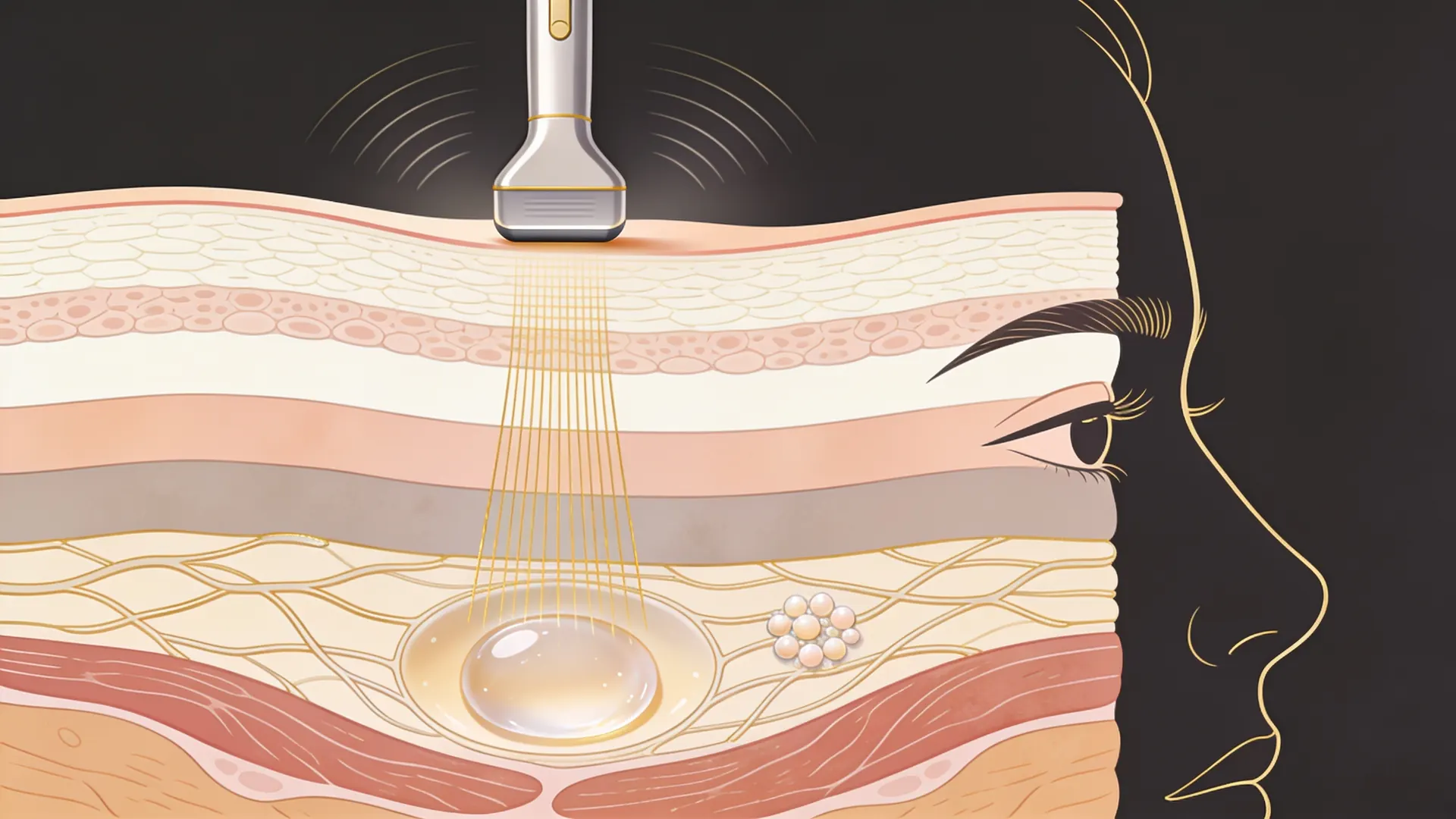
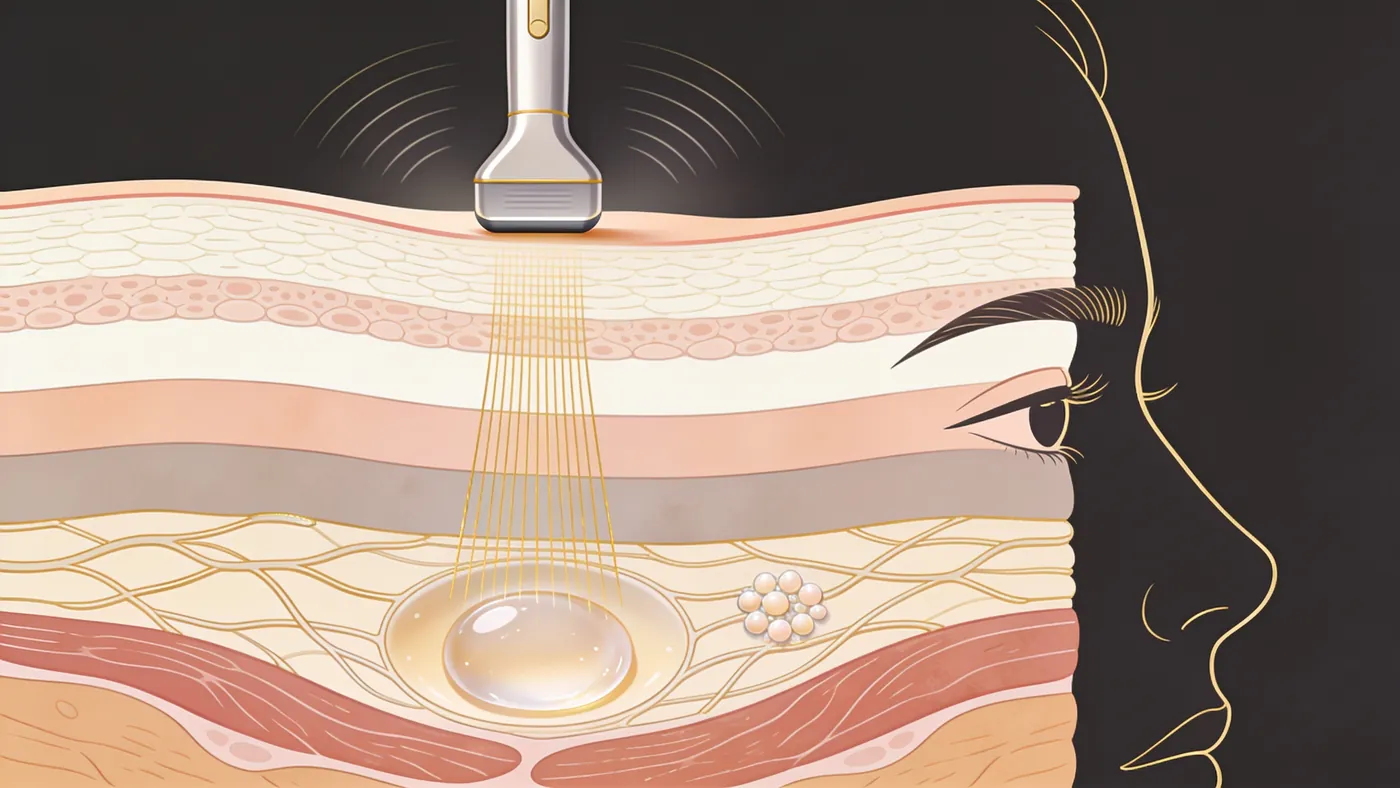
In the first 24 hours after HIFU, leave the skin alone and keep it cool. HIFU places small points of heat at set depths beneath an intact surface, so there is no wound to dress; what you are managing is warmth, tenderness and the small amount of swelling that follows heating. A clean, cool compress held gently against the jawline or cheeks eases the warmth. Do not press, rub or massage the treated lines.
Cleanse with a gentle, non-foaming cleanser and lukewarm water, pat dry, and use a plain moisturiser. Leave out retinoids, exfoliating acids, vitamin C serums and scrubs until the skin feels ordinary again. Avoid hot showers on the face, saunas, steam rooms, hot yoga and alcohol for the rest of the day, because heat and alcohol both widen blood vessels and prolong swelling. Paracetamol is reasonable for tenderness if you can take it; avoid anti-inflammatory painkillers unless the clinic has said otherwise, since they can add to bruising.
Ordinary activity is fine; most people carry on with the day. The written aftercare given before you leave is specific to the zones treated and takes priority over this page.
What should you avoid in the first week after HIFU?
For the first week, avoid anything that adds heat, pressure or friction to the treated area. That means no facials, no facial massage or gua sha, no microcurrent or at-home devices, and no other energy-based treatment over the same zones. Dental work that involves prolonged wide mouth opening is better postponed if the jawline is still tender. Swimming in chlorinated pools can wait until any redness has gone.
Make-up can usually be worn once the skin is calm, often the next day; apply it gently and remove it without rubbing. Waxing or threading on the treated skin waits until tenderness has settled, and no new active skincare product should be started in the first week, because a reaction is harder to interpret while the treated lines are still tender.
How should you handle sun, exercise and sleep position?
Sun protection after HIFU is daily and non-negotiable in Singapore's climate. Apply a broad-spectrum sunscreen every morning, reapply if you are outdoors, and wear a hat on bright days. Skin that has been heated is more reactive, and ultraviolet over reactive skin is what drives pigment change in Fitzpatrick III to V skin. No deliberate tanning while the skin is tender.
Light exercise such as walking is fine from the next day. Hard exercise, long runs and hot classes raise skin temperature and blood flow and are better left for a few days until swelling and tenderness have settled; the written aftercare gives the timing for your treatment. Treat exercise as a question of heat rather than of effort.
Sleep face-up with the head slightly raised on an extra pillow while the jawline is tender. Lying on one side presses the cheek and jaw into the pillow, which is uncomfortable and can make swelling look lopsided the next morning. A travel pillow or a rolled towel either side of the head helps anyone who turns in their sleep.
What is normal after HIFU, and what is not?
Normal after HIFU means redness and warmth that settle over the first day, tenderness along the treated lines that is most noticeable when you chew or press the jaw, slight swelling along the jawline, and occasionally a small bruise. These relate to heat placed in the dermis and the SMAS and resolve on their own. A faint tingling or a patch of altered sensation over the cheek or jaw can also occur and is usually short-lived; it should be mentioned at review.
Not normal is anything that points to heat having reached a nerve branch or the surface. Numbness or tingling that persists rather than fades, a new weakness when you smile, purse the lips or raise the brow, a raised welt or linear mark along a treated line that does not flatten, a blister, or swelling that is marked or clearly one-sided. These are uncommon, and they are the reason depth and energy are set zone by zone by a doctor, but they need prompt review rather than waiting for the scheduled appointment.
“Tenderness along the jaw after HIFU is common; numbness or weakness that does not settle needs a review.”
Dr Sin YongOn recovery after HIFU
Early firmness is not the result. Collagen remodels gradually around each coagulation point over the following weeks and months, which is why the review is timed to allow for that response. The article on HIFU shots explains why the number of lines is not a measure of how much change to expect.
When should you call the clinic after HIFU?
Call or message +65 8023 7170 during clinic hours (Monday to Friday 10am to 8pm, Saturday 11am to 3pm) if you notice any of the following:
Numbness, tingling or a patch of altered sensation that persists rather than fades.
Any change in facial movement: a smile that looks uneven, difficulty pursing the lips, a brow that will not lift.
A raised welt, a linear mark or a blister along a treated line.
Swelling that is marked, increasing, or clearly worse on one side.
Pain that is increasing rather than settling, or skin that becomes hot, red and tight.
A new hollow or dent over the cheek or temple.
If a message is sent outside clinic hours and the problem is urgent, do not wait for a reply; the complication care page sets out which signs go to a hospital emergency department. Most calls after HIFU turn out to be expected tenderness, and you will be told plainly whether what you describe sounds ordinary, needs to be seen, and how soon.
What happens at the review, and what if you were treated elsewhere?
The review is timed to the gradual response of collagen, not to the day after treatment. Dr Sin Yong examines the treated zones, asks about sensation and movement, and compares the face with the photographs in your medical record. Whether any further step is appropriate is decided then; the VF Lift – Vertical Facelift works by monopolar radiofrequency on a different layer and is sometimes planned alongside HIFU rather than instead of it.
If you had HIFU elsewhere and something feels wrong, the same warning signs apply: contact the clinic that treated you, or another doctor, and bring the device name, the zones treated and the date. How consultations work here is set out on the consultation process page.