Flying after an aesthetic treatment: how soon, and what to plan for
Medically reviewed by Dr Sin Yong · Last reviewed · 4 min read
Cabin pressure is rarely the problem. The reason to leave a gap between a treatment and a flight is that the first days are when swelling peaks, when an early problem shows itself, and when a review in person is easiest to arrange. For most injectables a gap of a day or two is planned; for thread lifts and resurfacing lasers, closer to a week. The table below sets out the intervals used when planning a visit, and why each one exists.
Illustrative image. Sun at the destination matters as much as the flight itself after laser treatment.
Key facts
Main reason for a gap
Seeing early swelling or a rare complication while still in Singapore, not cabin pressure
Injectables
A planning gap of about 1–3 days, depending on the product and area
Thread lifts
About 5–7 days before a long-haul flight
Resurfacing lasers
Until the skin has re-surfaced, often around a week
Non-ablative devices
Often the next day; sun protection on arrival
Urgent signs
White or mottled skin, worsening pain or any change in vision after filler need emergency care
No clinical trial sets a minimum interval between an aesthetic treatment and a flight, so the intervals below are planning intervals: the time it usually takes for the expected reaction to settle enough to be read, and for the rare early complication to declare itself. They are not promises about how you will look, and the plan for your own visit is set at assessment.
Planning intervals before flying home
Treatment
Gap usually planned
Why
Anti-wrinkle (botulinum toxin) injections
Same or next day
Cabin pressure does not move the toxin; the first hours are about not pressing or massaging the area
Hyaluronic acid filler
About 1–3 days
Swelling and bruising peak in the first 48 hours; vascular warning signs usually appear early
Collagen stimulators (PLLA, PCL, CaHA)
About 2–3 days
Aftercare instructions such as massage are taught and checked before you leave
Skin boosters and polynucleotides
Next day
Small injection bumps settle within a day or two
Thread lift
About 5–7 days
Swelling, tenderness and restrictions on wide mouth opening and sleeping position
Focused ultrasound (HIFU) or monopolar RF
Next day
Little visible reaction in most people; tenderness can last some days
Pico or laser toning
Next day
Mild redness; sun on arrival is the bigger risk for pigment
RF microneedling
About 2–4 days
Redness and tiny grid marks settle over a few days
Fractional CO2 or other resurfacing laser
About 7 days
Crusting and an open skin surface need cleaning and ointment until re-surfaced
Mole or lesion removal
Next day, with dressings
Wound care continues at home; histology results are communicated by message or teleconsultation, and any result needing action is discussed with you directly
If a plan needs a review that falls after your return, it can be staged differently, or the treatment can wait for a longer visit. That conversation is easier before a flight is booked than after; the trip planner sets out typical stays by treatment.
Why the gap is about review, not cabin pressure
Aircraft cabins are pressurised to the equivalent of roughly 1,800 to 2,400 metres above sea level. That small change does not shift filler, threads or toxin, and there is no good evidence that it worsens bruising. What it can do is dry the skin, because cabin air is low in humidity, and that matters for skin that has just been lasered or peeled.
The real reason to stay a little longer is timing. After filler, the most serious early complication, a blocked blood vessel, is usually apparent within minutes to hours of the injection, and it is treated urgently with an enzyme that dissolves hyaluronic acid. Being near the clinic during that window is the safer arrangement. After toxin injections, uneven movement is assessed at around two weeks, which is why some visitors plan their injections at the start of a stay or on a later trip. The page on filler warning signs explains what to look for.
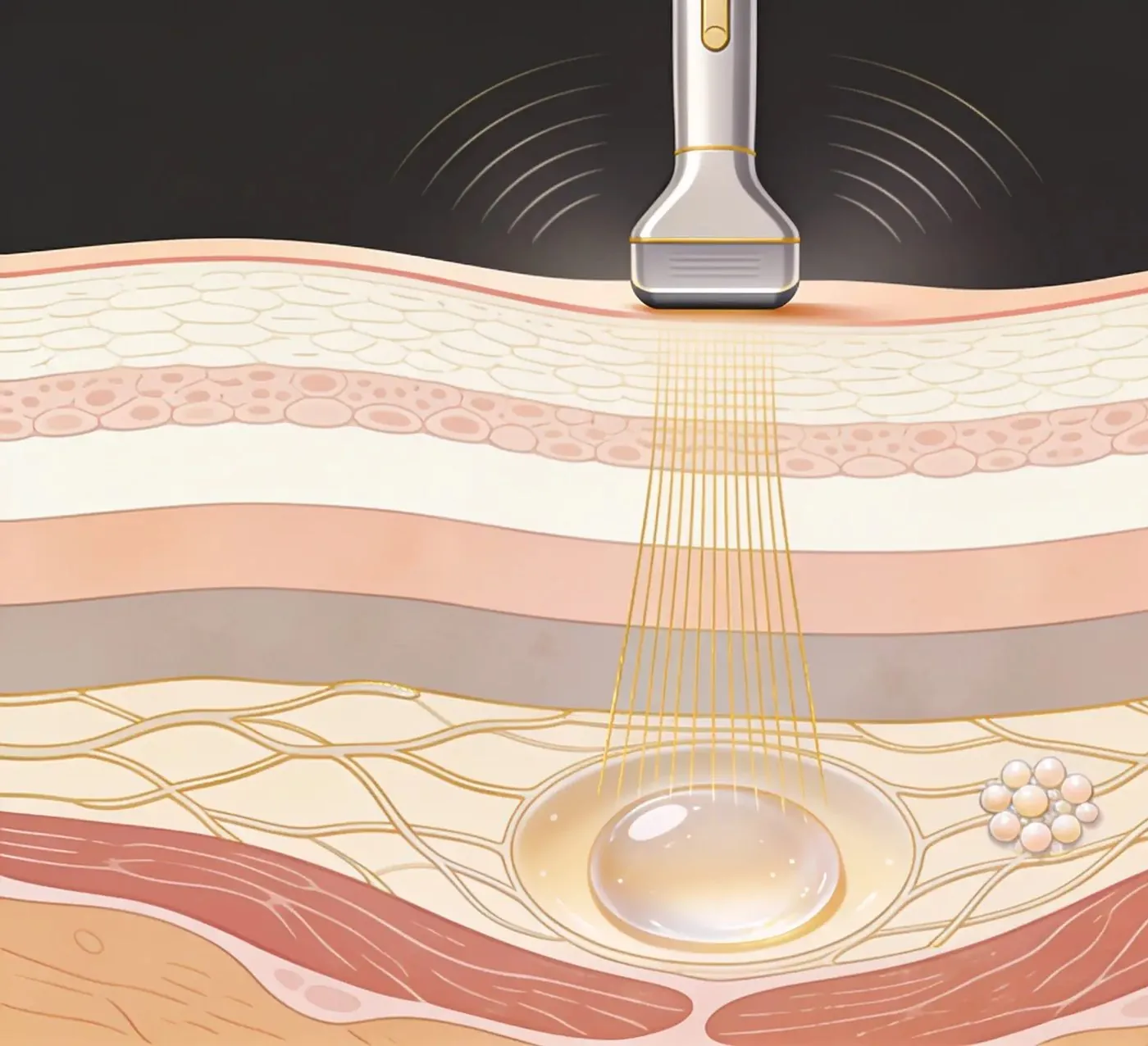
Illustration. Where filler sits is checked by ultrasound when a problem needs mapping.
On the flight: what helps
Drink water and keep alcohol light, because both dehydration and alcohol make swelling and flushing worse. Avoid pressing on treated areas: tight eye masks after under-eye work, and neck pillows that push into the jaw after a thread lift or jawline treatment. Sleep with your head slightly raised if you can.
After laser or peels, keep the skin moisturised with what you were given, close the window blind on a day flight, and apply sunscreen on arrival rather than after a day outside. Make-up is usually avoided until the skin surface has closed. Long-haul flights carry a general risk of blood clots in the legs for anyone, which is unrelated to these treatments; the usual advice about walking and calf exercises applies.
Signs that need care before or after you fly
Most of what people notice is expected and is covered in the written aftercare: swelling, redness, small bruises, tenderness and, after laser, warmth and fine crusting. A short list of signs is different and should not wait for the next message reply.
After filler: skin that turns white, grey, blue or mottled; pain that is worsening rather than easing; any change in vision. These need emergency care immediately, wherever you are.
After toxin injections: difficulty swallowing, speaking or breathing, generalised weakness, double or blurred vision or drooping eyelids are rare, can appear hours to weeks after injection, and need emergency care.
After laser, microneedling or threads: spreading redness, increasing heat, pus or fever suggest infection and need a doctor the same day.
Before you fly, you will be told which of these apply to your treatment, and questions after you land come back through the same WhatsApp line. The complication care page describes how problems are handled.
How to order a short visit
The order that works best is consultation early in the stay, treatment after you have had time to consider the written plan, and a check before departure where the treatment calls for one. You are not expected to decide on the day of the consultation. If you are short of time, it is reasonable to have only the assessment on the first trip and to plan treatment for a later visit.
Bring the names of any products used on you before, with the dates and areas, and a list of your medicines and supplements. Blood thinners, some supplements and recent dental work all change the plan, so mention them when you first write.
“The question is not whether the plane is safe. It is whether you are still close enough to be seen if the first days do not go as expected.”
Dr Sin YongOn planning treatment around a flight
Frequently Asked Questions
Many people do, but a gap of one to three days is usually planned so that swelling can be read and the rare early complication can be treated in Singapore. The interval for your own treatment is set at assessment.
There is no good evidence that the pressure change in a cabin moves filler or toxin. The gap before flying is about review and aftercare, not pressure.
About five to seven days is usually planned, because swelling and restrictions on mouth opening and sleeping position are greatest in the first days.
Usually once the skin has re-surfaced, often around a week after a fractional CO2 treatment. Before that, the open surface needs regular cleaning and ointment, which is hard to manage on a flight.
Most people can fly the next day. Tenderness can last some days, and sun protection on arrival still matters.
Expected reactions are covered in written aftercare and questions come back by WhatsApp. Warning signs after filler, such as white or mottled skin, worsening pain or vision change, need local emergency care immediately.
References
King M, Walker L, Convery C, Davies E. Management of a vascular occlusion associated with cosmetic injections. J Clin Aesthet Dermatol. 2020;13(1):E53-E58. source
SMC Ethical Code and Ethical Guidelines (2016 Edition), section A6 Telemedicine. Singapore Medical Council. source