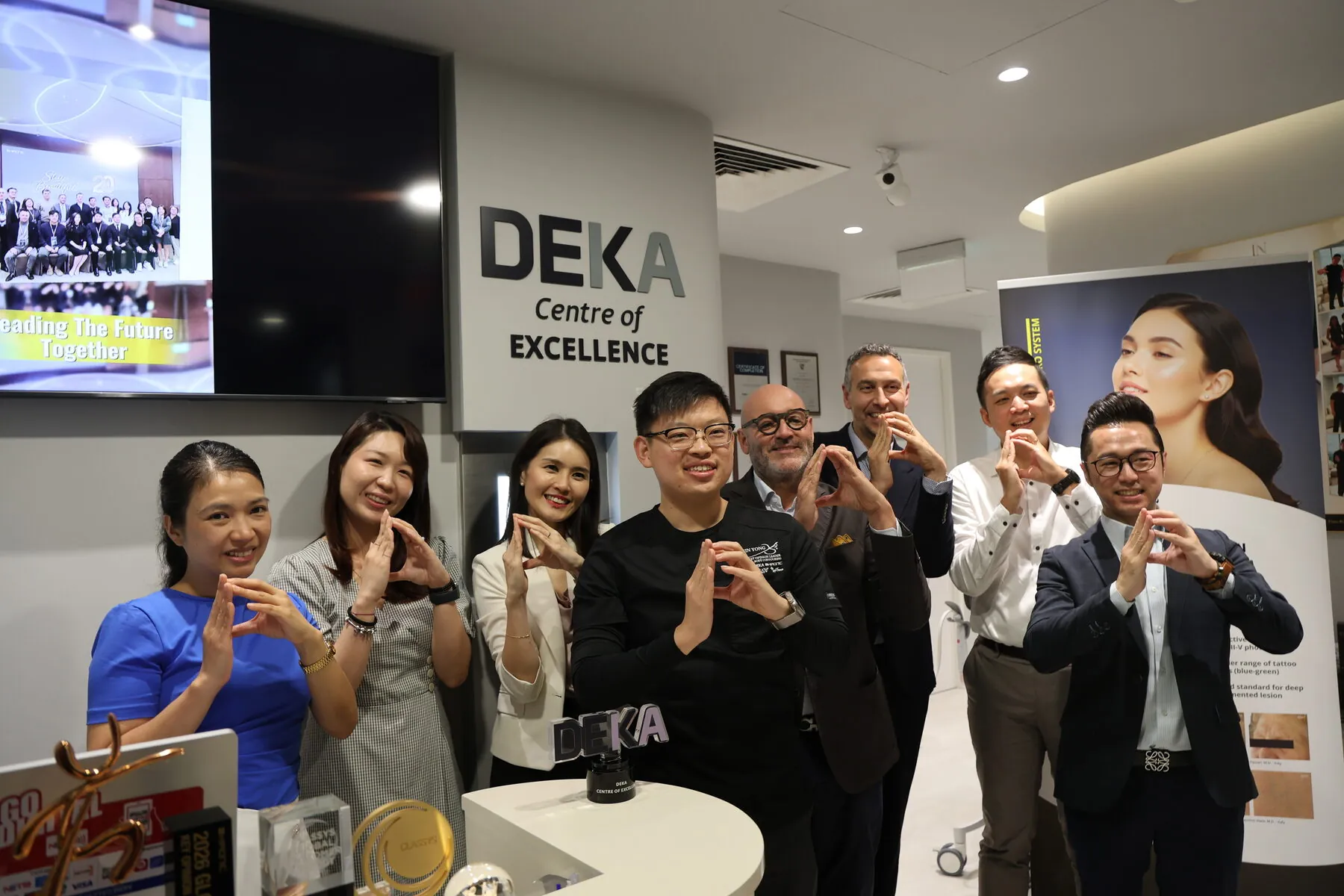
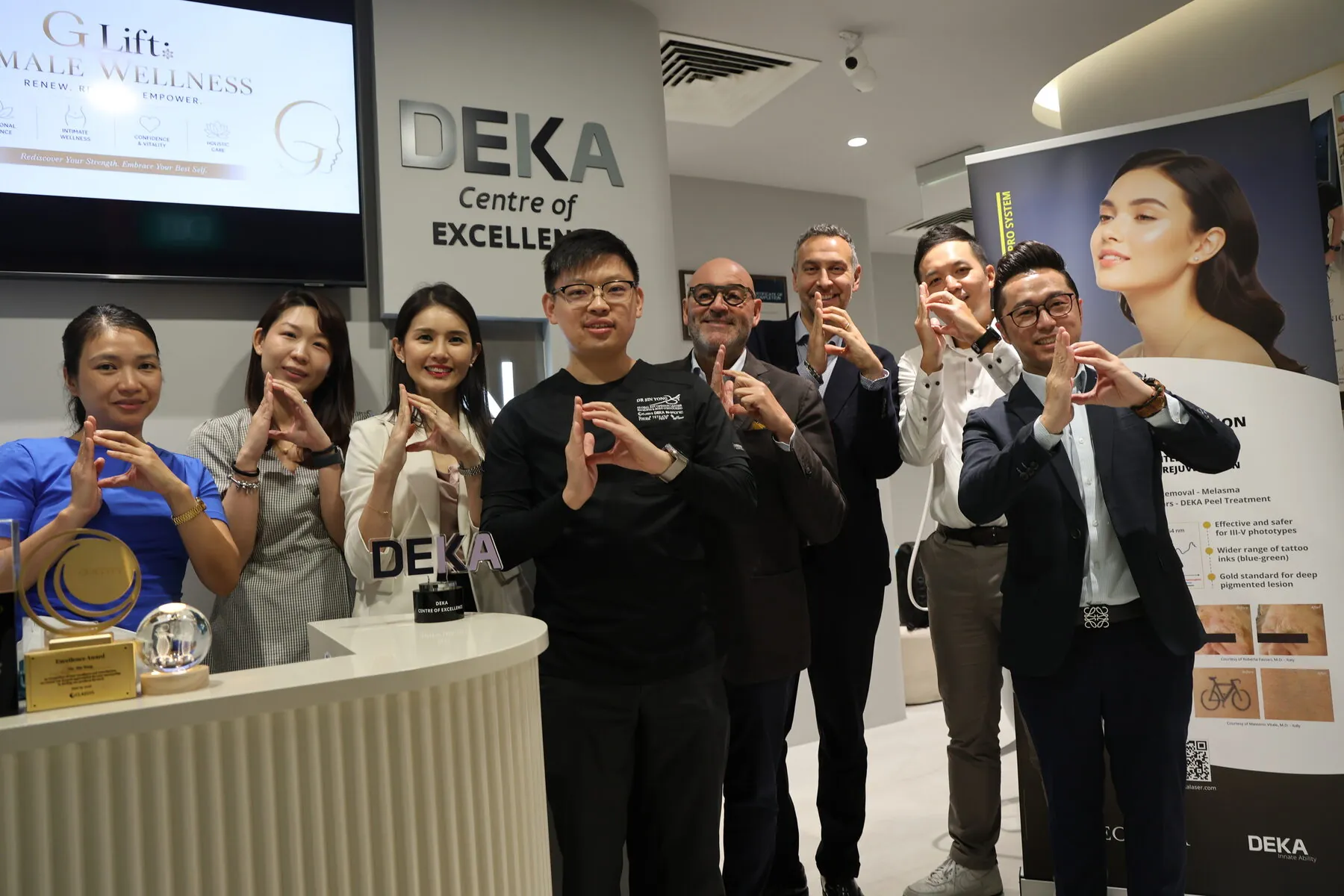
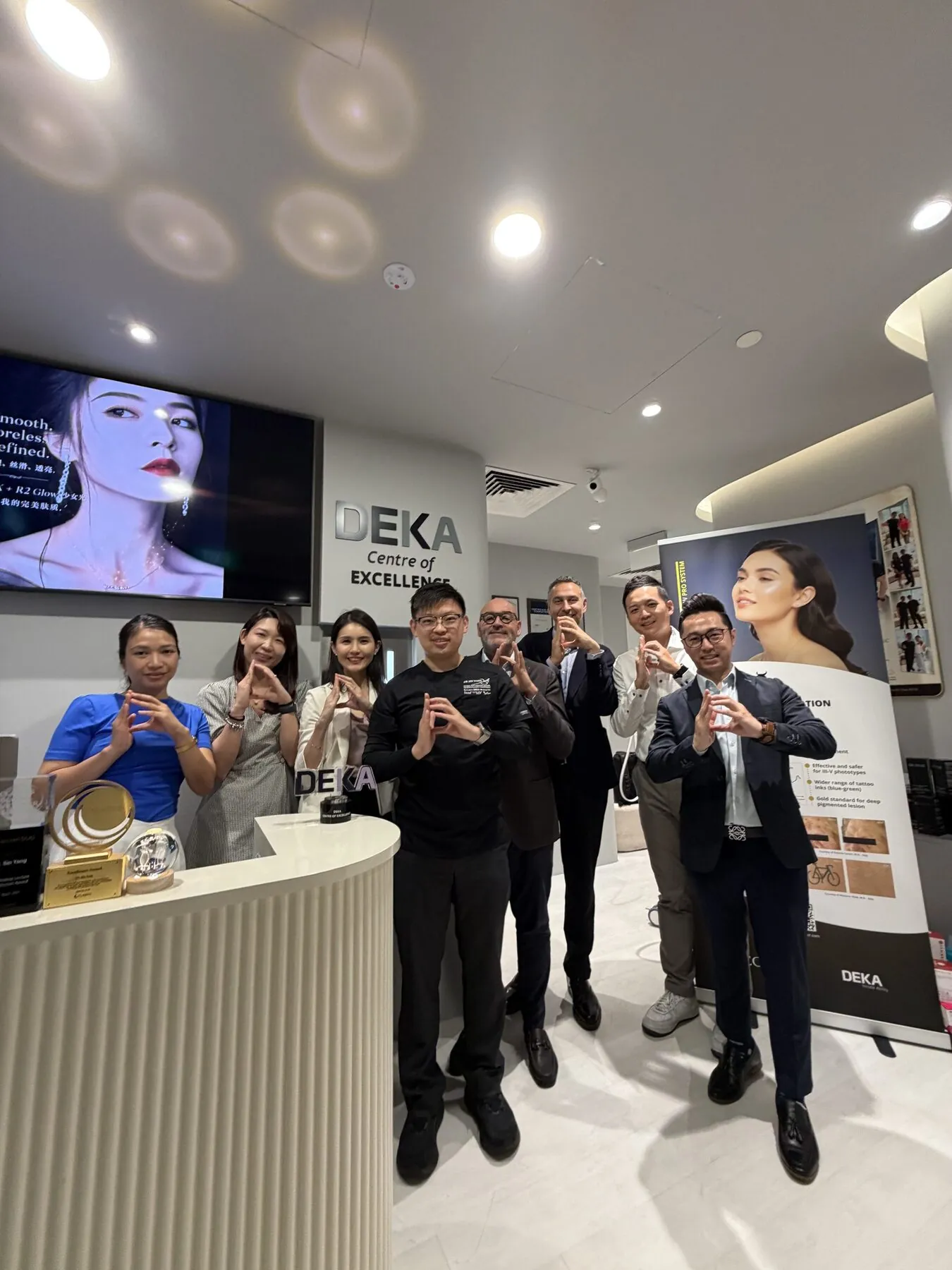
Dr Sin Yong is a Global Key Opinion Leader for DEKA, invited to share his clinical expertise with physicians and presenting protocol work internationally. In July 2026 a DEKA delegation from Italy spent a full working day with him at IN Eternity Clinic — one of the centres where he practises — for a clinical exchange on the TORO, RedTouch Pro and Tetra Pro CO2 platforms. The clinic was certified a DEKA Centre of Excellence by DEKA and NeoAsia during the visit.
DEKA Centre of Excellence status in Singapore was awarded by DEKA and NeoAsia in July 2026 to a clinic where Dr Sin Yong, a Global Key Opinion Leader for DEKA, practises. It followed a clinical exchange on the TORO, RedTouch Pro and Tetra Pro CO2 platforms and does not promise any treatment result.
Dr Sin Yong holds Global Key Opinion Leader appointments with six device manufacturers: DEKA, CLASSYS, HIRONIC, ALMA, FOTONA and LUTRONIC. It is worth setting out plainly what such an appointment is, because the term is used loosely in aesthetic medicine and often taken to mean something it does not.
A Key Opinion Leader appointment is a working relationship between a physician and a manufacturer. It is not a sponsorship, and it is not an endorsement in either direction. What it means in practical terms is that the manufacturer's clinical and engineering teams consult the physician when they are developing or refining treatment protocols — asking how a platform behaves in real clinical conditions, on real skin types, at settings that may sit well outside the factory presets. In return, the physician shares his clinical expertise with other doctors how to use the platform, usually at the chairside rather than from a lectern.
The distinction matters because it explains why a visit of this kind happens at all. A manufacturer does not fly a delegation halfway around the world to show a physician what a machine does. It does so because it wants to know what the physician has learned about the machine that the manufacturer does not yet know.
Dr Sin Yong's clinical work in this area runs across facial lifting, body contouring and scar reconstruction. On DEKA platforms specifically he has developed S3 multi-depth resurfacing, which he has presented at physician events, and 4D Scar Reconstruction. He is invited to share his clinical expertise with doctors across the Asia–Pacific region and has presented at symposia in Bangkok, Taipei, Seoul, Dubai and Singapore.
His qualifications are MBBS (National University of Singapore), MRCS (Edinburgh), MSc Aesthetic Medicine with Distinction (Queen Mary, London), MSc Practical Dermatology (Cardiff) and a Graduate Diploma in Sports Medicine.
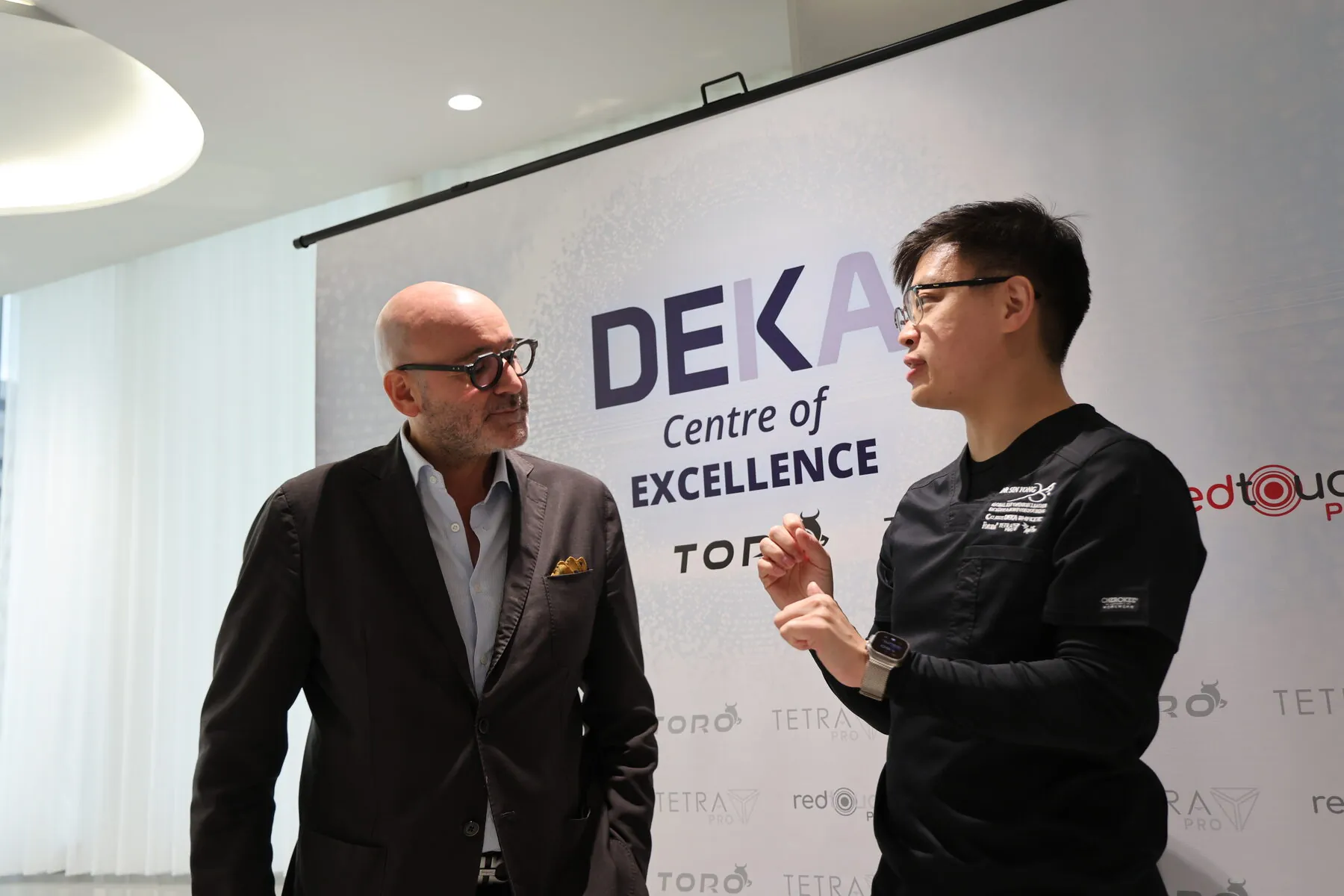
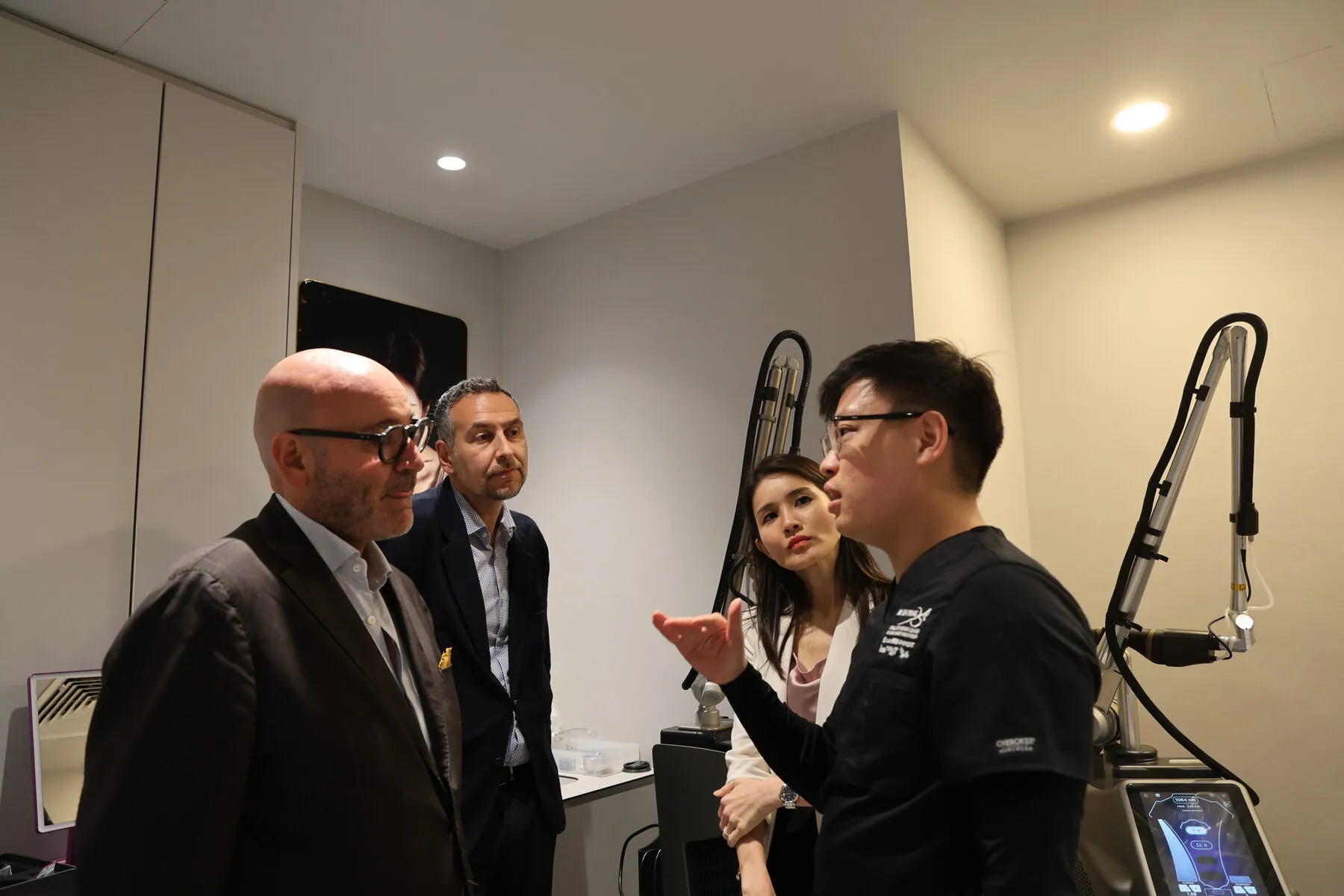
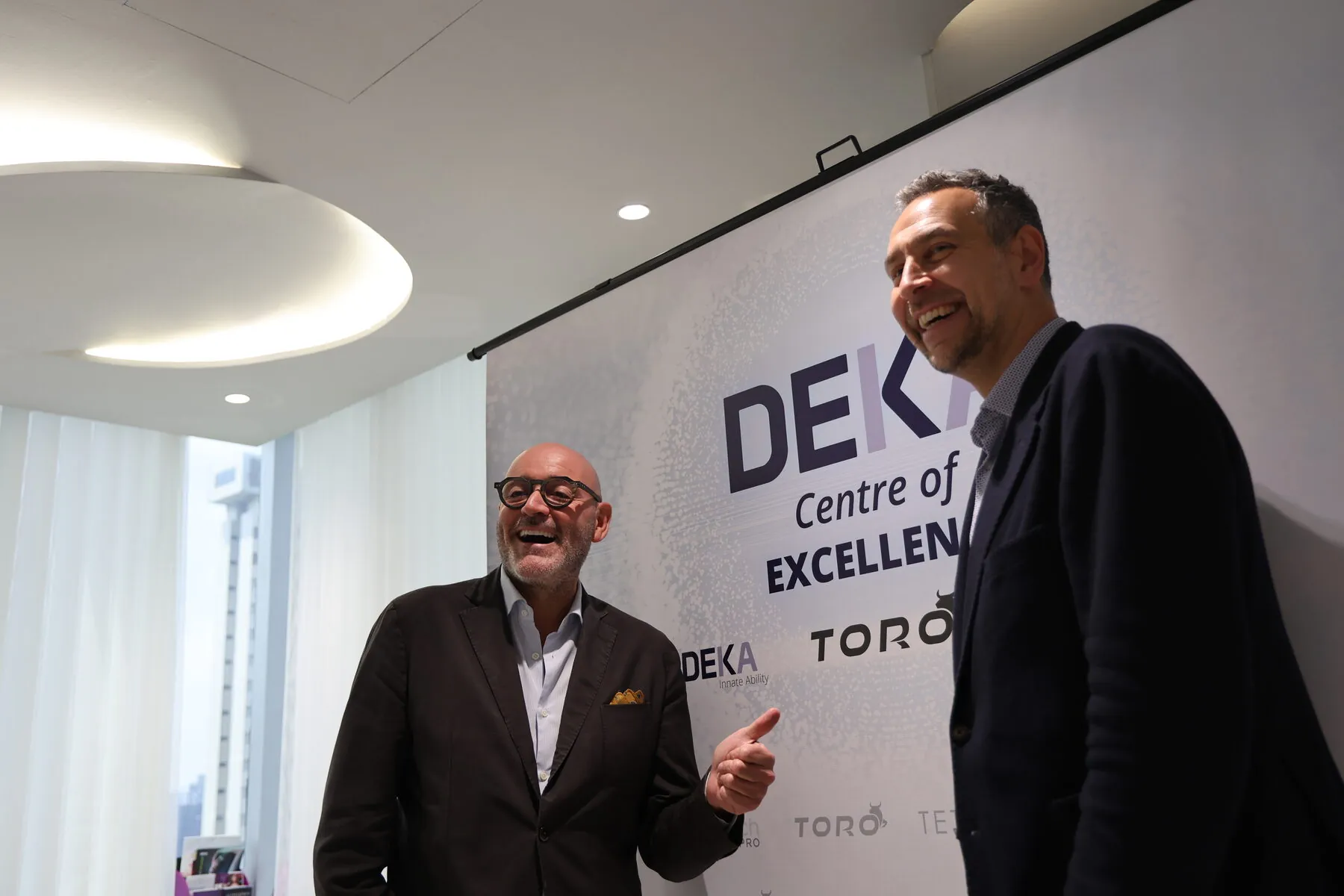
Dr Sin Yong at the Centre of Excellence backdrop.Discussing parameter selection with the delegation.
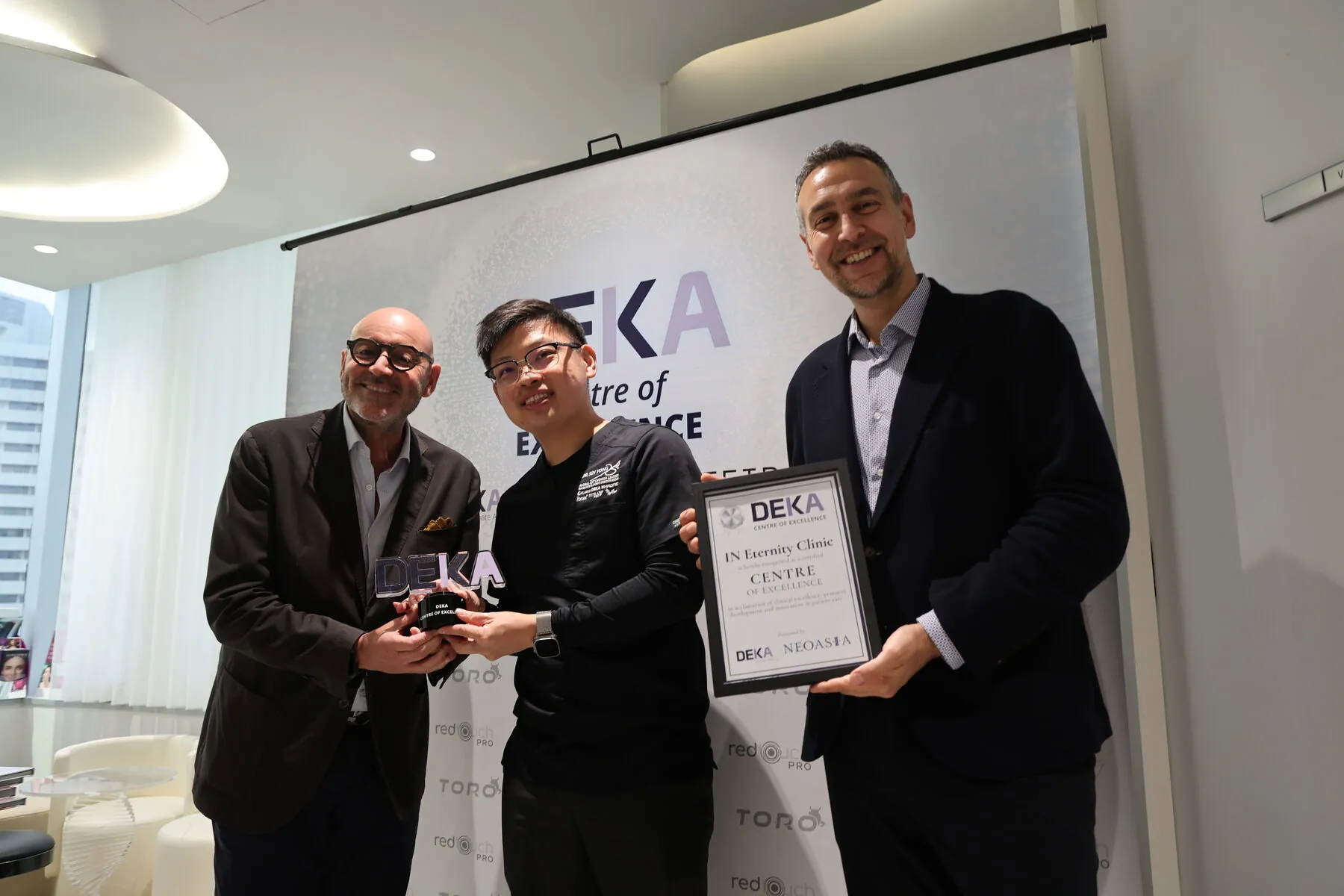
The Centre of Excellence Certification
DEKA is a medical laser manufacturer based in Florence, Italy. The company's roots are in laser physics rather than in cosmetics, and that lineage stretches back more than four decades — a period during which it contributed to the development of carbon dioxide laser technology for surgical and dermatological use. Its platforms are used in dermatology, plastic surgery, gynaecology and ENT as well as in aesthetic medicine.
The Centre of Excellence programme certifies a small number of clinics internationally. The designation is granted on the basis of clinical standards, protocol development and innovation in patient care rather than on purchase volume, and it is reviewed rather than granted permanently on first issue.
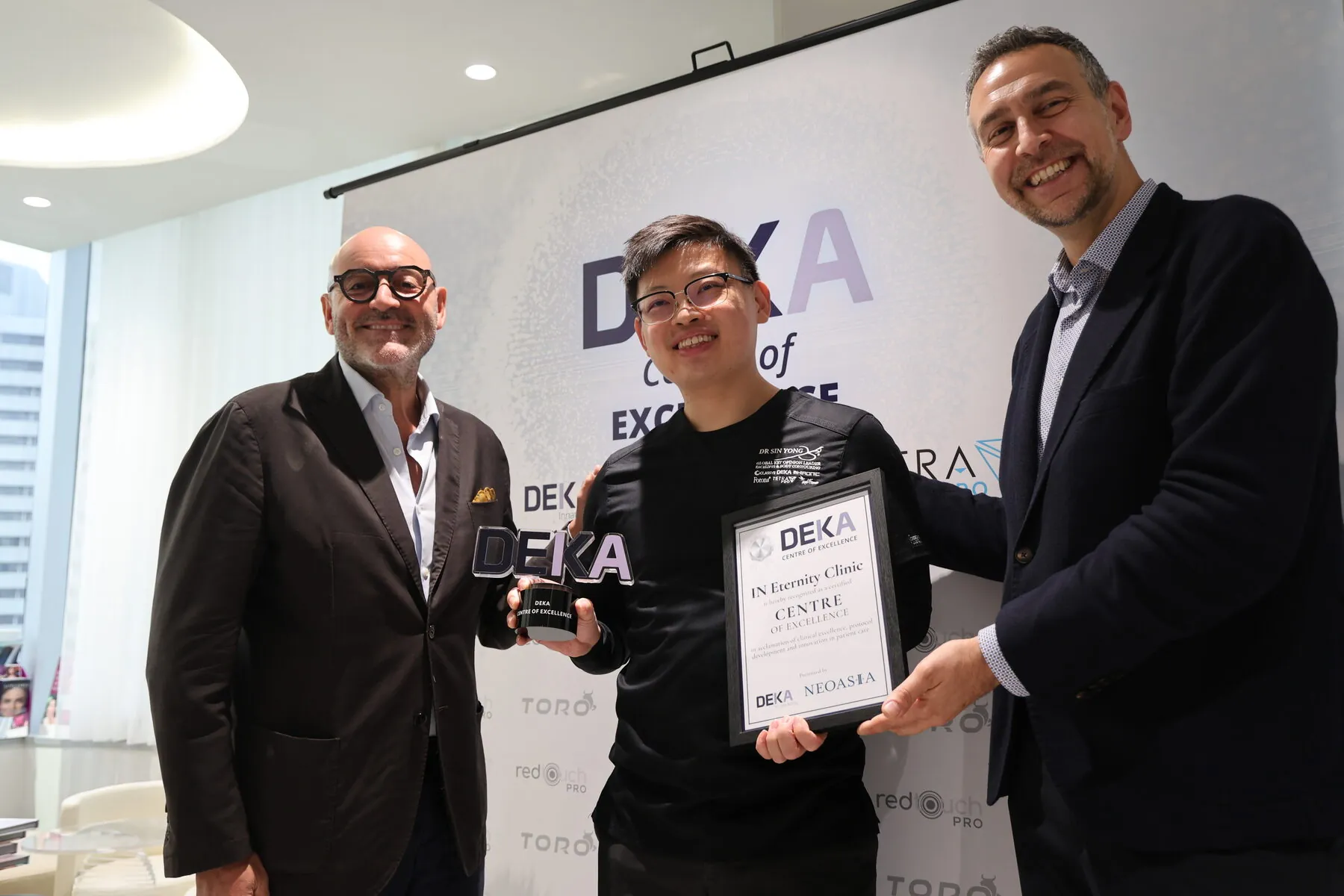
IN Eternity Clinic, one of the centres where Dr Sin Yong practises, received the certification on 24 July 2026. It was presented jointly by DEKA and NeoAsia, DEKA's Asia–Pacific distributor, and the designation is now held by the clinic on Orchard Road.
Because certifications of this kind are easy to over-read, it is worth being precise about what this one does and does not mean. It speaks to how a clinic is trained, how its protocols are developed, and how its equipment is maintained and applied. It says nothing about any individual patient's result. Response to any laser protocol varies with skin type, condition, age, medication history and a range of other factors, and every course is planned individually at consultation after in-person assessment. A certification is a statement about process. It is not a prediction about outcome, and no reader should treat it as one.
The Centre of Excellence certification presented by DEKA and NeoAsia, 24 July 2026.
“The physician shares his clinical expertise with other doctors how to use the platform, usually at the chairside rather than from a lectern.”
Dr Sin YongOn what a Key Opinion Leader appointment involves
The July 2026 Clinical Exchange
The delegation that arrived on 24 July included Dr Giustino and Francesco from DEKA, together with representatives from NeoAsia. The day ran from mid-morning through the afternoon, and it was structured as a two-way clinical exchange rather than a product presentation.
That structure is worth describing, because it is not how most manufacturer visits work. There was no scripted demonstration and no sales component. The day moved between the consultation room and the treatment rooms, with the group working through one platform at a time: what each system is actually doing to tissue, which parameter combinations suit which presentations, where the factory presets are a sensible starting point and where they are not, and how all of that shifts when the skin in front of you is Fitzpatrick III to V rather than the phototypes most European clinical data is built on.
Dr Sin Yong's contribution ran in both directions. He walked the delegation through protocol work he has developed on DEKA platforms, including his approach to multi-depth scar resurfacing, and the visiting team brought clinical data and engineering detail from Italy that fed back into how those protocols might be refined. Several settings were discussed that sit outside the standard parameter sets — the kind of adjustment that only becomes visible after a physician has run a platform across a large number of cases and formed a view about where its useful range actually lies.
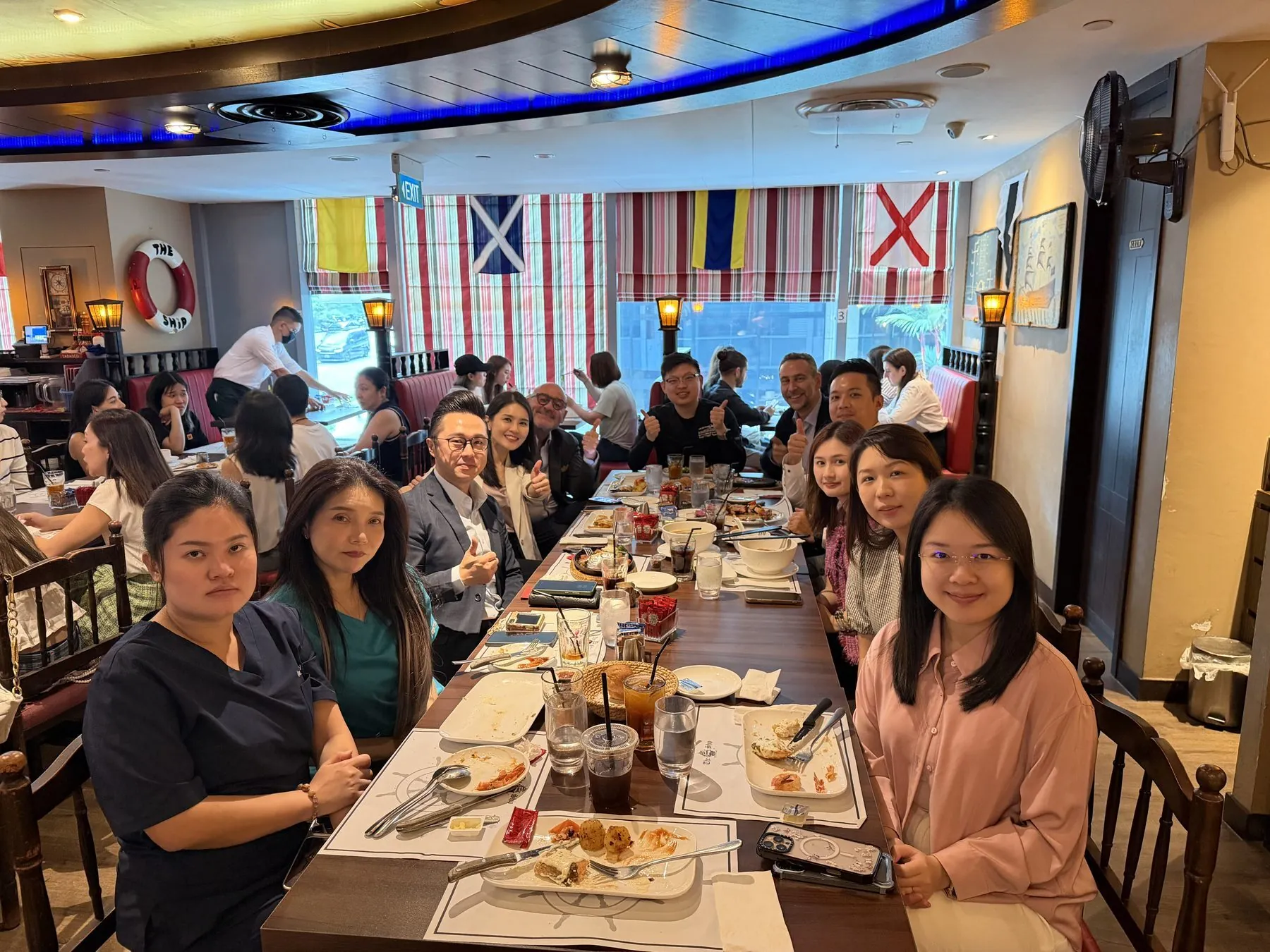
The group broke for lunch in the middle of the day and carried the discussion with them. Some of the most useful conversations in clinical medicine happen away from the equipment, and this was no exception. The afternoon then returned to the treatment rooms before the certification was presented.
Discussion at the Centre of Excellence backdrop.Working through platform reasoning.The team marking the certification.
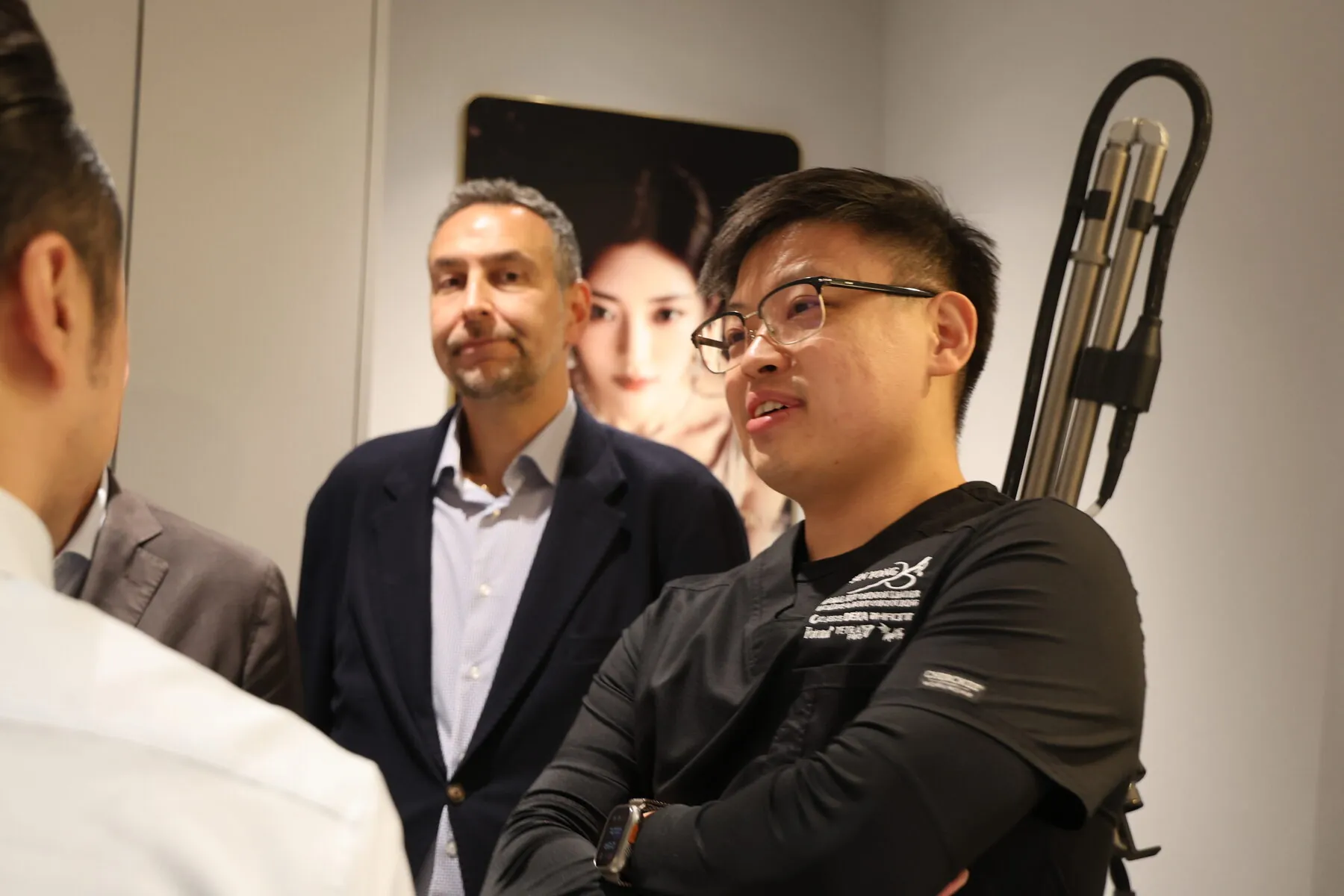
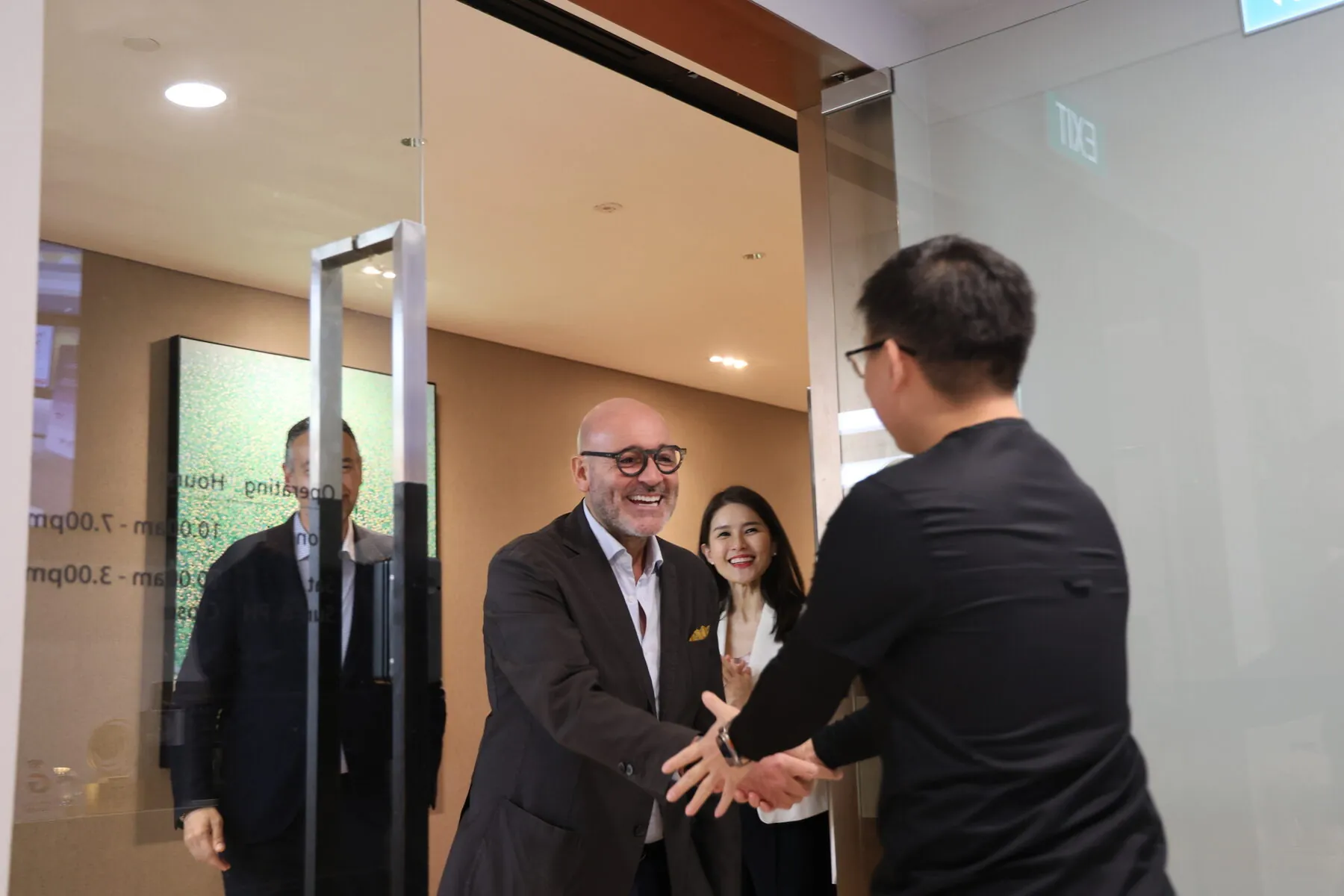
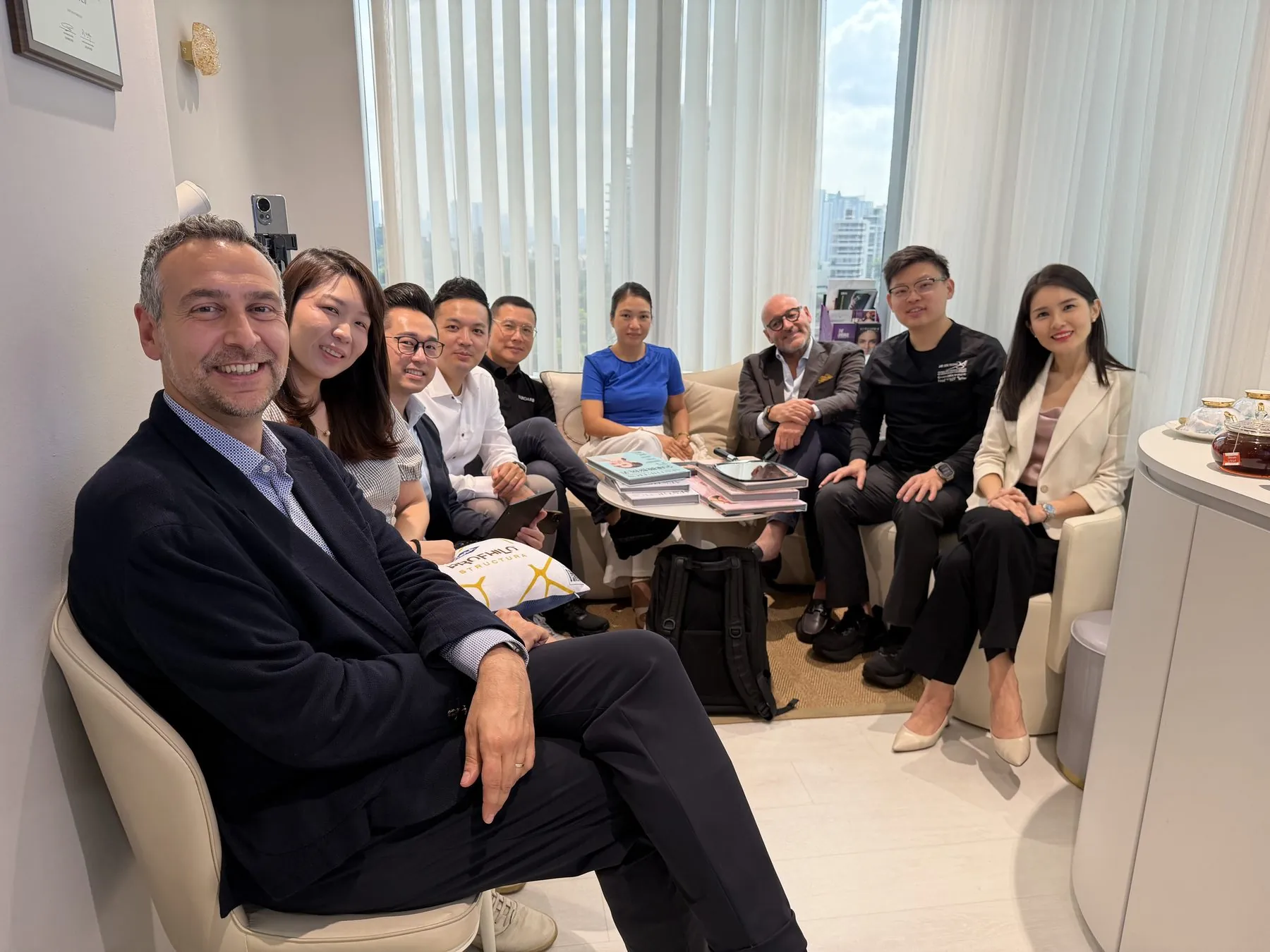
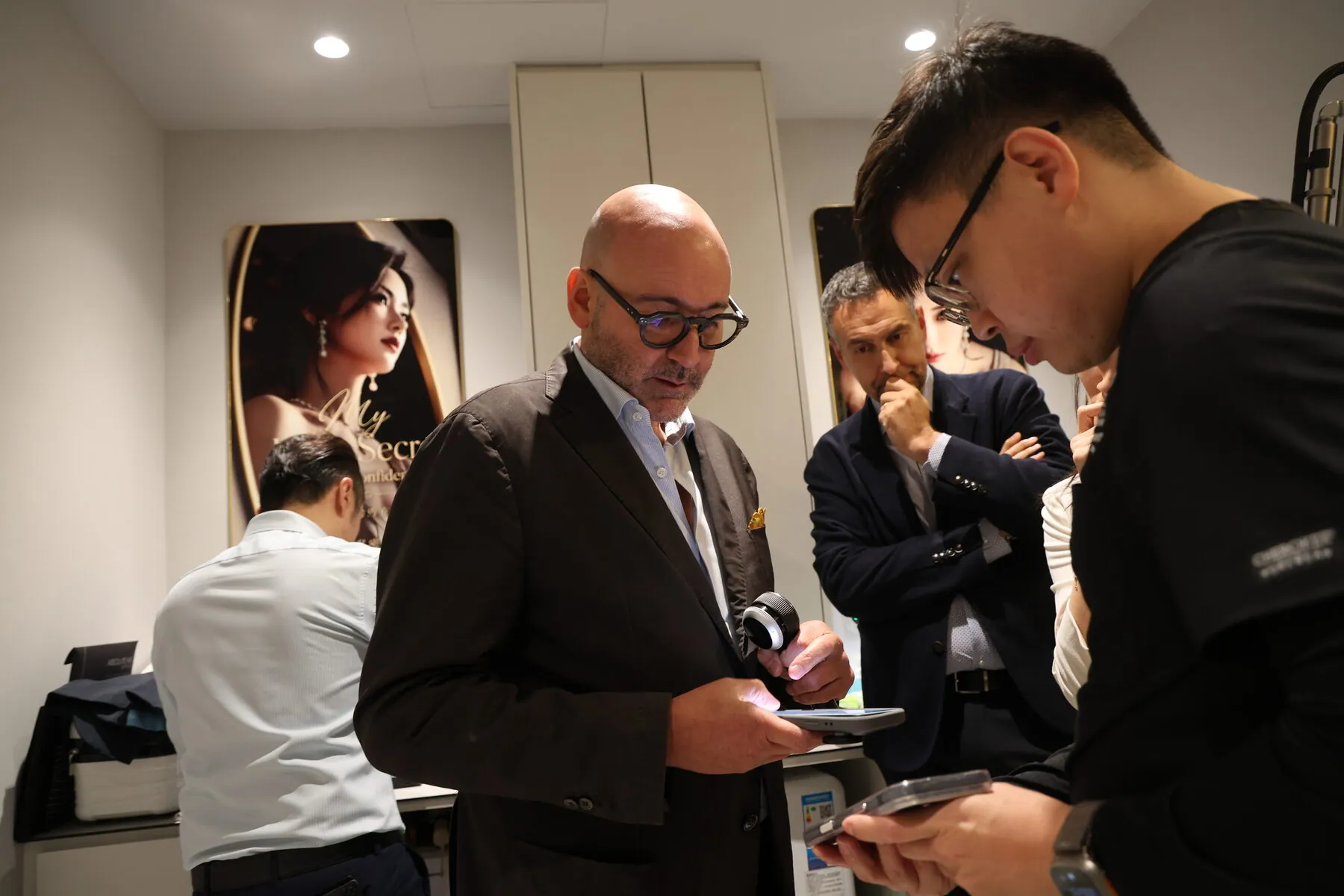
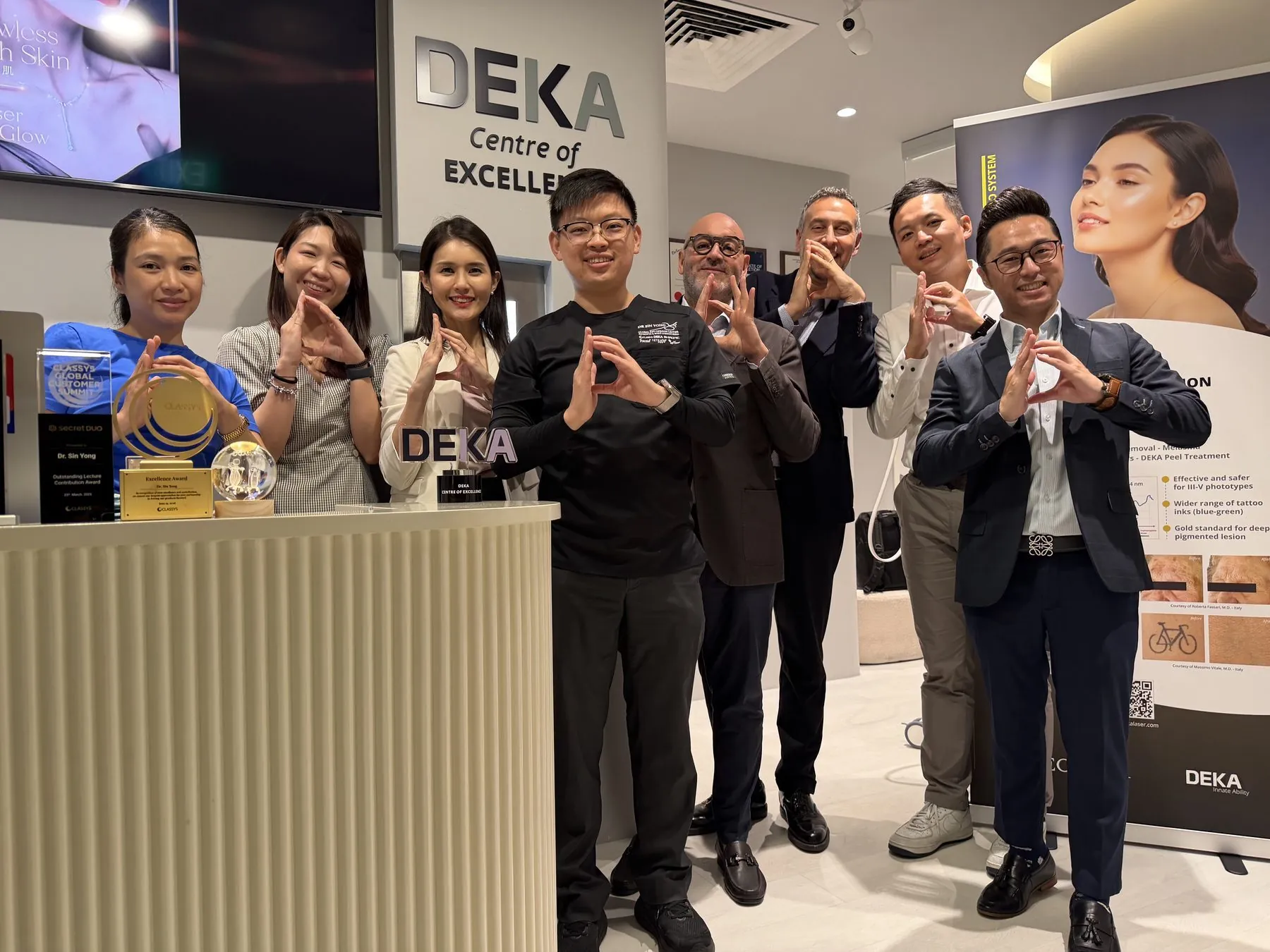
Welcoming the delegation on arrival.The opening discussion in the consultation room.Working through settings at the platform.Handpiece and applicator selection.The discussion carried on over lunch.The team at the clinic reception.
Working the TORO Platform
TORO was the platform that occupied most of the day, and it is the one that rewards the most explanation.
What the platform actually is
TORO is a hybrid system, and what most patients would recognise as a pico laser: it delivers both Q-switched and picosecond pulses across multiple wavelengths, and supports a repetition rate of up to 20 Hz. Those are specifications rather than promises, but they matter because they determine what a physician can and cannot do with the machine.
The mechanism is photoacoustic rather than photothermal. A pulse measured in picoseconds is too brief for meaningful heat to spread into surrounding tissue; instead it generates a rapid pressure wave that fragments pigment particles mechanically. The clinical reasoning behind using this on Asian skin follows directly from that distinction. In Fitzpatrick III to V skin, the principal risk in any pigment-directed treatment is that thermal energy absorbed by surrounding melanin provokes post-inflammatory hyperpigmentation — the skin responding to injury by making more of exactly the pigment you were trying to reduce. A mechanism that does its work before heat has time to diffuse changes that risk calculation.
Beyond the presets
Every platform ships with preset parameters. They exist so that a machine can be used safely by someone who has just been trained on it, and they are generally set conservatively for that reason. They are a floor, not a ceiling.
Much of the day was spent on where the useful range sits above that floor: which fluence and spot-size combinations to reach for on which presentation, how to sequence passes, when to change wavelength mid-treatment, and where the platform's higher repetition rates are genuinely useful as against where they simply outpace what the tissue can accommodate. Dr Sin Yong moved quickly into specialised parameter sets during these discussions, and the exchange with Dr Giustino and Francesco turned on the reasoning behind those choices rather than on the numbers themselves.
Pigment and brightening
Brightening and pigmentation protocols formed the first substantial block of the day. Pigmentation treatment on Asian skin is where picosecond delivery earns its place, and the discussion covered how to distinguish epidermal from dermal pigment before selecting a wavelength at all, how melasma differs from solar lentigines and post-inflammatory change in the way each responds to laser treatment for pigmentation, and why a protocol that suits one of those presentations may be actively unsuitable for another.
This is the clinical territory behind Dr Sin Yong's T2 Frax Radiance pico laser, which runs on the TORO and pairs picosecond pigment work with a thermal-mode tightening pass, and behind his R2 Glow protocol, which is built around progressive, calibrated brightening for Asian skin rather than aggressive single-session clearance. The judgement involved is largely about restraint: knowing where to stop, and recognising the presentations where a laser is not the right first instrument at all.
The periorbital region and dark eye circles
The group then moved to the area under the eye, which is among the most demanding regions on the face and among the most commonly misunderstood by patients.
The reason is that "dark eye circles" is not one condition. It describes an appearance that can arise from at least four distinct causes, and they do not share a treatment. Pigmentation may sit in the epidermis or deeper in the dermis. Thin periorbital skin can allow the vascular plexus beneath it to show through as a bluish cast, which is not pigment at all. Volume loss along the tear trough creates a shadow that photographs as darkness but is structural. And skin laxity produces crepe and texture change that reads as shadow under most lighting.
A platform-based approach is appropriate for some of these and irrelevant to others. The periorbital discussion covered how to differentiate them on examination, where the picosecond mechanism has a role in the pigmentary component, and where the honest answer is that a laser will not address the cause — because the cause is volumetric or structural, and belongs to a different treatment approach entirely. Working close to the orbit also imposes its own safety discipline: eye shields, energy selection and handpiece angulation are all handled differently here than elsewhere on the face.
Moving to scar work
The final block of the platform discussion moved to scars, which is the area in which Dr Sin Yong has most often been invited to share his clinical expertise.
Acne scarring is not a single entity either. Ice-pick scars are narrow and deep, with tracts that can extend well below the surface. Boxcar scars are broader with defined vertical walls. Rolling scars are shallow and undulating, tethered from beneath by fibrous bands rather than defined by any surface defect at all. Each morphology responds to a different depth and a different energy delivery, and the reason a single uniform pass produces disappointing work across a mixed field is that most of the field is being treated at the wrong depth for its morphology.
This is the reasoning behind S3 multi-depth resurfacing, where depth is varied across a single treatment field so that different morphologies within the same area are each addressed on their own terms, and behind 4D Scar Reconstruction, which layers energy-based work with structural correction for tethered scars that resurfacing alone will not release.
Platform work during the exchange.
RedTouch Pro — the Long-Pulsed Platform
RedTouch Pro occupies a different position in the range. Where TORO works through ultra-short photoacoustic pulses and Tetra Pro CO2 works ablatively, RedTouch Pro is long-pulsed, with a gentler thermal profile and a correspondingly gentler tolerability.
Dr Sin Yong uses it across four areas. The first is skin brightening, where it offers a slower, lower-impact route than pigment-directed laser work. The second is inflammatory activity — the redness and reactivity seen in acne flares and in rosacea — where the objective is to calm rather than to resurface. The third is the scalp, in androgenetic alopecia. The fourth is a mild tightening effect that accompanies the other three rather than being sought on its own. It is the platform behind Dr Sin Yong's 少女光 protocol, which works at the reticular dermis for redness, pores and skin tightening.
Its value is largely a question of when the skin will not tolerate anything more aggressive. Skin that is actively inflamed, reactive or already irritated is skin on which an ablative or high-energy approach is likely to make matters worse before it makes them better. Having a well-tolerated option in the range means those presentations can be treated at all, rather than being deferred until the skin settles on its own.
On the scalp, it sits alongside rather than in place of Dr Sin Yong's existing hair protocols. Luminescence Laser remains his first-line laser approach for hair regrowth; RedTouch Pro is an additional option within that picture rather than a replacement for it.
The visiting DEKA and NeoAsia representatives.Certification presented by DEKA and NeoAsia.
Tetra Pro CO2, S3 and 4D Scar Reconstruction
Tetra Pro CO2 is the ablative platform in the range and the one with the longest history behind it. A fractional CO2 laser — fractional carbon dioxide — creates controlled columns of thermal injury through the skin, leaving untreated tissue between them. Healing proceeds from those untreated bridges, which is what allows the skin to remodel without the recovery profile of fully ablative resurfacing.
The clinical variable that matters most is depth. A column that stops short of the level at which scar tissue is anchored will not release it, however many passes are made at the surface. A column driven past what the presentation requires imposes recovery and risk without adding benefit. Matching depth to morphology, across a field where the morphology changes from one square centimetre to the next, is the entire discipline.
That is what S3 is built to do, and it is the protocol Dr Sin Yong has been invited to share most widely on the platform — including at DEKA's own physician training, where he has presented alongside international faculty. 4D Scar Reconstruction extends the approach by adding structural release for tethered scarring, on the reasoning that a rolling scar bound down by fibrous bands is a mechanical problem before it is a surface one.
The same platform carries Dr Sin Yong's G Lift protocol, where the fractional principle is applied to mucosal tissue instead of facial skin — a good illustration of how far one platform can be taken once its behaviour is properly understood. These protocols are described in more detail on the S3 resurfacing and 4D Scar Reconstruction pages, and the wider assessment approach on the acne scar treatment page.
Onda Pro — Coolwaves® Microwave Technology
The fourth DEKA platform in Dr Sin Yong's range works on a different physical principle again. Onda Pro does not use laser light or radiofrequency. It delivers microwave energy — DEKA's patented Coolwaves® — at a frequency of 2.45 GHz. An Onda treatment is applied to the body and, with the finer handpiece, to the face.
The reason that frequency matters is absorption. Microwave energy at 2.45 GHz is preferentially taken up by adipose tissue, so a larger share of the delivered energy reaches the subcutaneous fat layer rather than being absorbed on the way through. Radiofrequency behaves differently, depositing more of its energy in the dermis and epidermis. One is not a substitute for the other — they simply place energy in different tissue layers, which is why Dr Sin Yong's radiofrequency work in the 4K Body Lift and his microwave work sit alongside one another rather than in competition.
What the energy then does is threefold: it acts on the membranes of subcutaneous fat cells, on the connective tissue between the adipose lobules that gives cellulite its dimpled surface, and on dermal collagen, which contracts under heat and then remodels over the weeks that follow. A contact cooling system holds the skin surface down while this happens, which is what allows the energy to be delivered without an incision and without a general anaesthetic.
The platform carries handpieces working at different depths — a deeper applicator for subcutaneous fat, a shallower one for cellulite and surface laxity, and on the Pro configuration a smaller Precision-GigaWave handpiece for finer areas, including the face.
That last handpiece is why Onda lifting of the face is asked about as often as body work. On the face the objective changes: the target is no longer a fat compartment but dermal collagen, and the energy is applied at lower depth with tighter control. On the body the areas most often addressed are the abdomen, flanks, thighs and the submental region.
Two days after the DEKA visit, Dr Sin Yong presented on microwave energy for body contouring at the SAM Conference 2026 in Singapore, working with a microwave platform from a different manufacturer — a useful vantage point from which to separate what belongs to the physics from what belongs to a particular machine. The platform is covered in full on the Onda Pro Singapore page. As with every platform on this page, suitability is decided by assessment rather than by the equipment. Microwave contouring is not appropriate for every patient or every presentation, and the decision about whether it is the right instrument comes before any discussion of settings.
Beyond Skin — Energy Across Face, Body and Intimate Wellness
A day spent on pigment, redness and scars gives a partial picture of what Dr Sin Yong actually does with energy-based devices. His interest in them has never been confined to the skin surface. Over fifteen years in practice it has extended into facial and body sculpting, into structural lifting, and into intimate wellness — three areas that have little in common on the surface but share a single underlying question: what can be achieved by delivering controlled energy into tissue, rather than by cutting it.
Two of the three protocols below run on platforms from other manufacturers, and are named here because they show where that interest has led. The third runs on the DEKA Tetra Pro CO2 platform itself — the same system behind the scar work discussed earlier in the day.
Sculpting with laser — Time Freeze Laser LCLR®
The lipo-modelling phase of Dr Sin Yong's Time Freeze Laser LCLR® protocol applies laser energy to point-zone fat deposits rather than to the skin surface. The zones it addresses are the ones conventionally approached by liposuction — the submental area, the jowls and the buccal region on the face; the flanks, abdomen, inner thighs and upper arms on the body — but the mechanism is thermal and non-incisional, with the treatment field selected zone by zone at consultation.
That is what makes it interesting as a piece of clinical thinking rather than as a device. Refining a fat compartment without an incision demands that energy be placed accurately at a particular depth in a particular plane, which brings the discipline back to exactly where the DEKA discussion sat: parameter selection, depth control, and knowing when to stop.
Structural lifting — the VF Lift
The VF Lift is a monopolar radiofrequency protocol on Volnewmer (6.78 MHz), applied along vertical vectors and customised for face and body. It is worth being precise about what it does, because it is frequently misunderstood: it introduces nothing into the face. Where volume appears restored, that volume comes from the patient's own tissue responding to stimulation, not from injected product.
The protocol is planned around three outcomes rather than one — lifting where there is laxity and jowling, reduction where there is excess puffiness, and restoration where the face has become hollow. Which of the three dominates depends entirely on the anatomy in front of you, and a protocol built to deliver all three indiscriminately would be the wrong protocol for most faces.
Alongside it, the 4K Body Lift applies radiofrequency to resistant fat deposits and overlying skin on the body, and RVR ProLift addresses vertical descent without threads.
Intimate wellness — the G Lift
The area Dr Sin Yong describes as the most under-served in his practice is women's intimate wellness. The G Lift runs on the DEKA Tetra Pro CO2 platform — the same system behind his scar resurfacing work — applying fractional laser energy to the vaginal mucosa to address laxity and mucosal thinning, concerns that commonly follow childbirth or accompany the menopausal transition.
It sits within his interest in obstetric and gynaecological laser work, and it is treated in the practice with the discretion the subject warrants. It is also the clearest illustration of the wider point: the same physics that lightens a sun spot on the cheek, when redirected to a different tissue at a different depth with different parameters, does something else entirely. Suitability is assessed in person, and Dr Sin Yong evaluates to exclude prolapse and other conditions for which laser is not the appropriate answer.
Applicator choice changes with tissue and depth.The same reasoning applies across every platform.
Why the Settings Matter More Than the Machine
If there is a single theme running through a day like this one, it is that the platform is not the treatment.
Two clinics can own the same system and use it to entirely different effect, because almost everything that determines the quality of a laser treatment happens before the handpiece touches the skin. It happens in the assessment: identifying what is actually causing the presentation, which is frequently not what the patient believes is causing it. It happens in the decision about whether a laser is the right instrument at all. It happens in wavelength selection, in fluence, in spot size, in pass sequencing, in the decision to stop a session early because the tissue response has already reached the point where continuing adds risk without adding benefit.
None of that is visible in a brochure, and none of it is captured by owning a particular machine. It is why manufacturer relationships of the kind Dr Sin Yong holds tend to form around a small number of physicians, and why a visit like this one is a two-way conversation rather than a training session. The engineering team knows what the platform was designed to do. The physician knows what it does in a room, on a given skin type, across enough cases to have formed a considered view.
Both halves of that are necessary. Neither is sufficient on its own.
Beneath the Centre of Excellence signage.Marking the certification.
In brief
What is a DEKA Centre of Excellence?
DEKA is an Italian medical laser manufacturer founded in Florence.
What does it mean that Dr Sin Yong is a Key Opinion Leader for DEKA?
A Key Opinion Leader appointment is a working relationship between a physician and a device manufacturer, not a sponsorship or an endorsement.
Who visited in July 2026?
A DEKA delegation from Italy, including Dr Giustino and Francesco, together with representatives from NeoAsia.
What is the TORO platform?
TORO is a hybrid platform combining Q-switched and picosecond pulse delivery across multiple wavelengths, with a repetition rate of up to 20 Hz.
References
Torbeck RL, Schilling L, Khorasani H, Dover JS, Arndt KA, Saedi N. Evolution of the picosecond laser: a review of literature. Dermatol Surg. 2019;45(2):183-194. doi:10.1097/DSS.0000000000001697. source
Chan JC, Shek SY, Kono T, Yeung CK, Chan HH. A retrospective analysis on the management of pigmented lesions using a picosecond 755-nm alexandrite laser in Asians. Lasers Surg Med. 2016;48(1):23-29. doi:10.1002/lsm.22443. source
Manstein D, Herron GS, Sink RK, Tanner H, Anderson RR. Fractional photothermolysis: a new concept for cutaneous remodeling using microscopic patterns of thermal injury. Lasers Surg Med. 2004;34(5):426-438. doi:10.1002/lsm.20048. source
DEKA is an Italian medical laser manufacturer founded in Florence. A DEKA Centre of Excellence is a clinic that DEKA has certified in recognition of its clinical standards, protocol development and approach to patient care. IN Eternity Clinic, one of the centres where Dr Sin Yong practises, received this certification in July 2026, presented by DEKA and its Asia–Pacific distributor NeoAsia.
A Key Opinion Leader appointment is a working relationship between a physician and a device manufacturer, not a sponsorship or an endorsement. The manufacturer consults the physician when developing or refining treatment protocols, and the physician is invited to share his clinical expertise with other doctors on the platform. Dr Sin Yong holds such appointments with DEKA, CLASSYS, HIRONIC, ALMA, FOTONA and LUTRONIC.
A DEKA delegation from Italy, including Dr Giustino and Francesco, together with representatives from NeoAsia. They spent a full working day at the clinic on 24 July 2026 covering the TORO platform, RedTouch Pro and Tetra Pro CO2 resurfacing, and presented the Centre of Excellence certification during the visit.
TORO is a hybrid platform combining Q-switched and picosecond pulse delivery across multiple wavelengths, with a repetition rate of up to 20 Hz. Picosecond pulses act on pigment through a photoacoustic mechanism, fragmenting pigment particles mechanically rather than by heating surrounding tissue. That distinction is the reasoning behind its use on Fitzpatrick III to V skin, where thermal load carries a risk of post-inflammatory hyperpigmentation.
RedTouch Pro is a long-pulsed platform with a gentler thermal profile than ablative resurfacing. Dr Sin Yong uses it for skin brightening, for calming inflammatory activity such as that seen in acne flares and rosacea, for scalp applications in androgenetic alopecia, and for a mild accompanying tightening effect. It is often the appropriate option where skin is already irritated and a more aggressive approach would not be suitable.
A pico laser and a CO2 laser do different jobs. A pico laser delivers pulses measured in picoseconds and works photoacoustically — it fragments pigment mechanically, with very little heat spreading into surrounding tissue. That makes it the tool for pigmentation treatment, melasma and post-inflammatory change, particularly on Asian skin.
A fractional CO2 laser is ablative. It creates controlled columns of thermal injury through the skin so that the tissue remodels as it heals, which is what makes it suited to acne scar treatment and textural work rather than pigment. Depth is the variable that matters, not brightness. Neither replaces the other, and the choice follows the presentation rather than the equipment. Suitability is assessed in person.
Most published laser parameters were developed on lighter phototypes. In Fitzpatrick III to V skin there is more melanin available to absorb energy, which raises the risk that a pigment-directed treatment provokes post-inflammatory hyperpigmentation — the skin producing more pigment in response to the injury. Wavelength, fluence and pulse duration all have to be selected with that in mind, and settings appropriate elsewhere may not be appropriate here.
Whether dark eye circles are treatable with laser depends entirely on the cause. Dark eye circles can arise from epidermal or dermal pigmentation, from thin skin allowing underlying vasculature to show through, from volume loss along the tear trough creating a shadow, or from skin laxity and texture change. A laser has a role in the pigmentary component. Where the cause is volumetric or structural, a laser will not address it and a different approach is required. Differentiating the cause on examination is the first step, and it is done in person.
Because they are structurally different. Ice-pick scars are narrow and deep. Boxcar scars are broader with defined walls. Rolling scars are shallow and tethered from beneath by fibrous bands. Each requires a different treatment depth and energy delivery, and a single uniform pass across a mixed field treats most of that field at the wrong depth. S3 multi-depth resurfacing varies depth within one treatment field for that reason.
Three of Dr Sin Yong’s protocols run on the Tetra Pro CO2 platform. S3 multi-depth resurfacing and 4D Scar Reconstruction apply it to facial skin for scar work, varying depth across a single treatment field. The G Lift applies the same fractional principle to mucosal tissue for intimate wellness. Different tissue, different depth, different parameters — one platform.
Onda Pro is DEKA’s microwave platform, delivering Coolwaves® at 2.45 GHz. Microwave energy at that frequency is preferentially absorbed by adipose tissue, so more of it reaches the subcutaneous fat layer. Radiofrequency deposits more of its energy in the dermis and epidermis. One is not a replacement for the other — they place energy in different tissue layers, which is why radiofrequency and microwave work are used alongside each other rather than interchangeably. Onda Pro is applied to localised fat, cellulite and skin laxity, most often on the abdomen, flanks, thighs and submental region. Suitability is assessed in person.
Onda Pro, HIFU and Ultherapy are different mechanisms aimed at different tissue, so they are not substitutes for one another.
HIFU and Ultherapy use focused ultrasound, which converges energy at a precise depth to create discrete coagulation points — typically at the SMAS layer, for lifting. Onda Pro uses Coolwaves® microwave energy at 2.45 GHz, which is absorbed preferentially by adipose tissue across a broader volume rather than converging at a single point. That makes focused ultrasound the tool where the objective is structural lift, and microwave the tool where the objective involves localised fat and the connective tissue behind cellulite, with a dermal collagen response following as a secondary effect.
Which is appropriate depends on the anatomy, not on the device. Both are assessed in person before anything is planned.
No. His energy-based work extends across facial and body sculpting, structural lifting and intimate wellness. The Time Freeze Laser LCLR® protocol applies laser energy to point-zone fat deposits in the areas conventionally approached by liposuction, without incision. The VF Lift applies Volnewmer monopolar radiofrequency along vertical vectors for lifting, reduction and volume restoration from the patient’s own tissue. The G Lift, which runs on the DEKA Tetra Pro CO2 platform, applies fractional laser energy to address vaginal laxity and mucosal thinning. Suitability for each is assessed individually.
No. The certification relates to training, protocol development and equipment standards. It does not predict or guarantee any individual outcome. Response varies with skin type, condition, age, medication history and other factors, and a course is planned individually at consultation.
Consultations are by appointment on Orchard Road, Singapore. You can reach the clinic on WhatsApp at +65 8023 7170. Suitability for any laser protocol is assessed in person before treatment is planned, and assessment comes before any discussion of which platform might be appropriate.
A fact sheet for each platform used in the practice, with the energy type, the layer it targets and the certification held: Devices used in Dr Sin Yong’s practice.