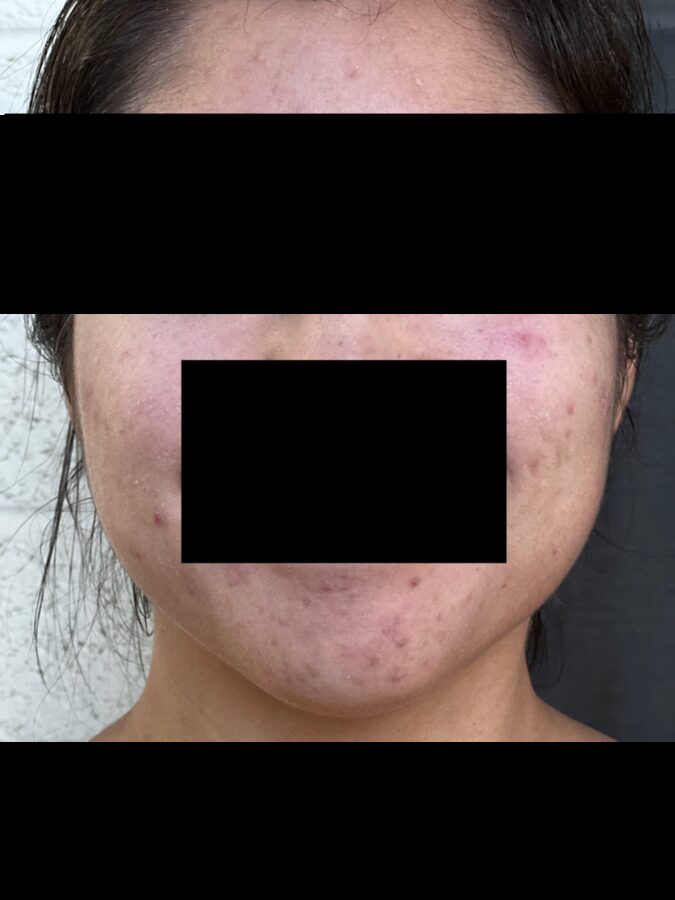
What does post-inflammatory hyperpigmentation look like?
Why does the dark mark outlast the pimple?
Inflammation is a megaphone aimed at melanocytes: cytokines released during any skin insult stimulate pigment production, and in darker skin types the response is brisk and generous. When the pigment stays in the epidermis, the mark is brown and fades as skin turns over. When inflammation disrupts the basement membrane, pigment drops into the dermis, where immune cells hold it — those marks read grey-slate and can sit for years [1]. Depth, not darkness, is what determines how long you will be looking at it — and depth is assessable in clinic.
PIH, PIE, or a scar?
Three different leftovers get called “acne marks”. A flat brown-grey mark is PIH — pigment. A flat pink-red mark that blanches under a pressed glass is post-inflammatory erythema — vessels, not pigment, treated on vascular principles like thread veins. A dent or dip you can feel is a true acne scar — a structural problem needing structural treatment. Mixing these up wastes months: pigment treatment does nothing for redness, and neither does anything for a dent. One examination sorts all three — and where active acne is still seeding new marks, the acne itself gets treated first, or the tail never ends.
What actually works for PIH?
The systematic reviews converge on a sequence [1,2]. First, stop the inflammation — active acne, eczema or picking makes PIH a moving target. Second, strict photoprotection: UV and visible light deepen existing marks, so tinted sunscreen is baseline treatment, not an accessory. Third, evidence-based lightening topicals — retinoids, azelaic acid, hydroquinone-class and newer agents under supervision. Fourth, where topicals plateau, conservative laser work: low-fluence pigment protocols such as laser toning and picosecond systems on the T2 platform — with the reviews of laser treatment in skin of colour emphasising restraint, because the same devices set aggressively cause the condition they treat [2]. The overlapping differential with other browns is covered in which brown is yours.
What doesn't work for PIH?
Scrubbing the marks — friction is inflammation, and inflammation is the disease. Lemon juice and DIY acids — chemical irritation on pigment-prone skin is a PIH recipe. Bleaching creams from unregulated sources — unsupervised strong agents can leave lasting damage including paradoxical darkening. Picking the next pimple — every squeezed lesion is a PIH order form. And impatience: dermal pigment clears on biology's schedule, and any clinic promising erasure in a fortnight is selling the calendar, not the outcome.
“In Singapore skin, the pimple is rarely the problem — the three-month brown souvenir it leaves is, and every squeeze places another order.”
— Dr Sin Yong
Dr Sin Yong’s Viewpoint
In our skin, the pimple is rarely the real enemy — the three-month brown souvenir is. I spend more consult time on PIH than on the acne that caused it, and my first prescription is always the same: stop the picking, start the photoprotection, and let restraint do what aggression cannot. Every squeeze is an order form for another mark.
Prefer Not to Use WhatsApp?
Use the short enquiry form instead →
Leave your name, mobile number and email and the clinic will contact you directly. No obligation.
Prefer a preliminary view first? You can also WhatsApp a photo of the area for Dr Sin Yong to review before you decide on a visit.