
Related: Time Freeze Laser LCLR® vs Ultherapy, Thermage and liposuction — what each does, what it cannot do, and why Dr Sin Yong chooses VF Lift for lean faces and Time Freeze for puffy ones.
Why 'which machine wins?' is the wrong question
All four of these approaches tighten or lift — microfocused ultrasound's evidence base for skin tightening is established in systematic reviews [1], and monopolar radiofrequency's collagen remodelling has decades of clinical documentation [3]. The question that actually separates them is what else the face needs besides lifting. Ageing is rarely laxity alone: the same years that let tissue slide also deflate the fat compartments beneath (see facial volume loss). A treatment that only tightens addresses half the picture — and in some faces, tightening the envelope over an emptying interior actively worsens the other half.
| Ultherapy | Thermage | Time Freeze Laser LCLR® | VF Lift | |
|---|---|---|---|---|
| Core mechanism | Microfocused ultrasound with visualization — focal coagulation points to the SMAS | Classic monopolar radiofrequency — bulk dermal heating for tightening | Layered laser lifting protocol — staged dermal heating and collagen remodelling | Volnewmer monopolar radiofrequency (6.78 MHz) applied along vertical vectors — no focused ultrasound |
| Lift | Yes — its defining strength | Tightening more than true lift — dermal contraction | Yes — a good degree of lift | Yes — vertical-vector lifting |
| Sculpt | Limited — lifting is the design goal | Limited — a tightening tool, not a shaping protocol | Yes — contour refinement along jawline and lower face | Yes — energy mapped by zone to shape, not just raise |
| Restore | No — no volume-support arm | No — no restore arm | No — lift and sculpt without a restore arm | Yes — a dedicated arm designed to stimulate the skin’s own regenerative response, including support of the fat layer |
| Typical discomfort* | High — commonly described around 8/10 (Ultherapy Prime's newer delivery closer to 6/10) | Highest of the four — commonly described around 9/10 | Low — around 3/10 | Low — around 3/10, with comfort-paced delivery |
| Suitable face | Laxity with good volume reserves | Mild laxity; patients preferring a no-needle format | Laxity + contour goals; recovery discussed at consultation | Laxity with deflation — the lifted-AND-supported brief; slim faces especially |
| The watch-out | In an already-slim face, tightening without volume support can read as further hollowing | Treatment discomfort is well documented — pain-perception studies and even nerve-block protocols exist for classic monopolar RF | Deflated faces still need a separate volume answer | A sequenced multi-session protocol — built for staging, not a single-visit event |
*Indicative patient-reported discomfort ranges observed in Dr Sin Yong's practice; individual experience varies with settings, zones treated and pain tolerance.

Where does Ultherapy fit — and where does it fall short?
Ultherapy — originally launched as Ulthera, and now in its newest generation as Ultherapy Prime — deserves its reputation: microfocused ultrasound with visualization, placing coagulation points at the SMAS with imaging guidance — a genuine, well-evidenced lifter, and the first name most patients type when researching Ultherapy Singapore options [1,2]. Its limitation is design, not quality: it lifts, and that is the whole job description. There is no sculpting logic beyond the lift vector and no restore arm at all. The consideration that matters most in an Asian practice: expert consensus on microfocused ultrasound explicitly cautions about treating over thin subcutaneous tissue, because focal thermal energy in a face with little fat reserve risks further volume loss [2]. In an already-slim face, a pure lifting treatment can leave the patient tighter — and gaunter. Lifted is not the same as younger.
And Thermage — the name everyone knows?
Thermage built the radiofrequency category: classic monopolar RF — currently sold as Thermage FLX — delivering bulk dermal heating across the face and eye area in a single no-needle session, with a genuine tightening effect on mild laxity. Two honest limitations define its place on this page. First, comfort: treatment discomfort with classic monopolar RF is well documented — pain perception during these treatments has been studied in its own right, and clinics have published nerve-block protocols specifically to manage it [4]. Second, capability: like Ultherapy, Thermage carries no restore arm — it tightens what remains without supporting what is being lost. Notably, monopolar RF itself has evolved: Volnewmer — the RF half of the VF Lift — is a newer-generation monopolar platform engineered around comfort pacing, delivering the same physics with a very different treatment experience.
What do Time Freeze Laser LCLR® and the VF Lift each add?
Time Freeze Laser LCLR® adds the second capability: sculpt. Its layered laser protocol lifts while refining contour along the jawline and lower face — shaping, not just raising — with recovery that varies by settings, which is why it anchors so many of Dr Sin Yong's lower-face plans. What it does not carry is a restore arm: a deflated face treated with Time Freeze still needs its volume question answered separately. The VF Lift is the complete framework in one protocol: Volnewmer's monopolar RF lifts, sculpts and remodels [3] — and the protocol's dedicated Restore arm uses calibrated energy designed to stimulate the skin's own regenerative biology, including support of the fat layer, rather than only tightening what age has left behind. That third arm is the answer to the slim-face problem the previous section described.
Know your facial shape — slim, normal volume, or fuller?
until you read this.
Every device on this page works by heating tissue — and in the wrong face, that heat spends fat you cannot afford to lose. Your facial shape decides which machine helps you and which one hollows you.
Machines don't pick faces — faces pick machines. The single biggest predictor of whether a lifting treatment ages you backwards or hollows you out is how much volume reserve your face carries. Tap the card that sounds like you:
Assess your facial fat volume via ultrasound before proceeding. The cards above are a first sort — the honest answer is measured, not eyeballed. Ultherapy's own headline feature is ultrasound visualization: imaging the tissue before committing energy to it. Dr Sin Yong applies that same logic one step earlier — at assessment, ultrasound imaging is used to gauge your subcutaneous fat thickness zone by zone, so the decision between Ultherapy, Thermage, Time Freeze Laser LCLR® and the VF Lift is made on your measured anatomy, not on a glance in the mirror. If your fat layer is thinner than it looks, that is precisely the finding that changes the plan — before any energy has been spent on it.
Can I see real VF Lift and Time Freeze results?
Below are clinical photographs from Dr Sin Yong's own patients. In line with Singapore's medical advertising guidelines, the pre-treatment photograph is shown and the post-treatment frame is intentionally blurred — no outcome imagery is published here. The actual un-blurred clinical photographs may be viewed in person at the clinic during your consultation, alongside cases matched to your own face type.
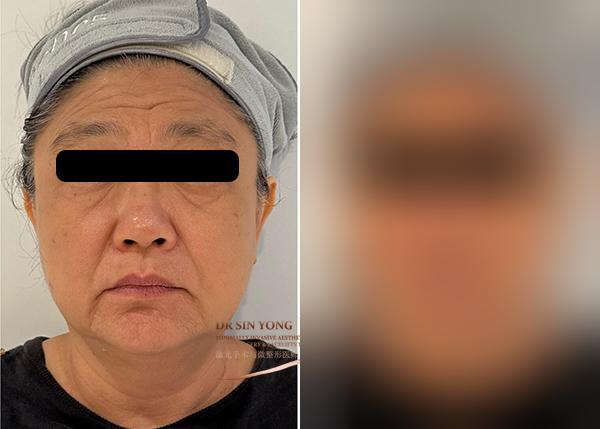
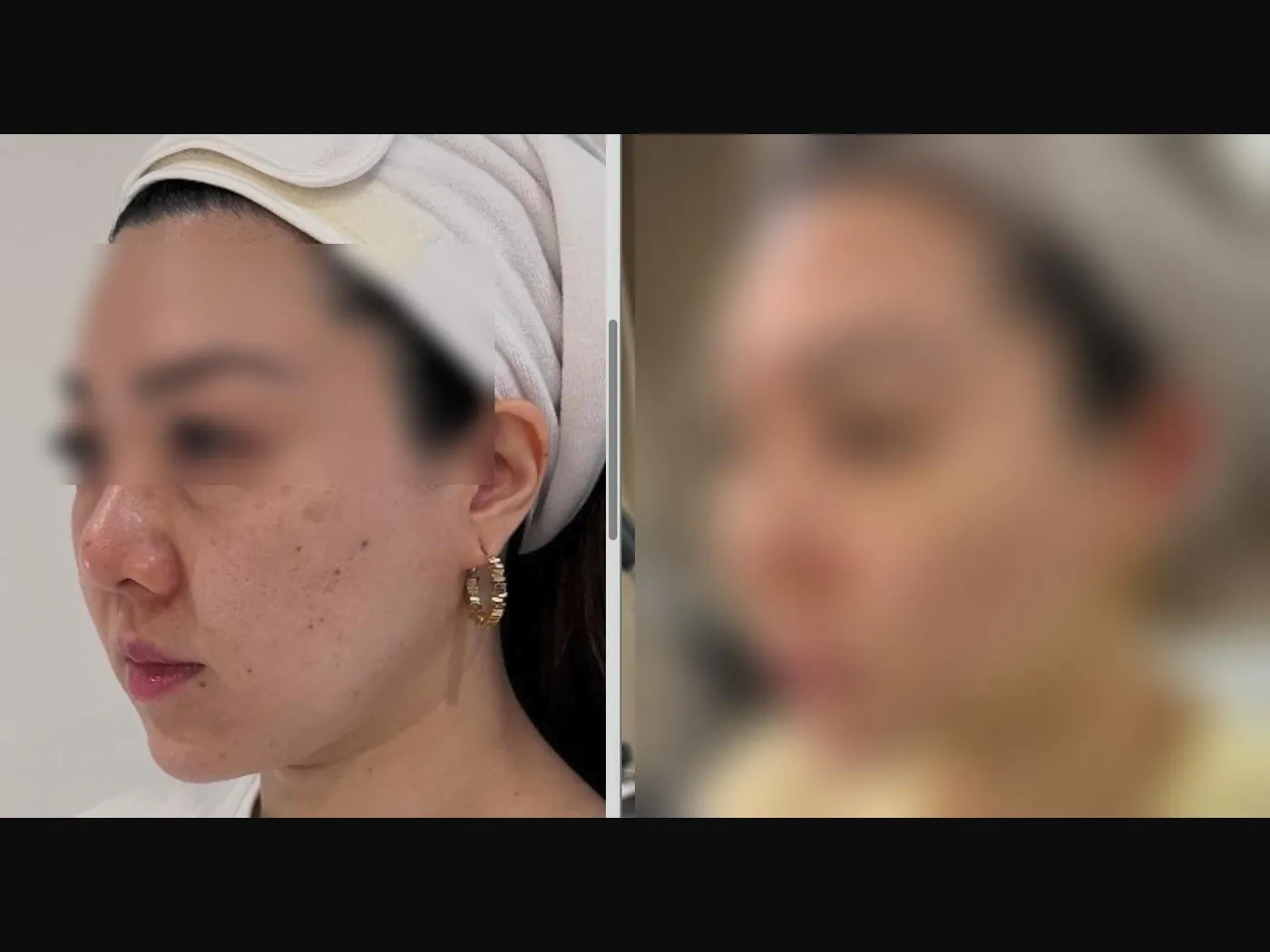
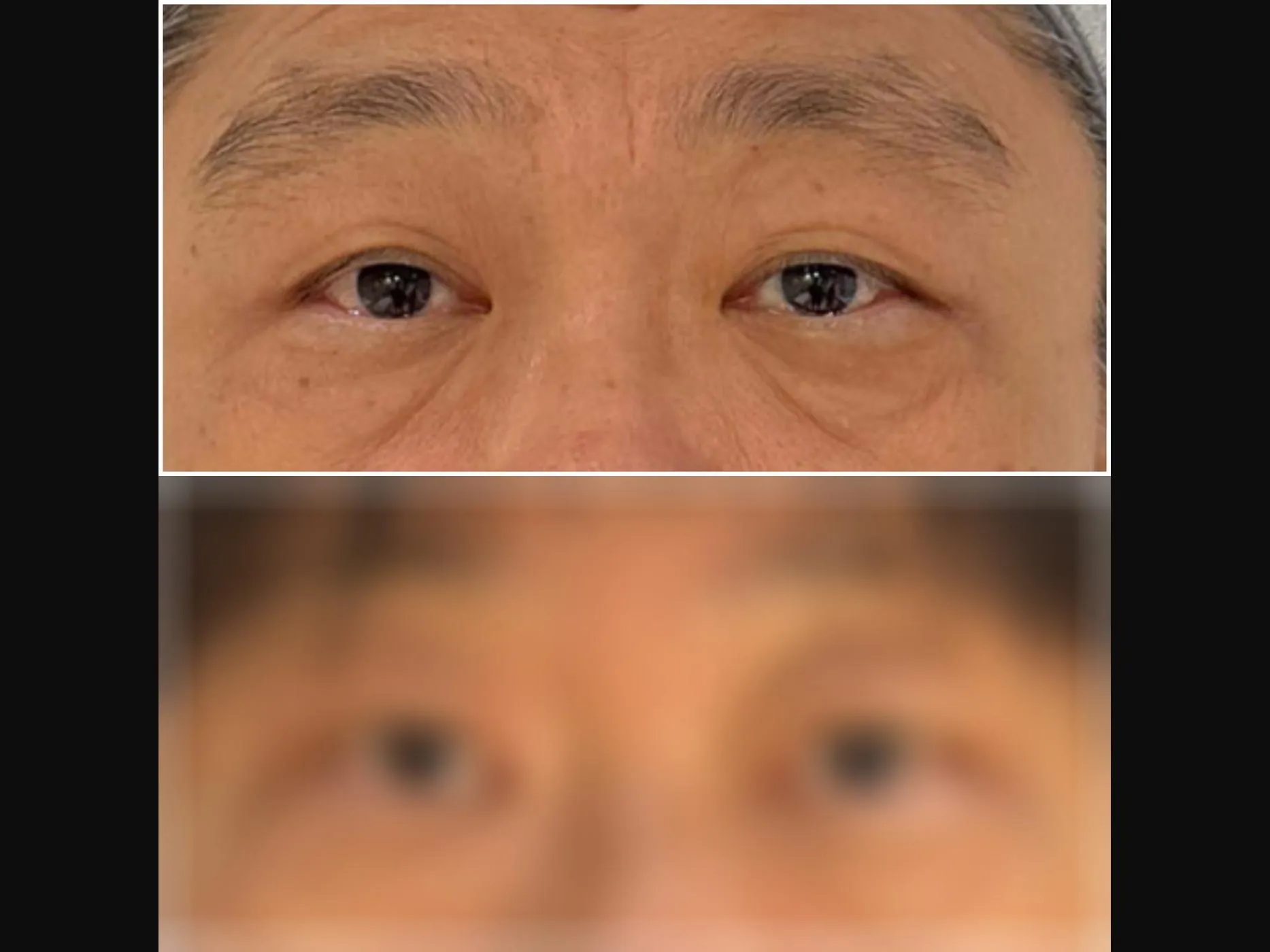
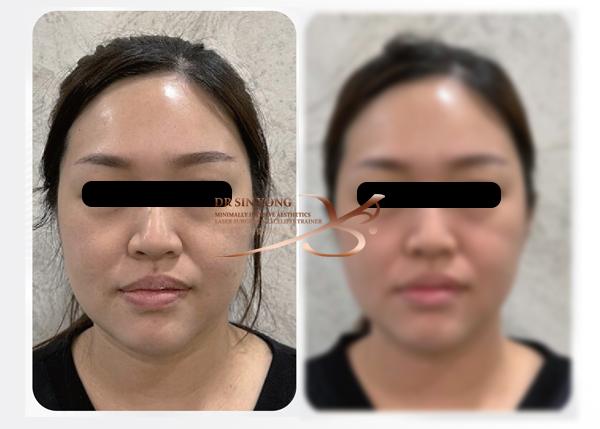
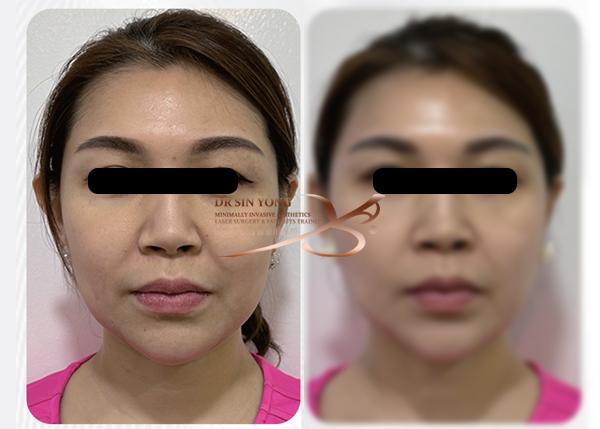
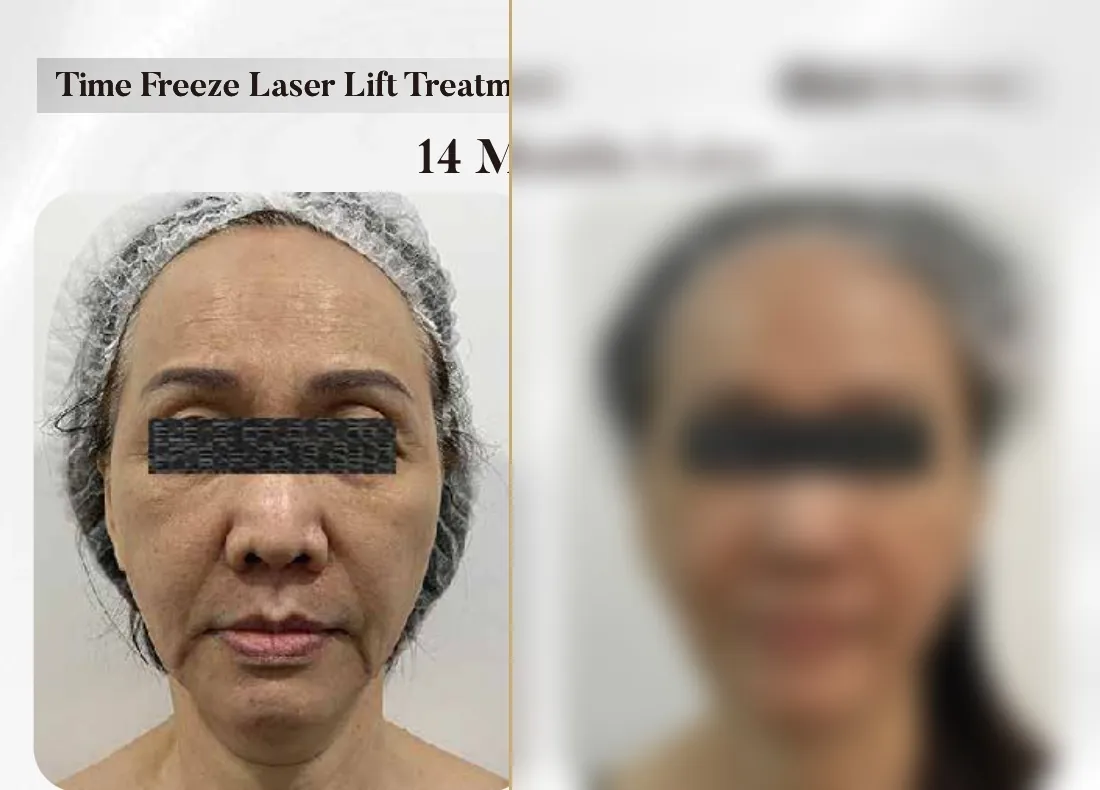
More cases are catalogued in the clinical gallery. Ask to view the un-blurred series for your face type at assessment.
Dr Sin Yong Recommendations on Lifting
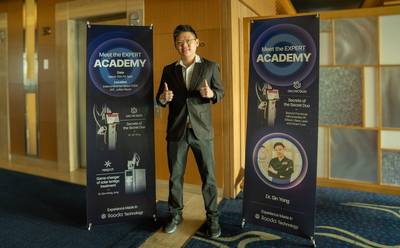
In energy-based lifting, the operator's mapping matters more than the machine's badge — so it is fair to ask who is doing the mapping. Dr Sin Yong is an international KOL invited to share his clinical expertise for CLASSYS, the manufacturer behind the Volnewmer platform that leads the VF Lift. At the 7th CLASSYS APAC Symposium 2026 in Bangkok, he presented the VF Lift protocol to an international audience of physicians, sat on the panel discussion alongside international KOLs including Dr Davin Lim, and received the KOL award on stage. The protocols compared on this page are not treatments he merely offers — the VF Lift and Time Freeze Laser LCLR® are protocols he authored and is invited to share.
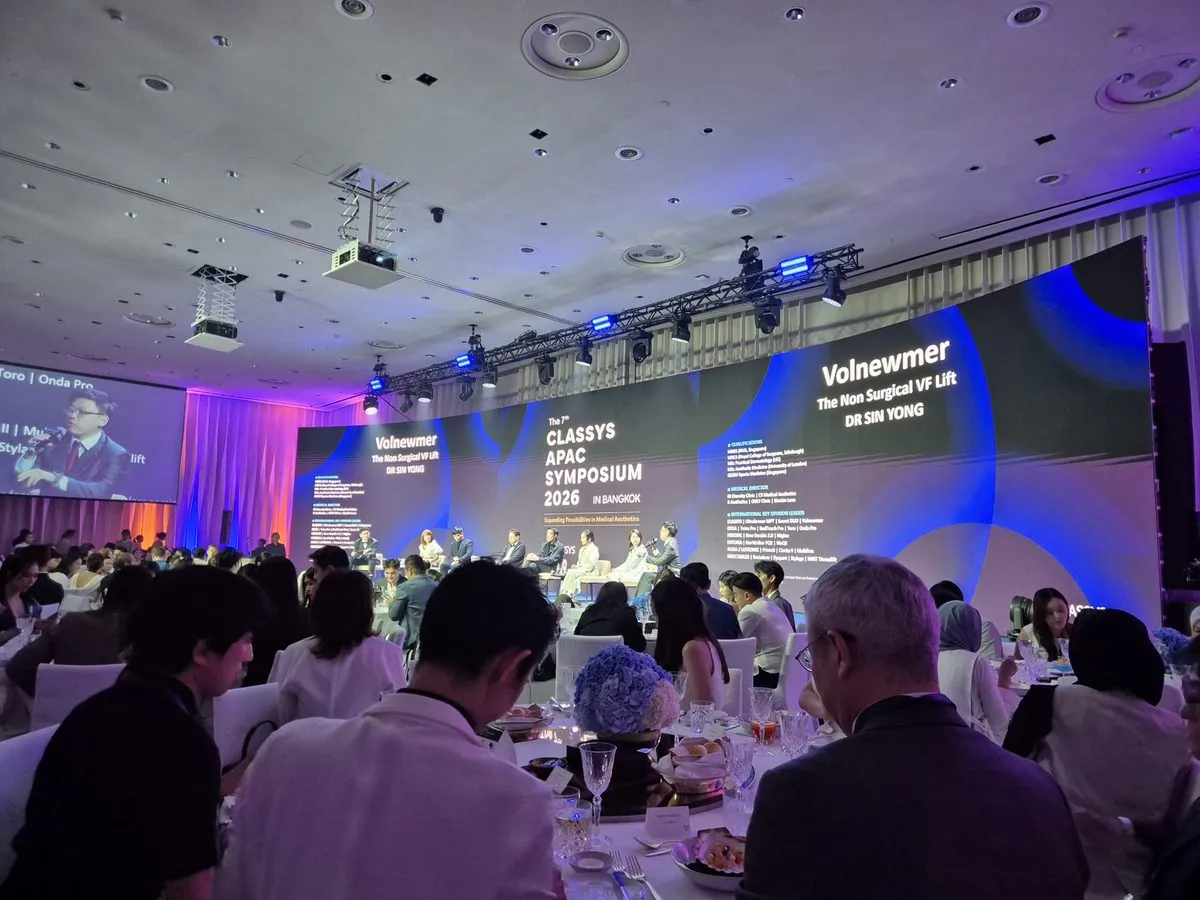
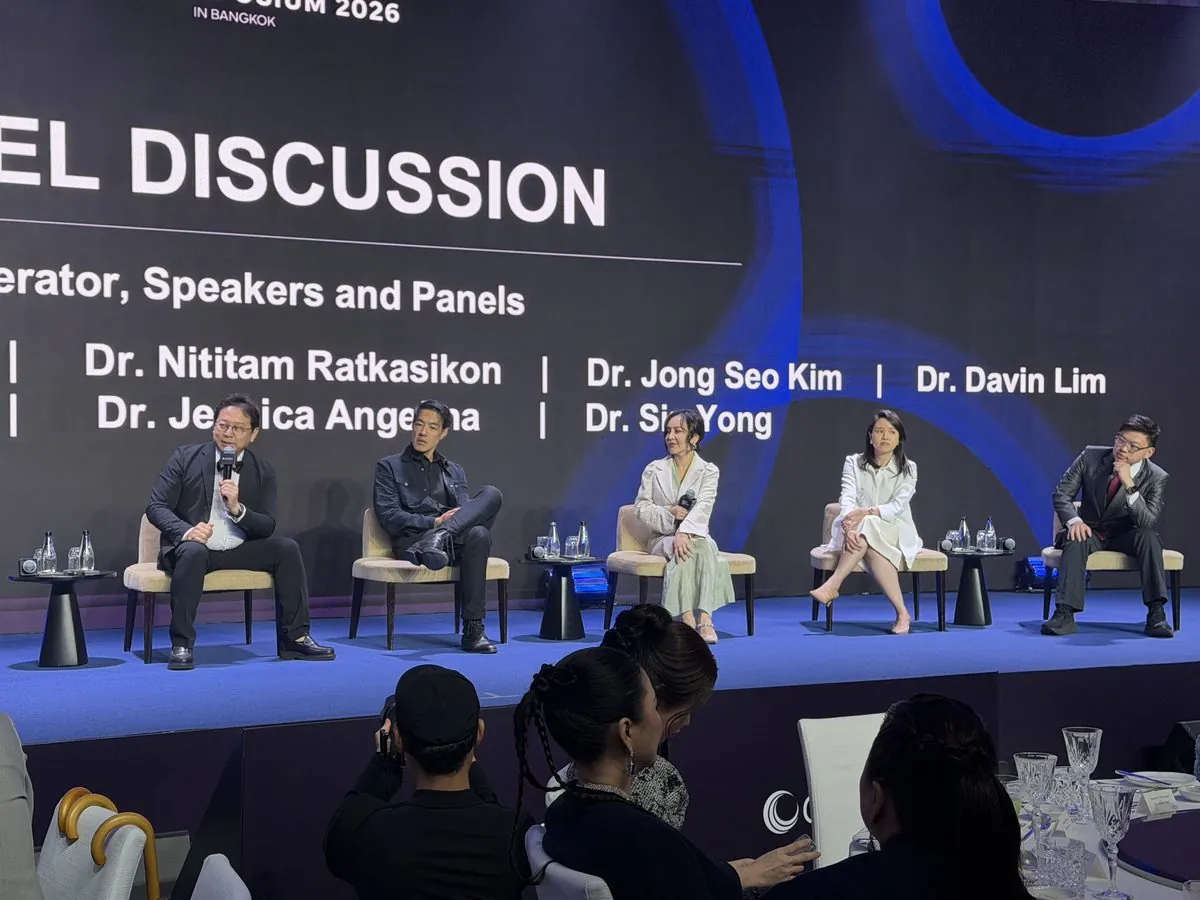
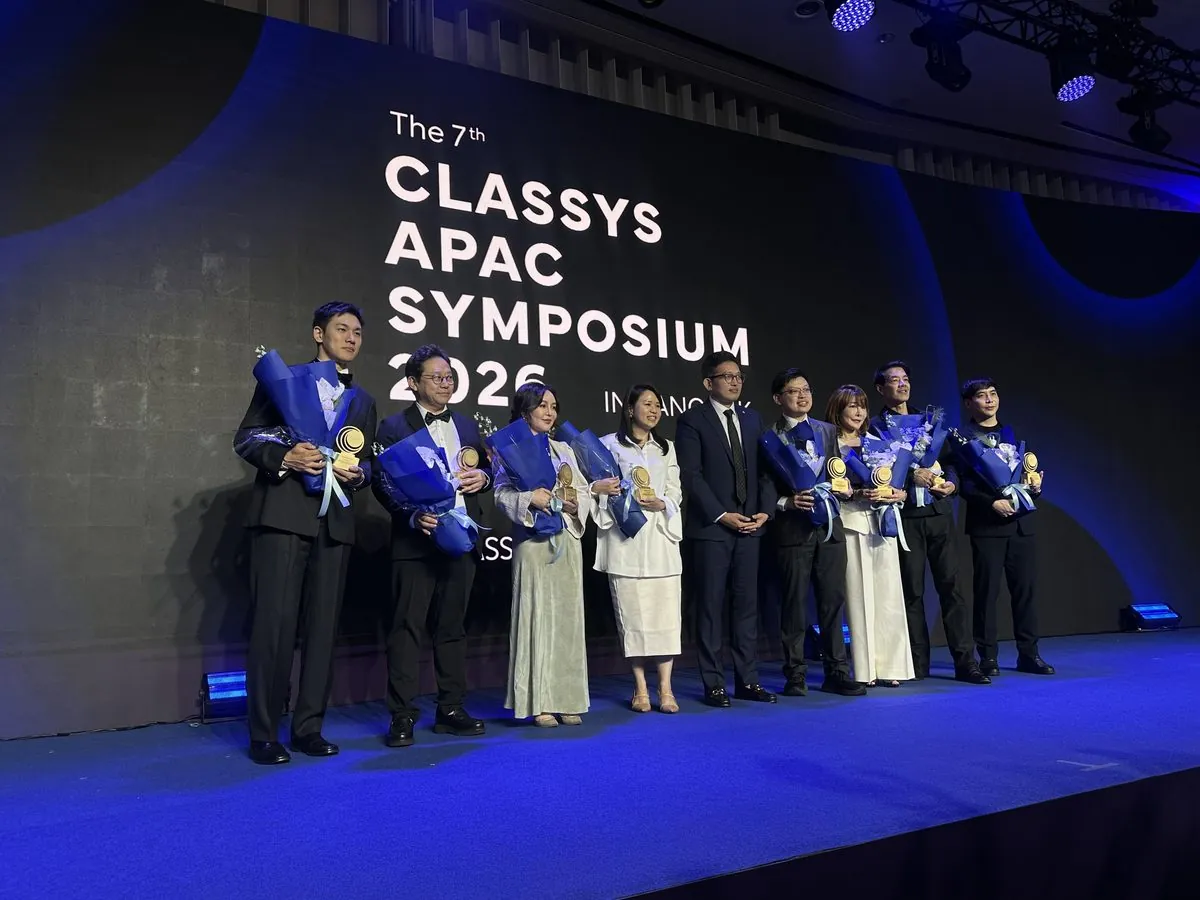
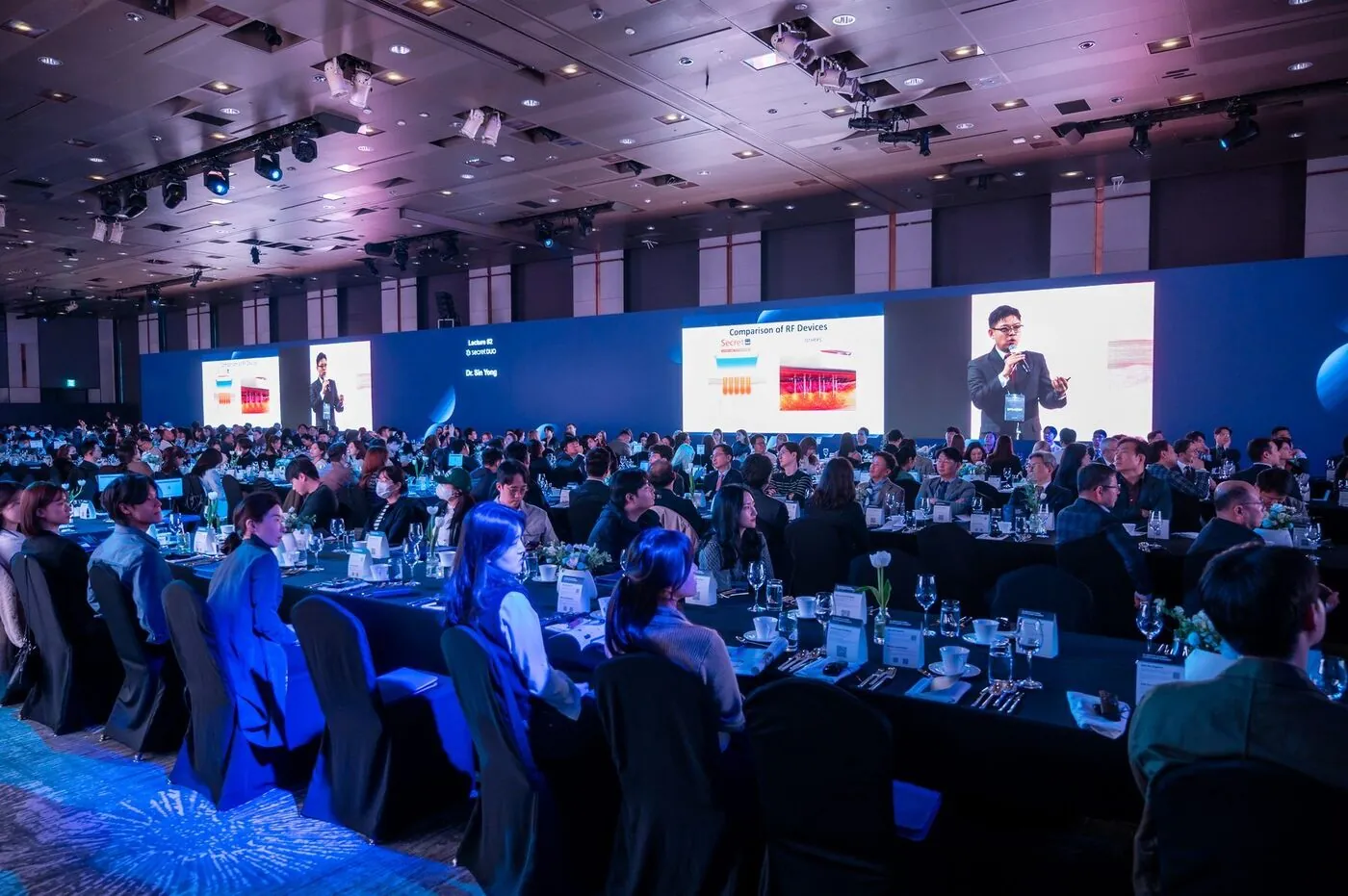
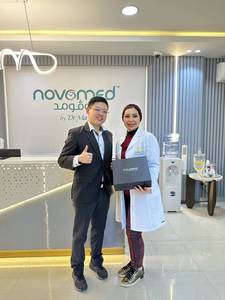
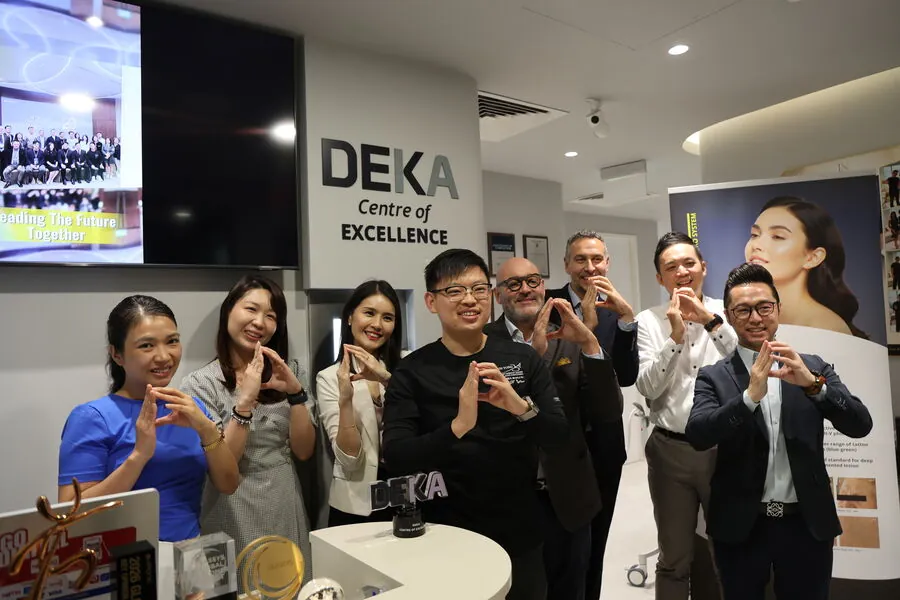
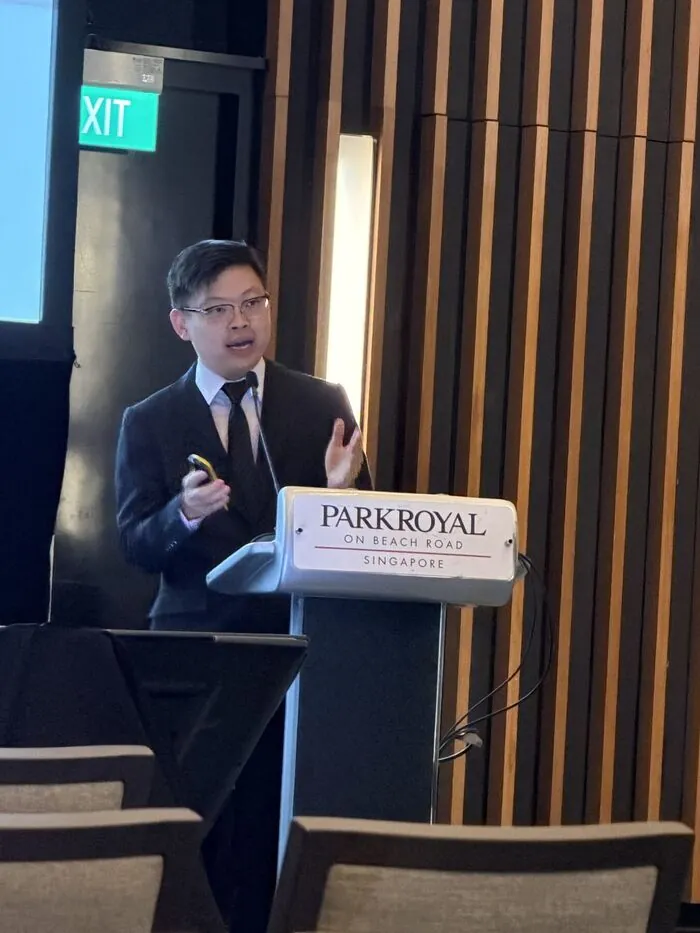
And CLASSYS is one chapter, not the whole story. Device manufacturers across the industry invite Dr Sin Yong to share his clinical expertise with other doctors on energy-based lifting — the very technology behind Ultherapy & Thermage alike:
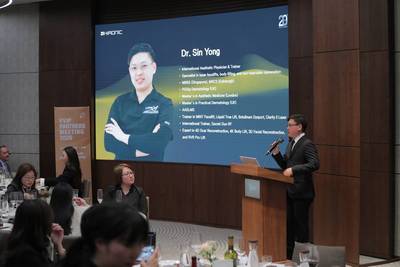
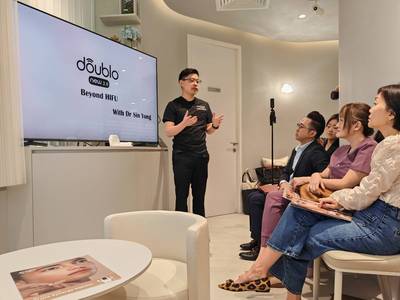

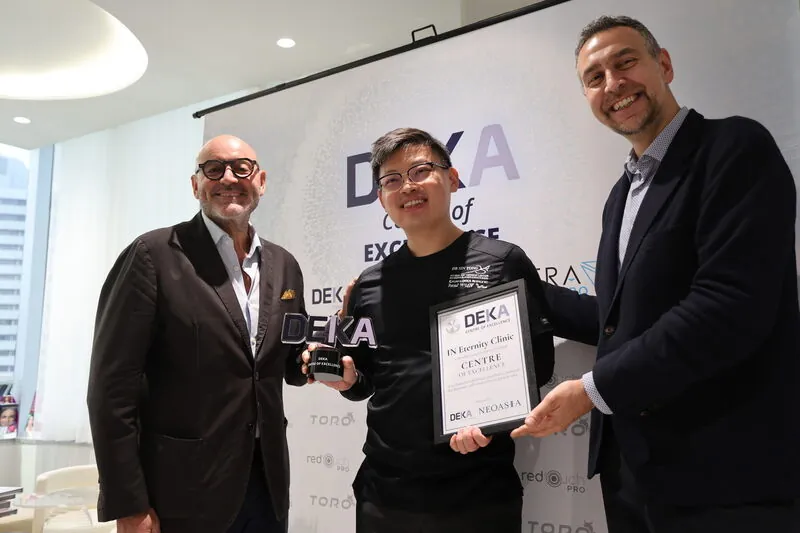
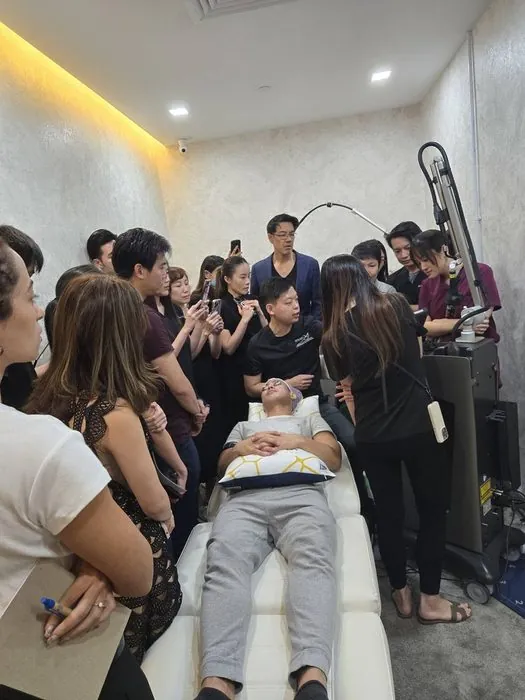
MBBS (NUS) · MRCS (Edinburgh) · MSc Aesthetic Medicine — when the companies that build lifting machines need someone to share with doctors how to use them, this is who they call. That is the judgment applied to your face at assessment.
How does Dr Sin Yong choose between them?
By anatomy, not menu. A face with good volume reserves and straightforward laxity does well on the lifting side of the table — Ultherapy or Thermage territory — and Dr Sin Yong works across all three approaches, so the recommendation follows the assessment rather than the inventory. A face wanting contour refinement points to Time Freeze. And the leaner the face — or the more deflation rides alongside the laxity — the more firmly the arrow points to the VF Lift, because it is the one protocol on this page built to give back support while it lifts. The sagging face assessment maps your layers first; slim patients considering any HIFU-class treatment anywhere should ask one question before booking: what is your plan for my volume? And when reading Ultherapy reviews or Thermage reviews while shortlisting Thermage Singapore or Ultherapy providers near you, remember that in energy-based lifting the operator's mapping matters more than the machine's badge — the same device produces different results in different hands. A clinic without an answer is offering you the hollowing risk for free.
“A lifted face is not automatically a younger face — tighten a face with no volume to spare and you trade sagging for gauntness.”
— Dr Sin Yong
Prefer Not to Use WhatsApp?
Use the short enquiry form instead →
Leave your name, mobile number and email and the clinic will contact you directly. No obligation.
Prefer a preliminary view first? You can also WhatsApp a photo of the area for Dr Sin Yong to review before you decide on a visit.