Conditions · Face · Breakouts That Aren't Acne

Fungal Acne (Malassezia Folliculitis)

“Fungal acne” is not acne at all. It is folliculitis caused by Malassezia — a yeast that lives on everyone's skin — overgrowing inside the hair follicle. Because the bumps mimic acne almost perfectly, it is routinely treated with acne medication, which does nothing and sometimes makes it worse.

WhatsApp Dr Sin Yong →
The Doctor Other Doctors Train With
International KOL & trainer for 14+ device brandsTrained 500+ doctors across AsiaMBBS (NUS) · MRCS (Edinburgh) · Dual UK Masters with DistinctionEvery assessment personally by Dr Sin Yong

Key Facts

The organism
Malassezia — a lipophilic (oil-feeding) yeast, part of normal skin flora
Where it lives
Inside the follicle, feeding on sebum and fatty acids
Classic distribution
Forehead and hairline, chest, shoulders, upper back — sites rich in sebaceous follicles
The giveaway sign
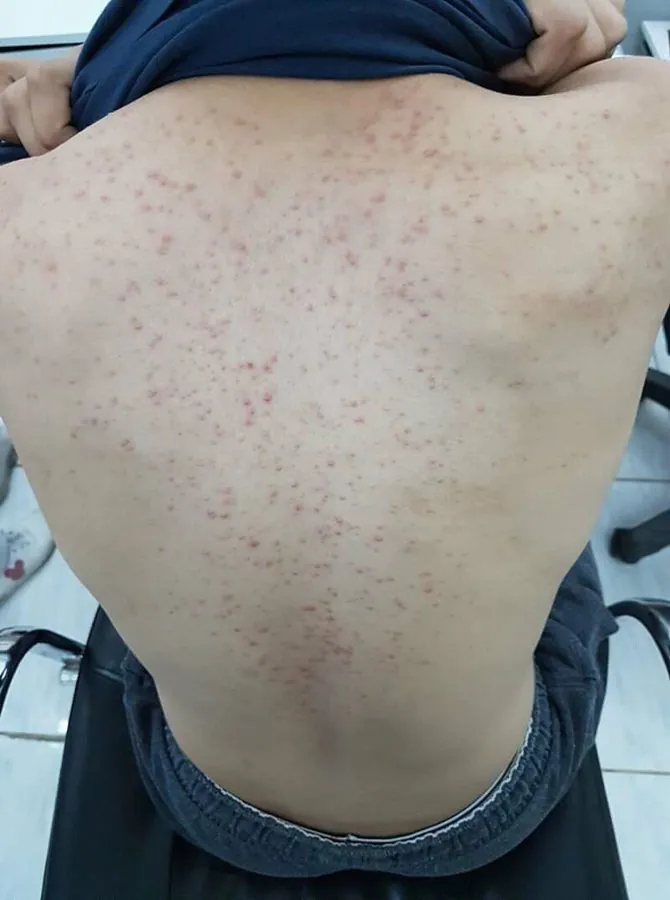
Monomorphic bumps — dozens of near-identical 1–2 mm papules and pustules, often itchy
Climate factor
Heat, humidity and occlusion drive overgrowth — Singapore's baseline weather
Why antibiotics fail
Antibacterials do not kill yeast; suppressing bacteria can hand the follicle to Malassezia
Who assesses this
An aesthetic physician or dermatologist — clinical diagnosis, sometimes microscopy
Typical first step
Stop stacking acne products; get the organism identified first

What does fungal acne look like?
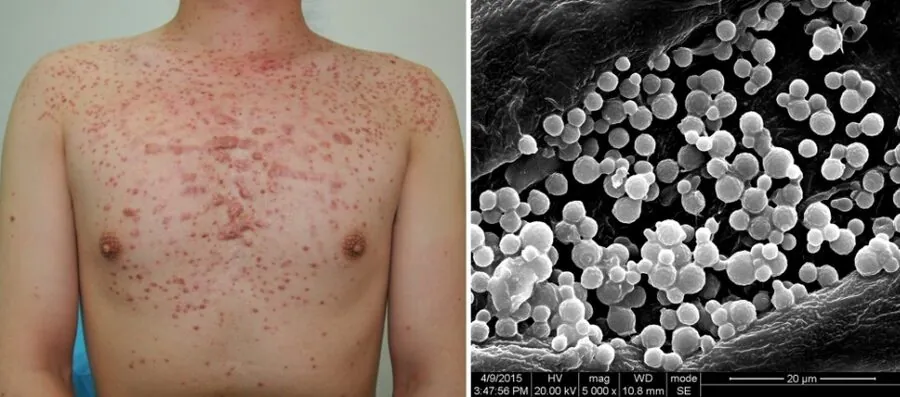
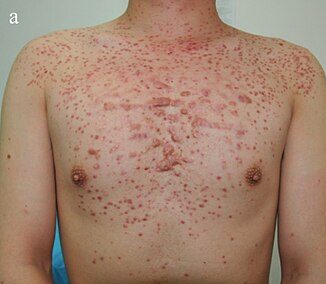
Malassezia (fungal) folliculitis of the trunk, with the yeast shown on electron microscopy
Malassezia (fungal) folliculitis of the trunk, with the yeast shown on electron microscopy. Image: Ran Yuping et al., via Wikimedia Commons (CC BY-SA 3.0).

Why does fungal acne look like acne but behave differently?

True acne vulgaris is a disease of the pilosebaceous unit involving comedones, Cutibacterium acnes and inflammation — and its lesions are polymorphic: blackheads, whiteheads, papules and deeper nodules of different ages coexisting. Malassezia folliculitis is a different process: yeast proliferating within the follicle triggers inflammation that surfaces as crops of strikingly uniform, often itchy papulopustules. Recent reviews describe it as one of the most common mimickers of acneiform eruptions, and one of the most underdiagnosed [1,2]. The itch, the uniformity and the distribution — forehead, chest, back rather than cheeks and jaw — are the pattern a physician reads.

Why your acne routine never worked

This is the condition behind years of failed skincare. Benzoyl peroxide and topical antibiotics target bacteria; Malassezia is a yeast. Long courses of oral antibiotics can actually worsen it by suppressing the bacterial flora that normally compete with the yeast [1,3]. Meanwhile heavy, oil-based moisturisers and sunscreens feed the organism — Malassezia metabolises exactly the lipids many products are built on. If your “acne” flares with sweat, occlusive gym wear or thick skincare and laughs at every acne product you have tried, the diagnosis deserves a second look.

What actually works for fungal acne?

Antifungal treatment — topical antifungal washes and creams, with oral antifungals reserved for extensive or stubborn cases under physician supervision [1,3]. Because Malassezia is part of normal skin flora, the honest framing is control rather than eradication: recurrence in a hot, humid climate is common and maintenance matters. And because true acne and Malassezia folliculitis frequently coexist in the same patient, both arms may need treatment — the acne programme and back acne page cover how Dr Sin Yong sequences this. Diagnosis comes first: treating the wrong organism for another year is the real cost.

What doesn't work for fungal acne?

Scrubbing — the yeast is inside the follicle, not on the surface. “Antibacterial” soaps — wrong kingdom. Stacking more acne actives — irritation without effect. And self-prescribed long-term oral antibiotics are the classic way this condition digs in. If a breakout is itchy, uniform and antibiotic-resistant, stop adding products and get it diagnosed.

“If every acne product has failed and the bumps itch, the question is not which acne treatment is next — it is whether this is acne at all.”

— Dr Sin Yong

Dr Sin Yong’s Viewpoint

Some of the most relieved patients in my clinic are the ones told their 'acne' was never acne. Years of benzoyl peroxide against a yeast — of course it failed. If your breakout itches, sits uniform across the forehead, chest or back, and laughs at acne products, ask for a diagnosis before another routine. The organism decides the treatment.

Prefer Not to Use WhatsApp?

Leave your name and mobile number and the clinic will contact you directly. No obligation.

Your details are delivered directly to Dr Sin Yong's clinic team.

Thank you — your enquiry has been received. The clinic will contact you during opening hours (Mon–Sat, 10.30am–8pm).

Prefer a preliminary view first? You can also WhatsApp a photo of the area for Dr Sin Yong to review before you decide on a visit.

Questions Patients Actually Ask

How can I tell fungal acne from real acne?+

Uniformity, itch and location. Malassezia folliculitis produces near-identical small bumps, often itchy, on the forehead, chest and back. True acne is polymorphic — mixed blackheads, whiteheads and deeper lesions — and rarely itches. Confirmation is clinical, sometimes with microscopy.

Why did it get worse after antibiotics?+

Antibiotics suppress skin bacteria that compete with Malassezia. With the competition gone, the yeast can overgrow — a documented pattern in the literature.

Is fungal acne contagious?+

No. Malassezia lives on everyone's skin. The condition is an overgrowth in a susceptible follicle, not an infection you catch or pass on.

Does diet cause it?+

No good evidence links diet to Malassezia folliculitis. Heat, humidity, occlusion, oily skin and prior antibiotic use are the documented drivers.

Can fungal acne and normal acne exist together?+

Frequently — and this is why one-product routines fail. Each arm needs its own treatment, which is a physician's sequencing decision.

Will it come back?+

It can, because the yeast is permanent skin flora and Singapore's climate favours it. A maintenance plan — often as simple as a periodic antifungal wash — keeps control.

References

  1. Malassezia Folliculitis Presentation, Diagnosis, and Treatment: A Review of “Fungal Acne” — PubMed.
  2. Malassezia Folliculitis: An Underdiagnosed Mimicker of Acneiform Eruptions — Journal of Fungi (PMC).
  3. Malassezia (Pityrosporum) Folliculitis — DermNet NZ.
Follow Dr Sin Yong
InstagramTikTokYouTubeThreadsXLinkedInFacebook
Dr Sin Yong · Every assessment personally performed
WhatsApp Enquiry