Key facts
- Starting point
- Degree of laxity, and whether laxity rather than volume loss or fat is the problem
- Plan
- Zones, cartridge depths and line distribution set from palpated tissue thickness
- Response
- Collagen remodelling is gradual; firmness felt early is not the result
- Review
- Any repeat is decided at review against the record photographs, not booked ahead
- Not a repeat
- No change can mean the wrong tool; volume loss, a fat pad or heavy skin point elsewhere
Why is HIFU not planned as a set number of sessions?
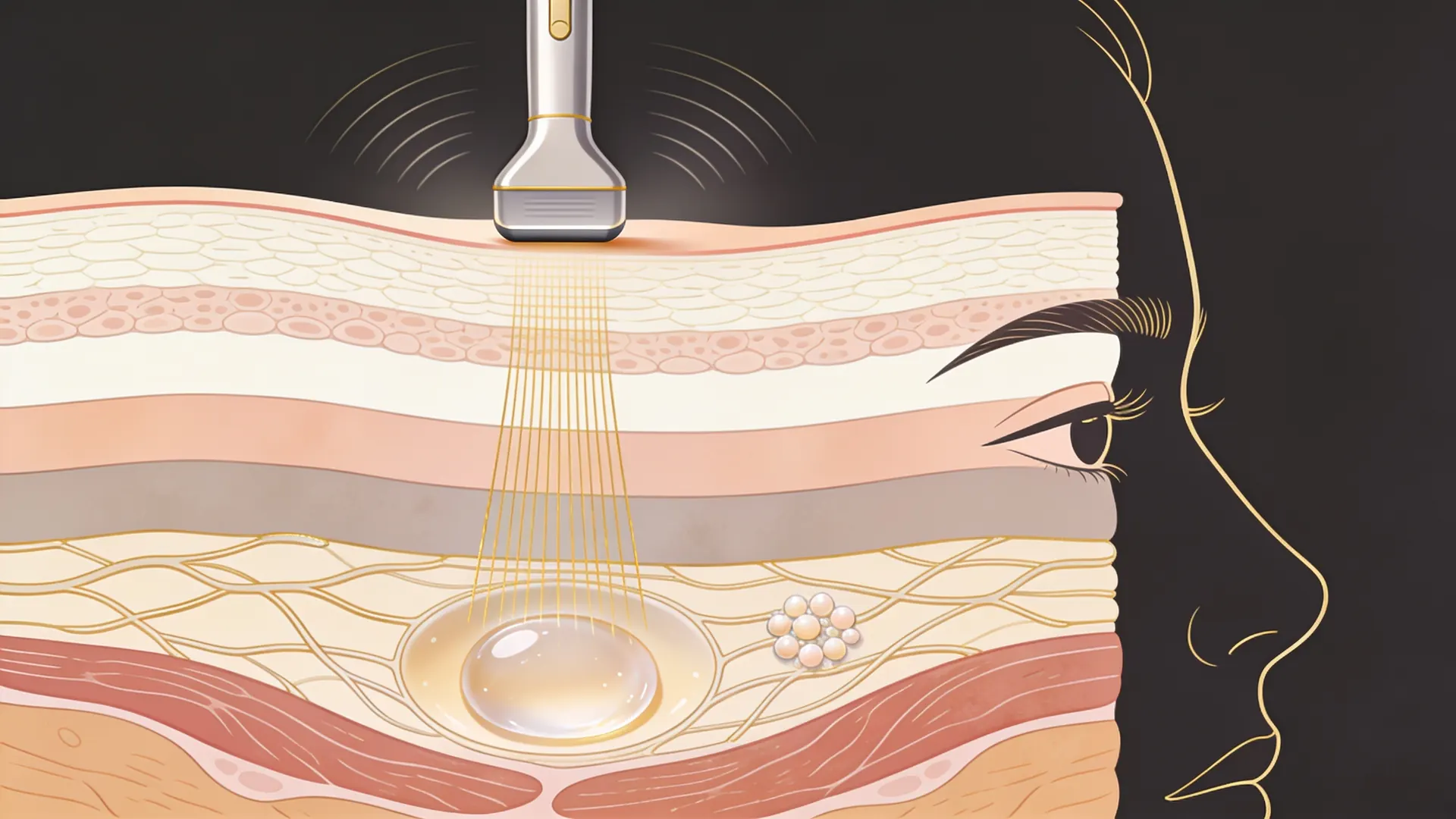
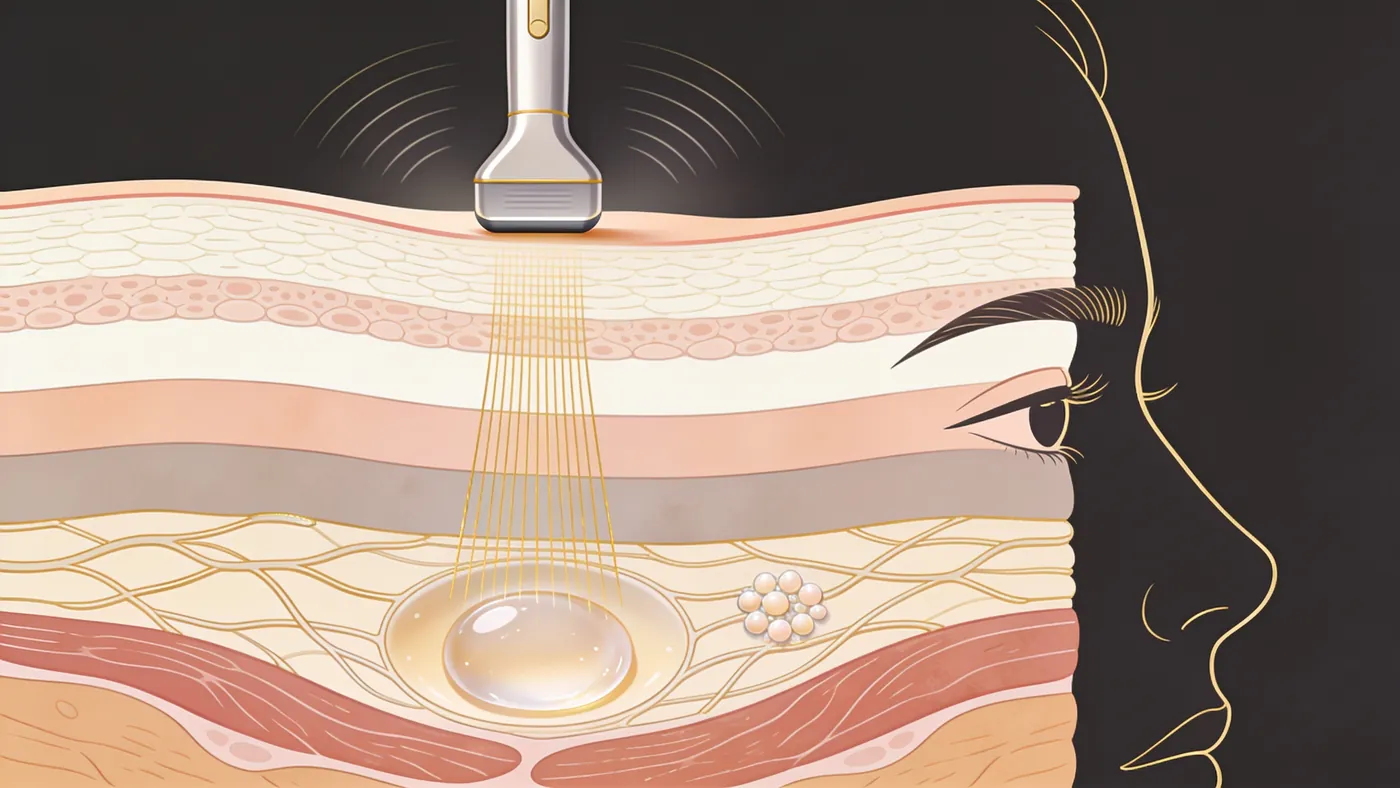
HIFU is not planned as a set number because its effect is a biological response rather than an immediate change. Each coagulation point placed at depth triggers wound healing, and new collagen is laid down around it over the following weeks and months. Whether a second treatment adds anything can only be judged once that response has had time to show, so the review is timed for the biology and the decision about any repeat is made there.
Stacking heat sooner does not shorten that timeline; it adds energy to tissue that is still remodelling, and over thin areas it adds risk without adding benefit. Dr Sin Yong plans one treatment from the assessment map, reviews, and decides the next step from what the review shows. The page on how fees are quoted explains why nothing is sold as a course.
What in the assessment changes the plan?
The first question is whether laxity is the problem at all. A jowl can be loose SMAS, a full fat pad or a deflated midface, and only the first is a focused-ultrasound question; the others call for a different mechanism and no number of HIFU treatments changes that. The second is the degree of laxity: early looseness along the jawline and under the chin is a different starting point from established descent with redundant skin, which may be beyond any energy device.
The third is tissue thickness over each zone, palpated at consultation, which decides whether the deeper cartridge can be used there at all and how lines are distributed. Age, skin quality, sun exposure, weight change and previous energy treatments round out the picture. The consultation process page describes how those findings become a written plan.
“HIFU is an umbrella term. The devices differ in transducer design, imaging and clearance; they are not interchangeable.”
Dr Sin YongOn what HIFU actually denotes
What does the review look for before any repeat HIFU?
The review compares the face with the record photographs taken before treatment, at rest and in animation, and asks three things. Has the laxity that was mapped changed, and in the zones treated? Has anything appeared that needs attention, such as persistent altered sensation, a welt or hollowing over a thin area? And is what remains still a laxity problem, or has the treatment revealed that volume or fat was the larger part all along?
Those answers route to different next steps: no further treatment for now, a further treatment over particular zones, a different mechanism, or referral. A repeat is one possible outcome of review, not its purpose.
When is another HIFU session not the answer?
Another HIFU treatment is not the answer when the remaining problem sits in a layer focused ultrasound does not reach. Laxity of the dermis and subcutaneous layer, with the deeper layers still supported, is a question for Volnewmer monopolar radiofrequency in the VF Lift – Vertical Facelift. Compact fat in the jowl and under the chin is a question for Time Freeze Laser LCLR®. Volume loss is a question for filler or collagen biostimulators, and mobile tissue sitting low is a question for a thread lift. A heavy lower face with much redundant skin is referred for a surgical opinion.
Repeating focused ultrasound on a face whose problem is one of those adds heat, cost and risk without addressing the structure that is actually there.
How is HIFU maintenance decided?
HIFU does not stop the face from ageing, and the collagen laid down after treatment ages with the rest of the face. Maintenance is therefore planned individually at review rather than on a fixed schedule: how much laxity has returned, in which zones, whether tissue thickness still allows the planned depths, and whether the face has changed in ways that call for a different approach. Sun exposure, weight change and skin quality all feed into that decision, and no duration is promised in advance.