Thermage vs Ultherapy: radiofrequency or focused ultrasound
Medically reviewed by Dr Sin Yong · Last reviewed · 8 min read
Quick answers
Thermage vs Ultherapy: which suits which face?
Ultherapy uses focused ultrasound with imaging to lift at set depths down to the SMAS, so it suits sagging that needs lifting. Thermage uses monopolar radiofrequency to heat the skin in bulk, so it suits crepey, lax skin. Both are usually single sessions repeated yearly, with results building over two to three months. Here, radiofrequency (the VF Lift) and HIFU are chosen by face shape.
How both compare with radiofrequency, laser and threads is set out under face lifting treatment for a sagging face.
Main guideUltherapy — what it treats, who it suits, sessions, downtime and what decides the cost, by Dr Sin Yong.
Published 9 October 2026 · Reviewed by Dr Sin Yong
Thermage vs Ultherapy comes down to energy and depth. Thermage FLX heats the deeper dermis in bulk with 6.78 MHz monopolar radiofrequency, while Ultherapy focuses ultrasound into small points at set depths, down to the muscle-and-fascia layer, while watching on an ultrasound image. Two small randomised trials have compared them directly and found no significant difference in laxity improvement.
Short answerUltherapy uses microfocused ultrasound with visualisation to heat points at about 1.5, 3.0 and 4.5 mm; Thermage uses monopolar radiofrequency at 6.78 MHz to heat the dermis broadly. In two small randomised split-face or comparative trials, both improved laxity with no significant difference between them; in one, ultrasound was more painful. Which suits you depends on where the laxity sits and how much facial fat you have.
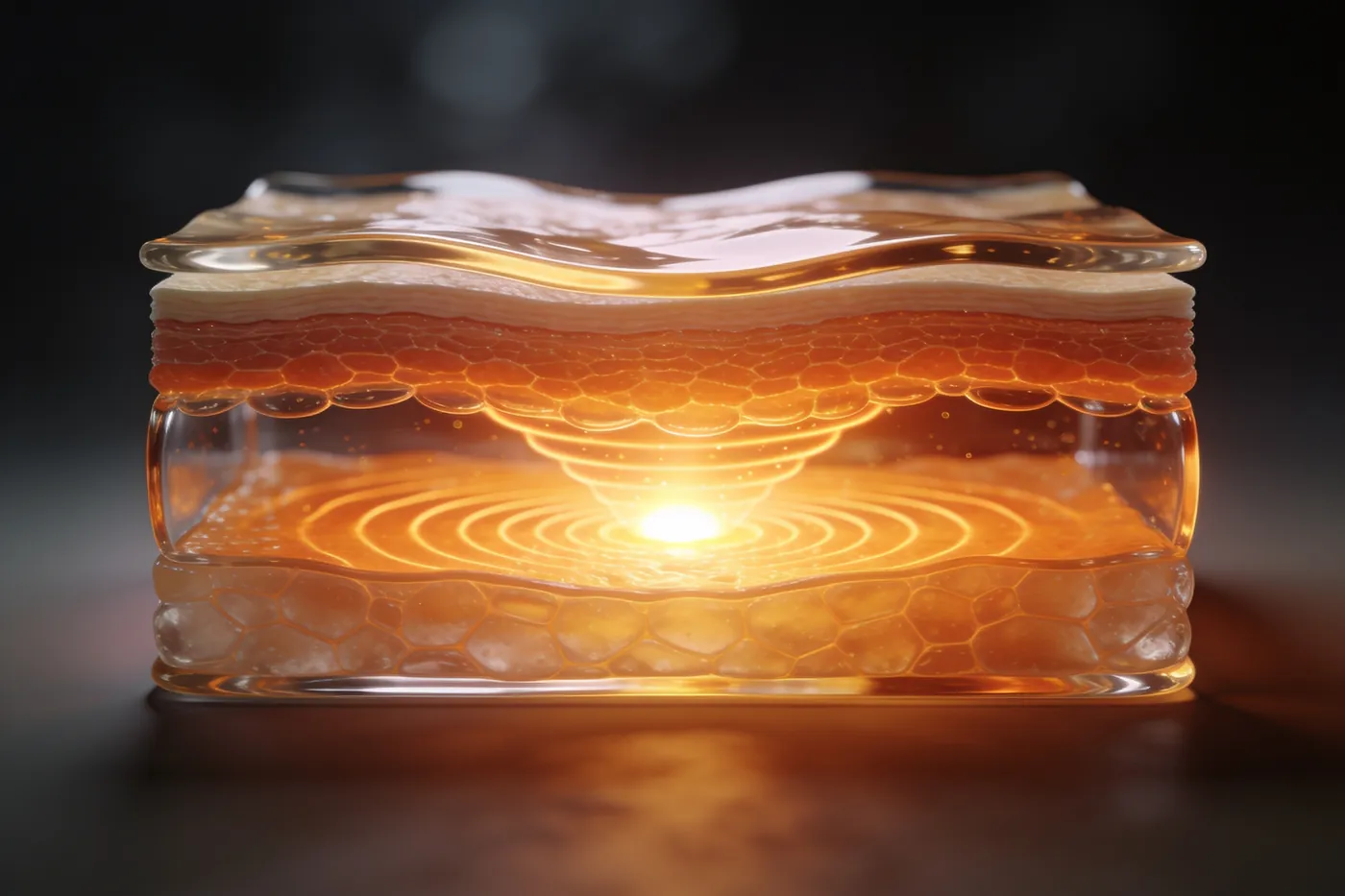
Ultherapy focuses ultrasound energy into tiny points beneath the skin, the way a magnifying glass focuses light, at depths chosen by the transducer: about 4.5 mm for the muscle-and-fascia layer, 3.0 mm for the deep dermis and 1.5 mm for the superficial dermis. An image on screen helps the operator see the layers. Thermage passes radiofrequency current through the skin to a return pad, heating the deeper dermis and its fibrous septa broadly while cryogen cools the surface. Focused points against a broad field is the core distinction.
Focused ultrasound places heat in points at set depths; monopolar radiofrequency heats the dermis broadly.
What do head-to-head trials show?
In a randomised split-face trial of 20 patients followed for six months, monopolar radiofrequency and microfocused ultrasound both improved laxity with no significant difference between them (Alhaddad, Dermatol Surg 2019). In a trial of 20 patients treated on the neck, results were again not significantly different, and ultrasound was more painful (Jones, Dermatol Surg 2017). Across 42 studies of microfocused ultrasound, 89% reported investigator-assessed improvement, with mean pain of 4.85 out of 10 (Amiri, Aesthet Surg J 2025); in an earlier lower-face study, outcomes were weaker in patients with a body-mass index above 30 (Oni, Aesthet Surg J 2014).
Where the laxity sits, and how much facial fat there is, decide the tool.
Thermage vs Ultherapy: a verdict by situation
Thermage vs Ultherapy comes down to which layer has loosened. Ultherapy places focused ultrasound at set depths down to the SMAS, with imaging, so it suits laxity that sits deeper along the jaw, under the chin and at the brow. Thermage FLX heats the deeper dermis broadly with monopolar radiofrequency, so it suits crepey skin and early softening of the skin envelope, including the eyelids with its eye tip. Dr Sin Yong performs both Ultherapy Prime and Thermage FLX himself, and the assessment decides which one, both, or neither fits.
Skin quality is assessed in natural light. Illustrative image, not a patient.
Your situation
Usually leans to
Why
Early jowling, a softening jawline, laxity under the chin or on the neck
Broad dermal heating suits skin quality more than deep laxity
Crepey eyelid skin with a reasonable brow position
Thermage FLX eye tip
A dedicated small tip with shields; heat does not raise a low brow
Laxity at two depths: deep jawline plus crepey skin above it
Sometimes both, as separate steps
They act on different layers; order and spacing are set at assessment
Lean or hollow face
Usually neither
Heat into fat that is not the target can hollow the face; the VF Lift on Volnewmer is considered instead
Puffy or heavier lower face
Usually neither as the main step
Fullness is a fat question; Time Freeze Laser LCLR® is generally used
Heavy jowls with redundant skin
Neither
Beyond energy devices; referred for a surgical opinion
Two small randomised trials found no significant difference between the two for laxity overall, which is why the decision is made on anatomy rather than on reputation. Comfort differs: focused ultrasound is felt as brief, deep heat that is most noticeable over bone, and radiofrequency as heat pulses with cooling bursts. Recovery for both is usually redness and tenderness that settle, with swelling more likely after eye treatment. The Thermage suitability and HIFU suitability guides set out who should wait for each.
Comfort, recovery and risks after Ultherapy or Thermage
Both treatments are usually done without an anaesthetic injection. Ultherapy pulses are felt as deep, brief heat and are more noticeable over bone. Thermage pulses are felt as heat followed by a cooling burst. Redness after either usually settles quickly. After Ultherapy, tenderness on chewing or touch, mild swelling and occasionally small bruises or temporary numbness are recognised, and they are reviewed if they persist.
The neck is thinner skin and is cared for like the face. Illustrative image, not a patient.
Uncommon risks for both include:
Burns where energy concentrates at the surface.
Small depressions from fat loss when heat reaches fat that should have been spared, which is why a lean face is planned more conservatively.
Temporary nerve weakness, rarely, after deep ultrasound lines.
These are the reasons the energy, the depth and the number of lines are set by the doctor for each zone rather than by a standard package. The fuller lists are on the Ultherapy side effects and Thermage side effects pages. A blister, a new dent over the cheek, temple or jaw, numbness that does not settle, or any change in facial movement should be reported the same day, wherever the treatment was done; the complication care page explains which signs need a doctor the same day.
Volnewmer by CLASSYS is also monopolar radiofrequency at 6.78 MHz, with continuous water cooling rather than cryogen spray. It is the platform behind the VF Lift – Vertical Facelift protocol, and it is not focused ultrasound. How the two radiofrequency platforms differ is set out in Thermage FLX vs Volnewmer.
Who suits which?
Where laxity sits deeper, along the jawline and under the chin, focused ultrasound reaches the deeper layer directly. Where the concern is skin quality and fine crêpiness, broad dermal heating is often the better fit. In lean or hollow faces, heat placed into fat that is not the target can make the face look more hollow; hollowing after Ultherapy, HIFU or Thermage is a recognised risk, which is why Dr Sin Yong does not prefer HIFU-type treatments for lean patients and uses the VF Lift – Vertical Facelift on Volnewmer instead. For puffier or heavier faces, he generally uses Time Freeze Laser LCLR®. His fuller comparison is on Ultherapy vs VF Lift vs Time Freeze.
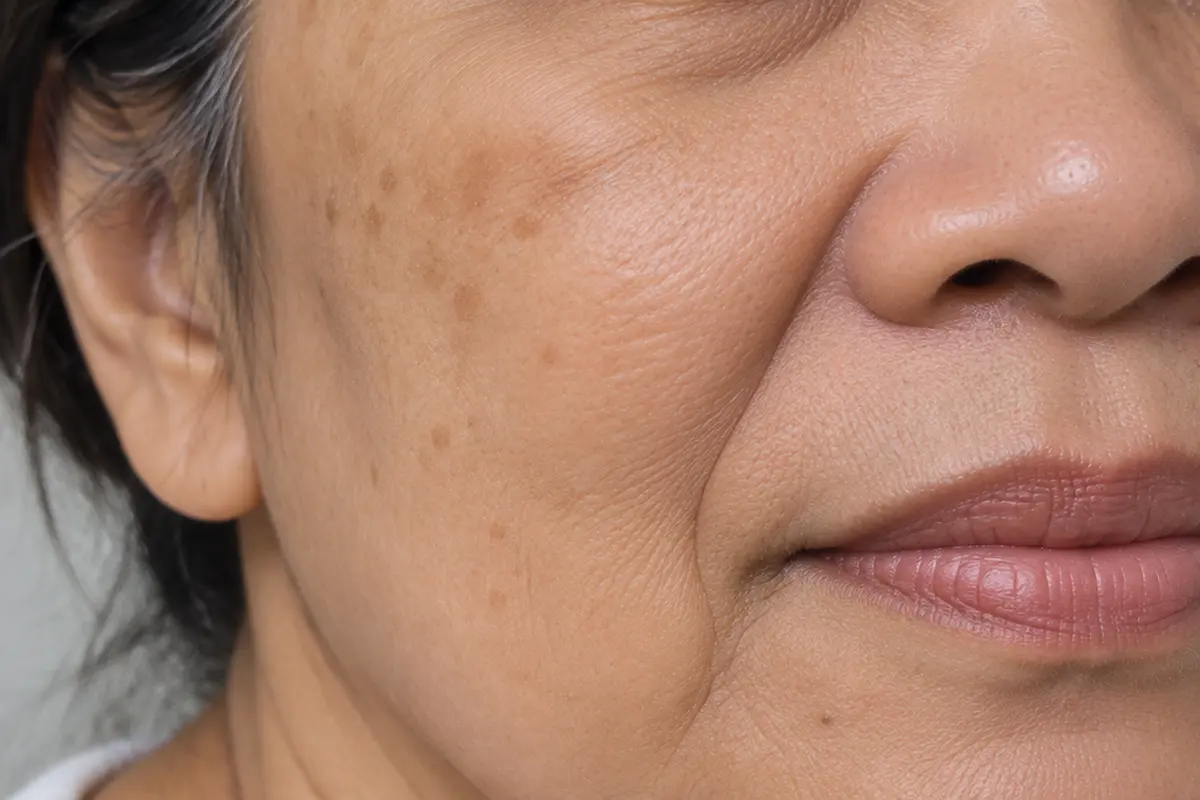
The plan follows what the skin shows on the day. Illustrative image, not a patient.
“The question is not ultrasound or radiofrequency. It is where the laxity sits, and how much fat the face can afford to lose.”
Related Guide: thread lift — what PDO, PCL and PLLA threads can and cannot do, and when the VF Lift fits instead.
Where the VF Lift – Vertical Facelift fits
Thermage and Ultherapy are not the only two routes. The VF Lift – Vertical Facelift is Dr Sin Yong’s own protocol on Volnewmer, a CLASSYS monopolar radiofrequency platform. Like Thermage FLX it works with monopolar radiofrequency at 6.78 MHz, on the dermis and the subcutaneous layer. It is built around three modes he designed, chosen area by area after the assessment:
A deeper smile line can come from the cheek descending, not only from the fold itself. Illustrative image, not a patient.
Lift tightens and lifts, for the jawline, the nasolabial folds, a double chin and a slimmer-looking face.
Sculpt flattens pouching and bulging, such as a puffy lower face or the bulge beside the nasolabial fold.
Restore is for hollow areas: the sides of the cheeks, under the eyes, the temples and the forehead, without filler. Nothing is injected, so there is no overfilling risk, and the volume develops over the following weeks.
That third mode is why the VF Lift often comes into a Thermage-or-Ultherapy decision. In a lean or hollow face, heat that reaches fat which is not the target can hollow the face further. Hollowing is a known side effect of Ultherapy, Thermage and other HIFU-type treatments, and it is the reason Dr Sin Yong does not prefer HIFU-type treatments for lean patients. For a lean face he looks at the VF Lift first; for a puffier or heavier lower face, Time Freeze Laser LCLR® is the protocol he weighs instead.
Focused ultrasound is not a core part of the VF Lift. It is added only where the assessment finds laxity at the SMAS layer that the radiofrequency pass does not reach.
“In a lean face the question is how to lift without taking away fat the face cannot spare. That is where I look at the VF Lift before focused ultrasound.”
Dr Sin YongOn choosing between Thermage, Ultherapy and the VF Lift
Thermage FLX, Ultherapy and the VF Lift – Vertical Facelift
Thermage FLX
Ultherapy
VF Lift – Vertical Facelift
Energy
Monopolar radiofrequency, 6.78 MHz
Microfocused ultrasound with real-time imaging
Monopolar radiofrequency on Volnewmer, 6.78 MHz
Where the heat goes
Broadly through the deeper dermis and septa
Points at about 4.5, 3.0 and 1.5 mm
Dermis and subcutaneous layer, planned by area
How it is planned
One treatment across the area
Transducer depths chosen by layer
Lift, Sculpt and Restore modes, chosen area by area
In a lean or hollow face
Heat reaching non-target fat can hollow the face
Heat reaching non-target fat can hollow the face
Restore mode is planned for hollow areas
Focused ultrasound
Not used
The core of the treatment
Only an adjunct, where the assessment calls for it
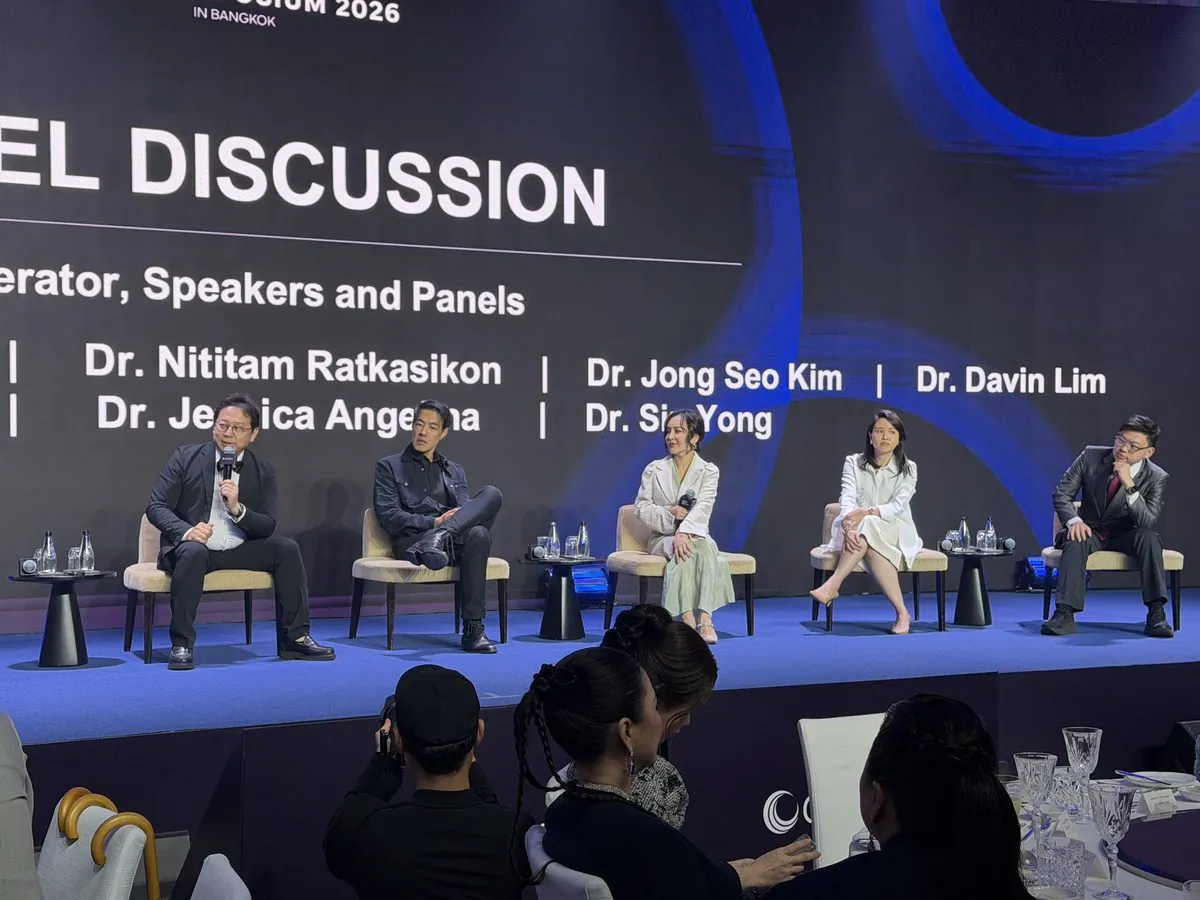
Dr Sin Yong was invited by CLASSYS to share his clinical expertise on the VF Lift – Vertical Facelift with international colleagues, including Dr Davin Lim.
Dr Sin Yong treats HIFU as one tool among several rather than a default. He maps where the SMAS is lax against where volume is missing, and that map decides which cartridge goes where, and whether HIFU is the right mechanism at all.
“HIFU is an umbrella term. The devices differ in transducer design, imaging and clearance; they are not interchangeable.”
Dr Sin YongOn what HIFU actually denotes
He is invited by CLASSYS to share his clinical expertise on the Ultraformer MPT internationally, and holds Certified Key Opinion Leader Trainer certificates for the CLASSYS Ultraformer MPT and HIRONIC New Doublo 2.0; they are listed on the About page and the originals can be viewed at consultation. He also performs Ultherapy Prime, Thermage FLX and the VF Lift – Vertical Facelift, so the recommendation follows the anatomy rather than the device in the room. Where focused ultrasound alone is not the right tool, his VF Lift – Vertical Facelift works on the dermis and subcutaneous layer with Volnewmer radiofrequency, and Time Freeze Laser LCLR® is a laser protocol directed at compact fat in the jowl and under the chin as well as dermal laxity.
HIFU or radiofrequency? Everyone asks me which is better. Wrong question: they don't do the same job. Focused ultrasound delivers energy to specific depths, including the deeper support layers. Radiofrequency heats a broader volume more diffusely. Different tissue, different problems. I'm a key opinion leader for platforms in both categories, and I use both because neither replaces the other. The right question is what's actually loose on your face. The device follows from that, never the other way around.
Transcript of Dr Sin Yong's video, lightly edited for reading.
“"HIFU or radiofrequency, which is better?" Wrong question. They don't do the same job.”
Dr Sin YongOn choosing an energy device
A device is only a device. Ultherapy Prime, Thermage or a filler syringe is a tool, like a suture; technique, experience and customisation to the face decide the result. Why technique, not the device, decides the result.
Ultherapy vs Thermage: layers, comfort and combining them
Which skin layer each targets
Ultherapy uses focused ultrasound to reach the deeper lifting layer (SMAS) and dermis at set depths. Thermage uses radiofrequency to heat the dermis more broadly. Ultherapy aims more at lifting; Thermage at tightening.
Comfort and recovery
Both can be uncomfortable during treatment; Ultherapy is often felt as deep aching, Thermage as brief heat. Both usually allow a return to work the same day, with mild redness or swelling.
Getting both
Some patients have both, weeks apart, to combine lifting and tightening. In lean faces Dr Sin Yong often prefers radiofrequency-based treatment.
Ask about Ultherapy or Radiofrequency Lifting
Leave your name, mobile number and email and the clinic will contact you directly.
Thank you — your enquiry has been received. The clinic will contact you during opening hours (Mon–Fri 10am–8pm, Sat 11am–3pm).
When to see a doctor after an energy-based lifting treatment
After focused ultrasound or radiofrequency, numbness or weakness of part of the face, blistering, a burn, or pain lasting more than a few days should be reviewed by the treating doctor.
A face that droops suddenly or on one side only, with or without slurred speech or weakness in an arm, is a medical emergency and not a cosmetic concern; call an ambulance.
How to choose a clinic for Ultherapy or Thermage in Singapore
A brand page or an overseas clinic cannot tell you how Ultherapy or Thermage is delivered here. These are the points worth checking with any clinic in Singapore.
Who performs it. Ask who will carry out Ultherapy or Thermage. Medical treatments here are performed by Dr Sin Yong himself and are not delegated.
What is used. Ask for the name of the device or product, and whether it is registered with the Health Sciences Authority.
Assessment first. The plan should follow an in-person assessment, not a package chosen in advance.
The fee in writing. Fees are quoted in Singapore dollars, in writing, before any treatment starts.
Review. Ask when you will be seen again after the treatment, and by whom.
Consultations with Dr Sin Yong are at 9 Scotts Road, Pacific Plaza #12-01, Singapore 228210.
Thermage and Ultherapy both tighten skin by heating it, but they use different energy and reach different depths, which is why they suit different faces.
Get to know Ultherapy
Micro-focused ultrasound with imaging places heat at set depths down to the SMAS, the deeper support layer, so it suits early sagging of the jaw, brow and neck. Dr Sin Yong performs Ultherapy Prime himself.
Get to know Thermage
Monopolar radiofrequency heats the dermis broadly, so it suits crepey, mildly loose skin of the face, eyes and body. Where others use Thermage, Dr Sin Yong uses his VF Lift – Vertical Facelift, also radiofrequency.
Can they be combined?
Yes. Ultrasound for the deeper support and radiofrequency for the skin can be planned together or in sequence when both layers have changed.
Frequently Asked Questions
Sagging jowls and brow may suit ultrasound lifting; crepey, loose skin may suit radiofrequency tightening. Many faces have both.
Both are premium treatments with similar price ranges, and the fee depends on the area and number of lines or shots. The fee is confirmed at the assessment.
Prices vary by area and tip size. The fee is confirmed after the assessment.
With either, tightening builds gradually over two to three months. Most people repeat treatment after about 12 to 18 months.
The collagen made after treatment remains, but the skin keeps ageing. Most people repeat treatment after about 12 to 18 months.
Ultherapy focuses ultrasound at set depths of 1.5 mm, 3 mm and 4.5 mm, the deepest reaching the layer that is tightened in a surgical facelift. Thermage heats the dermis and the fibrous strands in the fat beneath it more broadly, without a single focal depth.
The choice follows the problem. Loose, crepey skin points towards radiofrequency. Descent of the deeper layer along the jawline points towards focused ultrasound. Face thickness matters too: lean faces are usually steered away from deep ultrasound. An examination decides.
The difference between Thermage and Ultherapy is the energy and the depth. Thermage FLX uses 6.78 MHz monopolar radiofrequency to heat the deeper dermis broadly, with cryogen cooling of the surface. Ultherapy uses microfocused ultrasound with real-time imaging to place heat points at about 1.5, 3.0 and 4.5 mm, reaching the muscle-and-fascia layer. Both aim to prompt collagen remodelling.
In a lean face neither is chosen by default, because heat that reaches fat which is not the target can hollow the face. Dr Sin Yong does not prefer HIFU-type treatments for lean patients, and the VF Lift – Vertical Facelift on Volnewmer radiofrequency is one alternative considered. The examination, including how much facial fat there is, decides which route fits.
Both are monopolar radiofrequency at 6.78 MHz, so the energy is the same kind. They differ in the cooling system and the treatment tips. Volnewmer is the platform behind the VF Lift – Vertical Facelift protocol. Which suits you depends on the zones and the tissue, and that is decided at assessment.
Sometimes, because they treat different layers: Ultherapy reaches the SMAS and deep dermis at set depths, while Thermage heats the dermis broadly. Whether to combine them, in what order and how far apart is decided at assessment. In a lean face, adding more heat is not the answer, and a different route such as the VF Lift on Volnewmer radiofrequency may be proposed instead.
Neither is better for every neck. Where the laxity is in the platysma and the tissue under the chin, Ultherapy reaches that layer directly and was cleared for lifting lax neck and submental tissue. Where the concern is crepey skin quality, Thermage FLX broad dermal heating may suit better. Fat under the chin is a separate problem that neither device is designed to reduce.
No honest answer applies to everyone. Both work by heating collagen so the body remodels it, and that change develops gradually and then fades at a pace set by age, skin quality, weight change and sun exposure. The two head-to-head trials found no significant difference in laxity improvement. Whether and when to repeat either is decided at review, not promised in advance.
Neither has been shown to be better overall. Two small randomised trials comparing microfocused ultrasound with monopolar radiofrequency found no significant difference in laxity improvement; in one, ultrasound was more painful.
In a neck trial, microfocused ultrasound was more painful than monopolar radiofrequency. Comfort varies with settings, area and the individual.
Hollowing after Ultherapy, HIFU or Thermage is a recognised risk, particularly in lean faces where heat reaches fat that is not the target. This is why the plan depends on how much facial fat you have.
Yes. Dr Sin Yong performs Ultherapy Prime and Thermage FLX personally. He also uses the VF Lift – Vertical Facelift on Volnewmer for lean or hollow faces and Time Freeze Laser LCLR® for puffier faces, and the assessment decides which fits.
Both cause discomfort. Ultherapy is often felt as deeper aching along the bone; Thermage is felt as intermittent heat with cooling.
Both treat the face and neck; radiofrequency is also used around the eyes and on the body, ultrasound on the brow, jaw and under the chin.
Usually one session, with results over three to six months and maintenance yearly.
It depends on the area: a full face commonly uses about 600 to 900 shots, and the eyes about 225 to 450 with the small eye tip. Shot count is set by the area and skin thickness rather than chosen as a package.
Both usually last about a year, sometimes longer, because collagen remodels over months while ageing continues; repeating about once a year is common.
References
US FDA 510(k) K260618 — Ulthera System (Merz), 2026: indicated to lift the eyebrow, lift lax submental and neck tissue, improve lines and wrinkles of the décolleté, and improve skin laxity on the abdomen, arms and knees. source
US FDA 510(k) summary K170758 — Thermage FLX (Solta Medical), 2017: 6.78 MHz; indications include non-invasive treatment of wrinkles and periorbital wrinkles. source
Alhaddad M, et al. Randomised split-face comparison of monopolar radiofrequency and microfocused ultrasound with visualisation for laxity (n=20). Dermatol Surg. 2019;45(1):131-139. doi:10.1097/DSS.0000000000001653. source
Jones IT, et al. Subsurface monopolar radiofrequency versus microfocused ultrasound with visualisation for neck laxity (n=20). Dermatol Surg. 2017;43(12):1441-1447. doi:10.1097/DSS.0000000000001216. source
Amiri M, et al. Microfocused ultrasound with visualization (MFU-V) effectiveness and safety: a systematic review and meta-analysis. Aesthet Surg J. 2025;45(3):NP86-NP94. doi:10.1093/asj/sjae228. source
Oni G, et al. Evaluation of microfocused ultrasound with visualisation for lower-face laxity (n=93 evaluated). Aesthet Surg J. 2014;34(7):1099-1110. doi:10.1177/1090820X14541956. source