Lumps and other filler complications that remain once the swelling has settled are covered on their own page.
Published 6 October 2026 · Reviewed by Dr Sin Yong
Complication care is the page explaining what to do if something feels wrong after a treatment, for patients treated by Dr Sin Yong or elsewhere. After filler, white, dusky or mottled skin, worsening pain or any change in vision needs urgent assessment, and a vision change means going straight to a hospital emergency department.
If something feels wrong after a treatment, contact the clinic on +65 8023 7170 during clinic hours. After filler, skin turning white or dusky and mottled, or pain that is severe or getting worse, can mean a blood vessel is affected and needs same-day assessment; do not wait for a routine review. Any change in vision after filler is an emergency: go to the nearest hospital emergency department (A&E) immediately. Outside clinic hours, urgent signs go to A&E.
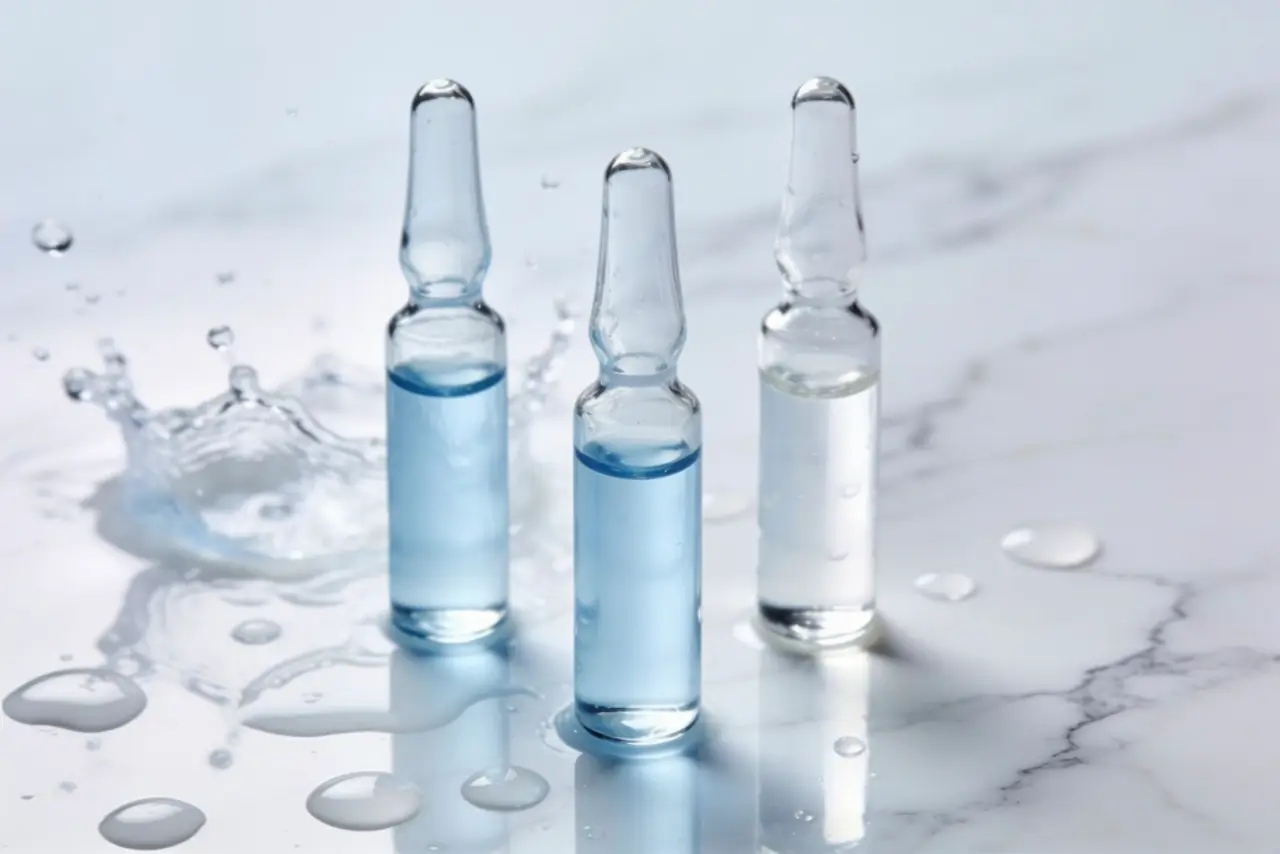
Illustrative image. Hyaluronidase acts only on hyaluronic acid filler and is used after examination.
Key facts
Clinic contact
WhatsApp or call +65 8023 7170, Mon–Fri 10am–8pm, Sat 11am–3pm
Same-day signs after filler
Blanching, dusky or mottled skin, severe or worsening pain
Emergency signs
Any vision change, stroke signs, swelling of the throat or difficulty breathing: A&E
Outside clinic hours
Urgent signs go to the nearest hospital emergency department
Hyaluronidase
May be used for hyaluronic acid filler only; no effect on Sculptra, Ellansé or Radiesse
Treated elsewhere
Seek assessment from the injecting clinic or another doctor; bring product details
Hard lumps after filler or skin boosters, and only offered surgery? Get assessed first: cutting filler out leaves a scar and can cause dents or nerve injury. Find out how Dr Sin Yong treats them without surgery.
What should you do if something feels wrong?
Contact the clinic first, unless the sign is one of the emergencies below. Message or call +65 8023 7170 during clinic hours, Monday to Friday 10am to 8pm and Saturday 11am to 3pm, and say what was done, when, and what you are noticing. A clear description helps, but it does not replace being seen when being seen is needed.
Messages are answered during clinic hours. That matters for the urgent signs on this page: if one appears in the evening or on a Sunday, do not wait for a reply. Go to the nearest hospital emergency department, or call 995 for an ambulance if you cannot get there safely.
Most of what people notice after treatment is expected: some swelling, redness or bruising after injectables, and warmth, redness or fine crusting after laser. These are discussed before treatment and set out in the written aftercare. The signs below are different, and they are the reason this page exists.
Which signs after filler need same-day attention?
Skin turning white over or near the injected area (blanching), or developing a dusky, purple or mottled discolouration, can mean filler is affecting the blood supply. This is called vascular occlusion. Pain that is severe, or that is getting worse rather than settling in the hours or days after injection, belongs in the same category.
These signs are time-critical. Seek medical assessment the same day, whether with this clinic, with the clinic that injected you, or with another doctor. Do not try to manage it yourself, and do not wait to see whether it improves by the next routine appointment.
Some signs are emergencies rather than same-day concerns. Any change in vision after a filler injection, including blurring, loss of vision, double vision or pain in or around the eye, needs the nearest hospital emergency department immediately. So do signs of a stroke, such as new facial weakness, slurred speech or weakness of an arm or leg, and swelling of the lips, tongue or throat with difficulty breathing. Go to A&E or call 995; do not travel to the clinic first.
“A biostimulator cannot be dissolved. That single fact should shape every decision about using one.”
Dr Sin YongOn why some fillers do not dissolve
What about other treatments and later problems?
After laser treatment, contact the clinic if crusts become thick, yellow or oozing, if blisters appear, or if pain, swelling or warmth increases instead of settling. These can point to infection or a burn and need to be looked at rather than covered with make-up. Dark marks that appear weeks after laser are often post-inflammatory hyperpigmentation; they should be reviewed, and strict sun protection matters in the meantime.
After BTX, a heavy brow or drooping eyelid should be reported so it can be assessed. Difficulty swallowing, speaking or breathing after BTX is rare and is an emergency: go to A&E.
Problems can also appear late. A firm nodule months or years after filler can be an inflammatory reaction such as a biofilm or granuloma, and it needs examination rather than massage or guesswork. Any lump that is painful, growing or changing the colour of the skin should be assessed promptly.
How does the clinic follow up after treatment?
Every treatment is performed personally by Dr Sin Yong, and post-treatment questions come back to him through the same WhatsApp line, +65 8023 7170. Injectable treatments are reviewed once the product has settled, and written aftercare is given for each treatment, including which signs to report.
If you contact the clinic with a concern, you will be told plainly whether it sounds expected, whether it needs to be seen, and how soon. If it sounds like an emergency, you will be directed to an emergency department, because that is where the investigations and the other specialities the situation may need are available.
Where a problem needs care outside aesthetic practice, such as skin disease that needs a dermatologist, or something that needs a plastic surgery specialist, Dr Sin Yong refers rather than manages it alone.
When is hyaluronidase used, and when is it not?
For hyaluronic acid (HA) filler, the doctor may use hyaluronidase, an enzyme that breaks down the HA gel. It is kept on hand where HA filler is injected, and published guidelines describe its urgent use when vascular occlusion from HA filler is suspected, as well as its planned use for filler that is misplaced or excessive.
Hyaluronidase acts only on hyaluronic acid. It has no effect on Sculptra (poly-L-lactic acid), Ellansé (polycaprolactone) or Radiesse (calcium hydroxylapatite). Concerns after those products are assessed and managed case by case; they cannot be dissolved.
Hyaluronidase is a medical treatment with its own considerations, including possible allergic reaction, which is screened for, and the fact that it also acts on the hyaluronic acid naturally present in tissue. Whether it is used, and how much, is decided after examination. How planned dissolving works is explained in the filler regret and dissolving guide.
What if you were treated somewhere else?
Warning signs follow the same rules wherever you were treated: same-day assessment for blanching, mottling or worsening pain, and the emergency department for any vision change. Contact the clinic that treated you, or another doctor, rather than waiting for the original clinic to reopen.
For anything that is not urgent, such as filler that looks heavy, has moved or feels lumpy, an assessment can be arranged through the filler correction consultation. If you do not know what was injected, or it was done overseas, the assessment still proceeds. Bring the product name, the areas treated and the dates if you have them, because knowing what is there changes what can be done.
What the research says about filler emergencies
For hyaluronic acid filler blocking a blood vessel, one published protocol uses repeated high doses of hyaluronidase injected into the affected area every hour (DeLorenzi, 2017). A 2025 pilot meta-analysis of 55 patients reported complete resolution in 94.6% after ultrasound-guided hyaluronidase for impending skin necrosis (Boey et al., 2025).
In a review of 243 cases of filler-related skin ischaemia, the facial artery territory was involved in 58% and the ophthalmic territory in 48%; ophthalmic involvement carried vision loss in 39% of cases (Soares et al., 2023). Sudden pain, blanching, a mottled patch or any change in vision after filler is a same-day emergency.
Thread lift aftercare: first 24 hours, first week, mouth opening, sleep, sun, make-up and exercise, what is normal…
Frequently Asked Questions
Skin turning white or dusky and mottled near the injection site, and pain that is severe or worsening, can mean the blood supply is affected and need same-day assessment. Any change in vision after filler is an emergency: go to A&E immediately.
For urgent signs, go to the nearest hospital emergency department or call 995; do not wait for a message reply. Clinic messages on +65 8023 7170 are answered Monday to Friday 10am to 8pm and Saturday 11am to 3pm.
No. Hyaluronidase breaks down hyaluronic acid filler only. Sculptra, Ellansé and Radiesse do not respond to it, so concerns after those products are assessed and managed case by case rather than dissolved.
Usually not. Some swelling, redness or bruising after injections is expected and is covered in the written aftercare. Swelling with blanching, mottled skin, worsening pain or any vision change is different and needs urgent assessment.
Yes. For urgent signs, seek same-day care from the clinic that treated you, another doctor or A&E. For non-urgent concerns, a filler assessment can be arranged; bring the product name and dates if you have them.
Guideline for the Safe Use of Hyaluronidase in Aesthetic Medicine, Including Modified High-dose Protocol. Journal of Clinical and Aesthetic Dermatology (Murray G et al.), 2021. source
This month's guideline: The Use of Hyaluronidase in Aesthetic Practice (v2.4). Journal of Clinical and Aesthetic Dermatology (King M, Convery C, Davies E), 2018. source
Update on Avoiding and Treating Blindness From Fillers: A Recent Review of the World Literature. Aesthetic Surgery Journal (Beleznay K, Carruthers JDA, Humphrey S et al.), 2019. source
Complications of injectable fillers, part I. Aesthetic Surgery Journal (DeLorenzi C), 2013. source
Patient guide (PDF):After your filler treatment — a printable summary of this page, medically reviewed by Dr Sin Yong. General information, not a substitute for assessment.