Published 29 October 2026 · Reviewed by Dr Sin Yong
Laser tattoo removal in Singapore at this clinic is planned by ink colour, depth and skin type. T2 Laser Tattoo Removal is Dr Sin Yong's staged protocol on the DEKA TORO: each ink colour is matched to a wavelength and pulse it absorbs. Settings follow your skin type, and healing is reviewed before every next visit.
Short answerLaser tattoo removal uses very short pulses to break ink into fragments that the body clears between visits. In Singapore, at this clinic, it is T2 Laser Tattoo Removal on the DEKA TORO: picosecond, Q-switched nanosecond and fractional (Frax) treatment. Each ink colour is given a wavelength it absorbs, which makes removal faster. No visit count or complete clearance is promised.
T2 stands for Targeted Tattoo: each ink colour in the tattoo is targeted with the wavelength it absorbs. T2 Laser Tattoo Removal is Dr Sin Yong's staged tattoo removal protocol on the DEKA TORO, a single laser platform with three wavelengths in two pulse regimes. Instead of treating every tattoo with one wavelength, it matches the wavelength and pulse to each ink colour. Black and dark inks are treated at 1064 nm nanosecond, red, orange and purple at 532 nm nanosecond, and green and blue at 785 nm picosecond. Energy is chosen for your skin type, and healing is reviewed before each next visit.
Illustrative image — not a patient.
The mechanism is that of any laser tattoo removal: short pulses fracture ink particles in the dermis, and the immune system carries the fragments away gradually between treatments. The tattoo removal page sets it out, together with what each pulse feels like and why IPL cannot remove ink. What T2 adds is the choice of wavelength and pulse colour by colour, within one platform, revisited at every review.
What it is not
Not a single visit: the body clears fragmented ink slowly, so treatment is staged.
Not a promise of clearance: matching the wavelength gives each ink light it absorbs, which makes removal faster, but complete clearance cannot be promised for any tattoo.
Not T2 Frax Radiance:T2 Frax Radiance is his separate pigment and pore protocol on the same TORO, working on skin, not ink.
Every treatment is performed by Dr Sin Yong after an in-person evaluation.
DEKA TORO tattoo removal: three wavelengths, picosecond and nanosecond
DEKA TORO tattoo removal runs on a platform made by DEKA, the Italian laser manufacturer in the El.En. group. The TORO is a Q-switched Nd:YAG system combining picosecond and nanosecond emissions across three wavelengths: 785 nm picosecond, plus 532 nm and 1064 nm nanosecond. It was cleared by the US FDA under 510(k) K240752 on 16 May 2024. Dr Sin Yong is a Global DEKA Key Opinion Leader, and his clinic is a DEKA Centre of Excellence.
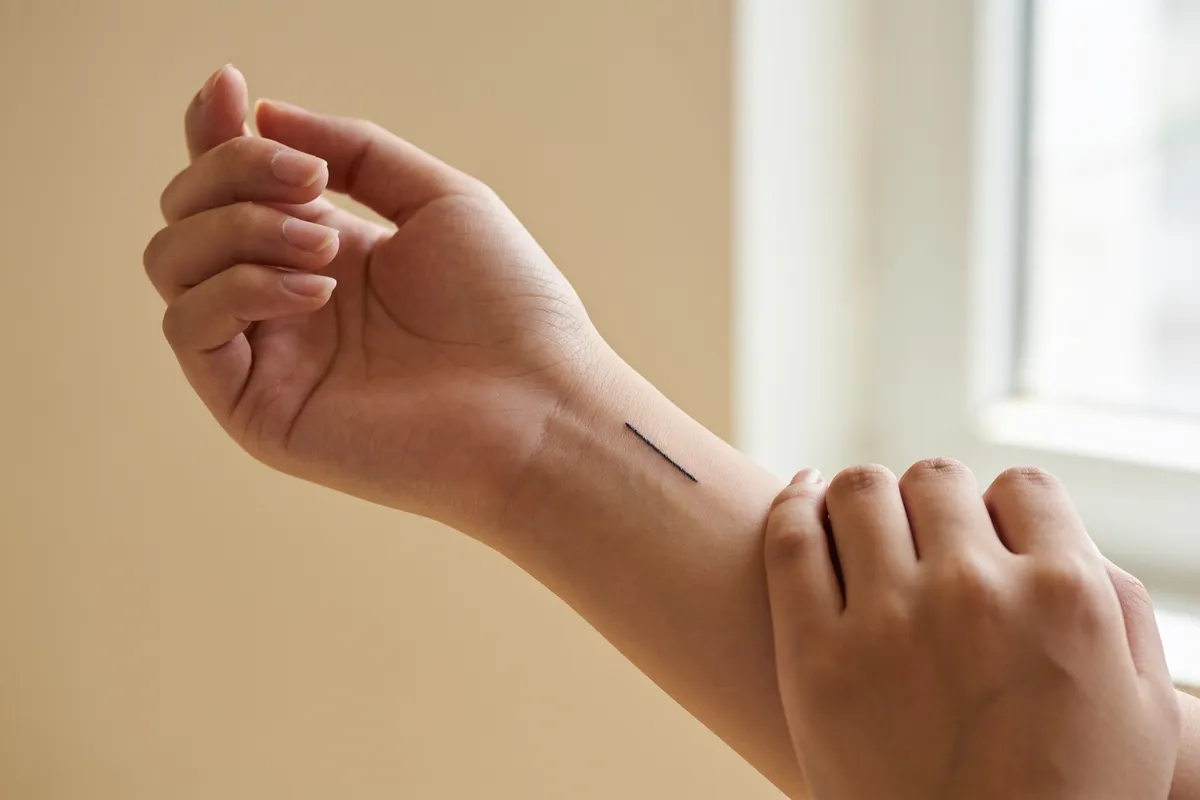
A small dark-ink tattoo on the forearm. Illustrative image, not a patient.
What each pulse regime does
A nanosecond pulse lasts about a billionth of a second and fractures ink with a mix of pressure and heat. It is the long-established pulse for dark ink at 1064 nm and for red and orange ink at 532 nm. The TORO's FDA clearance lists dark inks (black, blue, brown) for 1064 nm and light inks (red, orange, purple, tan, sky blue, green) for 532 nm.
A picosecond pulse is roughly a thousand times shorter. The 785 nm source is titanium-sapphire, with a pulse in the hundreds of picoseconds, so more of the work is done by a pressure effect and less heat spreads into the skin around the ink. DEKA describes 785 nm as well absorbed by melanin and less by haemoglobin; its FDA tattoo indication is green and blue ink, in Fitzpatrick II to IV skin. What a shorter pulse changes, and what it does not, is explained on pico vs Q-switched laser.
Handpieces and the thermal mode
Square-spot handpieces, which DEKA suggests for tattoo removal, let passes tile edge to edge without gaps or overlap, and a zoom handpiece changes spot size. Repetition runs up to 20 Hz, a specification rather than a promise. The longer-pulsed 1064 nm thermal mode belongs to T2 Frax Radiance and skin work, not to ink. T2 Laser Tattoo Removal does use fractional (Frax) treatment alongside the picosecond and Q-switched pulses, placing the energy in a grid of micro-spots with untreated skin between them; together they make removal faster. The term is defined under DEKA TORO laser.
“A tattoo with three colours is three different targets. I match a wavelength to each one, and I set the energy for the skin around the ink, not for the ink alone.”
Dr Sin YongOn matching wavelength to ink colour
How T2 is different: which wavelength for which ink colour
T2 differs from single-wavelength tattoo removal in the way that matters most for coloured tattoos: every colour in the tattoo is given a wavelength it absorbs, in the same visit. A laser can only fracture ink that absorbs its light, and each ink colour absorbs a different part of the spectrum.
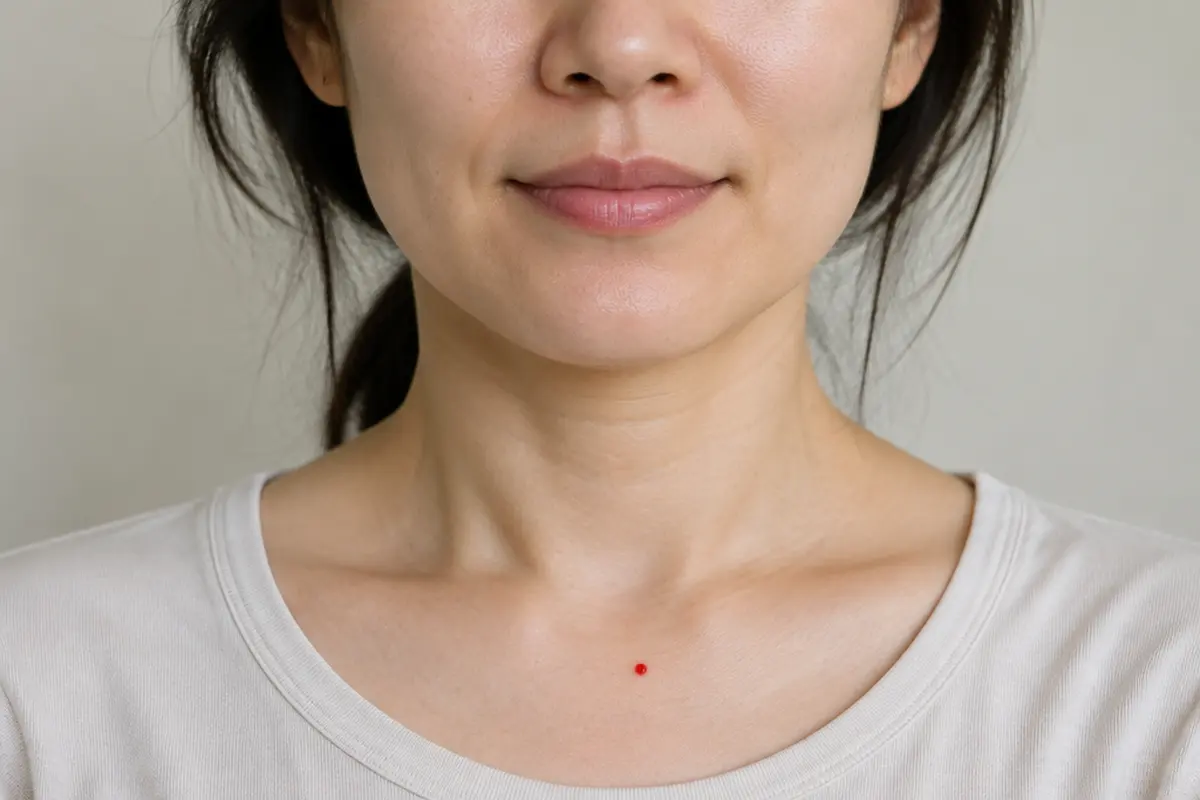
Small red spots of this kind are collections of vessels. Illustrative image, not a patient.
On a single-wavelength laser, some colours are left with light they barely absorb. 1064 nm suits black and dark blue but does little for green; 532 nm suits red and orange but not green or most blues. A multicoloured tattoo treated at one wavelength can therefore need extra visits, a change of device, or be left with colours that do not move. In a study of a 785 nm picosecond laser used on its own, purple, blue and green inks responded well while red and yellow responded little (Bernstein 2018).
On T2, the DEKA TORO carries all three emissions. It uses 1064 nm nanosecond for black and dark inks, and 532 nm nanosecond for red, orange and purple. It uses 785 nm picosecond for green and blue. Picosecond pulses break up ink mainly by a pressure effect. An early study tested a picosecond laser at 755 nm. Its authors reported rapid clearance of blue and green pigment, including in tattoos that had resisted earlier treatment (Brauer 2012).
Ink colour matched to TORO wavelength and pulse
Ink colour
TORO wavelength and pulse
What to expect
Black, dark blue, dark brown
1064 nm nanosecond
Respond most readily; clearance still cannot be promised
Red, orange, purple
532 nm nanosecond
Red ink can provoke an allergic reaction as it is released
Green and blue
785 nm picosecond
More stubborn than black; wavelength choice matters most here
Sky blue, tan, light green
532 nm nanosecond, assessed per tattoo
Response varies with depth and density
Yellow and white
Poorly absorbed by most wavelengths
The hardest to clear; may lighten rather than clear
Brown or flesh-tone cosmetic ink
Test area first
Iron oxide or titanium dioxide can darken or turn grey
No number of visits is promised. Yellow and white remain poorly absorbed by every wavelength, dense or layered ink and scarring still slow any laser, your skin type still sets the energy, and complete clearance cannot be promised for any tattoo. Each colour is covered in colour tattoo removal, and density, layering and amateur versus professional ink under tattoo removal suitability.
Laser tattoo removal: what published studies show about sessions and colours
A systematic review of 36 laser tattoo removal studies found that Q-switched Nd:YAG and picosecond lasers are both effective for black ink, and that picosecond lasers perform better for blue, green and yellow.
Session numbers are harder to predict than most people are told. In a long-term study of Q-switched Nd:YAG laser, patients needed an average of 5.09 treatments, against the 9.9 predicted by the scoring scale commonly used to estimate them, and tattoos continued to fade for years after the last session. The study followed 11 patients, so it indicates a pattern and not a rule. Colour, ink depth and skin type decide the plan, which is why a test area is sensible before a full treatment.
T2 on Asian and darker skin
On Asian and darker skin, T2 is planned with the skin setting the terms. The laser passes through epidermal melanin to reach the ink, and in Fitzpatrick III to V skin part of that energy is absorbed on the way. The area can then darken for a while, which is post-inflammatory hyperpigmentation, or lighten, and lightening can be slow to recover. Darker skin is not a reason to refuse treatment; it changes the plan:
An older tattoo that has faded with time. Illustrative image, not a patient.
Wavelength: 1064 nm is absorbed less by epidermal melanin, so it is favoured for dark ink in darker skin.
Green and blue ink: the 785 nm tattoo indication covers Fitzpatrick II to IV, so these colours in darker skin are approached with particular care, often with a test area first.
Energy: set for the skin around the ink, at a level that is useful rather than repeated at settings too low to help.
Sun: a fresh tan is a reason to wait, and sun protection on healed skin continues between visits.
Review: a dark or pale patch from the last visit changes the next settings.
Who suits T2 Laser Tattoo Removal, who waits and who is referred
Who suits T2 is decided from the ink and the skin. It tends to suit professional or amateur tattoos on intact, untanned skin, in someone who accepts that removal is staged and complete clearance cannot be promised. It also suits fading before a cover-up, a shorter course aimed at lightening; the cover-up art is done by a tattoo artist, not here.
Small red spots of this kind are collections of vessels. Illustrative image, not a patient.
Better to wait
Pregnancy
Broken, infected or freshly tanned skin over the tattoo
Recent isotretinoin, photosensitising medicines or past gold injections, reviewed first
Examined first, and sometimes referred
A mole inside the tattoo: examined before any laser, because laser over a lesion that needs a diagnosis removes the clue a doctor needs.
A small tattoo where excision suits: referred to a plastic surgery specialist.
A raised, itchy tattoo or red-ink reaction: treated as a skin problem first.
Tattoo removal creams are not used; there is no reliable evidence that they remove ink from the dermis.
How a T2 plan runs, and when to call
A T2 plan runs in the same order every time, and you are not treated on the day of the consultation.
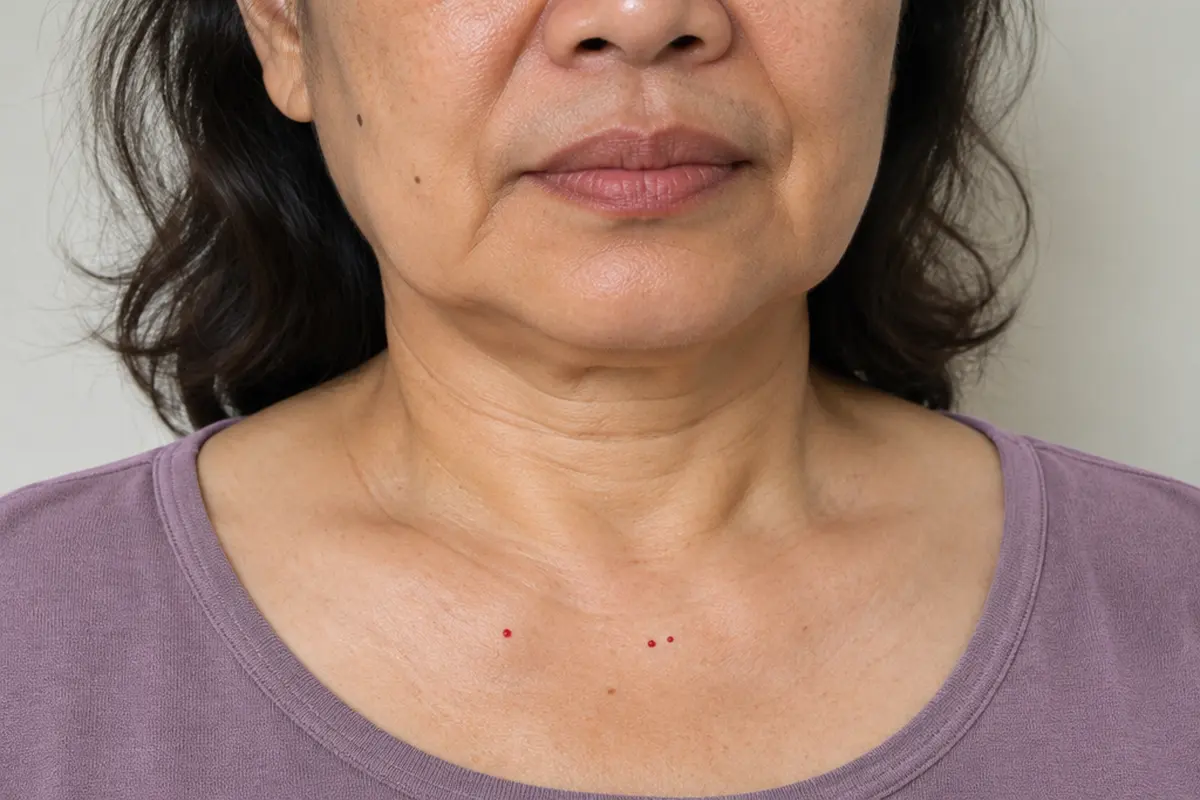
Skin and hair colour decide the laser settings. Illustrative image, not a patient.
Evaluation: each ink colour, density, location, layering and any scarring, your skin type, and your history of medicines, sun and scarring.
Written plan and quote: which wavelength for which colour, any test area, and how review decides each step.
Test area: for cosmetic pigment, or where the skin's reaction is uncertain.
Staged visits: eye protection and cooling or topical anaesthetic as planned; the ink turns white as the laser passes.
Review: healing is checked and the next step is set from how the tattoo and skin look. No count is fixed in advance.
Whitening, redness, swelling, pinpoint bleeding, blisters and scabs are expected after each visit. Scarring is uncommon when settings are appropriate and aftercare is followed, and more likely with picking, infection or sun on healing skin. See tattoo removal downtime and tattoo removal aftercare.
When to call
Thick, yellow or oozing crusts, or broken blisters that look infected
Spreading redness, or pain, swelling or warmth that increases
Itching beyond the tattoo, or fever
A patch that darkens or lightens after healing
Contact the clinic during clinic hours. Swelling of the lips, tongue or throat with difficulty breathing is an emergency: go to the nearest emergency department, as complication care explains.
What sets the fee for T2 Laser Tattoo Removal
The fee follows the plan. Tattoo removal at this practice is from $250 per tattoo with pico laser and from $400 per tattoo with the T2 multi-wavelength laser; the fee for your plan is confirmed in writing after assessment.
A small dark-ink tattoo on the forearm. Illustrative image, not a patient.
Size and location: a larger tattoo takes more laser time per visit.
Colours and wavelengths: a black tattoo is planned on one wavelength; a multicoloured piece may need two or three.
Density and depth: dense professional ink and layered cover-ups extend the staged plan.
Scarring or cosmetic pigment: assessed first; a cosmetic test area is itemised.
Skin type: pacing in darker skin changes the plan, not the aim.
Staging: the count cannot be fixed in advance, so the quote is reviewed as treatment goes on.
T2 laser tattoo removal price in Singapore at this practice
Treatment
Price
Tattoo removal with pico laser, per tattoo
From $250
Tattoo removal with T2 multi-wavelength laser, per tattoo
From $400
The number of sessions depends on ink colour, depth and skin type, and is estimated at the assessment.
Prices are nett. Each figure is a starting price; the fee for your plan depends on the area treated and what the assessment finds, and is confirmed in writing before any treatment.
Video
Tattoo ink fades in stages over several sessions. Illustrative video, not a patient.
How to choose a clinic for laser tattoo removal in Singapore
A brand page or an overseas clinic cannot tell you how laser tattoo removal is delivered here. These are the points worth checking with any clinic in Singapore.
Who performs it. Ask who will carry out laser tattoo removal. Medical treatments here are performed by Dr Sin Yong himself and are not delegated.
What is used. Ask for the name of the device or product, and whether it is registered with the Health Sciences Authority.
Assessment first. The plan should follow an in-person assessment, not a package chosen in advance.
The fee in writing. Fees are quoted in Singapore dollars, in writing, before any treatment starts.
Review. Ask when you will be seen again after the treatment, and by whom.
Consultations with Dr Sin Yong are at 9 Scotts Road, Pacific Plaza #12-01, Singapore 228210.
Frequently Asked Questions
About 6 to 8 weeks, to let the body clear the broken ink and the skin recover.
At this practice, laser tattoo removal starts from $250 per tattoo with pico laser and from $400 per tattoo with the T2 laser. The total depends on the size, the ink colours and depth, and how many sessions the tattoo needs, which Dr Sin Yong estimates at the assessment.
In a doctor’s hands, with the wavelength matched to each ink colour and the skin cooled and protected, laser tattoo removal is a well-established medical procedure. Expected effects are redness, swelling, pinpoint bleeding and sometimes blisters for a few days. The main risks are lightening or darkening of the skin and, uncommonly, scarring, which is why energy is kept conservative in Asian skin and sessions are spaced about 6 to 8 weeks apart.
Not always. Black ink usually clears most fully, while green, blue and yellow, and dense professional tattoos, may leave a faint shadow. A realistic estimate is given after the tattoo is examined.
That depends on how much the tattoo bothers you and whether you accept a course of sessions over many months. Fading for a cover-up needs fewer sessions than full clearance.
Tattoo removal at this practice is from $250 per tattoo with pico laser and from $400 per tattoo with the T2 multi-wavelength laser. Prices are nett, and the fee for your plan is confirmed in writing after assessment.
Ink colour and depth, how much ink was used, layering or cover-ups, the body site, skin type, smoking and the interval between sessions all affect how a tattoo responds. Black ink on the trunk usually clears faster than coloured ink on the hands or feet.
Keep the area clean and dry, apply the ointment and dressing advised, do not pick at blisters or scabs, and protect the area from the sun. Avoid swimming, saunas and friction from tight clothing until the skin has healed.
Laser tattoo removal carries a small risk of scarring or texture change. The risk rises with picked blisters, infection, high energy, intervals that are too short, and skin prone to keloids. Some marks seen after removal were already under the ink from the original tattooing. Dr Sin Yong examines the skin first, and healing is reviewed before every next session.
In Singapore, medical devices, which include most aesthetic lasers, energy devices and injectable fillers, must be registered with the Health Sciences Authority (HSA) before they can be supplied; only the lowest-risk class A devices are exempt. Ask which laser will be used and check it on HSA’s medical device register, and check that the clinic holds an MOH licence.
Complete clearance cannot be promised for any tattoo. Matching the wavelength to each ink colour gives every colour light it absorbs, and black and dark inks absorb the laser readily, while yellow and white absorb it poorly and may lighten rather than clear. Treatment is staged, healing is reviewed before each next visit, and some people choose a shorter course aimed at fading before a cover-up.
T2 Laser Tattoo Removal is Dr Sin Yong's staged tattoo removal protocol on the DEKA TORO. The wavelength and pulse are matched to each ink colour: 1064 nm nanosecond for black and dark inks, 532 nm nanosecond for red, orange and purple, and 785 nm picosecond for green and blue. Settings follow your skin type, healing is reviewed before each next visit, and complete clearance cannot be promised.
It depends on the ink. Picosecond pulses break particles mainly by pressure, with less heat, and are generally preferred for many inks, including green and blue. Nanosecond pulses remain established for black at 1064 nm and red at 532 nm. Picosecond pulses make removal faster for green and blue ink, but no number of visits is promised, and settings and skin type still decide the risk. In T2 Laser Tattoo Removal each colour gets the pulse that suits it.
Each colour needs a wavelength it absorbs. On the DEKA TORO, red, orange and purple are treated at 532 nm nanosecond, green and blue at 785 nm picosecond, and black at 1064 nm nanosecond. Yellow and white absorb poorly at most wavelengths and are the hardest to clear. A multicoloured tattoo may need several wavelengths, decided at the evaluation and reviewed as treatment goes on.
T2 Laser Tattoo Removal can be planned for medium and darker skin, with the skin setting the terms. Fitzpatrick III to V skin can darken or lighten after treatment, so 1064 nm is favoured for dark ink and energy is set for the skin. Green or blue ink is approached with particular care, a test area is often treated first, and sun protection continues between visits. Black ink is the most straightforward case.
Sometimes, and always cautiously. Brow pigments often contain iron oxide or titanium dioxide, which can darken or turn grey under laser instead of fading. A small test area is treated and reviewed first, and the plan may conclude that laser is not the route. Protective eyewear is used near the eye. The eyebrow embroidery removal page explains the approach.
No number is fixed in advance. It depends on the ink colours, density and depth, any layering or scarring, the location and your skin type, and the skin must heal fully between visits. Dr Sin Yong reviews the tattoo and the skin at each visit and sets the next step from what he sees. Some tattoos fade a long way without clearing completely.
Picosecond laser tattoo removal usually takes several staged sessions, with amateur black tattoos clearing sooner than dense professional or coloured ones. Dr Sin Yong spaces sessions so the skin heals fully between them, which limits the risk of scarring.
Depends on ink, colour and depth; often several.
It stings; numbing helps.
Keep the area clean and covered, avoid sun and picking.
References
510(k) Premarket Notification K240752: DEKA TORO (El.En. S.p.A.), cleared 16 May 2024. US Food and Drug Administration (via Innolitics 510(k) database), 2024. source
Cosmetic tattoo ink darkening. A complication of Q-switched and pulsed-laser treatment. Archives of Dermatology 129(8):1010-1014, 1993. source
A novel titanium sapphire picosecond-domain laser safely and effectively removes purple, blue, and green tattoo inks. Bernstein EF, Bhawalkar JD, Schomacker KT. 50(7):704-710. Lasers in Surgery and Medicine (PMC6120457), 2018. pmc.ncbi.nlm.nih.gov
Successful and Rapid Treatment of Blue and Green Tattoo Pigment With a Novel Picosecond Laser. Brauer JA, Reddy KK, Anolik R, et al. 148(7):820-823. Archives of Dermatology, 2012. doi.org
Laser tattoo removal: A clinical update. Ho SGY, Goh CL. 8(1):9-15. Journal of Cutaneous and Aesthetic Surgery (PMC4411606), 2015. pmc.ncbi.nlm.nih.gov
Gurnani P, Williams N, Al-Hetheli G, Chukwuma O, Roth R, Fajardo F, et al. Comparing the efficacy and safety of laser treatments in tattoo removal: A systematic review. Journal of the American Academy of Dermatology, 2022. doi.org
Egozi E, Toledano O. Retrospective clinical evaluation of Q-switched Nd:YAG laser safety and efficacy in tattoo removal: A new perspective on the Kirby-Desai scale. Journal of Cosmetic Dermatology, 2024. doi.org
About this page: written and medically reviewed by Dr Sin Yong, MBBS (NUS), MRCS (Edinburgh) · Last updated 8 November 2026 · Illustrative images only, not patients · Editorial policy