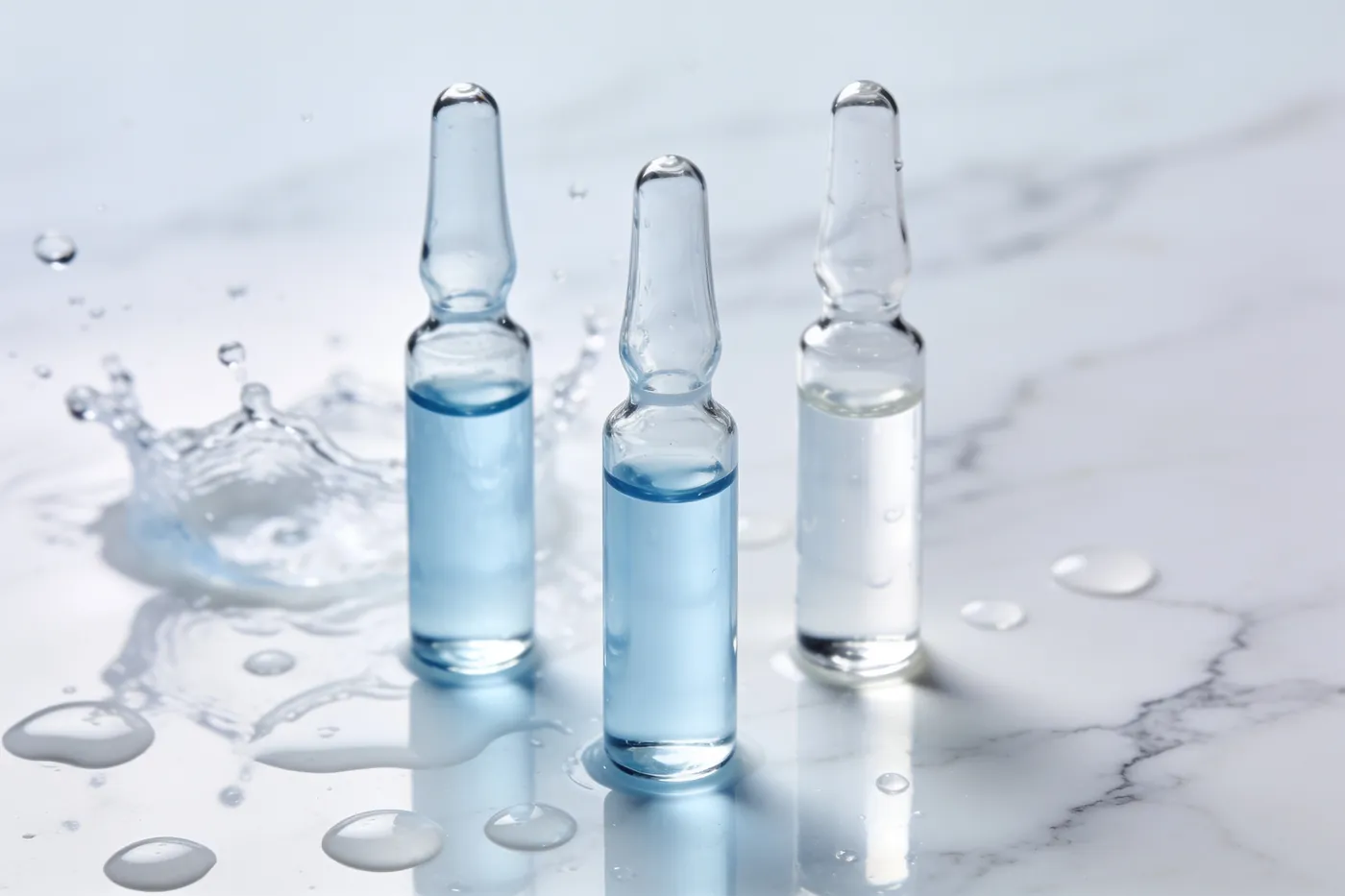
What is Rejuran S and how does it differ from Rejuran Healer?
Both carry the same active family — polynucleotides, purified DNA fragments whose regenerative signalling has been studied for years in wound healing [1]. The difference is formulation and job description. Rejuran Healer (the version on the Rejuran facial page) is a lighter preparation distributed through the dermis for overall skin quality. Rejuran S is the scar specialist: thicker, more cohesive, and placed focally beneath a depressed scar, where its viscosity gives mild immediate support while its biology goes to work on the scar bed's repair environment.
What does the evidence actually show?
The polynucleotide literature has matured from tradition to trials: systematic reviews of randomised studies support PN/PDRN across skin regeneration, healing support and scar-adjacent indications, with a consistent safety profile [1,2]. The honest reading for acne scars specifically: PN is a legitimate biological adjunct with supportive evidence, not a structural monotherapy — a depressed scar tethered by fibrous bands still needs the tether released, and a deep ice pick still needs CROSS. Where PN earns its place is quality: treated scar beds heal from energy sessions with better-conditioned tissue, which is exactly the job a supporting biological should do.
Where Rejuran S fits in the scar programme
In Dr Sin Yong's sequencing, Rejuran S slots between and after the structural moves: after subcision releases a rolling scar, PN supports the released bed; between Tetra Pro fractional sessions, it feeds the remodelling the laser initiated; under stubborn depressed scars, it adds biological pressure where energy alone plateaus. Scar-type mapping (see the scar guide) decides where it earns its cost — and where it would be an expensive way to avoid the treatment the scar actually needs.
What doesn't work
PN as a solo fix for structural scars — biology cannot un-tether a band or fill a well. Judging it like filler — polynucleotides are biostimulants; the change is gradual tissue-quality improvement, not instant volume. Endless standalone sessions without a programme — the adjunct logic only pays inside a sequence. And brand worship in either direction — the molecule family has evidence; the plan around it is what delivers.
“Polynucleotides improve the terrain a scar heals on — but no biology un-tethers a band or fills a well, which is why Rejuran S belongs inside a programme, not instead of one.”
— Dr Sin Yong
Prefer Not to Use WhatsApp?
Use the short enquiry form instead →
Leave your name, mobile number and email and the clinic will contact you directly. No obligation.
Prefer a preliminary view first? You can also WhatsApp a photo of the area for Dr Sin Yong to review before you decide on a visit.