An earlobe keloid usually starts after a piercing and keeps growing beyond the original wound. Dr Sin Yong uses the CO2 laser in two different ways for it. In Protocol A the laser is a precise cutting tool to remove a bulky keloid, with steroid and a pressure earring afterwards to guard against it returning. In Protocol B a fractional CO2 laser opens tiny channels so steroid reaches into a flatter keloid. Which one he uses depends on how the keloid looks and behaves.
Short answerProtocol A (CO2 excision, steroid and pressure) is for a bulky, rounded or stalked earlobe keloid. Protocol B (fractional CO2 with steroid delivery) is for a flatter keloid, one that has not responded to injections alone, or early regrowth after Protocol A. Laser alone is not enough: keloids commonly return after removal alone, so the follow-up plan is part of the treatment.
Key facts
What it is
Scar tissue that grows beyond the original wound, common on the earlobe after piercing
Protocol A
CO2 laser excision, steroid before and after, then a pressure earring
Protocol B
Fractional CO2 laser with steroid delivered into the micro-channels
Why follow-up matters
Removal alone has high regrowth rates in published series
Laser
CO2 laser (DEKA SmartXide Tetra Pro), Wheelock Place, Orchard Road
A keloid is scar tissue that keeps growing past the edge of the original wound. On the earlobe it usually starts after a piercing, sometimes months later, as a firm lump at the front or back of the lobe that slowly enlarges. It can itch or feel tender, and it does not go away on its own. A tendency to keloids often runs in families and is more common in Asian and darker skin.
A keloid is not the same as a hypertrophic scar, which stays within the wound and often flattens with time. That difference matters, because a keloid tends to come back when it is simply cut away. The wider options for an ear keloid after piercing are set out separately; this page explains the two CO2 laser protocols Dr Sin Yong uses.
Why a CO2 laser, and why laser alone is not enough
The CO2 laser (10,600 nm) cuts and seals at the same time, which keeps the field clean and lets the keloid be removed precisely on a small, soft earlobe. In fractional mode the same laser opens thousands of microscopic channels instead of cutting, which lets medicine reach deep into the scar. At the clinic this is done on the DEKA SmartXide Tetra Pro.
The laser is only one part of the plan. In a Singapore hospital series, all 13 patients whose earlobe keloids were debulked by CO2 laser or cold steel had regrowth within 2 to 18 weeks. What keeps a keloid from returning is what happens afterwards: steroid treatment at the edges, pressure, and keeping every review. That is why both protocols below are planned as a course, not a single visit.
“The laser takes the keloid off the ear. What keeps it off is the steroid plan and the pressure earring afterwards, so I see patients through the months that follow, not just the day of removal.”
Dr Sin Yongon earlobe keloid removal
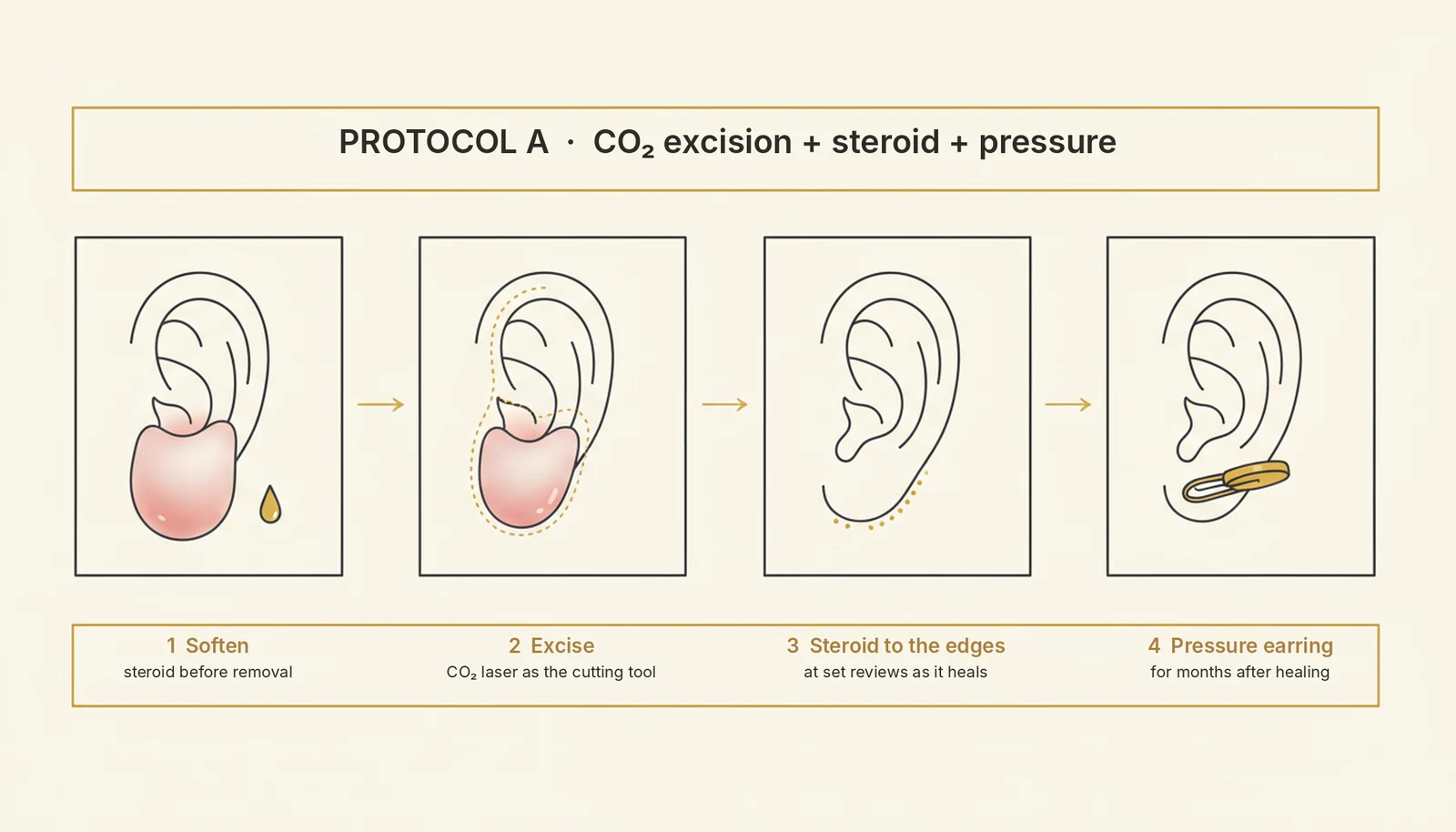
Protocol A: CO2 excision, steroid and pressure
For: a bulky, rounded or stalked earlobe keloid that hangs from or bulges out of the lobe.
Protocol A in four steps. Diagram, not a patient. Tap to enlarge.
Soften first. A short course of steroid injections into the keloid beforehand makes it smaller and softer, so less tissue has to be removed.
CO2 excision. The earlobe is numbed with a local anaesthetic nerve block. The laser is used as a cutting tool to free the keloid at its base. Where possible the cut stays within the keloid itself (a core or intralesional excision), which keeps tension low and avoids creating a new wound edge in normal skin.
Steroid to the edges. As the earlobe heals, steroid is injected into the healing margins at regular reviews over the following months. This is the step that most protects against regrowth.
Pressure earring. Once the wound has healed, a flat pressure earring is worn on the lobe for months, as many hours a day as advised.
Early signs of regrowth. Any firmness or new growth at a review is treated early, with steroid, sometimes cryotherapy, or by moving to Protocol B.
Keeping appointments matters as much as the procedure. In a published series of CO2 laser ablation followed by steroid injections, 2 of 13 patients who attended regularly had a recurrence, compared with 7 of 10 who attended irregularly.
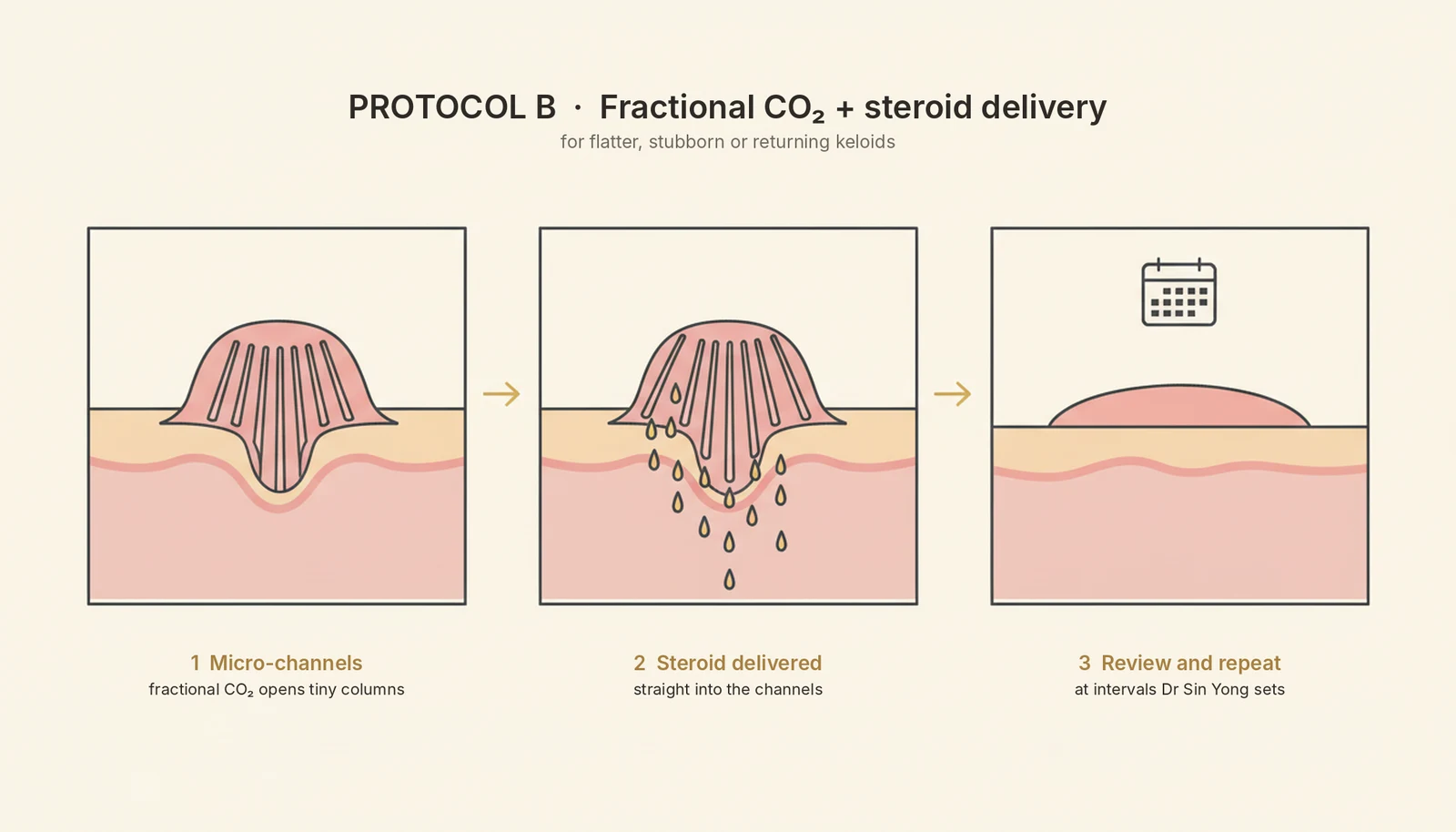
Protocol B: fractional CO2 with steroid delivery
For: a flatter, firm keloid; a keloid that has not responded to steroid injections alone; or early regrowth after Protocol A. This approach is called laser-assisted drug delivery.
Protocol B in three steps. Diagram, not a patient. Tap to enlarge.
Micro-channels. A fractional CO2 pass in a deep mode opens tiny columns through the keloid.
Steroid delivered. Steroid is applied straight away so it travels down the channels into the scar, sometimes with an injection as well.
Review and repeat. Sessions are repeated at intervals with a review each time. How many are needed depends on how the keloid responds, so it is not fixed in advance.
What is watched for: thinning of the skin, small visible blood vessels and lighter patches, which are more likely in darker skin. The steroid is kept to what the scar needs, and the plan changes if any of these appear.
Protocol A or B: how the choice is made
The choice depends on the shape, size and firmness of the keloid, how long it has been there, what has been tried before and how the skin has reacted to steroid. Some earlobes need both: Protocol A to remove the bulk, then Protocol B if the edge starts to thicken again.
Protocol A
Protocol B
Best suited to
A bulky, rounded or stalked (pedunculated) earlobe keloid
A flatter, firm keloid; one that has not responded to injections alone; early regrowth after Protocol A
What the CO2 laser does
Works as a precise cutting tool to remove the keloid at its base
Fractional mode opens tiny channels through the keloid
Role of steroid
Before removal to soften it, then into the healing edges at reviews
Delivered straight into the channels at each session, sometimes with an injection
Pressure earring
Yes, for months once healed
Where the shape allows, as advised
The wound
A small wound on the earlobe that needs aftercare while it heals
No cut; redness and fine crusting for some days
What prevents regrowth
The follow-up plan: steroid at reviews, pressure, and attending every review
Aftercare and the pressure earring
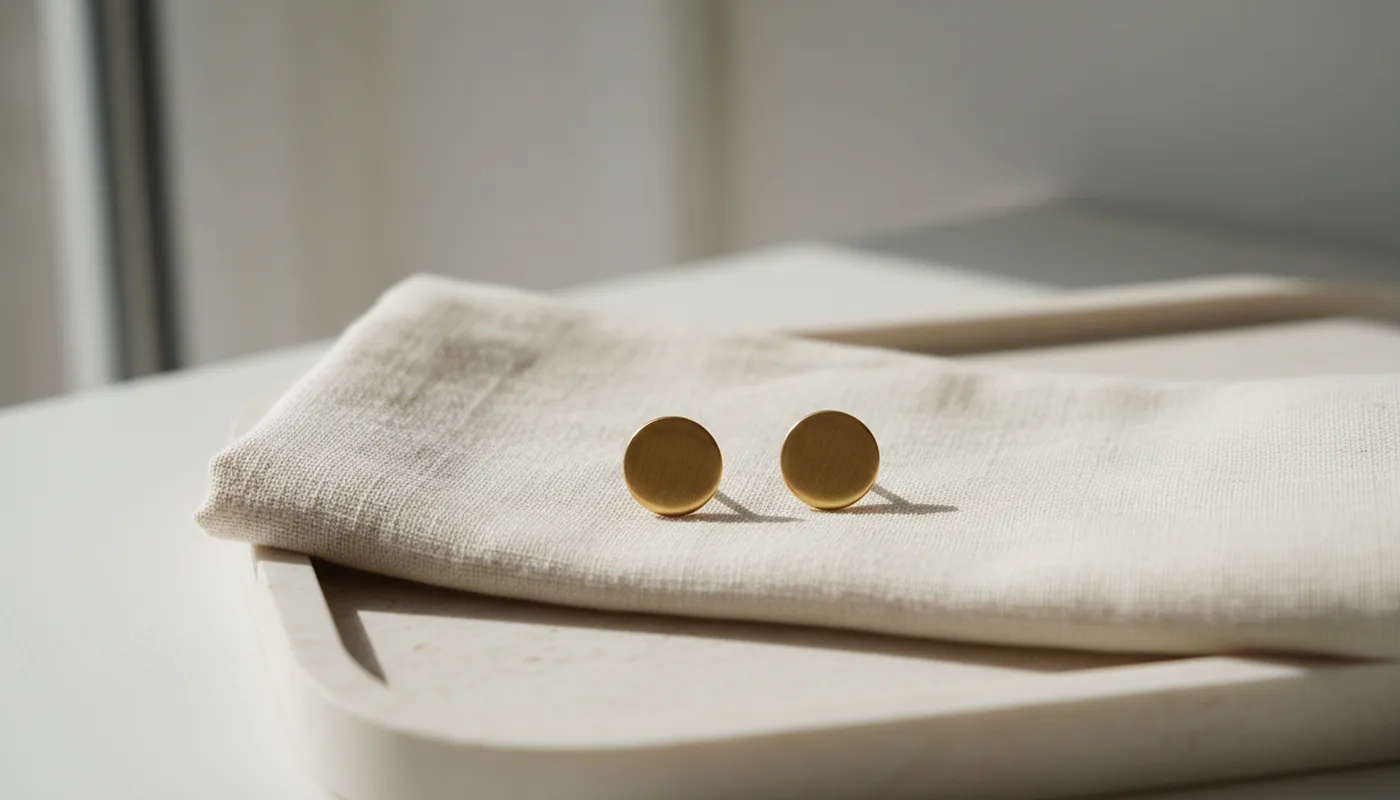
Flat pressure earrings. Illustrative image.
Wound care: after Protocol A the earlobe is kept clean and dressed as instructed until it heals. After Protocol B the skin is kept gently moisturised while the fine crusts settle.
Sun: protect the earlobe from the sun while it is pink, to lower the chance of darkening.
Pressure: the pressure earring starts once the wound has closed and is worn daily for months. It should feel firm but not painful.
Reviews: every review is part of the treatment, because that is when the healing edge is checked and treated.
Re-piercing: a new piercing carries a real risk of a new keloid, so it is discussed case by case and never on the treated spot without that conversation.
When this is not the right plan
A lump that does not look like a typical keloid is examined first, and sometimes sampled, before anything is removed.
Infection, an open wound or a skin flare is treated first.
During pregnancy or breastfeeding, treatment is usually deferred.
Very large, multiple or repeatedly recurring keloids may need a plastic surgery specialist, and sometimes radiotherapy after excision; Dr Sin Yong refers where that is the better route.
Dr Sin Yong examines the keloid and both earlobes, asks when it started, what has been tried and whether keloids run in the family, and checks for anything that needs a different route. He then explains whether Protocol A, Protocol B, both or neither suits you, what the months afterwards involve, and gives the fee in writing, including the option of not treating.
Your next step
1. Message privatelyWhatsApp +65 8023 7170. A reply comes from the clinic, not a bot.
2. Private consultationDr Sin Yong examines the keloid and takes your history at Wheelock Place, Orchard Road.
3. A plan in writingWhat he would do, what he would not, when a specialist is the better route, and the option of no treatment.
Every treatment is performed by Dr Sin Yong personally. Singapore Medical Council registered · MSc Practical Dermatology (Cardiff).
Yes. A CO2 laser can be used as a precise cutting tool to remove a bulky earlobe keloid at its base. Removal on its own is rarely enough, though, because keloids commonly regrow after removal alone. Steroid treatment to the healing edges, a pressure earring and regular reviews are what protect against it returning.
It can, which is why the follow-up is part of the treatment. Published series show high regrowth after removal alone and much lower rates when steroid follow-up is kept up. The risk is lowered by steroid to the edges, pressure, and attending every review, but no treatment can promise a keloid will never return.
Protocol A removes a bulky keloid with the CO2 laser, with steroid before and after and a pressure earring. Protocol B does not cut: a fractional CO2 laser opens tiny channels so steroid reaches into a flatter or stubborn keloid, repeated with reviews. Some earlobes need both.
The earlobe is numbed with a local anaesthetic nerve block before Protocol A, so the removal itself should not be painful. Steroid injections sting briefly. For Protocol B, numbing cream is used and the sensation is usually described as heat and prickling.
For months after the wound has healed, worn daily for as many hours as advised. The duration is set and reviewed at follow-up, depending on how the healing edge behaves.
Ordinary earrings can usually be worn once the area has healed, if they do not irritate it. Re-piercing carries a real risk of a new keloid, so it is discussed case by case and is not done on the treated spot without that conversation.
They are widely used for keloids. Possible effects include thinning of the skin, small visible blood vessels and lighter patches, which are more likely in darker skin. The amount used is kept to what the scar needs and adjusted at each review.
The fee depends on the size and number of keloids, which protocol is used and how many reviews and steroid treatments are planned. Dr Sin Yong gives it to you in writing after the consultation, including the option of not treating.
References
Garg GA, Sao PP, Khopkar US. Effect of carbon dioxide laser ablation followed by intralesional steroids on keloids. J Cutan Aesthet Surg 2011;4(1):2–6. source
Earlobe keloids treated by debulking with cold steel or CO2 laser ablation: a retrospective series, Changi General Hospital, Singapore. J Cosmet Laser Ther 2013. source
Krupa Shankar DS, Gupta A. Management of ear rim keloid with CO2 laser. Indian J Dermatol Venereol Leprol 2007;73:445. source
Goutos I. Intralesional excision as a surgical strategy for keloid scars. Scars, Burns & Healing 2019;5. source
Laser-assisted drug delivery for extensive refractory keloids, with topical and intralesional triamcinolone. source
Fractional CO2 laser alone versus combined with triamcinolone or TCA for keloids: a clinical and Doppler study. source
Wang et al. Ultrapulse fractional CO2 laser with topical triamcinolone for keloids in Asian patients. Dermatol Ther. source
About this page: written and medically reviewed by Dr Sin Yong, MBBS (NUS), MRCS (Edinburgh), MSc Practical Dermatology (Cardiff) · Last reviewed 4 November 2026 · Illustrative images only, not patients · Editorial policy