Where a cheek has deflated rather than dropped, the materials and areas are compared in the guide to dermal fillers in Singapore.
Heaviness from filler rather than descent is covered under overfilled cheeks and cheek filler dissolving.
Where the cheek skin itself has softened rather than descended, the energies compared layer by layer are in skin tightening.
If focused ultrasound is being weighed, Ultherapy vs HIFU explains how the imaging-guided platform differs from other HIFU.
Main guideNon surgical facelift — what it treats, who it suits, sessions, downtime and what decides the cost, by Dr Sin Yong.
Published 28 October 2026 · Reviewed by Dr Sin Yong
Time Freeze Laser LCLR®
I want to see the Time Freeze before and after
Singapore's advertising rules do not allow before-and-after photos on a clinic website, so they are not shown here. Tap the button and a WhatsApp message to the clinic opens with the request already written; send it and the team will reply with the Time Freeze Laser LCLR® before-and-after PDF.
WhatsApp +65 8023 7170 · replies within clinic hours · results vary and are assessed in person
Sagging cheeks happen when the fat pads of the mid-face deflate and slide downward, the ligaments that hold them loosen, and the cheekbone beneath recedes. The result is a flatter upper cheek, deeper smile lines and more weight along the jaw. What lifts them depends on which change leads, so descent, hollowing and fullness are told apart first.
Short answerSagging cheeks are lifted by matching the tool to the change: energy or threads where tissue has descended, support on the bone where it has deflated, and reduction where the cheek is heavy with fat or old filler. Volume added to a cheek that has slid adds weight. The full range of options for every layer of the face is on sagging face treatment.
Cheeks sag because several layers change at once. Facial fat sits in separate compartments rather than one sheet, and the compartments of the mid-face deflate and slide downward and inward with age (Rohrich 2007). The retaining ligaments that tether them to the bone loosen, so the tissue they held drifts lower. The cheekbone and the bone around the eye socket also remodel, so the frame underneath offers less support. On top of that, the skin thins and loses collagen and elasticity.
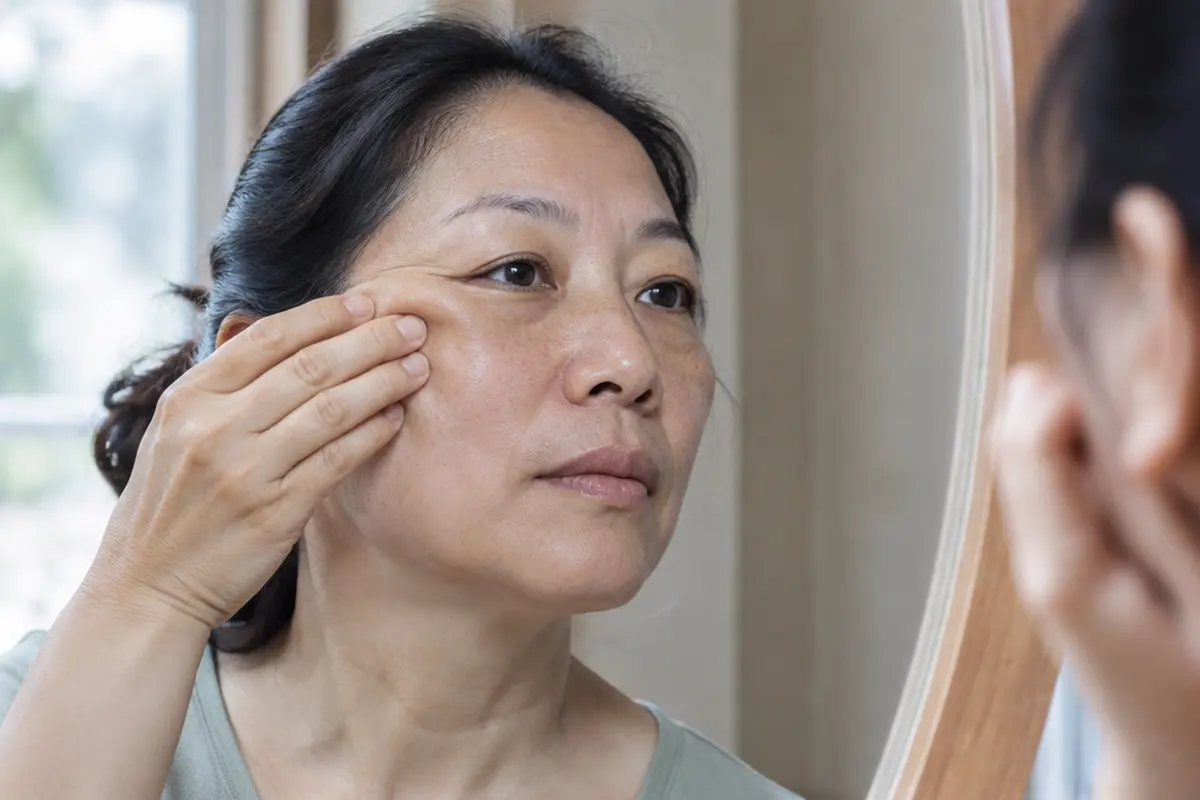
Lifting the skin by hand shows the direction of change being discussed. Illustrative image, not a patient.
Together these changes show in a recognisable pattern:
The upper cheek looks flatter, and the curve over the cheekbone softens.
The smile lines deepen, because descending cheek tissue piles against the fold beside the nose.
Weight gathers lower down, feeding the jowls along the jaw.
The face looks tired at rest even after a good night's sleep.
Some things speed it up. Weight loss empties the fat compartments, which is why cheeks can drop after dieting or illness. Sun exposure breaks down collagen. Smoking, genetics and bone structure all play a part: a flatter cheekbone gives less support from the start, so the change shows earlier.
Sagging cheeks are therefore rarely one problem. Most faces show a mix of descent and deflation, and the proportion decides the plan.
Advised to have a facelift or neck lift? Get assessed first
Many people with sagging cheeks, jowls or a loose neck are told that a facelift or neck lift is the only real answer. Surgery has its place, especially for heavy sagging. But it comes with risks of nerve damage, scars and dents, weeks of downtime, and it cannot be undone.
Dr Sin Yong's practice is built around lasers and energy-based devices, so sagging is approached without incisions. VF Lift and the Time Freeze Laser LCLR® lift and tighten the skin and the layers beneath it, and can be used together. He used to be involved in facelift cases with a surgical team; nowadays he gets parallel results for many patients with the Time Freeze Laser LCLR®.
Come in for an assessment before you agree to surgery. If an operation is the better choice for you, he will say so and refer you.
Sagging cheeks, hollow cheeks or cheek fat? Lookalikes that change the plan
Sagging cheeks look similar to several other changes from the front, and the treatment for each is close to the opposite of the others. The table sets out the common lookalikes.
Change
How it tends to show
What is happening
What it usually needs
Sagging (descent)
A cheek that sits lower, a deeper smile line, a heavier jaw
A simple check helps. In front of a mirror, place your fingertips on the cheekbones and lift the cheek gently back towards the ears. If the face looks right in that position, something has slid. If the cheek still looks flat, volume is part of the picture. If the inner cheek looks bulky even when lifted, fat or filler may be adding weight. Photographs from your twenties or thirties, taken at the same angle, separate deflation from descent better than the mirror does. Gaunt cheeks after buccal fat removal are discussed on buccal fat removal regret.
“A cheek that has slid needs lifting, and a cheek that has deflated needs support. Filling a cheek that has slid makes it heavier.”
Dr Sin YongOn sagging cheeks
What lifts sagging cheeks: lift, support or reduce
What lifts sagging cheeks depends on which layer has changed. Dr Sin Yong chooses between the options below after examination, and most faces need more than one, in a set order.
Heaviness from fat or earlier biostimulator overfill
Add volume to a hollow face
The order usually starts with lifting, so that less volume is needed afterwards. Where filler is the cause of a heavy mid-face, it is dissolved first and the face reassessed. The support material is chosen at assessment once deflation has been separated from descent.
Combining energy, threads and injectables in one plan is common practice in the published consensus on facial treatment, provided each step has a reason (Fabi 2016). Exercises, face yoga and gua sha do not reposition fat pads or tighten ligaments; massage can reduce puffiness for a while without changing structure.
Why adding volume to a sagging cheek can make it heavier
Adding filler is often the first thing offered for sagging cheeks, and in the wrong face it makes the problem heavier. A cheek that has slid has not lost its tissue; the tissue has moved. Placing volume into it adds weight to structures that are already loose, and the extra weight settles lower over time, deepening the smile lines and the jowls it was meant to soften.
The opposite mistake also happens. Lifting a cheek that has deflated moves the hollow rather than filling it, so the face can look tighter but still flat. That is why the examination separates descent from deflation before either is treated, and why many plans use both in a set order.
Repeated top-ups add up. Filler can stay in the tissue longer than expected, and product added over years builds a rounded, heavy mid-face. When a cheek looks fuller and lower than it did before treatment, the cause may be accumulated product rather than ageing. Ultrasound shows where it sits, hyaluronic acid can be dissolved with hyaluronidase, and the face is reassessed once the swelling has settled. Problems after cheek filler are covered on cheek filler gone wrong.
The aim is a cheek that sits where it used to, with enough support beneath it, not a cheek that is simply bigger.
Sagging cheeks without filler: where VF Lift and Time Freeze fit
Sagging cheeks can often be treated without filler, because many cheeks sag through descent or heaviness rather than lost volume, and adding volume to a cheek that has slid can make it heavier. A simple test helps: lift the cheek gently by hand. If it looks right, it has descended; if it still looks flat, volume is part of the picture.
Descent, and hollowing at the side of the face. The VF Lift – Vertical Facelift uses Volnewmer monopolar radiofrequency along vertical vectors, with Lift, Sculpt and Restore set zone by zone. Restore is used to stimulate the patient’s own fat at the lateral cheek, so any change there builds gradually from your own tissue. The mid-face plan is set out on VF Lift for the mid-face.
Heaviness. Where cheeks sag under fat or earlier biostimulator overfill, Time Freeze Laser LCLR® tightens with dual-wavelength laser heat and its Sculpting mode is directed at the excess. No redness, no downtime.
Neither injects anything, so there is no filler to overfill, migrate or form lumps in the mid-face. How much changes varies between people and with age, and the heat-related risks are set out on each protocol page.
Limits, and when another tool fits
Neither protocol replaces bone support or deep fat that has truly deflated; a flattened cheek may need a biostimulator or a small amount of filler placed for support. Tissue that has slid but kept its volume may suit a thread lift, focused ultrasound on HIFU or Ultherapy reaches the SMAS in a face with normal fullness, and pronounced skin excess is referred to a plastic surgery specialist. See face lifting without fillers and VF Lift vs fillers.
Sagging cheeks without surgery: who suits it, and when it is not enough
Treating sagging cheeks without surgery suits mild to moderate descent in skin that can still redrape, in someone who prefers gradual change without incisions. It also suits a face being maintained after earlier surgery.
Should wait: pregnancy or breastfeeding; infection, a cold sore or inflamed skin in the area; freshly tanned skin before laser treatment.
Plan changes: a pacemaker or implanted electronic device rules out monopolar radiofrequency; metal implants, recent filler or threads, a bleeding tendency or a keloid tendency change the method or the timing; a face that is already thin is treated with care so it does not look drawn.
Referred on: pronounced skin excess, which no energy device removes, goes to a plastic surgery specialist; unexplained swelling or asymmetry goes for medical review.
What decides the plan
The balance of descent, deflation and fullness in each part of the cheek.
Tissue thickness, which decides which energy and depth are safe.
Earlier filler, threads or fat removal.
Skin quality, sun exposure and recent weight change.
Whether the smile lines and jowls are planned at the same time.
Fees follow the plan and are set out in writing after the examination, as how fees are quoted explains.
How Dr Sin Yong assesses sagging cheeks
Dr Sin Yong examines the mid-face himself on Orchard Road. He looks at it in profile and three-quarter view, at rest and in animation, pinches the cheek to judge fat against skin, and compares the structure with earlier photographs where you have them. Earlier filler or threads are recorded, and ultrasound is used where product is present, because a heavy cheek is sometimes old filler rather than descent.
The plan comes in writing: which layer has changed, what would be done and in which order, what would not be done, and the option of no treatment. The sequence for most faces is to lift or reduce first and support second.
Afterwards, in broad terms
Energy treatments usually leave redness, warmth and tenderness that settle.
Threads and injections can leave swelling, tenderness or bruising.
The response to energy builds gradually and is read at a review, not on the day.
Skin that turns pale or dusky after filler, increasing pain or any change in vision needs urgent attention.
1. MessageWhatsApp +65 8023 7170 with what is bothering you. A reply comes from the clinic, not a bot.
2. AssessmentDr Sin Yong examines you himself on Orchard Road, with ultrasound where earlier filler is involved.
3. A plan in writingWhat he would do, what he would not, the fee factors, and the option of no treatment.
Every treatment is performed by Dr Sin Yong personally. Singapore Medical Council registered · invited to share his clinical expertise internationally for CLASSYS, DEKA, Fotona, Hironic and Ilooda.
Book an assessment with Dr Sin Yong on Orchard Road. Earlier photographs and the names of any filler in the cheeks help. How consultations work.
Time Freeze Laser LCLR®, in one line. Dr Sin Yong uses it to lift every zone of the face and neck, to take away excess filler in the same session, and to reduce loose fat in sagging areas while the skin tightens. The three uses, explained · Sculpting mode for excess filler.
A device is only a device. Ultherapy Prime, Thermage or a filler syringe is a tool, like a suture; technique, experience and customisation to the face decide the result. Why technique, not the device, decides the result.
Frequently Asked Questions
Often, when the cheek has descended rather than deflated. The VF Lift – Vertical Facelift lifts with monopolar radiofrequency and its Restore mode is used for a hollow at the side of the cheek, and Time Freeze Laser LCLR® tightens where fat or earlier overfill adds weight. Nothing is injected, so there is no filler to overfill, migrate or form lumps. A truly deflated cheek may still need support.
The fat pads of the mid-face deflate and slide downward as the ligaments that hold them loosen, and the cheekbone beneath recedes with age. The skin also thins and loses collagen. Weight loss, sun exposure, smoking and a naturally flat cheekbone make the change show earlier. Most faces have a mix of descent and deflation, and the balance decides the treatment.
Often, when the sagging is mild to moderate and the skin can still redrape. Energy-based lifting such as VF Lift – Vertical Facelift, HIFU or Thermage FLX works on lax tissue, threads reposition tissue that has slid, and filler or a biostimulator restores support where the cheek has deflated. Pronounced skin excess is beyond non-surgical reach and is referred to a plastic surgery specialist.
They can support a cheek that has deflated, and support on the bone can make the mid-face look less heavy. They do not lift a cheek that has slid; adding volume there adds weight that settles lower. Where both are present, lifting usually comes first so less volume is needed. Whether filler suits your cheeks depends on which change leads.
No. Sagging comes from fat pads sliding, ligaments loosening and bone receding, and exercising the muscles of the face does not reverse any of these. Face yoga, rollers and gua sha can reduce puffiness for a while, which is why the face may look fresher afterwards, but they do not reposition tissue. Sun protection and a stable weight help slow the changes.
Early sagging usually reflects a slimmer face, weight loss, a flatter cheekbone or heavy cheek fat that is starting to descend, rather than marked ageing. Sometimes what looks like sagging is fullness from earlier filler. An examination separates descent from deflation and fullness, and a younger face often needs less than expected.
Lift the cheek gently back towards the ear in a mirror. If the face looks right, tissue has slid and lifting is the question. If the cheek still looks flat, volume has been lost and support is the question. Many faces show both. Comparing photographs from your twenties or thirties at the same angle helps, and an examination confirms which leads.
For many people, yes. VF Lift and the Time Freeze Laser LCLR® lift and tighten without incisions. Heavy sagging may still need surgery, which is discussed at the assessment.
Surgery carries risks of nerve damage, scars, dents and contour problems, and weeks of downtime. It cannot be undone, so get assessed for non-surgical options first.
References
The fat compartments of the face: anatomy and clinical implications for cosmetic surgery. Plastic and Reconstructive Surgery, 2007. source
Consensus Recommendations for Combined Aesthetic Interventions Using Botulinum Toxin, Fillers, and Energy-Based Devices. Dermatologic Surgery, 2016. source
About this page: written and medically reviewed by Dr Sin Yong, MBBS (NUS), MRCS (Edinburgh) · Last reviewed 7 November 2026 · Illustrative images only, not patients · Editorial policy