RF microneedling devices compared: what each one actually is
Medically reviewed by Dr Sin Yong · Last reviewed · 12 min read
Published 9 October 2026 · Reviewed by Dr Sin Yong
Secret RF, Potenza, Morpheus8, Virtue RF, Sylfirm X, Genius, Scarlet, Vivace and Infini are all fractional microneedle radiofrequency devices: needles go to a set depth and radiofrequency heat is released in the dermis. They differ in frequency, needle design, depth range and how energy is pulsed. This page lays them side by side using what each manufacturer filed with the US FDA.
Short answerAll nine are the same treatment category. The differences that matter are the RF frequency, whether needles are insulated, the depth range and step, and the tips available. In their FDA summaries these devices are cleared for electrocoagulation and haemostasis; a few modes also carry facial-wrinkle wording, and none lists acne scars as a cleared indication. The device matters less than the doctor choosing depth, energy and needle type for your skin.
From 460 kHz (Genius) to 2 MHz (Secret RF, Sylfirm X); some offer more than one
Depth ranges filed
Mostly 0.5–3.5 mm or 0.5–4.0 mm; Sylfirm X starts at 0.3 mm
FDA wording
Electrocoagulation and haemostasis; wrinkle wording only for some modes; no acne-scar indication
Used here
Secret DUO (Secret RF plus 1540 nm fractional laser), performed by Dr Sin Yong
Why this site compares devices against Secret RF. Dr Sin Yong is a global Key Opinion Leader for ILOODA’s Secret RF platform and performs RF microneedling personally on the Secret DUO. He has been invited by the manufacturer to share his clinical expertise with doctors internationally. That is a disclosed relationship, so the comparisons on this site stick to what each manufacturer has filed with the US FDA and what published studies measured, and do not rank one device above another.
Why compare RF microneedling devices at all?
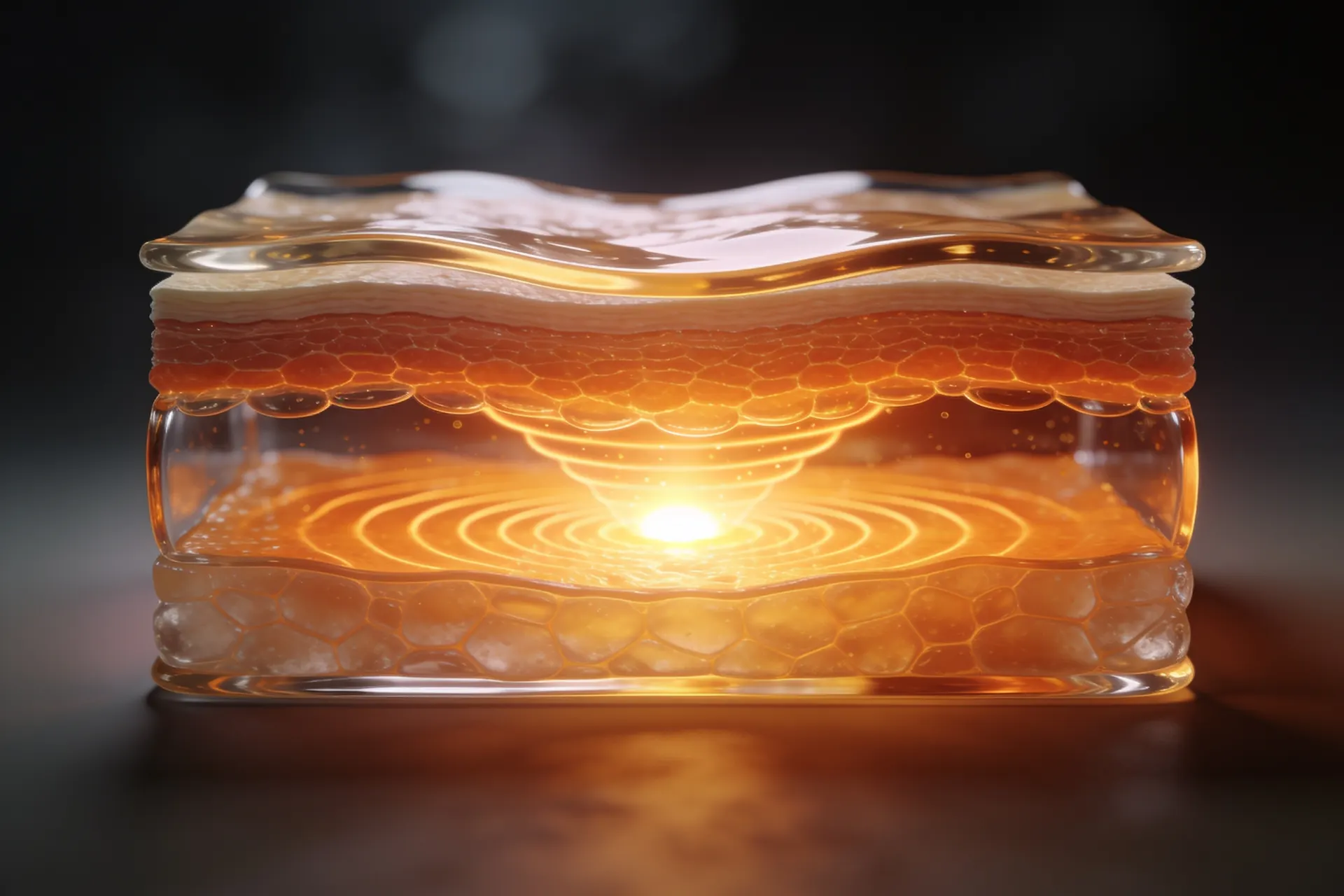
Because the same treatment is sold under many brand names, and different brands deliver the same treatment. Every device on this page drives an array of fine needles into the skin to a depth the operator sets, then passes radiofrequency current through or between the needles so that small columns of tissue are heated and the skin lays down new collagen as it repairs. That is what RF microneedling is, whatever the logo on the handpiece.
Where devices genuinely differ is in engineering: the frequency of the current, whether the needle shaft is insulated, how far down the needle can go and in what increments, how many needles are on a tip, and whether energy is delivered as one continuous pulse or as several short ones. Those choices change how heat is distributed and how a treatment feels. They are worth understanding, provided they are read as parameters a doctor sets rather than as results a brand delivers.
The nine devices side by side
The table below is taken from each manufacturer’s US FDA 510(k) summary, the document a company files to show its device is substantially equivalent to one already on the market. Where a figure is not in those filings it is marked as such rather than filled from marketing.
RF microneedling devices compared from their FDA 510(k) summaries
Device
Maker
RF type and frequency
Needles and tips
Depth range
FDA 510(k)
Secret RF / Secret DUO (used here)
ILOODA, Korea
Bipolar, 2 MHz
25- and 64-pin tips; DUO also lists 25PIN-S, 1PIN and 4PIN gold-plated cartridges
0.5–3.5 mm, 0.1 mm steps
K170325 (2017); DUO K202043 (2021)
Virtue RF
ShenB, Korea
Bipolar 0.5, 1 and 2 MHz; single-needle monopolar handpiece
36-, 12- and 1-needle arrays
Not stated in the summaries reviewed
K202415, K211562 (2021)
Potenza
Jeisys, Korea
Monopolar and bipolar, 1 and 2 MHz
Insulated and semi-insulated 16/25/49-pin tips; 21-pin Fusion tip; single-needle tips
0.5–4.0 mm, 0.25 mm steps
K192545 (2020); K231216 (2024)
Morpheus8
InMode, Israel
Bipolar, 1 MHz
12-, 24- and 40-pin tips
Maximum 4.0 mm in the FDA summary
K192695 (2019); K231790 (2023)
Sylfirm X
Viol, Korea
Bipolar, 2 MHz; continuous-wave and pulsed-wave modes
18- and 25-pin tips
0.3–4.0 mm, 0.1 mm steps
K200185 (2020); K213612 (2022)
Genius
Lutronic, Korea
Bipolar, 460 kHz
49 needles, 200 µm
0.5–3.5 mm (K180945); maximum 4.0 mm (K253484)
K180945 (2018); K253484 (2026)
Scarlet SRF / Scarlet Pro
Viol, Korea
Bipolar
Gold-plated needles; Pro: insulated and non-insulated 25/49-pin tips
0.5–3.5 mm (SRF 0.25 mm steps; Pro 0.1 mm)
K180872 (2018); K253859 (2026)
Vivace
ShenB, Korea
Bipolar, 1 and 2 MHz
36 needles
0.5–3.5 mm, 0.1 mm steps
K193070 (2021)
Infini
Lutronic, Korea
Bipolar, 1 MHz
49 needles
0.5–3.5 mm
K121481 (2013)
Needle depth ranges as filed with the US FDA. The shaded bands show approximate skin layers; facial dermis is thinner around the eyes and thicker over the cheeks and jaw.
What do frequency and insulation actually change?
Radiofrequency current heats tissue because the tissue resists it. Frequency affects how that heat spreads: across devices, lower frequencies are generally described as producing a broader zone of heating and higher frequencies a tighter one, and some systems offer more than one frequency so the operator can choose. Genius files at 460 kHz; Morpheus8 and Infini at 1 MHz; Secret RF and Sylfirm X at 2 MHz; Potenza, Vivace and Virtue RF offer two or three frequencies, including 2 MHz. A frequency is a tool, not a ranking.
Radiofrequency settings as stated in each FDA 510(k) summary. Scarlet’s frequency is not stated in the summaries reviewed and is omitted.
Insulation decides where along the needle the heat is released. An insulated needle carries current down a coated shaft and releases it at the exposed tip, sparing the surface; a non-insulated needle heats along its length, producing a column of heating that reaches up towards the epidermis. In Fitzpatrick III to V skin, which describes most patients in Singapore, sparing the surface matters because surface heat is what raises the risk of post-inflammatory darkening. A review of 35 studies of RF microneedling in skin of colour reported transient darkening in a minority of studies and concluded the risk of scarring or darkening was low (Syder, Dermatol Surg 2023).
What the FDA filings say the devices are cleared for
In the 510(k) summaries reviewed, every microneedle RF system on this page is cleared in the US for electrocoagulation and haemostasis, the generic language of electrosurgical devices. A few specific modes carry additional wording for the percutaneous treatment of facial wrinkles: Infini, Vivace at 1 MHz and Virtue RF’s Smart RF handpiece at 1 MHz, each for skin types I to V. None of the summaries lists acne scars as a cleared indication.
That does not mean RF microneedling is unproven for scars. The published evidence for atrophic acne scarring sits at the level of the technique rather than any one brand, and a 2026 systematic review of 41 studies tabulates results device by device (Kumar, Aesthetic Plast Surg 2026). It does mean that no device here is cleared in the US specifically for acne scars. In Singapore, devices are regulated by the Health Sciences Authority, and the doctor using one remains responsible for using it within its registration.
Scar type, depth and skin type decide the plan; the logo on the handpiece does not.
What evidence exists for each device?
Device-specific trials are few, and most are small. A sample of what has been published:
Secret RF. A split-face randomised trial in 25 Korean patients with active acne compared microneedle fractional RF with a 1450 nm diode laser; the RF side showed greater improvement at 12 weeks and post-inflammatory darkening was seen only on the laser side (Kwon, JEADV 2018). The device is identified in a later systematic review rather than in the abstract.
Potenza. An evaluator-blinded split-face trial in 20 patients with acne scars found improvement on both sides, with no significant additional benefit from adding a picosecond laser (Darji, Dermatol Surg 2025).
Genius. A study of 11 Korean patients reported improved periorbital wrinkle scores (Kim, Ann Dermatol 2023).
Scarlet. A trial of 40 patients with active acne compared microneedle RF plus isotretinoin with isotretinoin alone (Hasan, Postepy Dermatol Alergol 2023).
Virtue RF. Published work found was preclinical, in an animal model (Cho, Skin Res Technol 2024).
Small numbers, short follow-up and few head-to-head comparisons are the norm. That is why this site does not rank one device above another, and why the more useful comparison is between treatment plans.
“The brand on the handpiece is the least important decision in RF microneedling. Depth, needle type and energy for each zone of your face are the decisions that matter, and those are made by the doctor.”
Dr Sin YongOn comparing RF microneedling devices
How Dr Sin Yong uses Secret DUO
Dr Sin Yong performs RF microneedling personally on the Secret DUO, which combines Secret RF microneedling with a 1540 nm non-ablative fractional laser on one console. Planning starts with the tissue plane: he decides the depth at which each scar, pore field or area of laxity sits before choosing needles, depth or energy. Insulated needles are generally his choice in Fitzpatrick IV to VI skin; non-insulated needles are used for broad, shallow textural work. Depth and energy are set zone by zone, deeper over the cheeks and jaw and conservative around the eyes and over bone.
The platform’s I-STACK function, described by the manufacturer as delivering up to ten sub-pulses at each needle position, is one way he layers energy at more than one depth without re-inserting. Where the skin around a scar also needs work, the 1540 nm laser can be used in the same visit. Tethered scars are released by subcision and deep ice-pick scars treated with TCA CROSS first, so that RF microneedling is staged after the steps it cannot do itself. Only the Secret DUO is used here; the other devices on this page are described because patients ask about them.
Collagen remodelling after RF microneedling happens gradually over the months after treatment.
Questions to ask any clinic, whichever device it uses
Which tip or cartridge will be used, and are its needles insulated?
What depth is planned for each area of my face, and why that depth?
How will the energy be set for my skin type, and what happens if darkening appears afterwards?
Is the person setting those parameters the doctor who examined me?
What will not be helped by RF microneedling, and what would be done for that instead?
No device is shown to be best across the board. Head-to-head trials between brands are rare and small. All nine devices here deliver the same category of treatment; the differences are frequency, needle insulation, depth range and tips. The plan for your skin, set by the doctor, matters more than the brand.
No. They are different devices delivering the same treatment, fractional microneedle radiofrequency. Secret RF files at 2 MHz bipolar, Potenza at 1 and 2 MHz monopolar and bipolar, and Morpheus8 at 1 MHz bipolar, according to their FDA 510(k) summaries.
None of the 510(k) summaries reviewed for these nine devices lists acne scars as a cleared indication. They are cleared for electrocoagulation and haemostasis, and a few modes for facial wrinkles. Published studies support RF microneedling for atrophic acne scars as a technique.
The Secret DUO, which pairs Secret RF microneedling with a 1540 nm non-ablative fractional laser. Dr Sin Yong is a global Key Opinion Leader for ILOODA’s Secret RF platform. The other devices are described because patients ask about them.
No. Depth is chosen to match the layer where the problem sits. A shallow scar or enlarged pore is a dermal problem; heating fat that is not the target can hollow a lean face. Several devices reach 3.5 to 4.0 mm, but deeper is a different target, not more effect.
It is widely used in Fitzpatrick III to V skin because heat is delivered beneath the surface, particularly with insulated needles. A review of 35 studies in skin of colour found transient darkening in a minority and a low risk of scarring. Settings, sun protection and follow-up still matter.
References
US FDA 510(k) summary K170325 — Secret RF (ILOODA Co., Ltd.), 2017: bipolar 2 MHz, needle depth 0.5–3.5 mm in 0.1 mm steps. source
US FDA 510(k) summary K202043 — Secret DUO (ILOODA Co., Ltd.), 2021. source
US FDA 510(k) summary K211562 — VirtueRF (ShenB Co., Ltd.), 2021: 0.5, 1 and 2 MHz; 36-, 12- and 1-needle arrays; Smart RF 1 MHz mode cleared for facial wrinkles, skin types I–V. source
US FDA 510(k) summary K192545 — Potenza (Jeisys Medical Inc.), 2020: monopolar and bipolar RF at 1 and 2 MHz. source
US FDA 510(k) summary K231216 — Potenza tips (Jeisys Medical Inc.), 2024: insulated and semi-insulated tips; depth 0.5–4.0 mm in 0.25 mm steps. source
US FDA 510(k) summary K192695 — Morpheus8 (InMode), 2019: bipolar 1 MHz; maximal treatment depth 4.0 mm. source
US FDA 510(k) summary K213612 — Sylfirm X (Viol Co., Ltd.), 2022: bipolar 2 MHz; continuous-wave and pulsed-wave modes; depth 0.3–4.0 mm in 0.1 mm steps. source
US FDA 510(k) summary K180945 — Genius (Lutronic), 2018: bipolar 460 kHz; 49 needles; depth 0.5–3.5 mm. source
US FDA 510(k) summary K180872 — Scarlet SRF (Viol Co., Ltd.), 2018: bipolar; gold-plated needles; depth 0.5–3.5 mm in 0.25 mm steps. source
US FDA 510(k) summary K193070 — Vivace (ShenB Co., Ltd.), 2021: bipolar 1 and 2 MHz; 36 needles; depth 0.5–3.5 mm in 0.1 mm steps. source
US FDA 510(k) summary K121481 — Infini (Lutronic), 2013. source
Kumar N, et al. Fractional microneedle radiofrequency: a systematic review of 41 studies with device-level tables. Aesthetic Plast Surg. 2026. doi:10.1007/s00266-026-05834-y (PMID 42047762). source
Syder NC, Chen A, Elbuluk N. Radiofrequency microneedling in skin of colour: a review of 35 studies. Dermatol Surg. 2023;49:489. doi:10.1097/DSS.0000000000003733 (PMID 36826381). source
Kwon HH, et al. Microneedle fractional radiofrequency in acne: a split-face randomised trial versus 1450 nm diode laser in Korean patients. J Eur Acad Dermatol Venereol. 2018. doi:10.1111/jdv.14714 (PMID 29178495). source
Darji K, et al. Microneedle RF with and without picosecond laser for acne scars: an evaluator-blinded split-face randomised trial (n=20). Dermatol Surg. 2025. doi:10.1097/DSS.0000000000004817 (PMID 41405932). source
Kim KE, et al. Microneedle RF for periorbital wrinkles in Korean patients (n=11). Ann Dermatol. 2023. doi:10.5021/ad.22.217 (PMID 37830418). source
Hasan IA, et al. Fractional microneedle RF plus isotretinoin versus isotretinoin alone in active acne (n=40). Postepy Dermatol Alergol. 2023. doi:10.5114/ada.2022.124109 (PMID 36909913). source
Cho SB, et al. Sequential 1 MHz and 2 MHz microneedle radiofrequency in a minipig model. Skin Res Technol. 2024. doi:10.1111/srt.13898 (PMID 39213160). source
Chandra S, et al. Physics of fractional microneedle radiofrequency. J Cutan Aesthet Surg. 2024;17:177. doi:10.25259/jcas_98_23 (PMID 39483649). source