How Potenza and Secret RF differ in their FDA filings is set out side by side in Secret RF vs Potenza.
Morpheus8, InMode’s RF microneedling device, has its own explainer.
Main guideRF microneedling — what it treats, who it suits, sessions, downtime and what decides the cost, by Dr Sin Yong.
Published 8 November 2026 · Reviewed by Dr Sin Yong
Potenza is a radiofrequency microneedling device. This guide explains what it does, who it may suit and its risks in Asian skin, and sets out what Dr Sin Yong uses for the same goal: RF microneedling with Secret RF on the Secret DUO, which he performs himself, and FSX Laser where needles are not needed.
In briefPotenza Singapore explained: Potenza is an RF microneedling system made by Jeisys and marketed by Cynosure, releasing monopolar or bipolar radiofrequency through fine needles into the dermis for acne scars, pores and texture. For the same goal, Dr Sin Yong performs RF microneedling himself with Secret RF on the Secret DUO, and uses FSX Laser where needles are not needed.
Potenza is a brand of fractional radiofrequency (RF) microneedling device, made by Jeisys Medical in Korea and distributed by Cynosure. RF microneedling is the treatment; Potenza is one machine that delivers it. Fine needles are driven into the skin to a set depth and radiofrequency current is released through them, heating small columns of dermis. The skin answers that controlled injury by remodelling collagen and elastin over the following months.
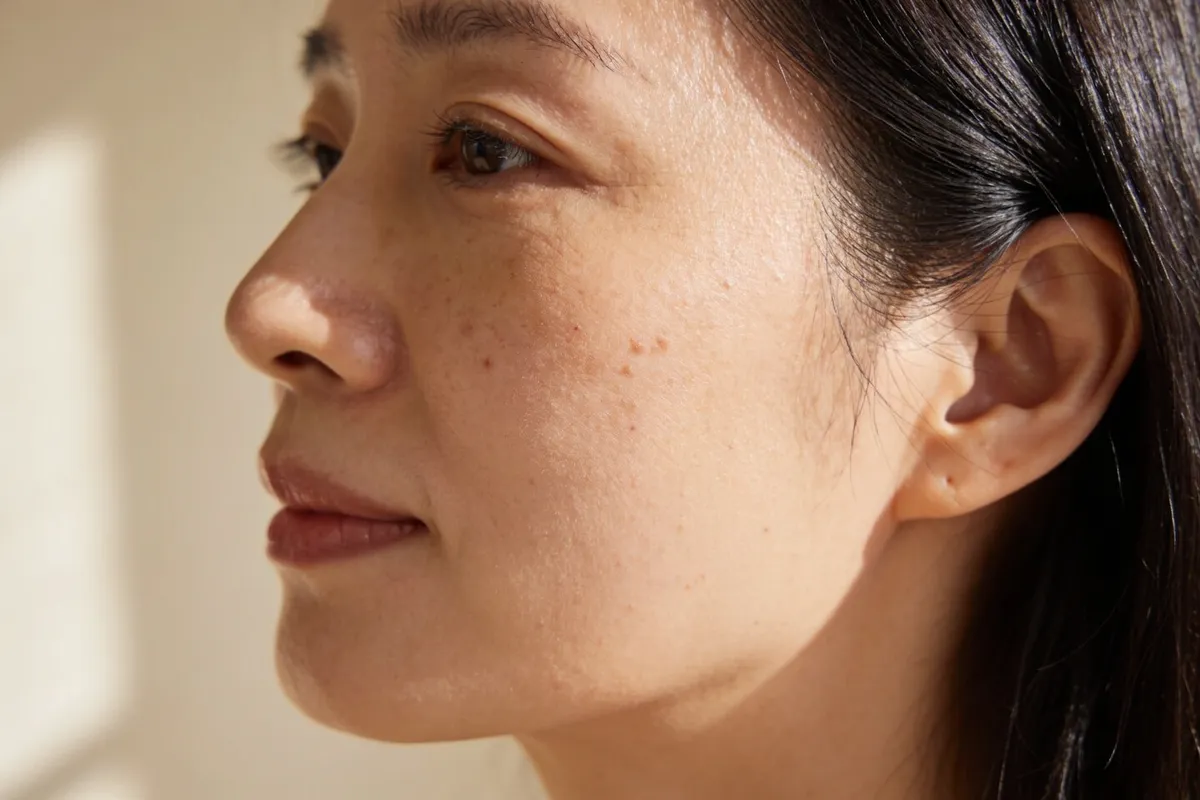
Side light shows the depth and shape of acne scars. Illustrative image, not a patient.Illustrative image — not a patient.
What sets Potenza apart within the category is a choice of radiofrequency mode. Its 2020 US filing describes monopolar delivery, where current flows from the needles to a return pad on the body, and bipolar delivery, where it flows between neighbouring needles, each at 1 or 2 MHz; the maker markets these as four modes. Monopolar delivery is generally described as heating a broader, deeper volume. The filing gives treatment depth up to 4.0 mm, and its cleared wording, as for other RF microneedling devices, is electrocoagulation and haemostasis.
How it differs from microneedling and from a laser
Microneedling without radiofrequency relies on the needle injury alone; adding radiofrequency places heat at the needle tips, inside the dermis. RF microneedling is also not a laser: it does not resurface the skin or target pigment. The comparison is set out on microneedling vs RF microneedling.
Dr Sin Yong’s approach: Secret RF on the Secret DUO, and FSX Laser
For the same goal as Potenza, Dr Sin Yong performs RF microneedling himself with Secret RF on the Secret DUO, made by ILOODA in Korea. He is a Global Key Opinion Leader for the Secret RF platform; that role is disclosed so that the choice can be read in context, and this page does not claim that one device outperforms another.
Needle choice by skin type. Insulated cartridges are chosen as a rule in Fitzpatrick IV to VI skin, so heat is released at the tip and the surface is spared.
Depth by zone. Needle depth is set between about 0.5 and 3.5 mm for the tissue in each zone, after its thickness has been felt.
A fractional laser on the same console. The 1540 nm non-ablative laser can treat the skin around a scar in the same visit.
Scars in sequence. Tethered scars are released by subcision and ice-pick scars treated with TCA CROSS before RF microneedling works on the dermis around them. Deep scarring may go to the S3 Resurfacing Lift.
Where needles are not needed, for fine lines, superficial scars, pores, redness and uneven tone, Dr Sin Yong uses FSX Laser, his protocol combining 1540 nm and 1927 nm wavelengths. The device, its filings and how it is used here are set out on Secret RF Singapore.
Who Potenza may suit, and who should wait
RF microneedling, on any device, is aimed at rolling and shallow boxcar acne scars, enlarged pores, uneven texture and early loss of firmness. It does not release tethered scars on its own, clear pigment or lift heavy sagging; those need subcision, a pigment laser or a lifting plan. Ice-pick scars usually need TCA CROSS first.
Scar type is identified before a method is chosen. Illustrative image, not a patient.Looking down for long periods folds the neck skin repeatedly. Illustrative image, not a patient.
Reasons to wait or choose differently
Active infection, a cold sore or inflamed skin in the area
Pregnancy
Recent isotretinoin, which changes the timing of any skin injury
A history of keloids or of darkening after skin injury, which changes the settings
A pacemaker or metal implants in the area, which matter especially for monopolar radiofrequency
Recent tanning or a planned period of strong sun
Potenza in Asian skin: pigment and settings
Asian skin is prone to post-inflammatory hyperpigmentation, darkening that follows inflammation or injury. RF microneedling is among the more workable options for Fitzpatrick III to V skin, because heat is released below the surface rather than across it. A 2023 review of radiofrequency and RF microneedling in skin of colour, covering 35 articles, found a low risk of scarring and pigment change; seven studies reported transient darkening and one reported milder prolonged darkening, and the authors noted that many studies were of weak quality.
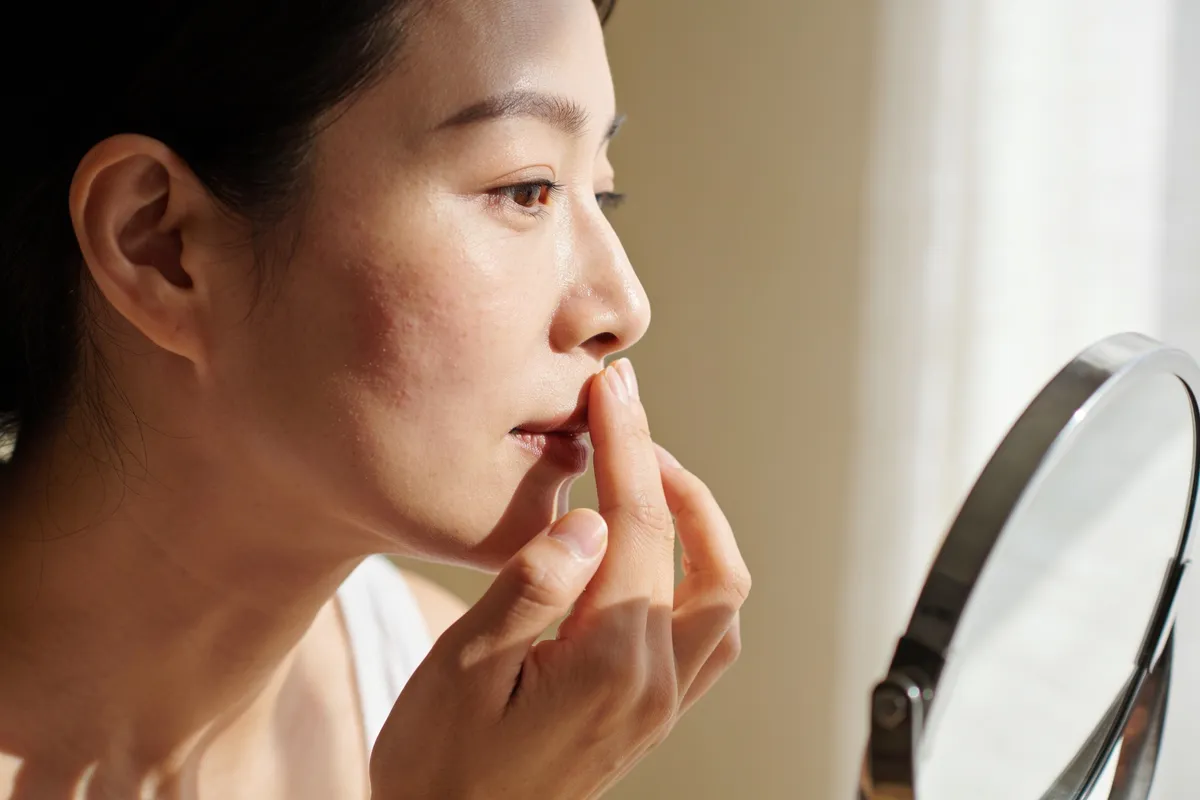
Skin quality is assessed in natural light. Illustrative image, not a patient.
What lowers pigment risk is the same whatever the brand: insulated needles where the skin type calls for them, energy matched to the zone, enough time between sessions, no strong actives too early, and daily sunscreen afterwards. Monopolar modes and deeper settings tend to produce more reaction. The detail is on RF microneedling in Asian skin.
Potenza vs Secret RF and FSX Laser, in one table
The table sets Potenza beside the treatments Dr Sin Yong uses for the same goal. It is a guide to how each works, not a ranking; comparative trials between branded RF microneedling devices are scarce.
Option
How it works
Who it tends to suit
Downtime factors
Main risks
Potenza (the device this page explains)
Needles release monopolar or bipolar radiofrequency at 1 or 2 MHz in the dermis; insulated and semi-insulated tips are marketed
Rolling and shallow boxcar acne scars, pores, texture, early laxity
Redness, swelling and grid marks; more with monopolar modes and greater depth
Post-inflammatory darkening, grid marks, infection, fat loss if heat is placed too deep
Secret RF on the Secret DUO (Dr Sin Yong’s approach)
Bipolar radiofrequency at 2 MHz through 0.5 to 3.5 mm needles, plus a 1540 nm fractional laser on the same console
The same scar, pore and texture concerns, with insulated needles chosen as a rule in Fitzpatrick IV to VI skin
Redness, swelling and pinpoint marks; depends on depth, energy and needle type
A 2025 evaluator-blinded split-face study in 20 people with moderate to severe atrophic acne scars used Potenza RF microneedling on both halves of the face, adding a picosecond 755 nm laser with a diffractive lens array to one half, over four sessions. Both halves improved on the study’s scales, with no significant difference between them, and the authors called for larger trials. A 2021 critical review of 42 randomised, split-body or blinded studies of RF microneedling across devices found it used for acne scars, rejuvenation, acne and other conditions, including in darker skin types, with collagen remodelling that continues for at least six months.
The plan follows what the skin shows on the day. Illustrative image, not a patient.Looking down for long periods folds the neck skin repeatedly. Illustrative image, not a patient.
These studies are small or pool several devices. None compares Potenza with Secret RF directly, so neither device can be said to outperform the other.
What decides the Potenza price in Singapore
Potenza fees in Singapore usually follow the area treated, the tip used, the number of sessions planned and whether subcision or another step is added. Before comparing quotes, ask which tip and depth are planned for each area and why, whether the needles are insulated, how energy is set for your skin type, and who sets it. Medical devices supplied in Singapore are registered with the Health Sciences Authority.
Dr Sin Yong gives fees in writing after assessment for the plan he recommends; how fees are quoted explains what a quote contains.
Your next step
1. MessageSend a WhatsApp message with what is bothering you. A reply comes from the clinic, not a bot.
2. AssessmentDr Sin Yong examines your skin himself on Orchard Road and sorts scars by type.
3. A plan in writingWhat he would do, what he would not, the fee factors, and the option of no treatment.
Every treatment is performed by Dr Sin Yong personally. Singapore Medical Council registered · invited to share his clinical expertise internationally for CLASSYS, DEKA, Fotona, Hironic and Ilooda.
Book an assessment with Dr Sin Yong on Orchard Road. Bring the name of any device used on your skin before. How consultations work.
Texture, pores and shallow rolling scars in side light. Illustrative video, not a patient.
How to choose a clinic for Potenza in Singapore
A brand page or an overseas clinic cannot tell you how Potenza is delivered here. These are the points worth checking with any clinic in Singapore.
Who performs it. Ask who will carry out Potenza. Medical treatments here are performed by Dr Sin Yong himself and are not delegated.
What is used. Ask for the name of the device or product, and whether it is registered with the Health Sciences Authority.
Assessment first. The plan should follow an in-person assessment, not a package chosen in advance.
The fee in writing. Fees are quoted in Singapore dollars, in writing, before any treatment starts.
Review. Ask when you will be seen again after the treatment, and by whom.
Consultations with Dr Sin Yong are at 9 Scotts Road, Pacific Plaza #12-01, Singapore 228210.
Frequently Asked Questions
Potenza is RF microneedling used for acne scars, enlarged pores, fine lines, texture and mild laxity. For the same goals Dr Sin Yong uses RF microneedling with Secret RF on the Secret DUO, which he performs himself.
It can help acne scars, pores and texture over a course of sessions. Results depend on the settings, needle depth and the skin type, especially in Asian skin where heat can cause darkening.
They are not alternatives. Anti-wrinkle injections relax muscles to soften expression lines. RF microneedling rebuilds collagen for texture, scars and mild laxity.
It suits acne scars, enlarged pores, fine lines and mild laxity in most skin types. It is postponed with active infection, a keloid tendency, pregnancy or recent oral acne medicine.
A session of radiofrequency microneedling to the full face usually takes 20 to 40 minutes, after about 30 to 45 minutes for numbing cream to work. Smaller areas take less time.
Potenza is a fractional radiofrequency microneedling system made by Jeisys Medical in Korea and distributed by Cynosure. Fine needles enter the skin to a set depth and release radiofrequency heat in the dermis, which the skin answers by remodelling collagen. Its US filing describes monopolar and bipolar modes at 1 or 2 MHz. It is used for atrophic acne scars, enlarged pores, uneven texture and early laxity.
All three are brands of RF microneedling. They differ in radiofrequency mode, frequency, depth range and tips: Potenza offers monopolar as well as bipolar delivery, Morpheus8 is a bipolar system marketed with deeper tips, and Secret RF runs bipolar radiofrequency at 2 MHz. No head-to-head trial shows one outperforming another, so the skin, the scar type and the settings matter more than the brand.
RF microneedling is one of the more workable options for Fitzpatrick III to V skin, because heat is released below the surface. A 2023 review of radiofrequency and RF microneedling in skin of colour found a low risk of scarring and pigment change, with transient darkening reported in seven studies, while noting that much of the evidence is weak. Needle type, energy and sun protection matter whatever the brand.
As with other RF microneedling, redness, mild swelling and pinpoint or grid marks are expected for a few days, and how visible they are depends on depth, energy, tip and skin type. Monopolar modes and deeper settings tend to produce more reaction. Gentle cleansing, no strong actives until advised and daily sunscreen are the usual aftercare for any RF microneedling device.
Where Potenza is provided, the fee usually depends on the area, the tip used, the number of sessions planned and whether other steps such as subcision are added. Ask which tip and depth are planned and who sets the energy. Dr Sin Yong gives fees in writing after assessment for the plan he recommends, usually Secret RF on the Secret DUO.
Dr Sin Yong performs RF microneedling himself with Secret RF on the Secret DUO, choosing insulated needles as a rule in darker skin and setting depth zone by zone. Where needles are not needed, for fine lines, superficial scars, pores and tone, he uses FSX Laser. Tethered scars are released by subcision first, and deep scarring may go to the S3 Resurfacing Lift.
When the problem sits mainly at the surface: fine lines, uneven tone, redness after acne, superficial scars and texture often respond to a fractional laser without needles. Dr Sin Yong’s FSX Laser combines 1540 nm and 1927 nm wavelengths for this. RF microneedling is chosen where heat is needed deeper in the dermis, such as for rolling and shallow boxcar scars.
Potenza, like other RF microneedling, is usually done after a numbing cream, and the heat is felt as warmth and prickling. Monopolar modes, deeper settings and bony areas tend to be more noticeable, and comfort varies between people, so settings can be adjusted during the session. For the same goal, Dr Sin Yong performs Secret RF on the Secret DUO after a numbing cream, and discusses comfort with you before he starts.
Clinics commonly plan Potenza as a short course spaced several weeks apart, but the number depends on the scar type, the skin and the settings, so no single figure suits everyone. Collagen remodelling after RF microneedling is gradual; a 2021 critical review across devices found it continued for at least six months. For Secret RF here, Dr Sin Yong sets the plan after assessment and reviews the response before each further session.
Potenza is sold with interchangeable tips. The maker markets insulated, semi-insulated and multi-needle tips, including tips designed to treat more than one depth in a pass. The tip changes where heat lands and how much surface reaction follows, not the category of treatment. On the Secret DUO, Dr Sin Yong chooses insulated or non-insulated cartridges for each skin type.
Potenza can deliver monopolar or bipolar radiofrequency through its needles, and has tips for different depths. The tip and depth matter more than the brand.
Results build over three months and last about a year with maintenance.
References
Darji K, Zarbafian M, Ishii L, Zubair R, Cho S, Zhou XH, Goldman MP, Wu D, Loyal J. Evaluating the picosecond 755-nm alexandrite laser with diffractive lens array and radiofrequency microneedling for the treatment of atrophic acne scarring. Dermatologic Surgery, 2025;51:S69-S76. PubMed · DOI 10.1097/DSS.0000000000004817
Syder NC, Chen A, Elbuluk N. Radiofrequency and radiofrequency microneedling in skin of color: a review of usage, safety, and efficacy. Dermatologic Surgery, 2023;49:489-493. PubMed · DOI 10.1097/DSS.0000000000003733
Tan MG, Jo CE, Chapas A, Khetarpal S, Dover JS. Radiofrequency microneedling: a comprehensive and critical review. Dermatologic Surgery, 2021;47:755-761. PubMed · DOI 10.1097/DSS.0000000000002972
About this page: written and medically reviewed by Dr Sin Yong, MBBS (NUS), MRCS (Edinburgh) · Last reviewed 8 November 2026 · Illustrative images only, not patients · Editorial policy