Key facts
- What Sylfirm X is
- A bipolar RF microneedling device made by Viol, Korea, used by a number of Singapore clinics
- What makes it different
- A pulsed-wave mode in addition to continuous-wave, with non-insulated needles
- Pulsed-wave mode
- Very short bursts of energy, studied for the basement membrane, small vessels and pigment-adjacent conditions
- Continuous-wave mode
- Behaves like conventional RF microneedling: coagulation columns in the dermis for scars, pores and laxity
- Secret Duo (used here)
- RF microneedling with insulated or non-insulated cartridges, plus a 1540 nm non-ablative fractional laser on the same platform
- Evidence level
- Strongest for RF microneedling as a modality in atrophic acne scars; device-specific comparative trials are scarce
- What decides the plan
- Scar type, depth of the problem and Fitzpatrick skin type, not the brand on the handpiece
Is Sylfirm X a different treatment from RF microneedling?
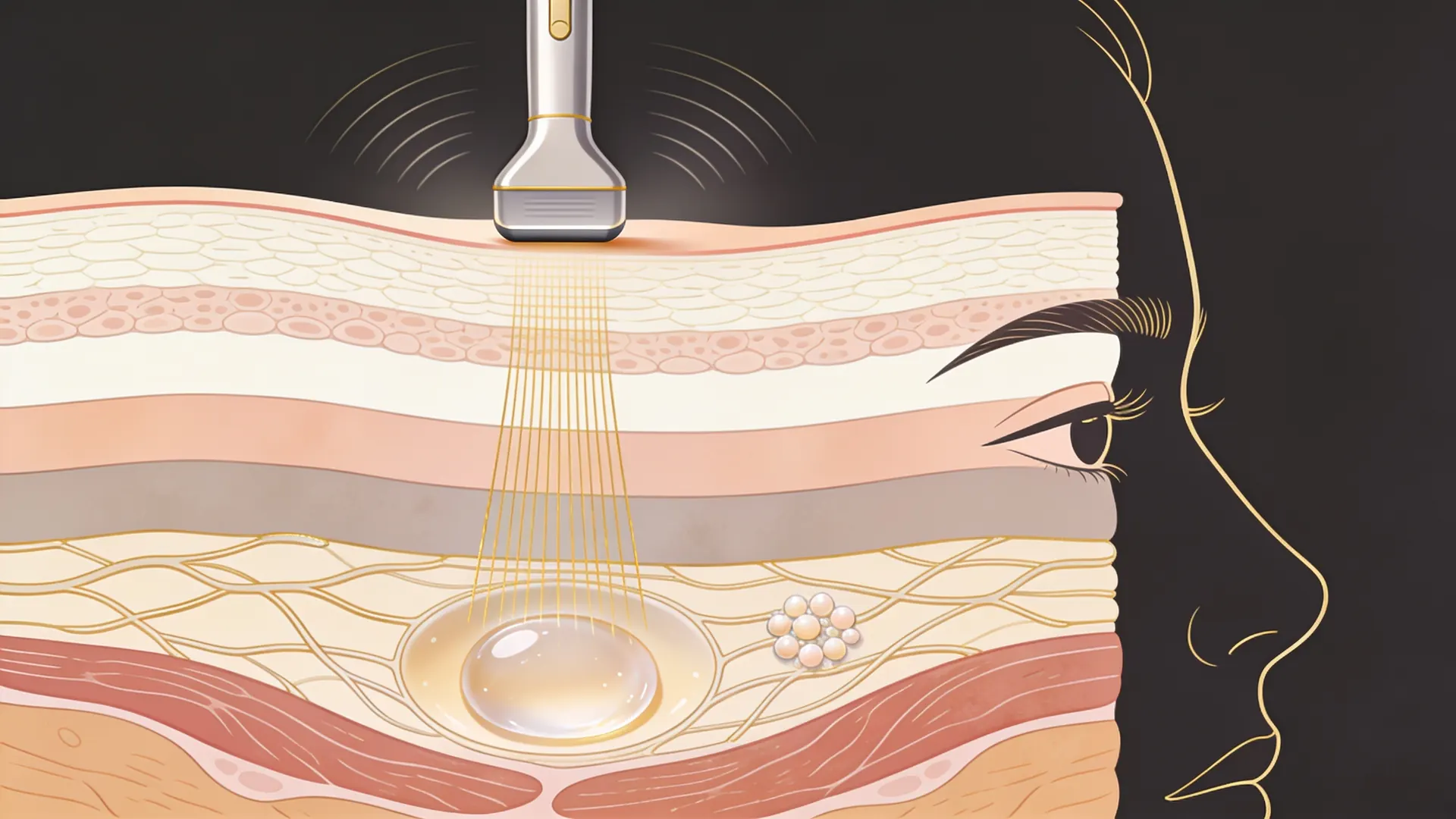
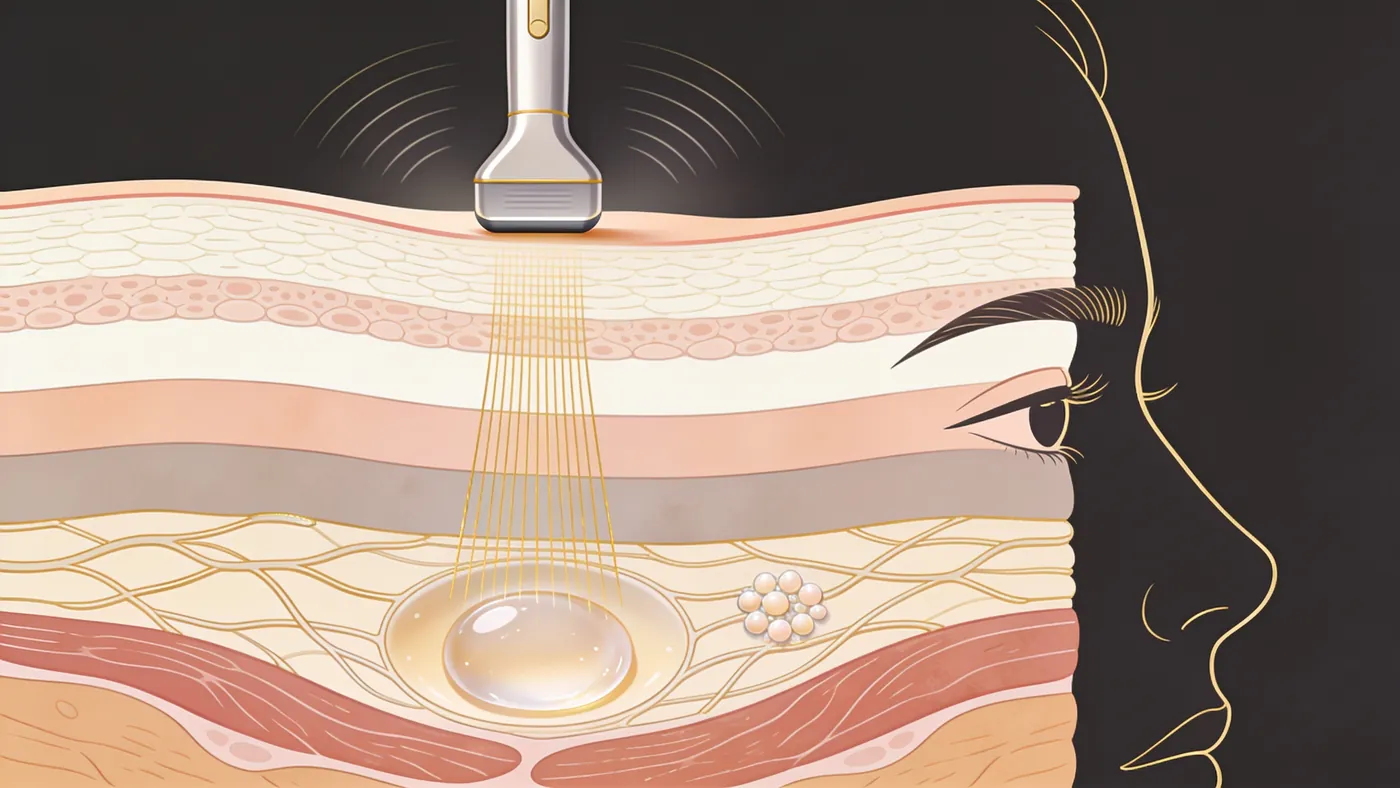
No. Sylfirm X is one brand of radiofrequency microneedling device, and RF microneedling is the treatment. Every system in this category does the same basic thing: fine needles are driven to a set depth in the dermis, radiofrequency current flows between or from them, and the heat produces controlled zones of coagulation that the skin repairs with new collagen and elastin over the following months. The needles are the delivery route; the radiofrequency does the work.
Sylfirm X is made by Viol in Korea and is used by a number of clinics in Singapore, often under its own name rather than under the general term. That naming is where confusion starts, because a patient can be offered Sylfirm X at one clinic and RF microneedling at another and believe they are choosing between two treatments. They are choosing between two devices that deliver the same category of treatment with different engineering.
The engineering differences are real and worth understanding, and they are set out below. They are not, however, the first question. The first question is whether RF microneedling of any brand is the right tool for the problem in front of you, and that is answered by examining the skin, not by reading a device brochure.
What does the pulsed-wave mode on Sylfirm X actually do?
The pulsed-wave mode delivers radiofrequency in very short, repeated bursts rather than as one continuous flow, and it is the feature Sylfirm X is most recognised for. In laboratory work on pulsed-type bipolar radiofrequency delivered through non-insulated needles, the short pulses produced small zones of coagulation in the dermis together with thickening of the basement membrane, the layer that separates the epidermis from the dermis, and narrowing of small blood vessels without damage to their lining.
That is why Sylfirm X is often discussed for conditions where the basement membrane and small vessels are thought to matter: melasma, Riehl melanosis, rosacea-type redness and the pigment-adjacent concerns that conventional heat-based treatments can aggravate. A Korean series of forty-four patients with refractory melasma or Riehl melanosis treated in pulsed mode reported clinical improvement in most, with reductions in measured melanin, redness and water loss through the skin, and no serious adverse events. It was a single-arm study without a control group, so it shows what the device can do rather than how it compares with other options.
The continuous-wave mode is conventional RF microneedling. It produces the larger coagulation columns used for atrophic acne scars, enlarged pores, texture and early laxity, and it is the mode most comparable with what other RF microneedling platforms deliver. A clinic offering Sylfirm X for scars is, in practical terms, offering RF microneedling for scars.
“The device is the instrument, not the treatment — two clinics with identical Ultraformers can deliver entirely different results, because the lift is in the mapping.”
Dr Sin YongOn why the device is not the treatment
How does Secret Duo differ from Sylfirm X?
Dr Sin Yong performs RF microneedling on Secret Duo, made by ilooda in Korea, and the two platforms differ in three practical ways. The first is needle insulation. Sylfirm X uses non-insulated needles, which release energy along the whole exposed shaft. Secret Duo offers both non-insulated cartridges and insulated cartridges, which are coated along the shaft so that energy is released only at the tip. Insulated needles are generally his choice in Fitzpatrick IV to VI skin, because the heat bypasses the pigmented epidermis; non-insulated needles suit broad, shallow textural work.
The second is what else sits on the platform. Secret Duo carries a 1540 nm non-ablative fractional laser alongside the RF microneedling handpiece, so the skin around a scar can be treated with light in the same visit when the assessment calls for it. Sylfirm X is a dedicated RF microneedling device, with its two modes as the variable. The third is the pulsed-wave mode itself, which Secret Duo does not offer in the same form; where a pulsed delivery is thought to suit a redness- or pigment-adjacent concern, that is a point in Sylfirm X's favour, and it is said plainly.
None of this ranks one device above the other. Head-to-head trials between RF microneedling brands are scarce, and the published evidence sits at the level of the modality, strongest for atrophic acne scars. Dr Sin Yong holds an appointment as Secret DUO Microneedling Trainer, awarded by ilooda Co Ltd, which is disclosed here because it is relevant to reading a comparison written by him.
Sylfirm X vs Secret Duo at a glance| Feature | Sylfirm X | Secret Duo |
|---|
| Maker | Viol, Korea | ilooda, Korea |
| Category | RF microneedling device | RF microneedling device |
| Needles | Non-insulated; energy released along the whole exposed shaft | Insulated and non-insulated cartridges |
| Modes | Pulsed-wave and continuous-wave | Continuous RF microneedling; no pulsed-wave mode in the same form |
| Also on the platform | Dedicated RF microneedling device | 1540 nm non-ablative fractional laser |
| Where each has an edge | Pulsed mode studied for refractory melasma, Riehl melanosis, redness-adjacent concerns | Insulated needles in Fitzpatrick IV to VI; laser in the same visit |
| Used at this practice | No; described for comparison | Yes; Dr Sin Yong performs RF microneedling on it personally |
Which problems suit RF microneedling, whatever the brand?
Rolling and shallow boxcar acne scars, enlarged pores, uneven texture and early laxity are the problems for which RF microneedling has the strongest support. Each involves dermal collagen that has been damaged, tethered or slowly lost, and a controlled thermal injury at a chosen depth is a reasonable way to prompt remodelling while sparing the surface. In Fitzpatrick III to V skin, common in Singapore, delivering heat below the epidermis rather than through it lowers, without removing, the risk of post-inflammatory hyperpigmentation.
Some problems need something done first. A tethered rolling scar is held down by fibrous bands, and no amount of dermal heating releases a band; subcision does, and RF microneedling is staged afterwards. A deep ice-pick scar is a narrow well, better matched to TCA CROSS than to needles that pass beside it. Pigment that is purely epidermal, such as a discrete sun spot, is a laser problem. Deeper laxity of the lower face sits beyond the dermis and belongs to lifting protocols.
Melasma deserves its own line. Pulsed-mode RF microneedling has been studied for it and may have a place, but melasma is a chronic condition with hormonal, vascular and ultraviolet drivers, and any energy-based treatment is a conservative supporting step inside a plan built on sun protection and topical therapy. Whichever device is used, the pattern that makes melasma worse is heat delivered too aggressively, and that is a settings decision rather than a brand decision.
How should you compare RF microneedling offers in Singapore?
Compare the plan, not the machine. A brand name tells you which device is in the room; it does not tell you what your scars are, how deep they sit, which needle type will be used, at what depth and energy, or whether anything should be done before the needles go in. Two clinics with the same device can be doing different things with it, and two clinics with different devices can be doing the same thing.
Useful questions are simple. What type of scar, pore or laxity is this, and has it been examined rather than assumed? Will insulated or non-insulated needles be used, and why does that suit my skin type? Is anything planned first, such as subcision for tethered scars or TCA CROSS for ice-pick scars? Who performs the treatment, and who reviews me if the skin darkens afterwards? If the answer to the first question is a device name, the plan has started in the wrong place.
This site does not publish fees, and Singapore's ethical rules for doctors bar discounts and time-limited offers, so a deadline is never a reason to proceed. Fees follow what the assessment finds, the area, the needle type and whether laser or other scar techniques are combined, and they are set out at consultation before anything is agreed. The wider factors behind the cost of RF microneedling are explained on the treatment page.
Does Dr Sin Yong offer Sylfirm X?
No. Sylfirm X is described on this page for comparison, as a device other clinics in Singapore use. The RF microneedling Dr Sin Yong performs is on Secret Duo, and he performs it personally, choosing between insulated and non-insulated cartridges and setting depth and energy zone by zone after an in-person assessment. Where the skin around a scar also needs attention, the 1540 nm fractional laser on the same platform can be used in the same visit.
If you have already had Sylfirm X elsewhere, that is useful information rather than a problem. Bring the dates, the mode used if you know it and how your skin responded, because a recent treatment changes the timing and settings of anything that follows, and a skin that has darkened after one energy-based treatment needs more conservative handling with the next.
The honest summary is that the brand matters less than people are led to believe and the assessment matters more. RF microneedling, under whichever name, remodels dermal collagen at a chosen depth. What it cannot do is release a tether, fill a well, clear a sun spot or lift tissue that has descended below the dermis, and a plan that starts from the problem rather than the device will say which of those applies to you.