What does seborrhoeic keratosis look like?
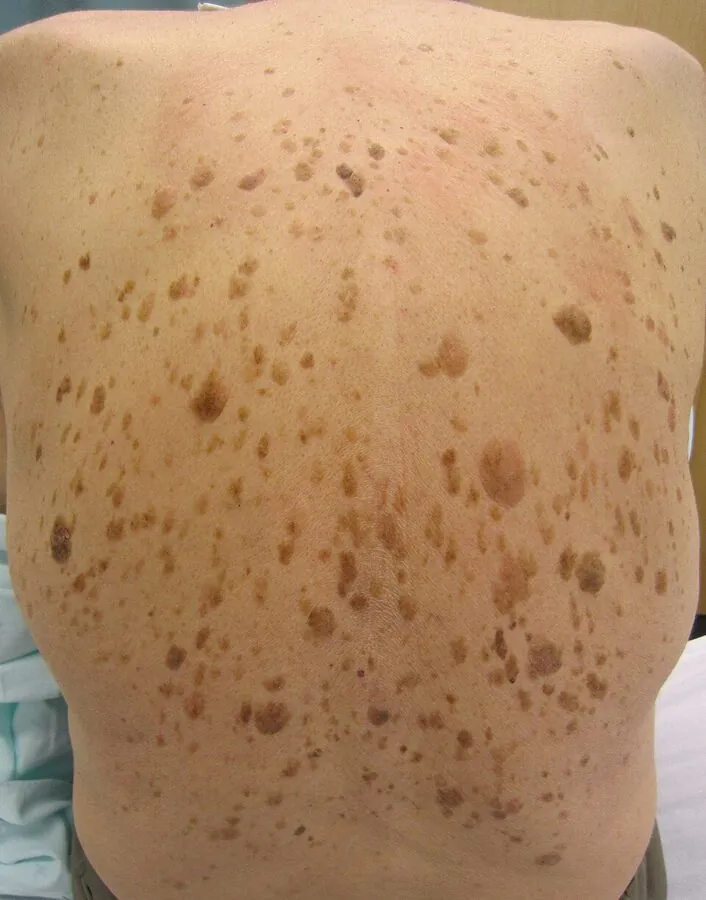
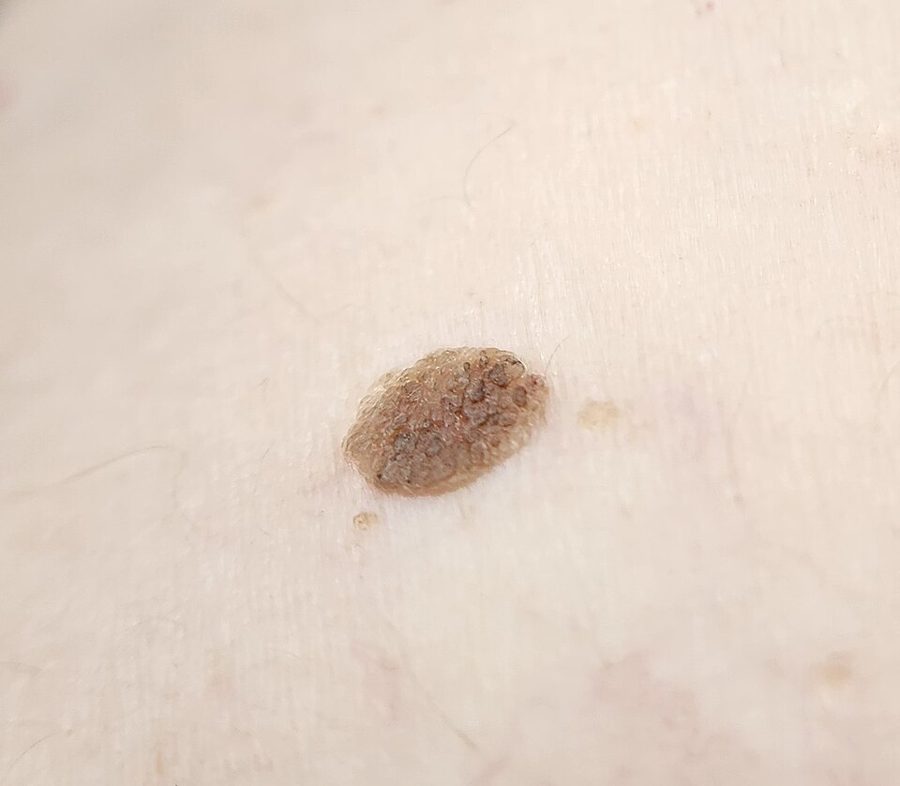
What are age warts, and why do they multiply?
Seborrhoeic keratoses are among the most common benign skin tumours in humans — reviews describe them as near-universal with ageing, driven by clonal changes in keratinocytes rather than by sun alone, though sun-exposed sites carry more [1]. They begin as flat tan patches and thicken over years into the classic waxy plaque. They run in families. They are not viral warts, despite the nickname — nothing spreads them, and picking one off (a popular home experiment) just brings it back from the base with a scab for company.
The one question that matters: is it definitely benign?
A seborrhoeic keratosis itself never becomes cancer. The clinical issue is the mimic: a melanoma can masquerade as a dark, irregular “SK”, and studies of excised lesions show a small but real rate of misdiagnosed malignancy hiding in presumed keratoses [1,2]. The rule Dr Sin Yong applies is absolute: any pigmented growth gets examined — dermatoscope where indicated — before anyone freezes, burns or lasers it. Destroying a lesion without diagnosis destroys the evidence. Features that fast-track review: rapid change, bleeding, an outlier that looks different from your other spots, or new pigmented lesions appearing in numbers.
What actually works for seborrhoeic keratosis?
Once confirmed benign, removal is elective and straightforward: cryotherapy for thin lesions, curettage or electrocautery for thicker ones, and ablative laser where precision or cosmetically sensitive sites call for it — the comparative literature supports all of these, chosen by lesion thickness and site [1,2]. On the face, technique matters more than modality: depth control determines whether the result is clear skin or a pale mark. Darker skin types need particular care with cryotherapy, which can leave lasting pigment change — one reason laser-based removal is often preferred in Singapore skin. Related surface concerns — flat brown patches and texture — are different problems with different tools.
Age warts are not the contagious kind
The lay name causes real confusion. A seborrhoeic keratosis is a benign overgrowth of keratinocytes with no viral component: it cannot be caught, cannot be passed to anyone else, and does not seed to other parts of the body. A viral wart, caused by human papillomavirus, does all three.
This matters before anything is treated, because the two need different handling and a lesion assumed to be an age wart should first be confirmed as one. The comparison is set out in full in warts versus age warts.
What doesn't work for seborrhoeic keratosis?
Creams — no topical dissolves a thick keratinocyte plaque reliably; the “SK removal” products sold online mostly irritate. Picking — it regrows from the base. Home freezing kits — uncontrolled depth on an undiagnosed pigmented lesion is the worst combination in dermatology. And ignoring the changing one because “it's just an age wart” — the mimic problem is exactly why the changing one earns a doctor's eyes.
If the lesion in question is a true mole rather than a seborrhoeic keratosis, Dr Sin Yong’s dermatoscopy-first mole removal protocol applies — the mole is scoped and assessed before any removal method is chosen.“A seborrhoeic keratosis never turns into cancer — but cancer occasionally dresses as one, which is why diagnosis comes before destruction.”
— Dr Sin Yong
Dr Sin Yong’s Viewpoint
My rule for seborrhoeic keratoses is absolute: diagnosis before destruction. The lesion itself never turns malignant — but melanoma occasionally dresses as one, and the changing, outlier 'age wart' is the one that earns my dermatoscope. Once confirmed benign, removal is quick, elective and satisfying.
Prefer Not to Use WhatsApp?
Use the short enquiry form instead →
Leave your name, mobile number and email and the clinic will contact you directly. No obligation.
Prefer a preliminary view first? You can also WhatsApp a photo of the area for Dr Sin Yong to review before you decide on a visit.