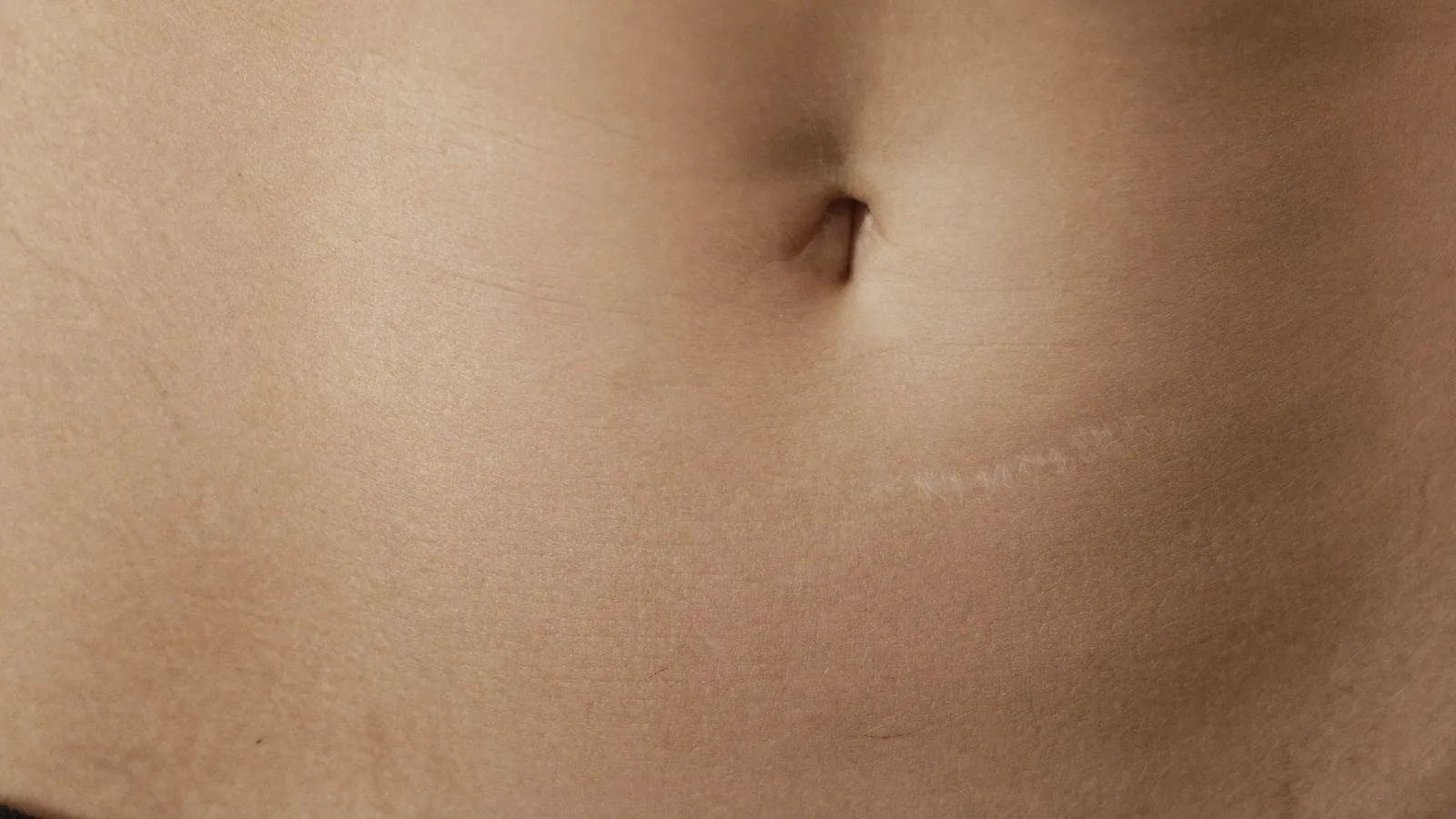
Scar removal surgery, meaning excision and re-closure or re-orientation, suits a narrow group: wide or stretched scars, contractures, eyelid or lip distortion and isolated deep pits, which are referred to a plastic surgery specialist. Red, raised, depressed, tethered or textured scars are usually approached first with lasers, injections and subcision; keloids are never simply cut out.
Key facts
- Surgical revision
- Excision and re-closure, or re-orientation of a scar; referred to a plastic surgery specialist
- Suits surgery
- Wide or stretched scars, contractures, distortion of an eyelid or lip, isolated deep pits
- Suits non-surgical work
- Red, raised, depressed, tethered or textured scars
- Non-surgical tools
- Fractional CO2 resurfacing, subcision, TCA CROSS, intralesional therapy, collagen-supporting injectables
- Timing
- Scars remodel for many months, often beyond a year; immature scars respond more readily to non-surgical work
- Keloid rule
- Excision alone frequently recurs, often larger; surgery belongs only inside a combination protocol
- Realistic aim
- Flatter, paler, softer and less noticeable; no method erases a scar
Does scar removal always mean surgery?
No. Most scars that bother people are a problem of colour, height, depth, attachment or texture, and each of those can usually be approached without cutting the scar out. Surgery replaces one scar with another, ideally a finer or better-placed one; it is the right tool for a narrower group of scars than the phrase scar removal surgery suggests.
It also helps to be precise about what removal means. Once the dermis has been injured through its full thickness, the repair is scar tissue. Every method, surgical or not, changes a scar's texture, colour, thickness and visibility; none erases the fact of it. The realistic aim is a scar that is flatter, paler, softer and less noticeable, with the degree of change varying from scar to scar.
So the first question at assessment is not surgery or laser, but what this scar's structure is and how mature it is. Scar reconstruction is planned by structure rather than by surface for exactly this reason: a tethered scar, a punched-out pit, a raised scar and a stretched line are different problems, and each answers to a different tool.
Which scars actually need surgical revision?
Surgical revision earns its place where the problem is the scar's width, shape or position, which energy devices and injectables cannot change. A scar that has stretched into a wide band, a scar running against the natural tension lines of the face so that it pulls and widens, or a scar that has contracted into a tight cord across a joint or the neck are typical examples. So is a scar that distorts a free margin, such as pulling down a lower eyelid or notching the edge of a lip.
Surgical techniques for these include excising the scar and re-closing it in layers under less tension, and re-orienting techniques such as Z-plasty or W-plasty, which break up or redirect a straight line. For acne, punch excision, punch elevation and punch grafting can address individual scars that are too deep or too wide for TCA CROSS and that resurfacing will not reach, although they do nothing for the texture around the scar. Revision carries its own trade-offs, too: often a longer line, stitches, a period of wound care, and a new scar that must itself mature before its final appearance can be judged.
None of this is part of Dr Sin Yong's own scar work. Where surgical revision is indicated, he refers to a plastic surgery specialist, or to a dermatology specialist for punch techniques, and plans any non-surgical work around that. The two routes are often complementary: a revised scar is a new, immature scar, and it can benefit from early non-surgical care while it remodels.
“Scar tissue is far more responsive while it is still remodelling. Timing matters as much as technique.”
Dr Sin YongOn the window most people wait out
Surgical revision vs non-surgical scar treatment| Feature | Surgical revision | Non-surgical route |
|---|
| What it does | Excises and re-closes, or re-orients a scar; exchanges one scar for another | Matches each scar feature to lasers, injections, subcision or TCA CROSS |
| Scars it suits | Wide or stretched scars, contractures, eyelid or lip distortion, isolated deep pits | Red, raised, depressed, tethered or textured scars |
| What it cannot do | Erase scarring; change the texture around the scar | Change a scar's width, shape or position |
| Keloids | Never excised alone; selected cases referred, with adjuvant treatment | First line: intralesional therapy, silicone, pressure, cryotherapy or laser |
| Timing | Usually waits until the scar has matured | Earlier, while the scar is still remodelling |
| Who performs it | Referred to a plastic surgery specialist, or dermatology specialist for punch techniques | Performed in clinic by Dr Sin Yong |
| How they combine | A revised scar is a new, immature scar | Early non-surgical care while the new line remodels |
What can lasers, injections and subcision do instead?
Non-surgical scar treatment works by matching each feature of a scar to the tool that reaches it. Fractional CO2 resurfacing creates microscopic columns of controlled injury within and around a scar so that it rebuilds its surface and upper dermis; on the DEKA platform this is the basis of the S3 Resurfacing Lift protocol for acne scarring. It refines texture and the step at a scar's edge, but it cannot cut a fibrous band beneath.
Subcision does that job. A needle or cannula passed beneath a depressed scar divides the bands that tether it, so the surface is free to rise, and resurfacing then has something worth refining. Although it works beneath the skin, subcision involves no excision or stitches and is carried out in clinic as a non-surgical release technique. TCA CROSS places high-strength trichloroacetic acid precisely into narrow icepick tracts, prompting them to rebuild from the base.
For raised scars, intralesional therapy, meaning medication placed directly into the scar, softens and flattens excess tissue, often alongside silicone and, for redness, vascular laser. For depressed scars with a volume deficit, collagen-supporting injectables placed under released tissue support the scar floor, and polynucleotide preparations can improve the repair environment as an adjunct. Combined in a planned sequence, these form the 4D Scar Reconstruction approach for established scarring.
Colour is a separate problem from contour. A scar that stays red while it remodels may be addressed with vascular laser, and brown post-inflammatory marks around a scar with picosecond work at 785 nm, calibrated for Fitzpatrick III to V skin. Treating colour does not change a scar's depth, and treating depth does not change its colour, which is why the two are planned separately.
When should a surgical scar be treated?
Earlier than most people think, at least for assessment. A scar remodels for many months after surgery, often beyond a year: early type III collagen is replaced by stronger, better-organised type I, blood vessels regress, and the scar fades from pink towards pale. While it is still remodelling, it is far more open to non-surgical influence than once it has matured.
International consensus recommendations published in 2020 describe lasers as a first-line therapy for traumatic scars and contractures, used alongside good scar care rather than as a last resort. That does not mean treating every fresh scar; often the right early advice is silicone-based care, sun protection and surveillance. It means the scar is seen while the range of options is widest.
Surgical revision has its own timing logic, usually waiting until a scar has matured enough for its final shape to be judged, and that decision belongs to the operating specialist. Old scars are not untreatable either: a mature scar no longer remodels on its own, so treatment restarts the process deliberately, with a different tempo and different expectations. The biology behind this is set out in the surgical scar timing guide.
Why do keloids need special caution?
Because cutting a keloid out on its own frequently makes it come back, often larger. A keloid is scar tissue that has grown beyond the boundary of the original wound and behaves as ongoing inflammation in the deep dermis rather than a finished scar. Excision hands that tissue a fresh wound, with the same genetics and the same skin tension that built the first one.
The first step is confirming the diagnosis. A hypertrophic scar is raised but stays within the wound and often settles with time and treatment; a keloid crosses the border into skin that was never injured. The difference between a keloid and a hypertrophic scar decides almost everything that follows. Keloids are more common in Chinese, Malay, Indian and African skin, and favour the earlobes, chest, shoulders, upper back and jawline.
First-line keloid treatment is intralesional medical therapy, often combined with silicone, pressure, cryotherapy or laser, staged over time with review. Surgical excision is reserved for selected large keloids that have not responded, is referred to a plastic surgery specialist, and is always followed by adjuvant treatment to defend the new wound. Anyone prone to keloids should say so before any procedure that breaks the skin, including scar revision itself.
How do you decide which route suits your scar?
By examining the scar rather than its label. Assessment looks at colour and vascularity, which indicate maturity; height, whether raised, flat or depressed; attachment, whether stretching the skin flattens the scar or it stays pinned down; width and orientation; the site and any functional pull; and any personal or family history of keloids.
Most plans that follow are non-surgical, staged and reviewed as the scar responds. Some combine routes: a referred revision for a wide or contracted scar, followed by early resurfacing and scar care on the new line. Acne scarring usually carries several scar types on one cheek and is mapped scar by scar; those options are set out under acne scar treatment.
What should be said plainly at the start is that response varies between scars and between individuals. The honest comparison is not surgery against lasers in the abstract, but which tool, or which sequence of tools, fits the specific scar in front of you, and no method, surgical or otherwise, leaves skin as if it had never been injured.