Key facts
- Disadvantages
- Discomfort over bone, swelling and tenderness, a gradual and variable response, operator dependence, risks when depth is wrong
- Not addressed
- Volume loss, a full submental fat pad, redundant skin, skin quality, pigment
- Worth it when
- The problem is early to moderate laxity of the jawline, under the chin or the neck in a face with enough tissue depth
- Not worth it when
- The sag is driven by lost volume, fat or established skin excess, which need a different mechanism
- Persistence depends on
- Age, skin quality, degree of laxity at the outset, sun exposure, weight change, smoking and ongoing ageing
- Fee depends on
- Area, cartridge depths, number of lines and whether HIFU is combined with radiofrequency or laser; quoted in writing after assessment
What are the disadvantages of HIFU?
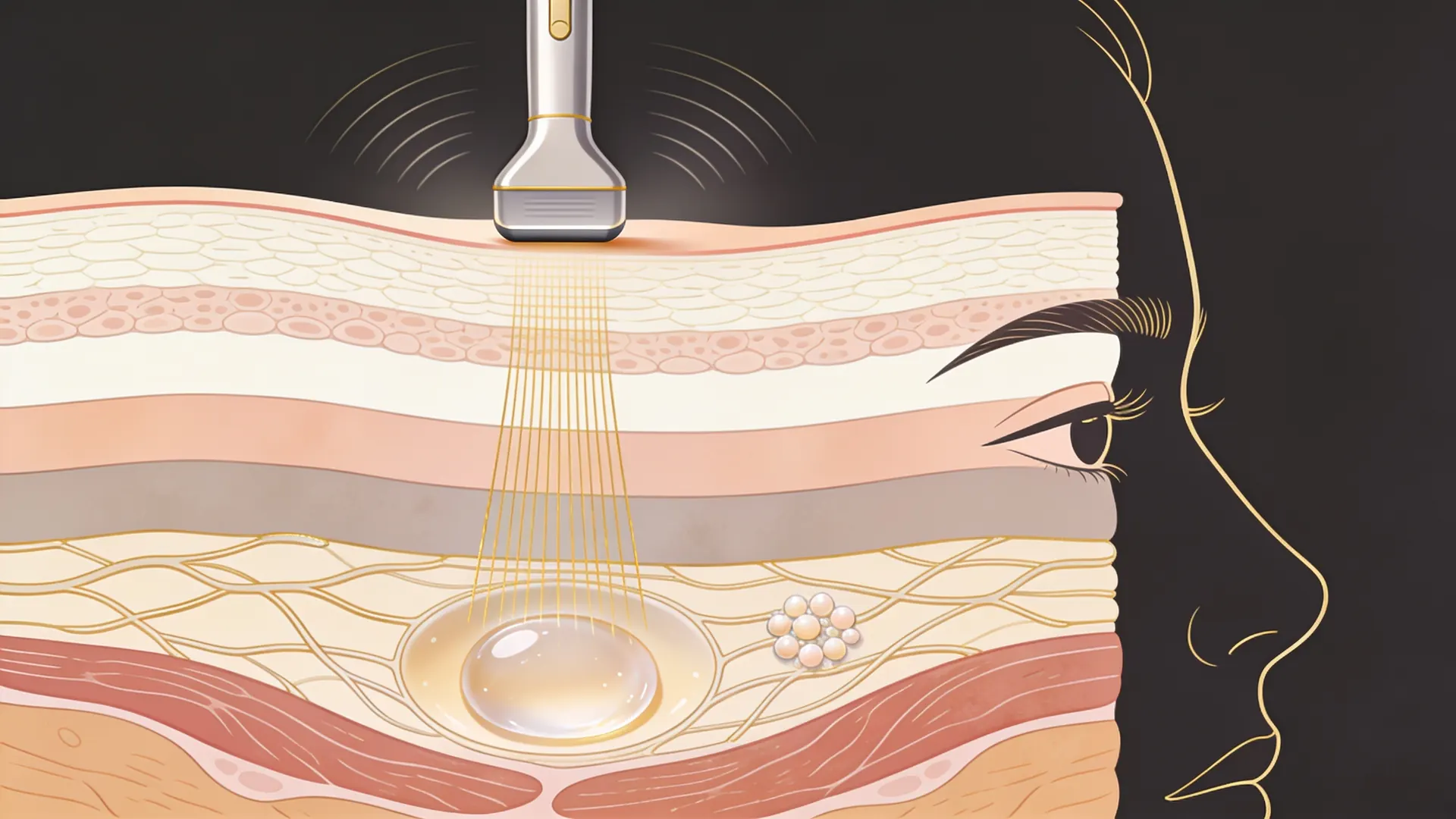
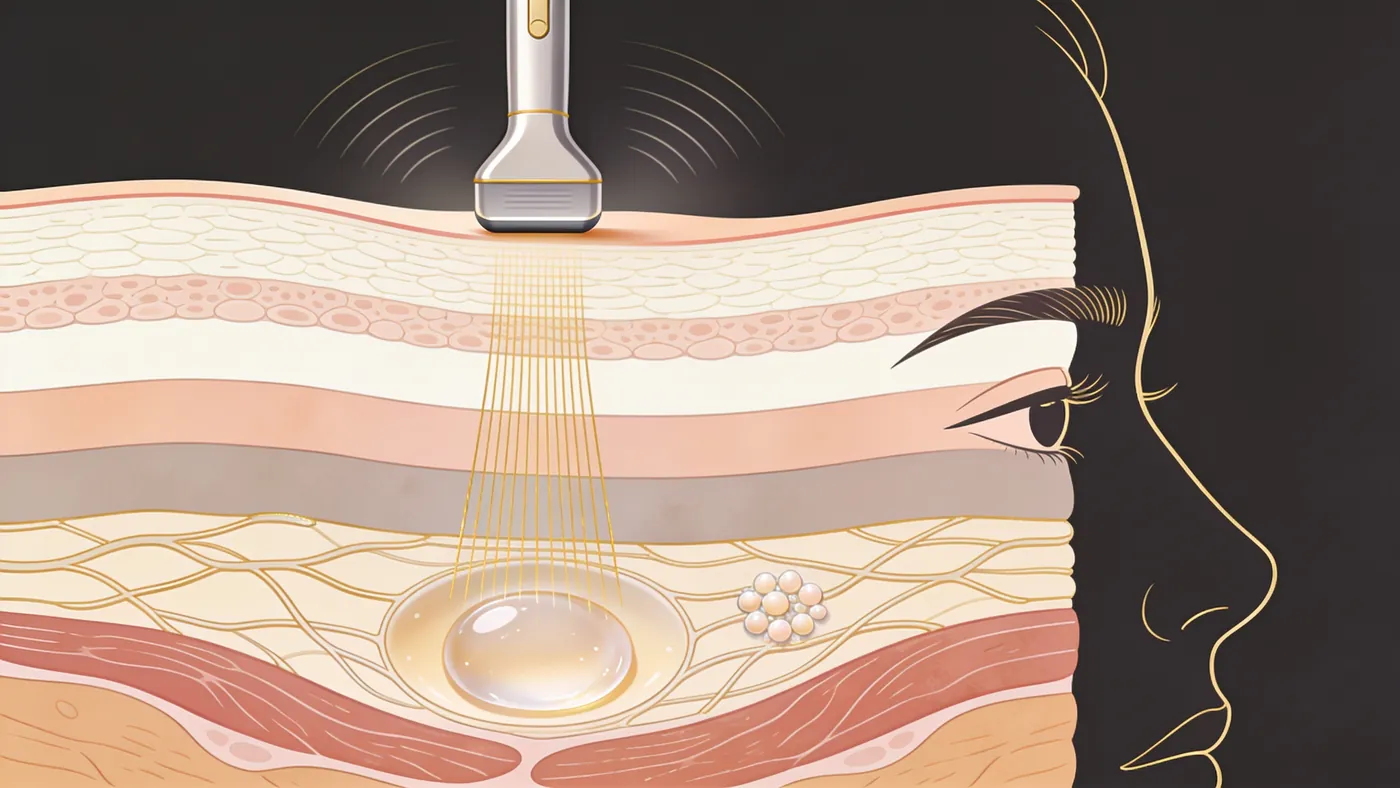
The disadvantages of HIFU are real and worth stating before the advantages. It is uncomfortable over bony areas such as the jawline and brow, where the focal depth sits close to the periosteum, and most people describe a deep ache or brief jolt during treatment. Afterwards, redness, warmth, tenderness along the treated lines and some swelling along the jaw are expected, and a bruise or a patch of altered sensation can occur. HIFU heats small points at set depths to prompt collagen remodelling, and that remodelling is gradual, so nothing meaningful is visible on the day and the degree of change varies between people.
The larger disadvantages are about what it cannot do. HIFU does not replace lost volume, reduce a full fat pad, remove redundant skin, change skin quality or treat pigment. Given to a face whose sag is driven by volume loss it does nothing useful, and given over thin tissue it can reduce the fat beneath the skin. Its risks, nerve irritation, fat loss, burns and welts, follow from heat landing where it should not, which makes the treatment heavily dependent on who palpates the tissue and sets the depth. The seven things to know before booking HIFU set these out alongside the questions to ask.
Is HIFU worth it, and for whom?
HIFU is worth it when the problem is the one it addresses: early to moderate laxity of the jawline, under the chin and across the neck, in a face where fat is neither markedly excessive nor depleted and there is enough tissue depth above bone for the planned cartridge. In that face, heating the SMAS and dermis prompts the collagen response the treatment is designed for, and the person has accepted that the change develops over months and is not fixed in size.
It is not worth it when the sag comes from somewhere else. A hollow midface or temple needs volume, a full submental fat pad needs a fat-directed approach, established skin excess needs a thread lift or surgical assessment, and crepey skin with no descent needs skin-quality work. Where laxity sits alongside fullness in the lower face, the VF Lift – Vertical Facelift, which runs on Volnewmer monopolar radiofrequency and does not use focused ultrasound, is one of the mechanisms discussed instead of or alongside HIFU. Dr Sin Yong's position is that HIFU or radiofrequency is the wrong question, because they do not do the same job; the right question is which layer is responsible for what you see.
“HIFU or radiofrequency is the wrong question — they don't do the same job.”
Dr Sin YongOn the HIFU Singapore page
What decides how long HIFU changes persist?
Persistence is decided by the tissue and the life around it, not by the device, and no duration is promised. Age matters because collagen turnover slows and the response to a thermal stimulus is smaller and shorter-lived in older skin. Skin quality matters because sun-damaged, thin or smoker's skin remodels less well. The degree of laxity at the outset matters because a face with mild loosening has less to recover and holds the change more easily than one treated late.
Sun exposure and weight change act after treatment. Ultraviolet light degrades collagen continuously, so year-round protection in Singapore's climate is part of keeping any change. Weight gain stretches the envelope and weight loss empties it, and either can undo tightening faster than ageing alone. Facial ageing itself continues regardless of what has been done, which is why review is timed to allow for the gradual response and why any repeat treatment is planned at review rather than on a fixed schedule. A systematic review of microfocused ultrasound noted that follow-up periods and protocols varied widely between studies, which is one reason durations quoted online are not comparable.
Why does operator dependence weigh so heavily?
Operator dependence weighs heavily because every risk and most of the benefit sit in decisions the device does not make: which cartridge goes over which zone, how much tissue lies above bone there, where the nerve courses run, how much energy the person can tolerate and when to stop. A preset applied across the face treats the brochure's average face, not yours. Imaging, as on Ultherapy Prime, shows the layers before each line; micro-pulsed delivery without imaging, as on Ultraformer MPT, relies on palpation and a depth map built at assessment. Dr Sin Yong performs both and adjusts energy to feedback rather than running a protocol.
The practical consequence is that a HIFU quote is only comparable with another if the device, the depths, the number of lines and the person holding the handpiece match. The HIFU shots article explains why a count alone cannot carry that information.
What determines the fee, and how should you weigh it?
Singapore's rules prevent clinics from advertising prices, so no figure appears here and none can be given before examination. What moves the fee is the area treated, the cartridge depths used, the number of lines the plan requires and whether HIFU is performed alone or alongside radiofrequency or laser. A plan for the jawline alone and a full-face plan are different undertakings. A written, itemised quote follows the consultation, and the how we quote page explains what it contains.
Weigh the fee against the question on this page rather than against another clinic's number. If the examination finds laxity in a face with enough tissue depth, the fee buys a treatment aimed at the right layer; if it finds volume loss or a fat pad, the same fee would buy heat aimed at the wrong one, and the consultation should say so. It can, and sometimes does, end with no treatment advised.