Main guideHIFU Singapore — what it treats, who it suits, sessions, downtime and what decides the cost, by Dr Sin Yong.
Published 31 October 2026 · Reviewed by Dr Sin Yong
HIFU myths swing between fear and over-promise: that it melts the face, or that it replaces a facelift. High-intensity focused ultrasound heats small points at a set depth, in the dermis or the SMAS, so that collagen contracts and remodels while the surface is spared. Here are six claims heard in clinic in Singapore, each checked against peer-reviewed studies rather than marketing.
Fat loss after microfocused ultrasound is rarely reported in the literature, but lipoatrophy appears in device-safety reports; depth and patient selection matter
Timing
Collagen changes were seen in biopsies taken months after treatment, not on the day
Facelift
A 2020 meta-analysis of 17 studies rated the effect on the face and neck as moderate, with short follow-up in most
Side effects
Usually transient redness, swelling and pain; blistering, nerve effects and tissue loss are rare but documented
Later surgery
A 2025 systematic review found no supporting evidence in the literature that HIFU compromises a later facelift
Fat loss after HIFU is uncommon in the published studies, but it is not a myth that it can happen. A 2025 systematic review of microfocused ultrasound with visualisation gathered 19 articles with data on 506 patients and found that significant adverse events were limited in the scientific literature, apart from one case of subcutaneous atrophy. The same review searched the US device-safety database and found lipoatrophy among the most frequently reported events there, alongside nerve effects and scarring. Those reports are unverified and lack denominators, so they cannot give a rate, but they show the risk is real.
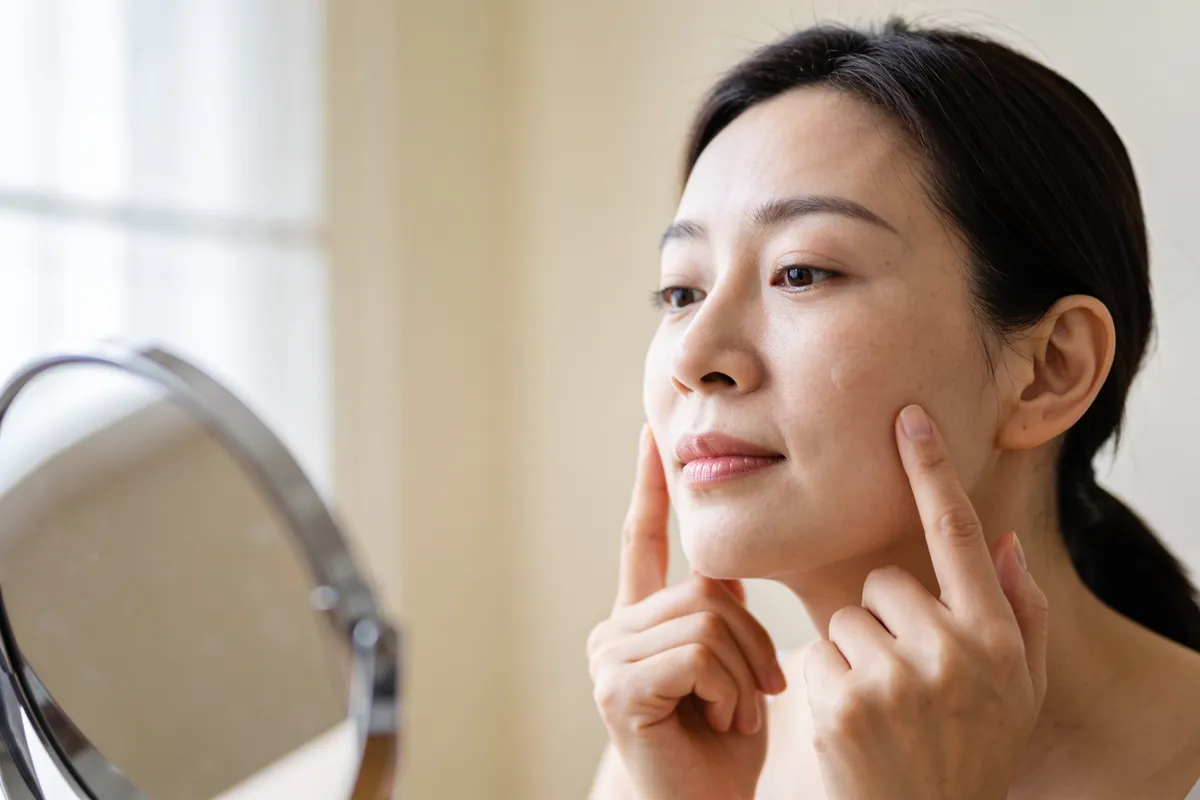
Lifting is judged along the jawline and neck. Illustrative image, not a patient.
The practical answer is depth and selection. On the Ultraformer MPT used here, the 4.5 mm cartridge reaches the SMAS and is placed where there is enough tissue above bone; it is kept off thin tissue, and a very lean face is usually directed to the VF Lift – Vertical Facelift instead. The full answer, with what a hollow after HIFU usually turns out to be, is on will HIFU melt face fat.
Myth 2: "HIFU works on the day"
HIFU does not work on the day, because its mechanism is a healing response. Each focused point is heated to roughly 60 to 70 °C, creating a small thermal coagulation point; the tissue then contracts and remodels collagen around it. A 2011 study of 22 Korean patients treated once with focused ultrasound took skin biopsies from 11 of them before treatment and again two months later, and found more dermal collagen, a thicker dermis and straighter elastic fibres in the later samples. The structural change was seen in tissue taken weeks after treatment, not straight after.
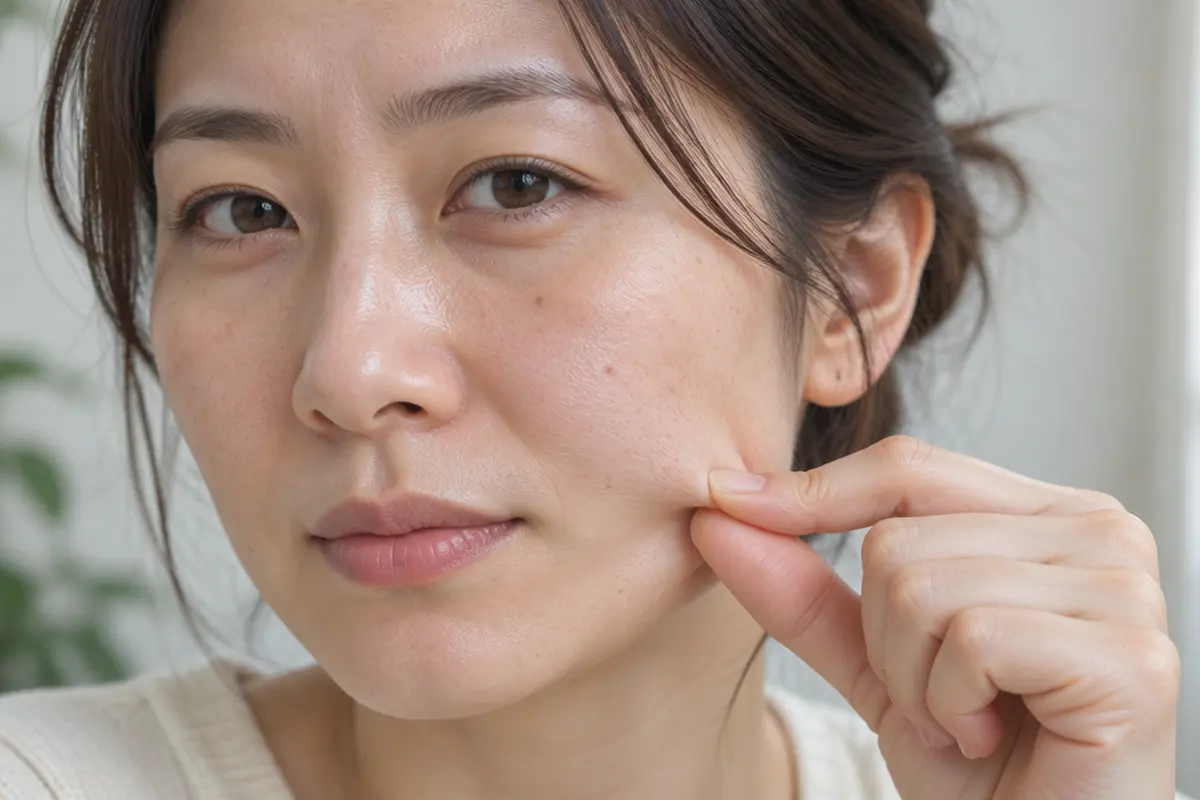
How much skin can be pinched gives a rough idea of laxity. Illustrative image, not a patient.
Any change you notice straight after HIFU is mostly mild swelling. The study was small and uncontrolled, so it explains the mechanism rather than predicting how a given face will change. It is the reason the review here is timed months later and why the change is judged then, against photographs, rather than in the mirror that evening. What the timeline looks like is set out on HIFU results.
“HIFU is heat placed at a depth. The questions that matter are which depth, in which face, and whether that face needed heat at all.”
Dr Sin YongOn what HIFU can and cannot do
Myth 3: "HIFU is a facelift without surgery"
HIFU is not a substitute for a surgical facelift; it is a treatment for early to moderate laxity. A 2020 systematic review and meta-analysis of 17 studies with 477 participants rated HIFU's effect on face and neck rejuvenation as moderate on both objective and patient scores, and noted that most studies used different outcome measures and did not report long follow-up. A facelift repositions tissue and removes excess skin; focused ultrasound heats tissue in place so that it firms. They answer different degrees of the same problem.
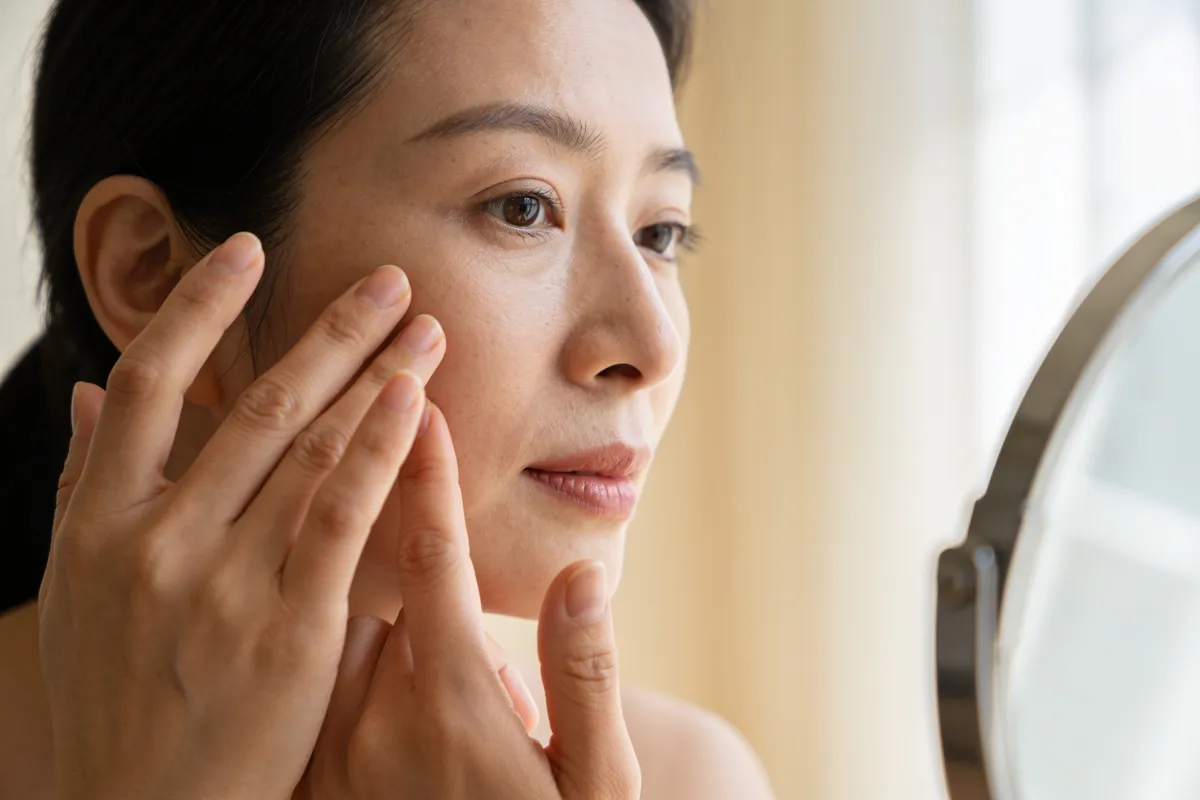
A gentle lift with the fingers shows where laxity sits. Illustrative image, not a patient.
That is why the assessment here separates laxity of the SMAS and dermis from volume loss and from excess skin before HIFU is proposed. HIFU suits early to moderate laxity along the jawline, under the chin and across the neck in a face with enough tissue depth. Heavy, redundant skin points to a surgical opinion, which Dr Sin Yong gives by referral. Who suits it, and who is directed elsewhere, is on HIFU suitability.
Myth 4: "HIFU has no side effects"
HIFU has side effects; most are mild and short-lived, and a few are not. The 2020 meta-analysis found pain during treatment to be moderate on average, and redness and swelling common but variable. A 2018 multicentre case series described five patients who developed serious events after a single session of microfocused ultrasound: blistering, erosion or ulceration, swelling followed by atrophy, and in one case skin necrosis. The authors concluded such events are rare, possibly under-reported, and need early management.
Lifting is judged along the jawline and neck. Illustrative image, not a patient.
Nerve effects are the other known risk. Temporary weakness of a branch of the facial nerve, or numbness, has been described, which is why lines along the jaw are placed with the course of the marginal mandibular nerve in mind and nothing is delivered over the thyroid or the orbital rim. Expected effects and the uncommon ones are set out on HIFU downtime, and what to do if something goes wrong on HIFU gone wrong.
Myth 5: "More shots and higher energy mean better results"
More shots do not mean a better treatment; the right depth in the right place does. A 2025 systematic review of 45 clinical trials and cohort studies of HIFU for skin tightening and body contouring concluded that standardising treatment protocols, particularly the optimal energy settings and patient selection criteria, remains a key challenge. In other words, the studies do not show a simple dose-response in which more lines give more lift. Advertised shot counts are a unit of sale, not a unit of outcome.
What matters more is whether each cartridge depth is matched to the layer in each zone. Here, depth is chosen by palpating tissue thickness zone by zone: 4.5 mm at the SMAS where the tissue allows, 3.0 mm in the dermis, 1.5 mm over thin areas, and 2.0 mm mainly at the brow. Labels such as 4D, 7D or 9D describe marketing, not a different physics; see 4D, 7D and 9D HIFU labels and HIFU shots explained.
Myth 6: "HIFU ruins your chances of a facelift later"
There is no published evidence that HIFU compromises a later facelift, though the question has not been well studied. The 2025 systematic review of microfocused ultrasound set out to test exactly this concern, which some plastic surgery specialists had raised, and found no supporting evidence in the scientific literature; the US device-safety database held one report of facelift compromise. The authors called for better data rather than declaring the question closed.
A gentle lift with the fingers shows where laxity sits. Illustrative image, not a patient.
Two practical points follow. If you think you may want surgery later, say so at the assessment, because it is part of deciding whether energy treatment is worth doing now. And tell any surgical team you see later what you have had, where and when. Dr Sin Yong performs HIFU on the Ultraformer MPT or Ultherapy Prime and decides between them at assessment; the platforms are compared on Ultherapy vs HIFU, and the wider trade-offs on HIFU disadvantages.
Your next step
1. MessageWhatsApp +65 8023 7170 with what is bothering you. A reply comes from the clinic, not a bot.
2. AssessmentDr Sin Yong examines you himself on Orchard Road, with ultrasound where earlier filler is involved.
3. A plan in writingWhat he would do, what he would not, the fee factors, and the option of no treatment.
Every treatment is performed by Dr Sin Yong personally. Singapore Medical Council registered · invited to share his clinical expertise internationally for CLASSYS, DEKA, Fotona, Hironic and Ilooda.
Mention any earlier filler or threads in the face, and whether surgery is something you may consider later. How consultations work.
What sets the fee, and why there is no price list, is explained under HIFU price Singapore.
Frequently Asked Questions
Fat loss after HIFU is uncommon in published studies; a 2025 systematic review found one case of subcutaneous atrophy across 19 articles and 506 patients, though lipoatrophy appears more often in unverified device-safety reports. Risk is reduced by matching cartridge depth to tissue thickness and keeping deep cartridges off thin tissue; very lean faces are usually directed to another option.
No. HIFU works through a healing response: heated points in the dermis or SMAS prompt collagen to contract and remodel. A 2011 study found more dermal collagen in biopsies taken two months after treatment. What shows on the day is mostly mild swelling, so the change is judged at review months later, against photographs.
HIFU is not a substitute for a surgical facelift. A 2020 meta-analysis of 17 studies rated its effect on the face and neck as moderate, with short follow-up in most studies. It suits early to moderate laxity in a face with enough tissue depth; heavy, redundant skin points to a surgical opinion, which is given by referral.
Common effects are pain during treatment, redness and swelling, which are usually short-lived. Rare but documented events include blistering, erosion, tissue atrophy and nerve effects such as temporary weakness or numbness. Placing lines with the facial nerve in mind and keeping energy off thin tissue, the thyroid and the orbital rim reduce those risks.
Not necessarily. A 2025 systematic review of 45 studies found that optimal energy settings and patient selection are still not standardised, so there is no evidence that more lines simply give more lift. What matters is matching each cartridge depth to the layer in each zone, judged by palpating tissue thickness rather than by a preset shot count.
Yes. A 2025 systematic review found no supporting evidence in the scientific literature that microfocused ultrasound compromises a later facelift, with one unverified report in a device-safety database. Tell any surgical team what you have had, where and when, and mention at assessment if surgery is on your mind, because it affects whether energy treatment is worth doing now.
The device, number of lines, areas treated and who performs it.
Not always; fewer lines, older devices or non-medical settings change both safety and results.
Ask about the device, the number of lines per area and who performs it, rather than comparing price alone.
References
Microfocused Ultrasound With Visualization: A Systematic Review of Adverse Events and Risk of Subsequent Facelift Compromise. Dermatologic Surgery (Humphrey VS, Rambhia PH, Gmyrek R, Chapas A), 2025. source
Intense focused ultrasound tightening in Asian skin: clinical and pathologic results. Dermatologic Surgery (Suh DH, Shin MK, Lee SJ, et al.), 2011. source
Systematic review and meta-analysis of safety and efficacy of high-intensity focused ultrasound (HIFU) for face and neck rejuvenation. Lasers in Medical Science (Ayatollahi A, Gholami J, Saberi M, et al.), 2020. source
Complications from microfocused transcutaneous ultrasound: Case series and review of the literature. Lasers in Surgery and Medicine (Friedmann DP, Bourgeois GP, Chan HHL, et al.), 2018. source
A Systematic Review of High-Intensity Focused Ultrasound in Skin Tightening and Body Contouring. Aesthetic Surgery Journal (Haykal D, Sattler S, Verner I, et al.), 2025. source
About this page: written and medically reviewed by Dr Sin Yong, MBBS (NUS), MRCS (Edinburgh) · Last reviewed 6 November 2026 · Illustrative images only, not patients · Editorial policy