Key facts
- Where the questions come from
- Public Singapore forum threads, paraphrased; no quotes, usernames or clinic names
- Shot counts
- Not comparable between devices or clinics; depth, zone and energy per line matter more than the number
- Pain
- Deep warmth or a brief ache, strongest over bone; energy is adjusted to feedback rather than run on a preset
- Gone wrong
- Burns, nerve irritation and fat loss trace to depth, coupling and energy placed over the wrong tissue
- Trial deals
- A low introductory price usually buys a preset on a different device; the questions to ask are depth, device and who treats
- How long
- No duration can be promised; collagen remodelling is gradual and repeat treatment is decided at review
Is 300 shots enough, or do I need 600 or 800?
A shot count cannot tell you whether a HIFU treatment is enough, because a shot is not a standard unit. On an older shot-based device a shot is one focal point of heat at a set depth; on the Ultraformer MPT energy is laid along each line as rapid micro-pulses rather than fired as discrete shots; Ultherapy plans its lines against a live image. A figure of 300 on one machine may carry less, the same or more total energy than 800 on another, and none of the numbers says which cartridge depths were used or over which zones.
The questions that matter are the ones a count cannot answer: which depths will be used where, will tissue thickness be palpated first, and who sets and adjusts the energy. More lines placed where they are not indicated add heat without adding benefit, particularly over thin tissue. Dr Sin Yong plans HIFU lines from the assessment map rather than to a target figure, and the article on HIFU shots explains why the number is a poor way to compare clinics.
How painful is HIFU really, and is it worse on some areas?
Most people describe HIFU as a deep warmth or a brief, sharp ache that comes and goes with each line, and it is stronger over bone: the jawline, the cheekbone and the brow are the areas forum threads mention most, and the deeper 4.5 mm cartridge is felt more than the superficial ones. Tolerance varies a great deal between people, and a treatment that one person shrugs off another finds hard, so no promise is made about how it will feel for you.
What changes the experience is whether the energy is adjusted to your feedback or run on a preset. Topical anaesthetic is used where the area or settings call for it, the sequence can be paced, and energy over bony zones is set to what the tissue there can carry. Pain that is severe, or that persists afterwards rather than fading, is a reason to say so during treatment and to report afterwards.
“HIFU is an umbrella term. The devices differ in transducer design, imaging and clearance; they are not interchangeable.”
Dr Sin YongOn what HIFU actually denotes
HIFU gone wrong: can it burn the skin or damage a nerve?
It can, and the mechanisms are worth knowing rather than fearing in the abstract. A surface burn or a raised welt along a line follows poor coupling between the transducer and the skin, or a cartridge too superficial for the skin being treated. Nerve irritation follows heat placed near a nerve branch, usually along the jaw where the marginal mandibular nerve runs, or above the brow; the result is numbness, tingling or a temporary weakness of a facial muscle, and any change in how the mouth or brow moves needs prompt review. These are uncommon, and they are the reason depth and energy are set by a doctor zone by zone rather than applied from a menu.
Reports to the US FDA's device-event database for a related focused-ultrasound system most often described fat loss, nerve-related symptoms and scarring. Problems usually trace back to the same causes: a preset applied without palpating tissue, energy stacked over the same line, or treatment over the thyroid, the orbital rim or the course of a nerve. The complication care page sets out which signs after treatment need prompt attention.
Why did my face look more sunken after HIFU?
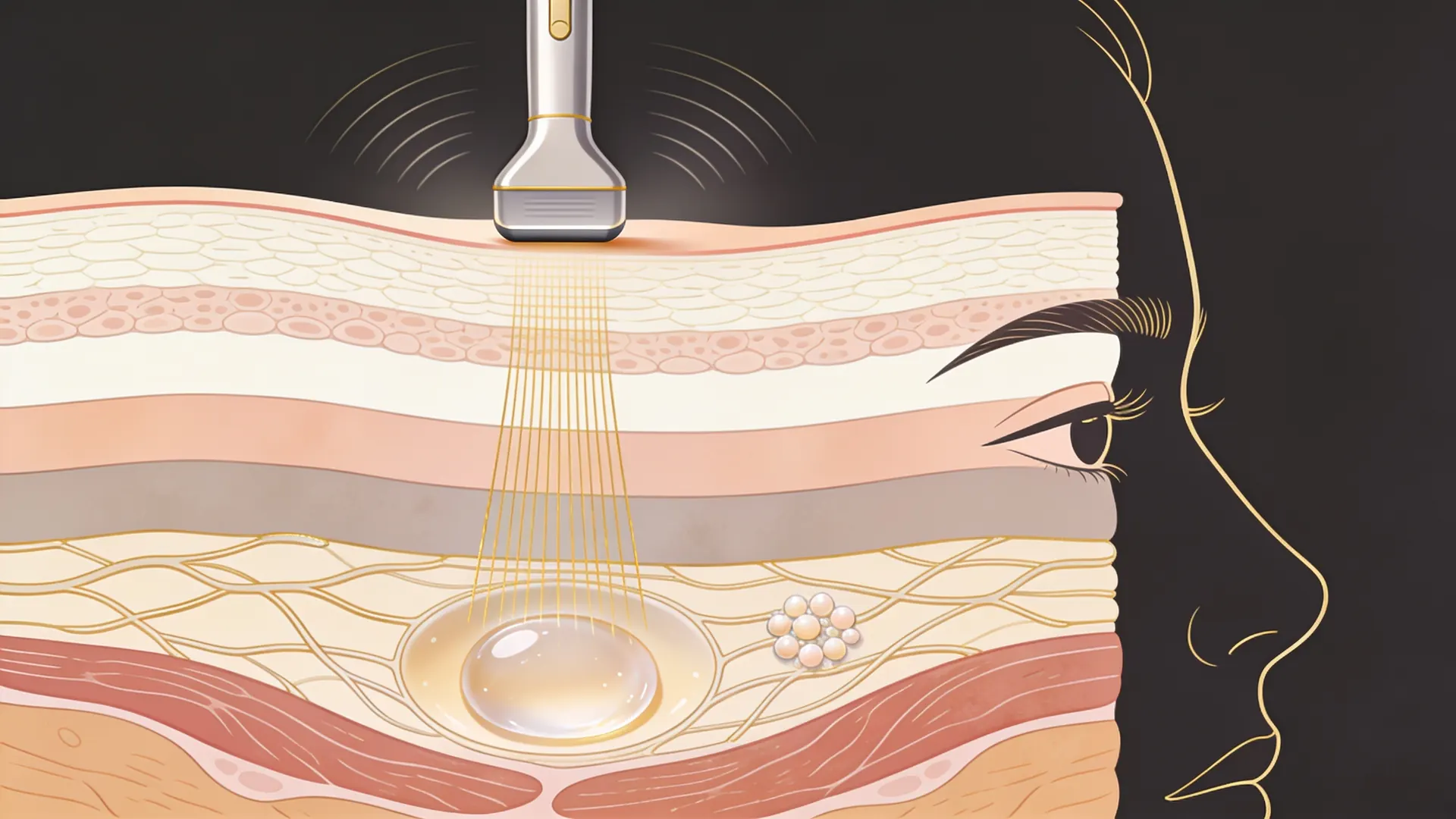
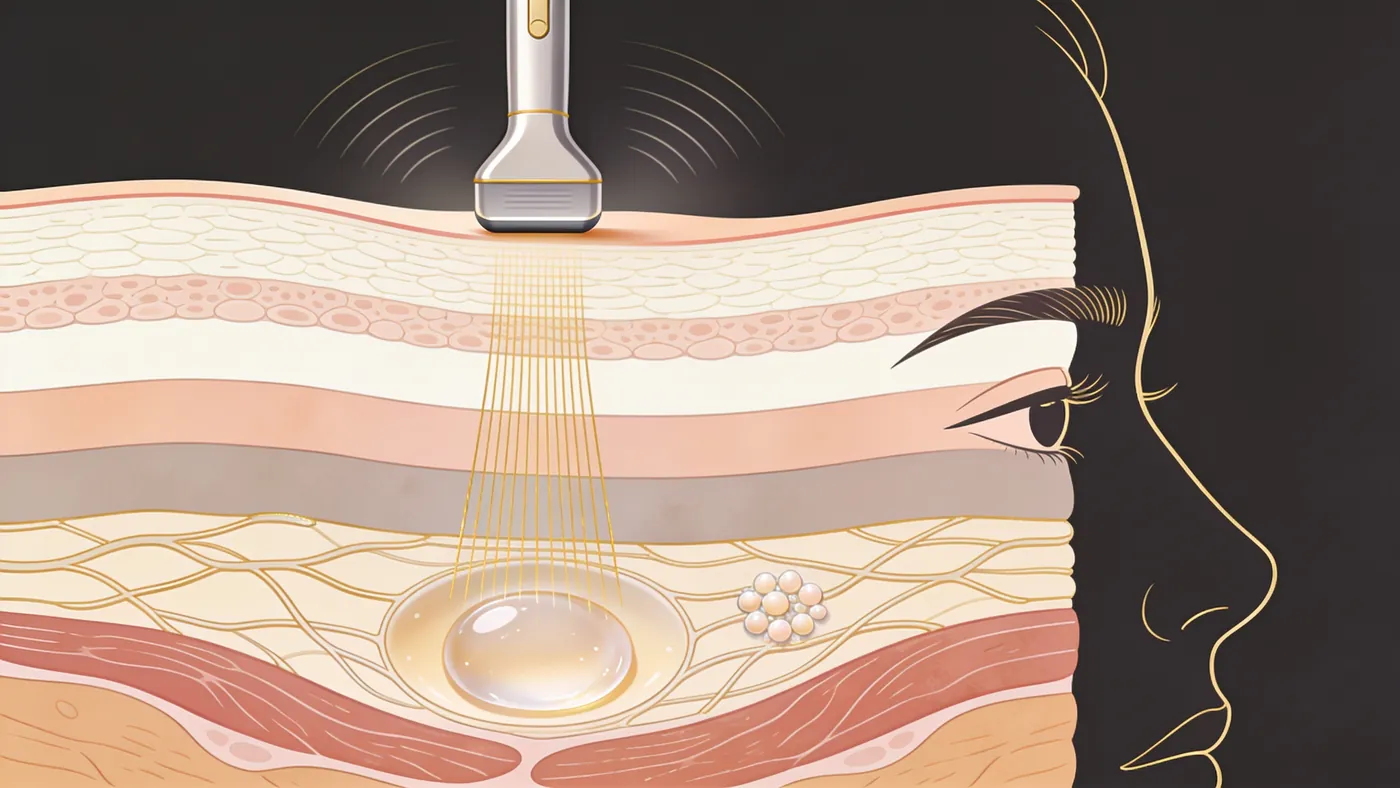
A face that looks hollower after HIFU has usually had energy placed into fat beneath thin skin. Focused ultrasound heats whatever tissue sits at the focal depth; in a lean face, or over the temple and the cheek below the cheekbone, the 4.5 mm focal point can sit in the subcutaneous fat rather than the SMAS, and heated fat can shrink. The result is a cheek or temple that looks more sunken than before, which is the opposite of what was wanted.
This is avoided by palpating tissue thickness zone by zone and keeping the deeper cartridge to areas with enough depth above bone, using the 3.0 and 1.5 mm cartridges over thinner areas and none at all where there is nothing to tighten. It is also why HIFU is a poor fit for a face whose main change is volume loss: heating the SMAS does not replace what has been lost, and heating thin tissue can remove more. Hollowing that appears after treatment is reviewed; some settles as swelling resolves, and some does not.
Should I try a cheap first-timer HIFU deal at a salon?
A low introductory price tells you the device is being run to a preset by someone who is not assessing your face, because that is the only way the arithmetic works. The questions to ask before any HIFU treatment are the same wherever it is offered: which device is it, which cartridge depths will be used and over which zones, will tissue thickness be palpated first, who sets and adjusts the energy, and who will see you if something goes wrong. A trial that cannot answer those is a trial of a preset, not of HIFU.
What differs between a clinic and a salon is what happens when a line is placed over the wrong tissue: a burn, nerve irritation or fat loss needs a clinician who can recognise it and manage it. The main HIFU page sets out why a doctor rather than a salon, and the fee for a doctor-performed treatment is quoted in writing after assessment rather than advertised; the how we quote page explains what the quote contains. If price is the main constraint, say so at consultation; a plan can be limited to the zones that matter most rather than diluted into a preset.
Is HIFU worth it in your thirties, or is it too early?
Age does not decide whether HIFU is worth it; tissue does. HIFU is directed at laxity of the skin and SMAS, and it suits a face where those layers have begun to loosen, early to moderate descent along the jawline, under the chin and across the neck, without a full fat pad or a depleted midface. Some faces in their thirties have that; many do not, and a face with good skin quality and no descent has nothing for focused ultrasound to tighten.
The honest consultation in that situation ends with no HIFU recommended, and that is a normal outcome rather than a failed sale. Where laxity is early and dermal rather than at the SMAS, a different energy may fit better, and where the concern is volume, descent of a fat pad or skin quality, the answer lies elsewhere entirely. The guide to seven things to know before you book HIFU sets out how to tell whether your face has the problem HIFU addresses.
How long does HIFU last, and how often do people repeat it?
No duration can be promised, and anyone who promises one is guessing. HIFU works through collagen remodelling around each coagulation point, which develops over the weeks and months after treatment rather than on the day, and how much change follows and how long it holds vary with age, skin quality, the degree of laxity at the outset, weight change and sun exposure. Published studies describe assessment at fixed follow-up points for research purposes; they are not a schedule for an individual face.
Repeat treatment is decided at review rather than booked to a calendar. Early firmness is not the result, so review is timed to allow for the gradual response, and the next step, if any, is planned once the skin has settled. A face that has aged further may need the same layer treated again, a different layer treated instead, or no treatment at all. Buying a fixed series in advance assumes an answer the review has not yet given.
Is Ultherapy just expensive HIFU?
Ultherapy is micro-focused ultrasound with visualisation, which means the handpiece images the tissue before each line is delivered, with a different transducer set and a different regulatory clearance from the Korean HIFU platforms; the underlying principle, focused ultrasound converging at a set depth to form a coagulation point, is the same. The Ultraformer MPT places micro-pulsed energy along each line through a chosen cartridge, and the depth is set from the doctor's palpation of the face rather than from a live image.
Neither is a stronger version of the other, and the fee difference reflects device, consumables and clearance rather than a promise of a different outcome. Dr Sin Yong performs both, and the assessment decides which suits a given face; the comparison of Ultherapy and HIFU in Singapore sets the two side by side without ranking them. Which is better is the wrong question; which depths and which plan your tissue needs is the right one.
Do home HIFU devices from online shops work?
Home HIFU devices sold online are low-powered by design, because a device capable of placing a 60 to 70 °C coagulation point at 4.5 mm in the hands of an untrained user would be dangerous. What they can deliver at the surface is mild warming, and what they cannot do is reach the SMAS, assess tissue thickness or avoid the structures a doctor avoids. The risk at the other end is a device that is more powerful than its labelling suggests, used repeatedly over thin tissue or near a nerve.
A home device is not a cheaper version of a clinical treatment; it is a different product doing a different thing, and the article on home HIFU devices sets out what to check before buying one. If laxity is the concern, an assessment of which layer has loosened answers the question the device cannot.
Is doctor-performed HIFU really different from a therapist at a salon?
The difference is not the machine; it is who maps the face and who answers for what happens. A therapist running a preset places lines by template. A doctor palpates skin and fat thickness over each zone, decides where the 4.5 mm cartridge is appropriate and where it is not, keeps energy off the thyroid, the orbital rim and the course of the marginal mandibular nerve, adjusts energy to feedback, and recognises a burn, nerve irritation or fat loss if it occurs.
The second difference is what happens before the device is switched on. A doctor's assessment can end with HIFU not being recommended, because the face has volume loss, a fat pad or skin quality as its main problem rather than laxity, and that outcome is not available from a service whose business is the treatment itself. Where HIFU is not the right tool, the VF Lift – Vertical Facelift, a thread lift or restoration may be, and the comparison of a thread lift with HIFU explains how repositioning differs from tightening.