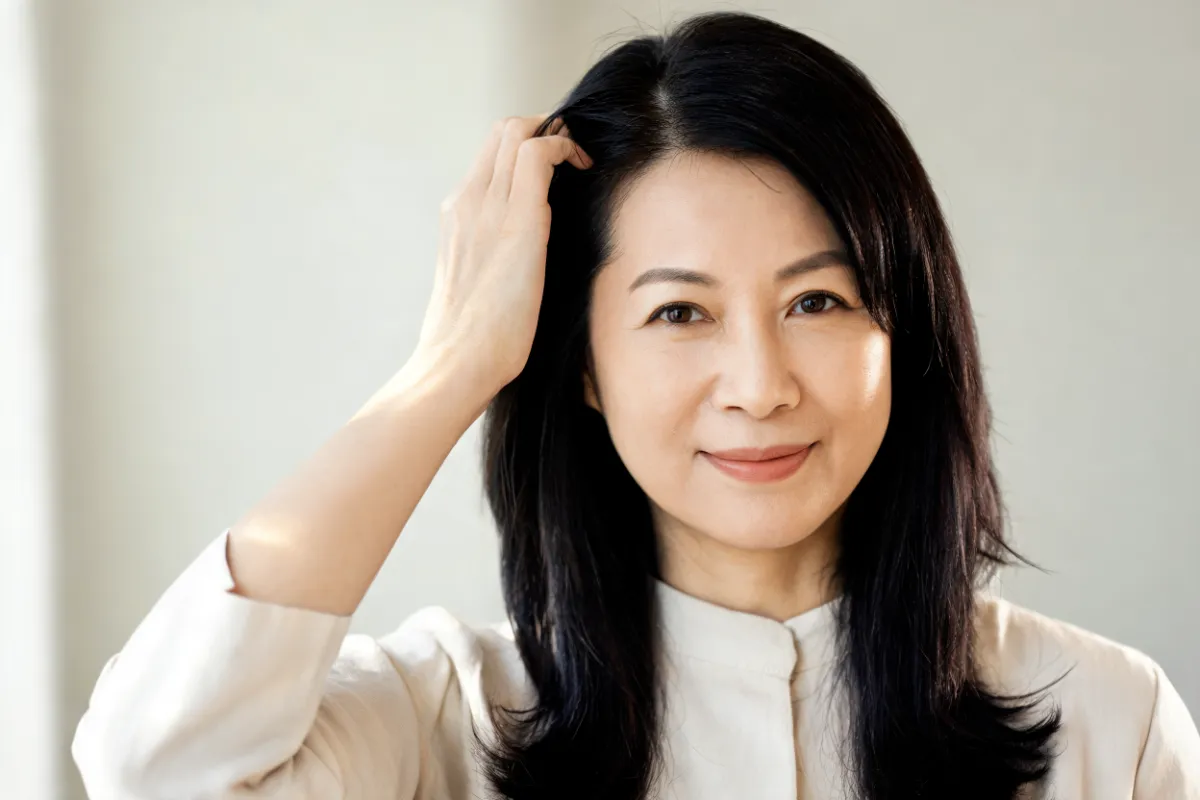
Topical finasteride is a prescription medicine applied to the scalp for androgenetic hair loss. Like the tablet, it blocks the enzyme that converts testosterone into DHT, but it is designed to act mainly where applied, with lower systemic exposure. Some is still absorbed, so in Singapore it is prescribed after a doctor's assessment and side-effect discussion.
- Anti-hair-loss medication is prescription treatment for androgenetic alopecia, started after a doctor's assessment and side-effect discussion.
- Oral and topical DHT-pathway therapy act on the hormonal driver; a topical vasodilator acts through the follicle's blood supply.
- Not all thinning is androgenetic, so the scalp and baseline blood tests are checked first.
- The seven-step protocol is personalised, and not every patient needs every step.
- Drug names are given for education; finasteride is not for women who are or may become pregnant.
- Medical Foundation First
- Seven Steps, Evidence-Based
- The 7-Step Anti-Hair-Loss Medication Protocol
- Step 7 — Blood Test Monitoring
- Topical finasteride in Singapore: who prescribes it and what is discussed
- Who it suits, who should wait, who is referred on
- What happens, step by step
- Risks, side effects and when to call
- Aftercare
- Before you book
- What determines the fee
- Myths we hear in clinic
- Frequently asked questions
- Frequently Asked Questions — Anti-Hair-Loss Medications
- Anti-Hair-Loss Medication Consultation — Dr Sin Yong
Hair loss medication is the foundation of most pattern hair loss plans. Oral or topical medicines slow the hormonal miniaturisation of follicles, minoxidil supports growth, and supplements and blood test monitoring sit alongside. Dr Sin Yong prescribes and oversees them in a stepwise protocol after the cause is diagnosed, and reviews side effects as treatment continues.
Medical Foundation First
No laser treatment, exosome application or supplement can compensate for uncontrolled DHT-driven follicle miniaturisation. The medical foundation — addressing the hormonal driver of hair loss with prescription medications — must be established first. Energy treatments and growth factor therapies then build on this foundation to maximise regrowth potential.

Seven Steps, Evidence-Based
Dr Sin Yong's anti-hair-loss medication protocol is structured as a seven-step programme. Steps are introduced progressively based on diagnosis, response and tolerance. Not every patient requires all seven steps — the protocol is personalised at consultation.