Key facts
- Thermage FLX
- Monopolar radiofrequency at 6.78 MHz with cryogen surface cooling; bulk dermal heating
- HIFU
- Focused ultrasound at set depths of 1.5, 2.0, 3.0 and 4.5 mm; the deepest reaches the SMAS
- Volnewmer
- Monopolar radiofrequency at 6.78 MHz; the platform behind VF Lift – Vertical Facelift
- Heating pattern
- Radiofrequency heats a volume; HIFU heats discrete points and spares the tissue between
- Imaging
- Varies by platform; Ultherapy displays tissue layers, and devices are not interchangeable
- None of them
- Add volume, remove fat or skin, or replace a surgical facelift
- Chosen by
- Which layer the examination finds at fault, not by device name
What is the real difference between Thermage, HIFU and Volnewmer?
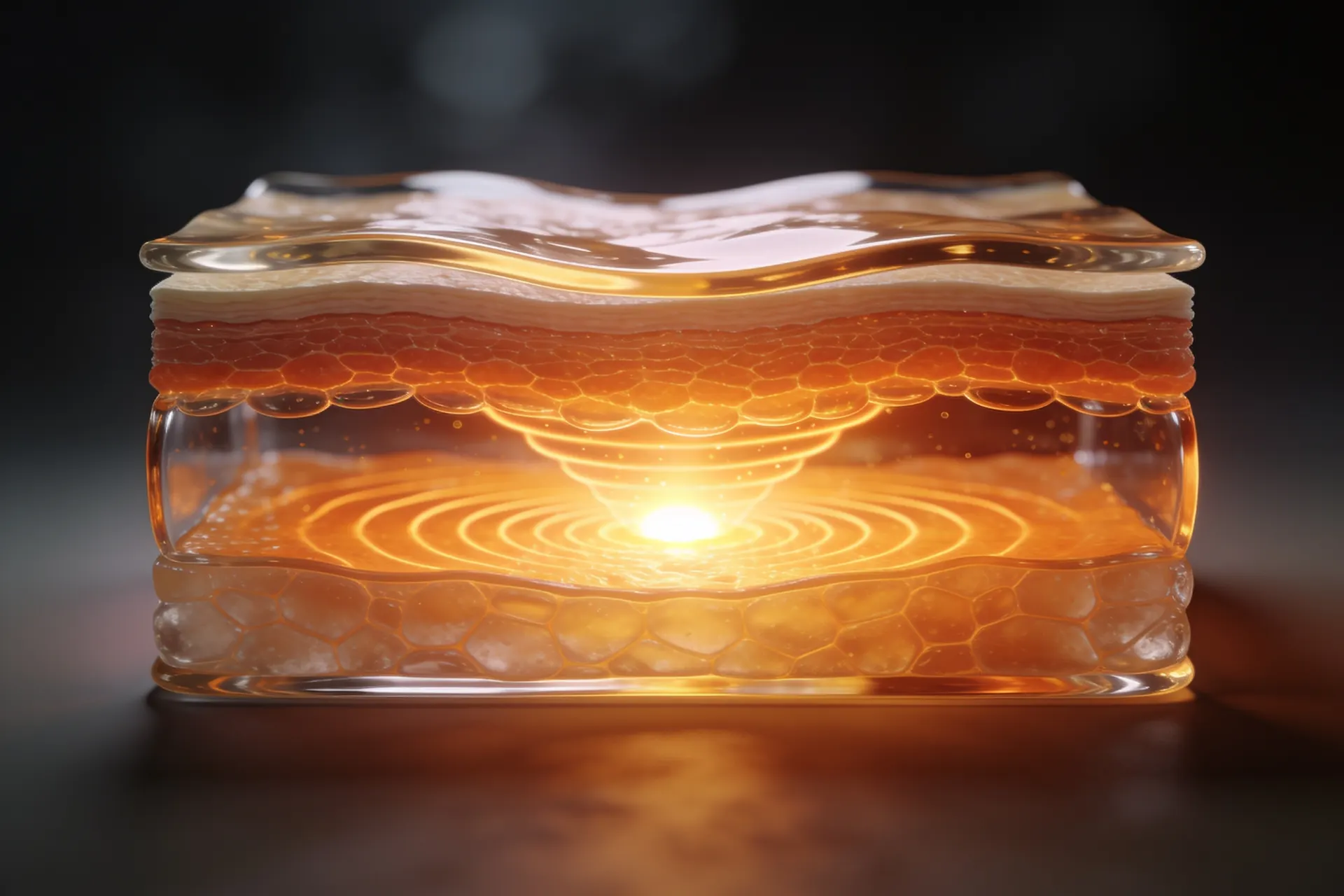
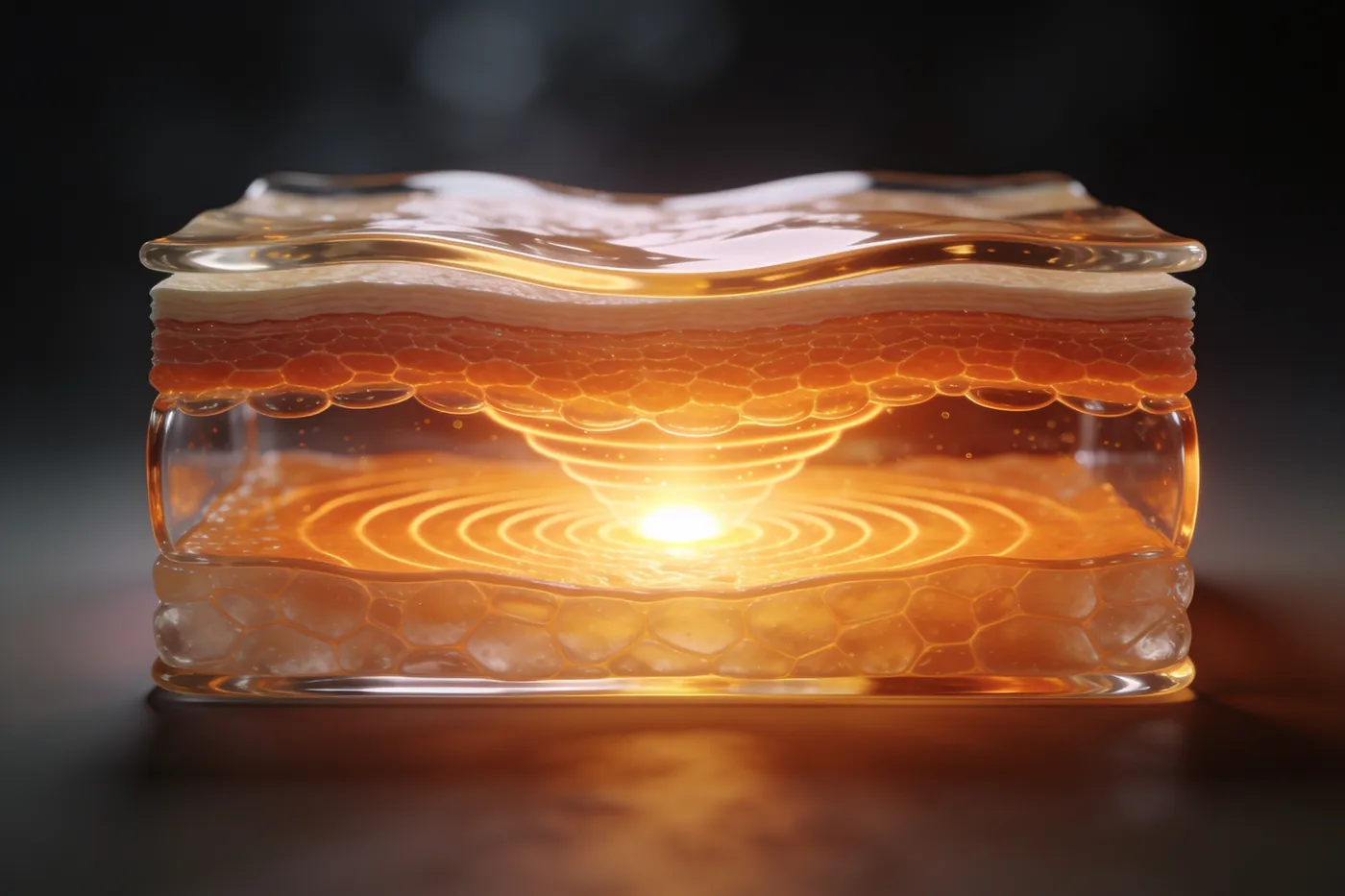
The difference is the energy and where it is placed. Thermage and Volnewmer both use monopolar radiofrequency at 6.78 MHz, passing an electrical field through tissue so that resistance generates heat within the dermis. HIFU uses ultrasound converged to a point, so a small zone of tissue is heated while the surface is spared. All three aim to prompt collagen remodelling after controlled heat injury.
Because the endpoint is shared, the devices are often treated as rivals. They are not interchangeable. Radiofrequency conditions a volume of dermal collagen, while focused ultrasound places discrete points at fixed depths, including the SMAS, the fibromuscular layer a surgical facelift tightens. Two clinics offering a treatment of the same name may be using different platforms at different depths.
Dr Sin Yong uses all three categories: Thermage FLX, the Ultraformer MPT for HIFU, and Volnewmer for the VF Lift – Vertical Facelift, and he is invited by manufacturers to share his clinical expertise. The question is therefore not which wins but which layer is responsible for what you see.
For the same comparison at greater length, the guide to HIFU versus radiofrequency covers it, and the comparison of Ultherapy, Thermage, VF Lift – Vertical Facelift and Time Freeze Laser LCLR® adds Dr Sin Yong's laser lifting protocol. The HIFU page describes cartridge depths, who focused ultrasound suits and what is assessed beforehand.
How does Thermage heat the skin, and what does it suit?
Thermage FLX is monopolar radiofrequency delivered through a single-use tip, heating the deep dermis and fibrous septa to roughly 4.3 mm, with cryogen cooling of the surface before, during and after each pulse. It is used for mild to moderate laxity of the face, eyelids, neck and body, and it covers large areas with one tip.
Its target is the skin envelope: texture and surface firming across larger areas. It does not reach the SMAS, which is the plane focused ultrasound addresses, and it does not add volume, reduce fat or remove excess skin. Real-time energy tuning is used and there is no imaging, so the energy is guided by your report of heat during each pass.
Technique has moved towards lower energy in multiple passes, guided by that feedback, rather than a single high-energy pass. That is why the page on Thermage FLX describes energy selection as a conversation during treatment, not a fixed setting.
“HIFU or radiofrequency is the wrong question. They do not do the same job.”
Dr Sin YongOn the commonest comparison request
How does HIFU differ, and where does imaging come in?
HIFU converges ultrasound at a set depth so a point of tissue reaches roughly 60 to 70 degrees Celsius, the threshold at which collagen denatures, while the tissue between the surface and the focus is largely spared. Each point triggers a wound-healing response and collagen remodels around it. Cartridge depth sets the layer: 1.5 mm for the superficial dermis, 3.0 mm for the dermis and 4.5 mm for the SMAS.
Imaging is one of the ways HIFU platforms differ. Ultherapy is microfocused ultrasound with visualisation, displaying tissue layers before energy is delivered. The Ultraformer MPT, used here, is described by its manufacturer in terms of micro-pulsed delivery and cartridge depths. Without imaging, depth is judged by palpation and by choosing a cartridge that suits the tissue over each zone.
HIFU is directed at laxity of the SMAS and dermis, not at a full fat pad or a hollow. In a lean face, energy placed into the fat beneath the skin can leave hollowing, so cartridge choice follows the depth of tissue over bone.
Thermage, HIFU and Volnewmer compared by mechanism | Thermage FLX | HIFU (Ultraformer MPT) | Volnewmer (VF Lift – Vertical Facelift) |
|---|
| Energy | Monopolar radiofrequency, 6.78 MHz, cryogen surface cooling | Focused ultrasound converging at set depths | Monopolar radiofrequency, 6.78 MHz, active surface cooling |
| Depth reached | Deep dermis and septa, to roughly 4.3 mm | 1.5, 2.0, 3.0 or 4.5 mm cartridges; 4.5 mm reaches the SMAS | Dermis and subdermal fibrous septa |
| Heating pattern | Bulk heating of a volume through a single-use tip | Discrete thermal points; tissue between is spared | Bulk heating planned zone by zone along vertical vectors |
| Imaging | None; energy tuned in real time to your heat feedback | Varies by platform; Ultherapy displays tissue layers | Not described as imaging-guided; planned by examination |
| What it cannot do | Add volume, reduce fat or remove excess skin | Replace lost volume or reach heavy redundant skin | Refill a hollow or replace surgery for heavy laxity |
Where do Volnewmer and the VF Lift – Vertical Facelift fit between the other two?
Volnewmer is the same family of energy as Thermage, monopolar radiofrequency at 6.78 MHz, and it is the platform behind Dr Sin Yong's VF Lift – Vertical Facelift. The VF Lift – Vertical Facelift is not a focused-ultrasound protocol and does not use the Ultraformer. It delivers volumetric heat to the dermis and the subdermal fibrous septa with active surface cooling, planned zone by zone along vertical vectors.
What distinguishes it from a single-device treatment is the planning. It is customised after assessment: directed at laxity and jowling where tissue has descended, at excess puffiness where there is fullness, and at support where there is hollowing. It involves no incisions or injected product, and it is adapted for the body as well as the face.
The three are not stacked by default. A plan may use one, or stage two when the examination finds both deeper laxity and dermal change, and the order is decided at assessment.
Which energy suits which face, and who should wait?
Laxity concentrated at the structural layer argues for depth, which points to focused ultrasound. Dermal thinning, crepey or loosely draped skin argues for volumetric conditioning, which points to radiofrequency. Many faces show both, which is why staged combinations exist. A face whose real problem is volume loss may be better served by neither, because deflation cannot be lifted, only refilled.
A slim face needs particular care. Tightening an envelope over an emptying interior can read as hollowing, so lean faces are treated with restraint and the plan may lean on volume or support. The leaner the face, the more the plan hinges on support as well as tightening, which is why the examination looks at volume, laxity and descent together before any energy is named. Heavy redundant skin, or a very heavy lower face, may be beyond what any energy device reaches, and referral to a plastic surgery specialist is then the honest answer.
All three are usually deferred or avoided with a pacemaker or other implanted electronic device, in pregnancy, with active infection, open wounds or inflamed acne in the area, and over metal implants in the field. Recent filler or threads in the treatment plane, a keloid tendency and reduced sensation call for individual assessment.
What are the risks, and when should you call?
All three are heat-based, so redness, warmth, tenderness and mild swelling are expected and usually settle. Less commonly, too much heat in one spot can cause a blister, a crust, a small burn, a patch of altered sensation or a dent where the fat beneath thin skin is over-heated. In darker skin, any surface injury can be followed by temporary pigment change.
HIFU has its own risks from heat landing where it should not: a surface burn or welt, and temporary numbness or weakness of a facial muscle when heat reaches a nerve branch, usually along the jaw or above the brow. Depth is chosen zone by zone to keep energy away from the thyroid, orbital rim and marginal mandibular nerve.
Contact the clinic the same day for blistering, increasing pain, lasting redness, a change in contour, numbness or weakness that is not settling, or signs of infection. The complication care page sets out what to do. Response varies between people, and no outcome can be promised.
What determines the fee for each of these treatments?
Singapore rules prevent clinics advertising prices, so factors are given here, not figures. The fee depends on the area treated, such as full face, lower face or neck, what the assessment finds the laxity to be, whether one energy or a staged combination is indicated, and the single-use components involved.
Focused work on one layer and a combined programme addressing depth and dermal quality are not comparable undertakings, so a figure quoted before examination would not be meaningful. Ask what a quote covers, such as the zones, the single-use tip or cartridges and review, so that two quotes can be compared like with like. Dr Sin Yong gives a written quote at consultation, after assessment and before anything is agreed. How quotes work is explained on the how we quote page.