Dr Sin Yong · MBBS (NUS) · MRCS (Edin) · MSc Aesthetic Medicine (London) · MSc Practical Dermatology (Cardiff) · International KOL
A needle-free skin booster for skin quality and hydration. Nothing is injected: the DSB ampoule replaces the ultrasound coupling gel, and the Ultraformer MPT booster handpiece carries it inward while it works.
Most treatments that put actives into skin have to break the surface to do it. A needle passes through it. Microneedling perforates it. Both work, and both leave the skin with something to repair.
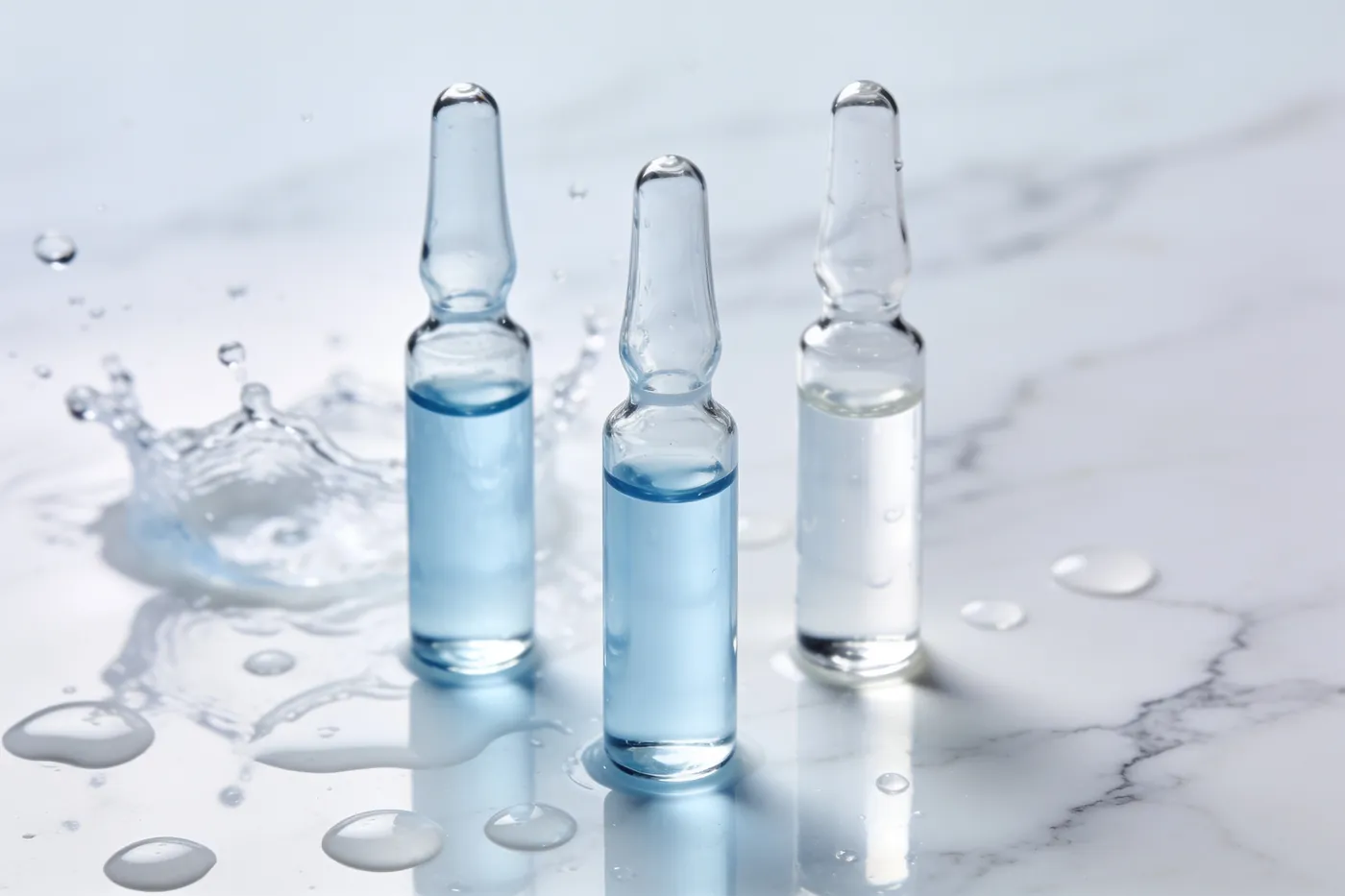
The Deep Synergy Booster takes a different route. Focused ultrasound treatment normally requires a coupling gel so the energy can pass from the handpiece into the skin — the gel is inert, and it gets wiped off at the end. Here the gel is replaced by the DSB ampoule. The energy still has to travel through something, so it travels through the ampoule, and the ultrasonic movement carries the ampoule’s contents inward at the same time.
That is the whole idea. The delivery step is not an extra stage added to the treatment — it is the coupling medium the treatment already needed. Nothing is wiped off at the end.
CLASSYS sets out four ways an active can be put into skin, and they are not equivalent. An ampoule applied to the surface alone achieves minimal penetration. A microneedling stamp and a needle both achieve effective penetration, but they do it by making holes — and the manufacturer’s own comparison lists bleeding, bruising and inflammation among what comes with that. The booster handpiece with the ampoule is placed in the effective-penetration group without a puncture being made.
What that means in the room is simple: there is no injection site, because there is no injection. There is no needle track to bruise, because no needle passes through the skin. This is a statement about mechanism, not a promise about how any individual will look or feel afterwards — skin is warmed during treatment, and how each person experiences that varies.
It also sets the honest limit. A needle can place a product at a depth chosen by the person holding it. An ampoule driven by ultrasound cannot. If what your skin needs is structural placement in the dermis, an injectable skin booster is the right answer and this is not a substitute for it.
The booster cartridges run at 4 to 7 MHz, which is 40,000 to 70,000 oscillations per second. Two things happen together. The vibration moves the ampoule’s contents from the surface inward through the epidermis, and the focused beam forms thermal coagulation points at a set depth in the dermis — the same mechanism the focused ultrasound platform uses for tightening.
Three booster depths exist, and they are chosen rather than cycled through. The 1.5 mm derma booster is the shallow cartridge and the one most often used for skin quality work; it can be run in MP mode or normal mode, which behave differently. The 3.0 mm cell-up booster and the 4.5 mm line-up booster reach progressively deeper. The shallow cartridges also reach curved and narrow areas — the forehead, the brow, the zygomatic arch — that flat handpieces sit awkwardly against.
Which depth is appropriate, and whether a booster pass belongs in your plan at all, is decided by examination rather than by the treatment having a fixed recipe.
DSB 357 is formulated specifically as an Ultraformer coupling ampoule rather than adapted from a general serum, and CLASSYS states it contains no emulsifier, no pigment and no declared allergen. The named actives include:

A note on the ingredient count: CLASSYS’s own materials give two different totals for the number of active ingredients, so no single figure is quoted here. The named components above are the ones the manufacturer identifies individually.
Three things on this site sound similar and are not. An injectable skin booster is placed into the dermis through a needle or cannula and is chosen when the skin needs something delivered to a specific plane. The Ultraformer MPT lifting protocol uses deeper cartridges directed at the SMAS and is chosen when the complaint is laxity rather than skin quality. The Deep Synergy Booster sits in neither category: it is a surface-to-dermis delivery step, usually added to a plan rather than standing as the whole of one.
It is often the finishing step of an ultrasound session for that reason — the coupling medium has to be there anyway, so the question is only whether it should be inert.
It is considered for people whose concern is skin quality — dullness, dehydration, surface texture — and who either do not want needles or are not suitable for them. It is also considered where an ultrasound session is already planned and the coupling step can be made to do more than couple.

It is not the right choice where the presentation is volume loss, structural descent, or a pigmentary condition that needs to be diagnosed before it is treated. Active infection or inflammation at the treatment site, and known sensitivity to any component of the ampoule, are among the things assessed before it is used. Anyone whose main concern is facial sagging is being assessed for a different treatment entirely.
Treatment is planned individually, so the cost follows the plan rather than a fixed list. Four things shape it:
A figure quoted before assessment would not reflect your presentation. Cost is set out clearly at consultation, before anything is agreed.
The Deep Synergy Booster is a needle-free skin quality treatment. The DSB ampoule replaces the inert gel normally used to couple a focused ultrasound handpiece to the skin, so the ultrasound energy passes through the ampoule and its contents are carried inward as the treatment is performed. Nothing is injected and nothing is wiped off at the end.
Yes. No needle passes through the skin and nothing is injected. The active ingredients are moved from the surface inward by ultrasonic oscillation rather than placed by a needle. That is a difference in mechanism, and it also sets a limit: a needle can place product at a chosen depth and this cannot.
An injectable skin booster is delivered into the dermis through a needle or cannula, which lets the doctor decide exactly where it goes. The Deep Synergy Booster delivers from the surface using ultrasound, so it does not break the skin but also cannot target a specific plane. They answer different questions, and where structural placement is needed an injectable is the appropriate treatment.
CLASSYS identifies PDRN, glutathione, niacinamide, adenosine and Centella asiatica extract among the actives, together with seven hyaluronic acids, ten multi-peptides and seventeen amino acids. The manufacturer states the formulation contains no emulsifier, no pigment and no declared allergen. CLASSYS's own materials give two different totals for the overall ingredient count, so no single figure is quoted.
The skin is warmed while the ultrasound is delivered, and how each person experiences that varies. Because nothing punctures the skin there is no injection site and no needle track. What happens afterwards is discussed individually at consultation rather than described as a fixed expectation.
It frequently is. A focused ultrasound session needs a coupling medium regardless, so where a lifting protocol is already planned the booster step can replace the inert gel. Whether that is appropriate for you is decided at assessment.
No. It is not appropriate where the presentation is volume loss or structural descent, and a pigmentary condition should be diagnosed before it is treated. Active infection or inflammation at the treatment site and known sensitivity to any component of the ampoule are among the things considered at assessment.
“Nothing is injected, so nothing has to be repaired. The trade is that a needle reaches a depth an ampoule cannot.”Dr Sin Yong
Consultations by appointment at Orchard Road, Singapore.
WhatsApp +65 8023 7170 →