A polynucleotide skin booster is an injectable made of purified DNA fragments, usually from salmon, placed into the dermis to support how the skin repairs itself. PN refers to longer chains and PDRN to shorter fragments of the same family, and products built on each are not interchangeable. Polynucleotides do not hydrate in the way hyaluronic acid boosters do, and do not build structure like collagen biostimulators. Rejuran is the polynucleotide product used at this practice, and a fish or salmon allergy is a reason to discuss suitability first.
Illustrative. Polynucleotides, hyaluronic acid boosters and biostimulators are different classes doing different jobs.
A polynucleotide treatment injects purified DNA fragments, usually from salmon, into the dermis to support skin repair. PN means longer chains and PDRN shorter fragments, and their products are not interchangeable. Dr Sin Yong uses polynucleotides for texture, fine lines and thin skin, not volume or lift, and asks about fish allergy first.
Key facts
Material
Purified DNA fragments, usually from salmon, filtered and sterilised
PN
Polynucleotide: longer chains that form a viscous gel; Rejuran Healer carries PN at approximately 20 mg/mL
PDRN
Polydeoxyribonucleotide: shorter fragments of the same family, used in other preparations
Described mechanisms
Adenosine A2A receptor signalling, fibroblast activity and extracellular matrix turnover
Placement
Intradermal micro-injection, by fine needle or injector device
Not directed at
Volume, lift, pigment or pore diameter
Discuss first
Fish or salmon allergy, pregnancy, breastfeeding, autoimmune conditions or a bleeding tendency
Brand names in this group include Rejuran and Nucleofill.
What is a polynucleotide skin booster?
A polynucleotide skin booster is an injectable preparation of DNA fragments, extracted and purified, usually from salmon, and placed into the dermis by micro-injection. Purification and sterilisation mean that what is injected is the polymer, not genetic information, which is why searches for 'salmon DNA injection' describe the source rather than what the product does in the skin.
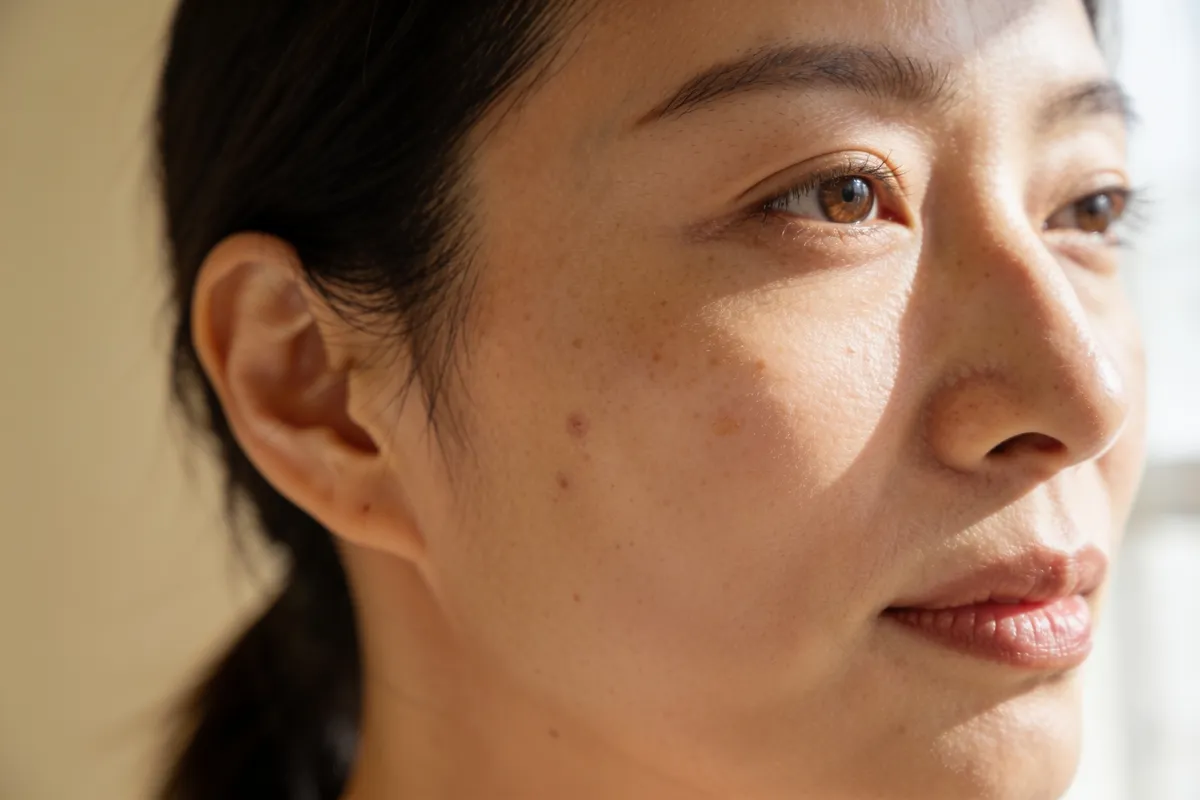
Side light shows the depth and shape of acne scars. Illustrative image, not a patient.
These preparations are directed at the repair environment of the dermis rather than at its bulk. The literature describes two lines of action: signalling through adenosine A2A receptor pathways, which is also how the material's anti-inflammatory effect is described, and an influence on fibroblast activity and extracellular matrix turnover. The long chains also bind water in the tissue they occupy.
Injectable polynucleotides are regulated health products that should be administered by doctors in a clinical setting. Rejuran, made by PharmaResearch in Korea, is registered with Singapore's Health Sciences Authority as an injectable medical device, and it is the polynucleotide booster used at this practice. Rejuran Healer, the standard facial preparation and the product often searched for as 'PN healer', carries polynucleotide at approximately 20 mg/mL.
PN vs PDRN: what is the difference?
PN and PDRN belong to the same molecular family but differ in chain length. PN, polynucleotide, consists of longer DNA chains that form a viscous gel; in Rejuran the chains span a molecular weight range of roughly 50 to 1,500 kDa. PDRN, polydeoxyribonucleotide, consists of shorter fragments. A recent review comparing the two attributes extracellular matrix remodelling mainly to the longer PN chains, and adenosine receptor activation and support for nucleotide synthesis mainly to the shorter PDRN fragments.
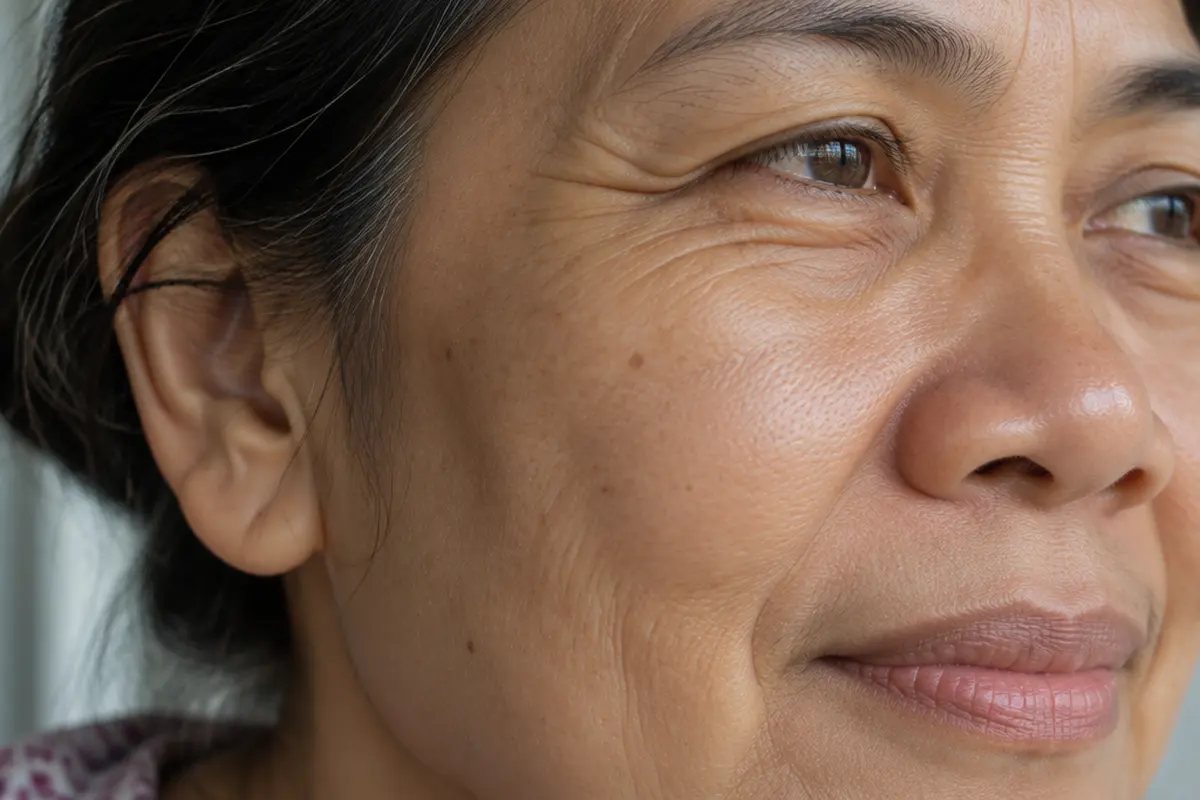
Skin quality is about hydration and texture, not shape. Illustrative image, not a patient.
The practical point is that the terms are not synonyms. Marketing copy often uses them interchangeably, and searches for a 'PDRN skin booster', 'PN healer' or 'salmon DNA injection' may all describe the same appointment. Products built on each material differ in concentration, viscosity and intended use, and findings reported with one product may not apply to another. It is reasonable to ask which material, and which product, you are being offered.
Other polynucleotide brands, such as Plinest, are used by some clinics. They are separate products from different manufacturers, so a comparison between any two depends on the product information and the evidence for each, not on a shared label. With any injectable, asking for the product name and having it recorded in your notes is sensible.
“Rejuran signals the skin to repair. It does not fill, it does not lift, and it does not remove pigment.”
Dr Sin YongOn what polynucleotides do
PN treatment, PDRN treatment and topical serums side by side
Searches for polynucleotide treatment, PDRN treatment, salmon DNA injection or a brand name such as Nucleofill can describe quite different things. The difference is the material, how it reaches the skin and how it is regulated.
Option
Material
How it reaches the skin
How it is regulated in Singapore
What to ask
Injectable PN (polynucleotide)
Longer purified DNA chains, usually from salmon, forming a viscous gel
Micro-injection into the dermis by a doctor
Injectable medical device
Which product and preparation, and who injects it
Injectable PDRN
Shorter fragments of the same family
Micro-injection into the dermis
Depends on the product
Which product, and what its evidence covers
Topical PN or PDRN skincare
The same families in a serum or cream
Applied to the surface, where large molecules penetrate poorly
Cosmetic product
Whether any findings come from injectable studies
Salon salmon DNA facial
A serum applied to the skin, sometimes after a channel-making device
Surface, not a dermal injection
Not a medical treatment
Whether it is the injectable at all
Findings reported with one product cannot be transferred to another, so the product name matters more than the label. Rejuran is the polynucleotide booster used at this practice, and Dr Sin Yong checks fish or salmon allergy before any of them is considered.
How do polynucleotides differ from hyaluronic acid boosters?
Hyaluronic acid boosters work mainly by placing a water-binding molecule into the dermis. Non-cross-linked or lightly bonded hyaluronic acid hydrates where it is put. Profhilo, thermally bonded hybrid hyaluronic acid at 64 mg per 2 mL, spreads through tissue and is designed to stimulate as well as hydrate. The primary intent of the class is hydration and support of the skin envelope.
Scar type is identified before a method is chosen. Illustrative image, not a patient.
Polynucleotides have a different primary intent: a repair signal to the dermis. They are directed at complaints where texture, fine lines, elasticity, post-acne skin quality or thin, crepey under-eye skin are the issue, rather than dryness alone. The difference shows on the day, too. Small raised points at the injection sites are expected with both classes, but they tend to be more noticeable at first with polynucleotides.
Rejuran HB combines polynucleotide with hyaluronic acid in one syringe, carrying both a repair signal and a hydrating component. That does not make the two classes interchangeable; it means some skins need both, and the assessment decides the balance. The fuller side-by-side comparison is set out in Profhilo vs Rejuran.
How do polynucleotides differ from collagen biostimulators?
Collagen biostimulators work on structure. Poly-L-lactic acid, polycaprolactone and PDLLA act as a resorbable scaffold that fibroblasts respond to by laying down new collagen over the following weeks and months, which is why they are directed at diffuse volume loss and firmness rather than surface quality. Poly-L-lactic acid and polycaprolactone products also cannot be dissolved, which shapes how they are planned.
A polynucleotide booster has no scaffold. Nothing in the syringe is engineered to occupy space or hold a contour, so it adds no volume and does not lift. A hollow temple or a deflated midface is a structural problem and needs a product designed to stay where it is placed. A crepey, inflamed or textured dermis is a different problem, and that is where a repair signal makes sense. Both classes work gradually through the skin's own response, but they ask different things of it: a biostimulator asks for new structural collagen around a scaffold, while a polynucleotide is directed at the repair environment of the dermis.
The classes are sometimes combined in one plan, because faces often show more than one problem. When they are, the order and spacing are decided at assessment, so that each treatment is given at a sensible point and the reason for each is clear.
Polynucleotides, HA boosters and biostimulators at a glance
Feature
Polynucleotide booster
Hyaluronic acid booster
Collagen biostimulator
Material
Purified DNA fragments, usually salmon-derived; PN longer chains, PDRN shorter
Water-binding hyaluronic acid, such as Profhilo
Resorbable scaffold: poly-L-lactic acid, polycaprolactone or PDLLA
Primary intent
A repair signal to the dermis
Hydration and support of the skin envelope
New structural collagen around the scaffold
Complaints it suits
Texture, fine lines, elasticity, post-acne quality, crepey under-eyes
Dryness and dehydration
Diffuse volume loss and firmness
Volume or lift
None; nothing in the syringe holds a contour
Not volumising
Directed at volume and firmness
Time course
Gradual, through the skin's own repair response
Hydrates where it is placed
Collagen laid down over the following weeks and months; cannot be dissolved
Who should avoid
Fish or salmon allergy; pregnancy, breastfeeding; active infection
Assessed individually
Assessed individually
Combining classes
Order and spacing decided at assessment
Order and spacing decided at assessment
Order and spacing decided at assessment
Who should avoid polynucleotide boosters?
Anyone with a fish or salmon allergy should raise it with the doctor before any polynucleotide is considered, because the material is fish-derived, and people with that allergy are generally advised to avoid these products. Allergic reaction is rare, but it is the reason the question is asked directly rather than assumed absent.
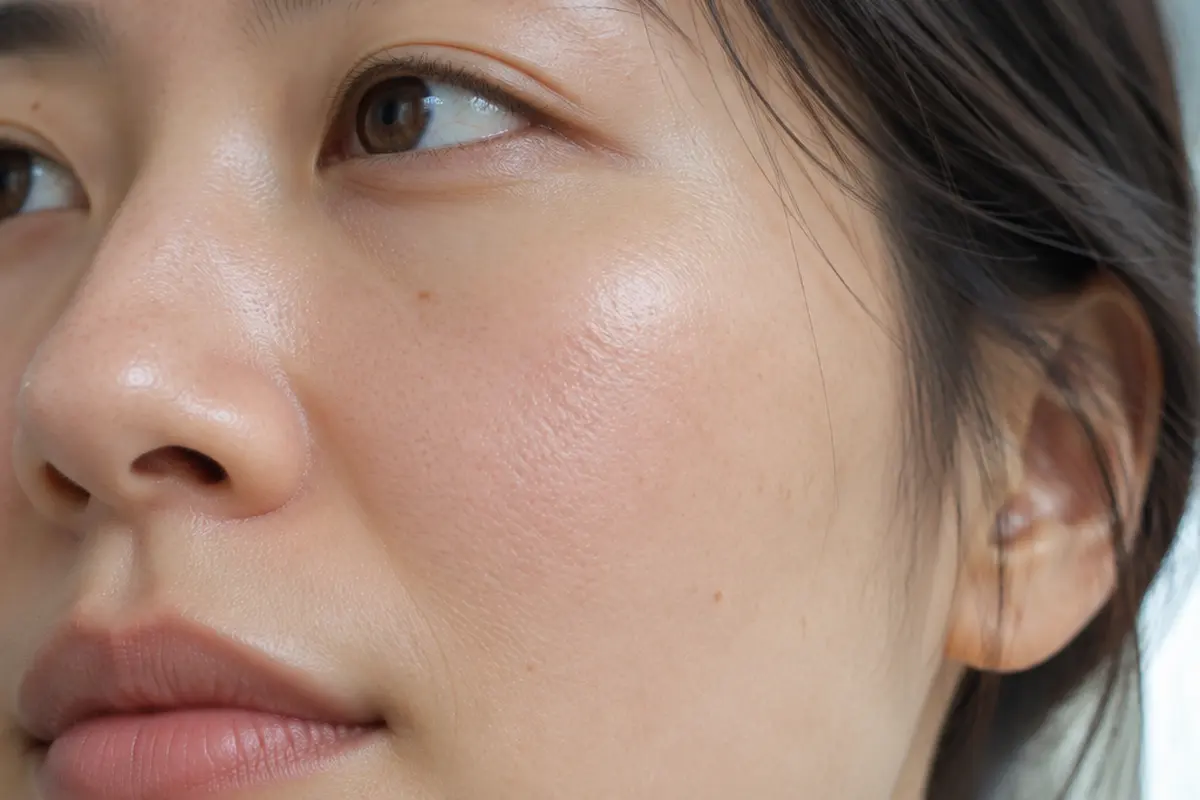
Skin quality is about hydration and texture, not shape. Illustrative image, not a patient.
Injectable polynucleotides are not used in pregnancy or while breastfeeding, and are not injected through active infection or inflamed skin. An autoimmune condition or a bleeding tendency should be discussed with the doctor first, and a keloid tendency is weighed where the intention is to inject into or around scar tissue.
Polynucleotides are also the wrong treatment for some expectations. Anyone hoping for volume, a lift or pigment clearance is being offered the wrong class of product; each of those complaints has its own assessment and its own tools.
Do topical PDRN serums do the same thing?
Not in the same way. Topical PDRN and polynucleotide skincare is sold in Singapore as cosmetic products, but large molecules penetrate intact skin poorly, and the evidence for topical use is weaker than for injection. Salon 'salmon DNA' facials that apply a serum to the surface, sometimes after a device that creates fine channels, are different treatments from an injectable placed into the dermis, and findings from studies of the injectable cannot be transferred to them.
Skin quality is assessed in natural light. Illustrative image, not a patient.
If you are booking a polynucleotide treatment, three questions are worth asking: whether it is the injectable product, whether a doctor is administering it, and which preparation in the range is being used.
After injection, small papules at the injection points, swelling, tenderness and bruising are common and settle as the material is taken up; bruising is more likely around the eyes. Nodules where material sits unevenly, and infection, are less common. Pain that increases rather than settles, spreading redness and warmth, or swelling that does not subside warrants prompt review.
Polynucleotides: sessions and injection points
How many sessions are needed?
Usually three sessions two to four weeks apart, then maintenance every four to six months.
How many injection points?
A full face uses many small injection points or fine threads of product. The under-eye area uses a lower-concentration product.
Combining with other treatments
Polynucleotides are often combined with lasers, other boosters or collagen stimulators.
Skin boosters versus moisturisers. A moisturiser sits on your skin. This is a different conversation at a different depth. Topicals work at the surface, exactly where they're meant to. Treatments that place hydrating or stimulating agents into the dermis are addressing a different layer entirely. Neither replaces the other. If anyone tells you one makes the other unnecessary, ask more questions.
Transcript of Dr Sin Yong's video, lightly edited for reading.
How to choose a clinic for a polynucleotide skin booster in Singapore
A brand page or an overseas clinic cannot tell you how a polynucleotide skin booster is delivered here. These are the points worth checking with any clinic in Singapore.
Who performs it. Ask who will carry out a polynucleotide skin booster. Medical treatments here are performed by Dr Sin Yong himself and are not delegated.
What is used. Ask for the name of the device or product, and whether it is registered with the Health Sciences Authority.
Assessment first. The plan should follow an in-person assessment, not a package chosen in advance.
The fee in writing. Fees are quoted in Singapore dollars, in writing, before any treatment starts.
Review. Ask when you will be seen again after the treatment, and by whom.
Consultations with Dr Sin Yong are at 9 Scotts Road, Pacific Plaza #12-01, Singapore 228210.
More questions about polynucleotide treatment
What is Nucleofill?
Nucleofill is a range of injectable polynucleotide gels from a different manufacturer to Rejuran, sold in several strengths for different areas. Like other polynucleotide boosters, it is placed in the dermis to support skin repair rather than to add volume. Concentration, viscosity and published evidence differ between products, so findings for one do not transfer to another. Rejuran is the polynucleotide booster used at this practice, and any product injected should be named in your notes.
Is polynucleotide treatment painful?
Most people feel a series of small pricks with some stinging as the gel is placed, and the gel is thicker than a hydrating booster, so the points can feel firmer at first. Numbing cream is applied beforehand. The under-eye area and thin skin tend to be more sensitive than the cheeks. Small raised points, redness and the odd bruise are expected afterwards and settle as the material is taken up.
How often is polynucleotide treatment repeated?
There is no fixed schedule, and no number of sessions is promised. A course is planned from the skin at the first assessment, and each repeat is decided from how the skin has responded, the area treated and whether polynucleotides are combined with laser or RF microneedling. Maintenance, if any, follows review rather than a calendar. Dr Sin Yong stops when a further session is unlikely to add anything.
What a polynucleotide treatment visit involves
It is a doctor-performed injection, and a visit follows a set order.
The plan follows what the skin shows on the day. Illustrative image, not a patient.
Assessment. The skin is examined to confirm the concern is skin quality rather than a hollow or sagging. Fish allergy, pregnancy, blood thinners and keloid history are checked.
Numbing. Numbing cream is applied and the skin is cleansed. Some PDRN and PN products contain a local anaesthetic; ask whether yours does.
Injection. The polynucleotide is placed in the dermis as a grid of fine injections, by needle or injector device. The under-eye is treated separately with a preparation made for it.
Afterwards. Small raised points, redness and sometimes bruising appear and settle; most people return to normal activities the next day.
Review. A short course is usual, and the response is reviewed before further sessions are planned.
Polynucleotides are often paired with laser or RF microneedling for acne-scarred skin, with the order set at the assessment. For the preparation used at this practice, see Rejuran Healer.
What does the evidence show, and what affects cost?
A systematic review of polynucleotides in aesthetic medicine identified nine studies, of low and moderate quality, reporting improvements in wrinkles, texture and elasticity with generally mild, transient side effects, and concluded that more rigorous, high-quality studies are needed. That is a fair summary of where the field stands: promising, with variation in technique between studies and in response between individuals. Whether a polynucleotide suits your skin is decided by examination under good light and under stretch, which separates texture and crepiness from scarring, pigment and laxity, because only some of those are polynucleotide territory.
Cost depends on the area treated, which preparation the assessment indicates, whether polynucleotides are used alone or alongside other treatment, and how the plan is staged. Rejuran, a polynucleotide skin booster, at this practice is from $750 per 2 ml syringe; the fee for your plan is confirmed in writing after assessment. Dr Sin Yong, MBBS (NUS), MRCS (Edinburgh), MSc Aesthetic Medicine with Distinction (Queen Mary, London), MSc Practical Dermatology (Cardiff), assesses and performs injectable treatments personally on Orchard Road.
Polynucleotide skin booster price in Singapore at this practice
Treatment
Price
Rejuran (polynucleotide), per 2 ml syringe
From $750
Rejuran for the under-eye, per 1 ml syringe
From $600
Prices are nett. Each figure is a starting price; the fee for your plan depends on the area treated and what the assessment finds, and is confirmed in writing before any treatment.
Frequently Asked Questions
Numbing cream is applied first. It feels like small pinpricks.
After a course of two to three sessions, the improvement in skin quality usually lasts several months, often six months or more. Maintenance every four to six months keeps the result.
They do different jobs. Anti-wrinkle injections relax muscles that cause expression lines. Polynucleotides improve skin quality, hydration and fine lines by supporting repair. They are often used together.
Some people see a change after two sessions, but most protocols use three sessions two to four weeks apart for a fuller result, then maintenance.
They are not interchangeable. Filler adds volume or shape. Polynucleotides improve skin quality without changing shape. Hollow areas need volume; thin, tired skin needs a booster.
They work differently. Nucleofill is a polynucleotide booster that supports skin repair; Profhilo is a high-concentration hyaluronic acid that hydrates and spreads across the skin. Thin or crepey skin often suits polynucleotides; dry, dull skin often suits Profhilo. Some patients combine them.
After an initial course, the result usually lasts about six months, depending on age, skin and lifestyle. Maintenance sessions keep the effect.
Yes. Nucleofill is a polynucleotide (PN) skin booster injected into the skin to improve elasticity, hydration and fine lines. It does not add volume like a filler.
Small bumps, redness and bruising are common for a few days. Rarely there can be infection, lumps or an allergic reaction. Using a sterile technique and the right depth keeps the risk low.
Small bumps settle in one to three days. Skin quality changes gradually over four to eight weeks, across a course of about three sessions.
Yes. They can be injected by hand in small points, delivered with an injector device, or applied over the skin after a laser or microneedling session. Injection places a measured amount in the dermis, while surface application relies on channels opened by the device.
Rejuran, a polynucleotide skin booster, at this practice is from $750 per 2 ml syringe. Prices are nett, and the fee for your plan is confirmed in writing after assessment.
After numbing cream, small amounts of polynucleotide are placed into the skin with fine needles across the area. It takes about 20 to 30 minutes. Small raised bumps at the injection points are expected and usually flatten within a day or two.
It can help the quality of post-acne skin, such as texture and fine shallow scarring, because polynucleotides support the repair environment of the dermis. It does not release tethered scars or fill deep ones. Rolling and tethered scars usually need subcision, and deeper scars laser, so it is often planned alongside these rather than on its own. Dr Sin Yong sorts the scar types at assessment.
PN stands for polynucleotides: long chains of nucleotides purified from salmon DNA, used as a skin booster for thin, fragile skin and fine texture where repair rather than volume is wanted. Rejuran is one example. A PN booster adds no volume and does not lift, and small bumps at the injection points settle afterwards. Because it is derived from fish, a fish allergy is a reason not to use it.
They answer different problems. Hyaluronic acid filler placed deep along the tear trough restores volume where a true hollow casts a shadow, and it can be dissolved with hyaluronidase. Polynucleotides, such as Rejuran I, add no volume; they are placed in the thin lower-lid skin to improve its quality where it has become crepey or finely lined. A hollow needs volume, crepey skin needs skin-quality work, and many under-eyes are assessed for both.
A Plinest treatment is an injection of Plinest, a polynucleotide product made by Mastelli in Italy, placed into the dermis by micro-injection in the same way as other polynucleotide boosters. Plinest is a separate product from Rejuran, which is made by PharmaResearch in Korea, so concentration, formulation and published evidence differ. Rejuran is the polynucleotide booster used at this practice, and the product name should always be recorded in your notes.
PDRN treatment uses polydeoxyribonucleotide, shorter DNA fragments purified from salmon, mainly for tissue repair. A 2017 pharmacology review describes adenosine A2A receptor activation as its main mechanism, with clinical use in wound healing and diabetic foot ulcers. A 2026 systematic review of seven randomised trials, 183 participants in all, found the clearest benefit in wound healing, with smaller trials in skin rejuvenation and scars.
No. PDRN and polynucleotide boosters are directed at the repair environment of the dermis, and nothing in them is designed to occupy space or hold a contour. Hollowing and sagging are different problems with different tools, and which applies to your face is decided at assessment.
No. Topical PDRN and polynucleotide skincare is sold in Singapore as cosmetic products. Injectable polynucleotide products are regulated health products that should be given by a doctor in a clinical setting. Status depends on the product, so ask a doctor before choosing any injectable treatment.
PN (polynucleotide) is made of longer DNA chains that form a viscous gel, while PDRN (polydeoxyribonucleotide) is made of shorter fragments of the same family. Products built on each are not the same, so it is worth asking which you are being offered.
The material is DNA-derived but purified and sterilised, so what is injected is the polymer, not genetic information. 'Salmon DNA' describes the source. Injectable polynucleotides are regulated health products that should be given by a doctor.
Generally not. People with a fish or salmon allergy are advised to avoid polynucleotide products, because the material is fish-derived. Raise any allergy with the doctor, who can discuss other classes of treatment instead.
No. Rejuran adds no volume and does not lift. It is directed at the repair environment of the dermis; a hollow or deficient contour needs a product designed to hold shape where it is placed.
'PN healer' usually refers to Rejuran Healer, the standard facial preparation in the Rejuran range, with polynucleotide at approximately 20 mg/mL. Other preparations in the range are formulated for scarred skin, for the under-eye area, or combined with hyaluronic acid.
Neither is better in general; they do different jobs. Hyaluronic acid boosters mainly hydrate, while polynucleotides are directed at repair signalling. Which suits your skin, or whether both are needed, is decided at assessment.
Not in the same way. Large molecules penetrate intact skin poorly, and evidence for topical PDRN is weaker than for injectable use. A serum on the surface and an injectable placed into the dermis are different treatments.
Small raised points at the injection sites, redness, swelling, tenderness and bruising are common and settle. Nodules and infection are less common, and allergic reaction is rare. Increasing pain, spreading redness or persistent swelling warrant prompt review.
Nucleofill and Rejuran are both polynucleotide skin boosters, differing in concentration, viscosity and the areas they are marketed for; both support skin repair rather than adding volume. Rejuran is the polynucleotide booster used at this practice, and the difference between products is explained at the assessment.
A polynucleotide treatment places DNA fragments, usually from salmon, into the skin to support repair, thickness and hydration without adding volume. Dr Sin Yong uses Rejuran for thin under-eye skin, scars and damaged skin, often paired with laser.
Hyaluronic acid boosters hydrate, while polynucleotides aim to support repair and skin quality.
Yes, often with lasers or other skin treatments in a planned sequence.
DNA fragments usually derived from fish.
People with fish allergy, active infection or pregnancy.
Small bumps are expected for a few days; persistent lumps need assessment.
Comparison of Polynucleotide and Polydeoxyribonucleotide in Dermatology: Molecular Mechanisms and Clinical Perspectives. Pharmaceutics, 2025. source
The Effectiveness of Polynucleotides in Esthetic Medicine: A Systematic Review. Journal of Cosmetic Dermatology, 2025. source
Medical devices: regulatory overview. Health Sciences Authority, Singapore, 2026. source
Pharmacological Activity and Clinical Use of PDRN. Frontiers in Pharmacology, 2017. pubmed.ncbi.nlm.nih.gov
Polynucleotides and Polydeoxyribonucleotides for Skin Rejuvenation, Postoperative Scar Prevention, and Wound Healing: A Systematic Review of Randomized Clinical Trials. Cureus, 2026. pubmed.ncbi.nlm.nih.gov
Skin Booster Types and Brands Explained — NCTF 135HA, Restylane Skinboosters, Profhilo, Rejuran and Plinest sorted by category: what each type of skin booster is …
Skin Whitening Supplements: The Evidence — Glutathione pills, tomato carotenoids and tranexamic acid tablets: what the evidence shows, how HSA regulates supplement…