Published 20 October 2026 · Reviewed by Dr Sin Yong
Glass skin in Singapore describes a look rather than a treatment: skin hydrated, smooth and even enough to reflect light uniformly. The look has four parts, each with its own route: hydration with skin boosters and medical facials, texture with non-ablative laser, tone with laser toning or R2 Glow, redness with the inflammation-directed protocols. Dr Sin Yong breaks the request into these parts at assessment.
Glass skin is a K-beauty term for skin that looks clear, even and smooth enough to reflect light uniformly; it depends on even pigment, fine texture, little redness and good hydration together.
Hydration
Addressed with skin boosters, which change skin quality and add no volume; Profhilo is placed with Dr Sin Yong's modified BAP technique, and a needle-free route exists in the Deep Synergy Booster.
Texture and pores
Addressed with the FSX Laser (1540 nm and 1927 nm, non-ablative); pores can be made less visible but not smaller.
Tone
Addressed with R2 Glow (long-pulsed 755 and 1064 nm, directed at inflammation) or low-fluence 1064 nm laser toning, chosen by what drives the unevenness.
Facials
Hydrafacial and the LDM facial are maintenance and recovery steps; they do not remodel collagen, treat pigment or lift, and a facial alone does not produce the look.
Glass skin in Singapore, as a goal, is several separate problems that have to line up: hydration, texture, tone and redness. Skin boosters or the needle-free Deep Synergy Booster address hydration, the FSX Laser addresses texture, and R2 Glow or low-fluence toning addresses tone. Hydrafacial and the LDM facial maintain the skin but do not remodel collagen, and pores can be made less visible, not smaller.
What glass skin describes: hydration, texture, even tone and low redness
Korean glass skin is a description of how light behaves on a face. Light reflects evenly from a surface that is smooth, hydrated and the same colour across it, and scatters from a surface that is dry, textured, blotchy or red. So the look is not one property but four, and the mirror shows which is missing.
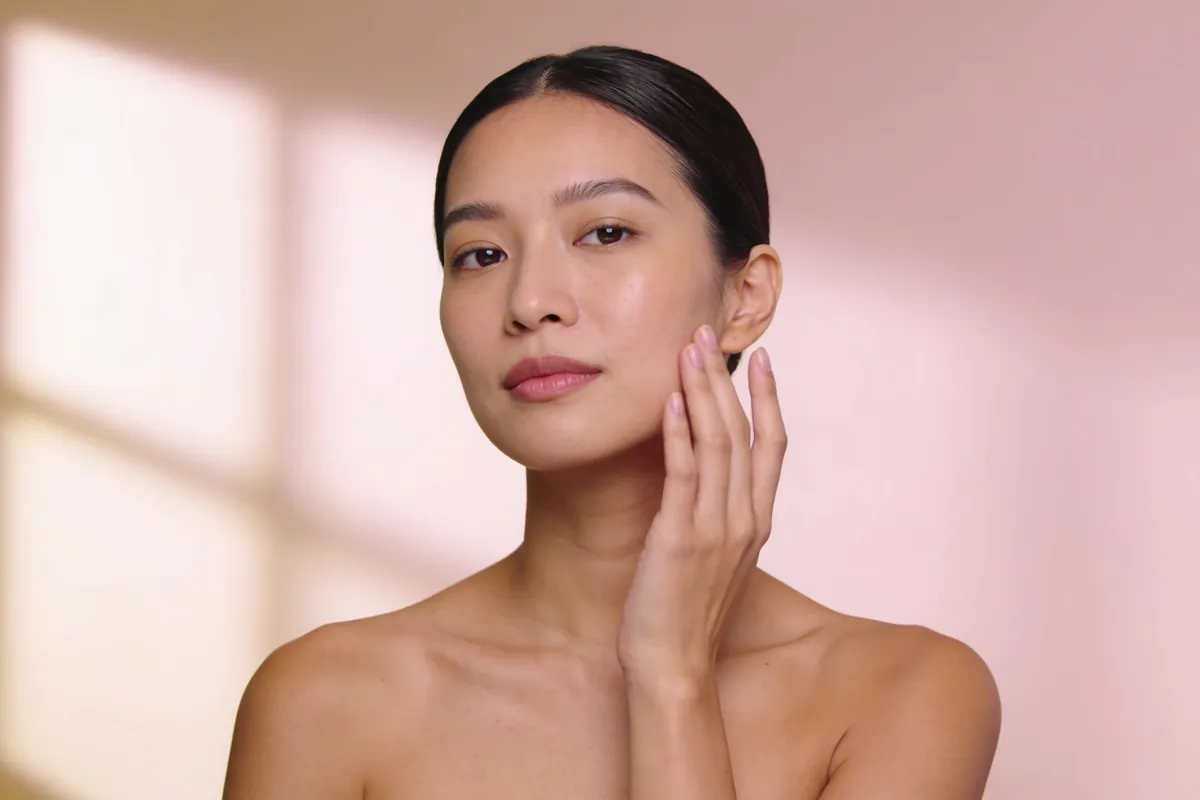
Illustrative image — not a patient.
Component
What it looks like when missing
What drives it in Singapore
Where it is addressed
Hydration
Dull, tight, fine surface lines that show under make-up
Air-conditioning, over-cleansing, acid and retinoid overuse, thin skin with age
Skin boosters; medical facials for maintenance; barrier skincare
Texture and pores
Visible pores, roughness, light scattering across the cheeks
Oil, sun damage, old acne, pores that have lost their collagen collar
FSX Laser; pore protocols; retinoids
Even tone
Patchy brown, post-acne marks, sun freckling, a greyer centre of the face
UV year-round, inflammation after acne, melasma, hormonal change
R2 Glow or laser toning by driver; sun protection daily
Low redness
Flushed cheeks, red marks after acne, a background pink that reads as dullness
R2 Glow; vascular protocols where vessels are visible; barrier repair
Two things are often confused with glass skin and are not it. A filter or a highlighting routine creates the impression on the surface for a photograph. And naturally textured or scarred skin can become healthier and more even without ever looking like a filtered image. The FSX Laser page says this plainly in its own glass skin section.
Glass skin treatment Singapore: the clinic route for each component
Because the look has four parts, the plan at Dr Sin Yong's practice is built from the part that is most missing, and treatments are paired where two parts are missing together. Every treatment is performed by Dr Sin Yong after an in-person assessment.
Illustrative image — not a patient.
Hydration: skin boosters
A skin booster is an injectable placed into the skin to change its quality, not its shape; it adds no volume. Hyaluronic acid boosters act on dehydration and fine surface lines; Profhilo bio-remodelling suits skin that has started to soften but has not descended, placed with Dr Sin Yong's modified BAP technique; polynucleotides such as Rejuran suit thin, fragile skin where repair rather than volume is wanted. The class is chosen by what the skin is short of, not by brand. For those who prefer no needle, the Deep Synergy Booster replaces the coupling gel in a micro-focused ultrasound treatment, with the limit that it cannot place product at a chosen depth the way an injection can.
Texture and pores: FSX Laser
The FSX Laser is Dr Sin Yong's non-ablative protocol: 1540 nm heats the dermis to prompt collagen remodelling around pores and fine lines, and 1927 nm acts superficially on pigment and surface texture, with settings adjusted for darker skin types. Pores can be made less visible but not smaller, as the pore reduction page explains.
Even tone: R2 Glow or laser toning
Where dullness comes from low-grade inflammation that keeps stimulating pigment, R2 Glow works on that driver with long-pulsed 755 nm and 1064 nm energy, and brightness follows as a consequence. Where the problem is diffuse deposited pigment or post-acne marks, low-fluence laser toning at 1064 nm is weighed. Melasma is managed, not brightened away, and a glass skin request with melasma underneath starts on the melasma plan.
Low redness
Background redness is read before it is treated: sensitised barrier, rosacea, post-inflammatory erythema and visible vessels each have their own route, and R2 Glow's anti-inflammatory action covers the first and third. Rosacea is diagnosed rather than brightened over.
Pairing
R2 Glow and a skin booster are commonly paired in one visit where inflammation and dehydration coexist, and the boosters with RF microneedling page covers the pairing where texture is the larger problem.
“Glass skin is not a treatment I can book you for. It is four properties of skin, and I will tell you which one you are missing before I tell you what addresses it.”
Dr Sin YongOn Glass skin treatment plan
Korean facial Singapore: what a facial can and cannot do for glass skin
A Korean facial in Singapore usually means a multi-step facial in the K-beauty style: double cleanse, gentle exfoliation, extraction, a hydrating mask or serum, and a finishing step. It is where many people start, and it has a real place, provided its limits are clear.
Non-thermal dual-frequency ultrasound micro-massage directed at hydration and barrier support
Lift, tighten, resurface or clear pigment
Dehydrated, sensitive or reactive skin; recovery after laser
Spa-style Korean facial
Cleansing, exfoliation, mask and massage
Reach the dermis, change pigment or pores, or calm inflammation
Short-term surface smoothness and hydration
The pattern is that a facial maintains; it does not remodel. At Dr Sin Yong's practice Hydrafacial and the LDM facial are doctor-assessed, with settings adjusted for darker skin types and for skin between treatments, and they are placed in the plan as the maintenance step around the booster or laser that does the structural work. Someone whose skin is well hydrated and even may need nothing more than that maintenance and daily sun protection, and the assessment says so. The Rejuran facial page covers the polynucleotide variant that sits between a facial and a booster.
What skincare alone can do for glass skin
A good part of the look is daily, and no clinic treatment replaces it. Three things carry most of the weight.
Sunscreen, every day. UV in Singapore is high year-round and drives both uneven tone and the breakdown of the collagen that keeps pores tight. Broad-spectrum protection, applied in the morning and reapplied when outdoors, is the single habit that decides how much of any treatment is kept. The sunscreen guide covers texture and choice for this climate.
A barrier that is left alone. Over-cleansing, daily acids and frequent scrubs strip the surface and produce the tight, dull, reactive skin that scatters light. A gentle cleanser, a moisturiser suited to the climate and a pause from actives when the skin stings are often the first correction.
A retinoid, used sensibly. Topical retinoids refine surface texture and even tone over time, and are introduced slowly to avoid the irritation that makes skin redder before it makes it smoother.
What skincare does not do is place hydration in the dermis, remodel collagen around pores, fragment deposited pigment or calm inflammation at depth, which is where boosters and lasers come in. The skin boosters versus skincare guide draws that line, and the skin ingredients A to Z explains the actives.
Korean glass skin expectations in a Singapore climate
The glass skin aesthetic comes from a temperate, four-season climate and from skin that is, on average, lighter than most skin in Singapore. Two adjustments follow.
Illustrative image — not a patient.
Humidity and heat change the routine. The layered, occlusive K-beauty routine that suits a dry Seoul winter sits heavily on skin that sweats in an air-conditioned-to-outdoor cycle several times a day. Lighter textures, fewer layers and a focus on sunscreen and barrier do more here than a ten-step routine. Heat also provokes redness and, in melasma, pigment, so the steam-and-massage facial culture is applied with care in anyone with either.
Skin type changes the laser plan. Most patients in Singapore are Fitzpatrick III to V. Pigment that is fragmented too aggressively, or heat that spreads during a texture treatment, produces post-inflammatory darkening, which is the opposite of even tone. So the laser side of a glass skin plan here is gentler and more staged than clinics abroad describe: non-ablative protocols, settings adjusted for the phototype, test patches where appropriate and strict sun protection throughout. The pico laser in Asian skin guide explains the risk.
Expectations are set honestly. Healthier, more hydrated and more even skin is a reasonable aim for most people. A face that photographs like a Korean advertisement is a question of lighting, filters and genetics as much as treatment, and Dr Sin Yong says so at the first visit rather than later.
What decides the plan, and what to expect afterwards
The plan is built from the component that is most missing, so cost follows the plan rather than a fixed list. What shapes it: which of the four components are involved; whether a booster, a laser, a facial or a combination is used; whether the work is staged; and the phototype, which sets the laser approach. A figure quoted before assessment would not reflect your skin, and fees are set out at consultation. The how fees are quoted page explains the approach.
Who it suits, and who should wait
It suits people whose concern is skin quality rather than volume or lifting, who accept that the look is built in parts, and who will keep up sun protection. It is better to wait during an active acne flare, an infection or a cold sore, and in pregnancy or breastfeeding for the injectable and laser steps. Melasma and rosacea are diagnosed and planned on their own pages first.
Aftercare in broad terms
After a skin booster, small raised points at the injection sites settle and the area is not massaged unless asked. After a non-ablative laser, redness settles and occasional fine scabbing is left to shed. After a facial, actives are paused briefly and sun protection continues as usual. Specific instructions are given at each visit, and the skin booster aftercare page collects them.
Your next step
1. MessageWhatsApp +65 8023 7170 with what is bothering you. A reply comes from the clinic, not a bot.
2. AssessmentDr Sin Yong examines you himself on Orchard Road, with ultrasound where earlier filler is involved.
3. A plan in writingWhat he would do, what he would not, the fee factors, and the option of no treatment.
Every treatment is performed by Dr Sin Yong personally. Singapore Medical Council registered · invited to share his clinical expertise internationally for CLASSYS, DEKA, Fotona, Hironic and Ilooda.
It is a plan rather than one procedure. Glass skin describes skin that is hydrated, smooth, even and calm enough to reflect light uniformly, so the plan is built from the part that is missing: skin boosters for hydration, FSX Laser for texture and pores, R2 Glow or laser toning for tone, and a medical facial for maintenance. Dr Sin Yong assesses which part is limiting before choosing.
No. A Korean facial cleanses, exfoliates, hydrates and smooths the surface for a short period; it does not reach the dermis, change pigment or pores, or calm inflammation at depth. It is the maintenance step in a glass skin plan, not the structural one. Hydrafacial and the LDM facial play that role at Dr Sin Yong's practice.
They address one part of it, hydration and skin quality, and add no volume. If dullness comes from dehydration and thin skin, a booster is the right first step; if it comes from pigment, pores or redness, a booster alone will not change the look and a laser or an inflammation-directed protocol is paired with it. The class of booster is chosen by what the skin is short of.
Daily broad-spectrum sunscreen, a gentle cleanser and a moisturiser suited to the climate, and a retinoid introduced slowly. Fewer layers suit Singapore's heat better than a ten-step routine, and a barrier that is not stripped by daily acids reflects light better than one that is. Skincare does not place hydration in the dermis or fragment deposited pigment; that is where clinic treatment comes in.
The sequence changes. Active acne is controlled first, because treating texture or tone over inflamed skin produces more marks. Once it is settled, pores and post-acne marks are the usual limiting parts, so FSX Laser and toning lead and hydration is kept light. Oily skin is not a barrier to the look; untreated acne is.
Yes, with the laser side planned for the phototype. In Fitzpatrick III to V skin, heat and aggressive pigment work cause darkening, so non-ablative protocols, adjusted settings, test patches where appropriate and strict sun protection are used, and the plan is staged. Skin boosters and medical facials are not affected by skin type in the same way.
References
The Effectiveness of Injectable Hyaluronic Acid in the Improvement of the Facial Skin Quality: A Systematic Review. Clinical, Cosmetic and Investigational Dermatology, 2023. source
Effects of Profhilo® Tissue Bioremodeling on Skin Texture and Perioral Wrinkles: A Randomized Controlled Triple-Blind Clinical Trial. Aesthetic Plastic Surgery, 2026. source
Superficial Intradermal Injections of Cohesive Polydensified Matrix Hyaluronic Acid Fillers for the Improvement of Facial Pores and Skin Quality: A Split-Face Randomized Study. Journal of Cosmetic Dermatology, 2025. source
Treatment of pigmentary disorders using picosecond laser in Asian patients: A meta-analysis and systematic review. Dermatologic Therapy, 2021. source
About this page: written and medically reviewed by Dr Sin Yong, MBBS (NUS), MRCS (Edinburgh) · Last reviewed 20 October 2026 · Illustrative images only, not patients · Editorial policy