Rosacea: a medical condition wearing a skincare label
Medically reviewed by Dr Sin Yong · Last reviewed · 3 min read
Published 13 October 2026 · Reviewed by Dr Sin Yong
Rosacea is a chronic inflammatory condition of the central face (cheeks, nose, chin, mid-forehead), usually sparing the skin around the eyes: flushing that lingers, background redness that stops fading, visible thread veins and, in some, acne-like bumps without blackheads. It is a medical diagnosis rather than a skin type, and in Asian skin it often hides behind a 'sensitive skin' label. It is treated feature by feature: triggers, skincare, prescribed anti-inflammatory treatment, and vessel-directed laser or IPL for fixed redness.
Heat, sun, alcohol, spicy food, hot drinks, stress, some skincare actives
Laser's place
Vessel-directed light treats the vascular component; it does not switch off the condition. For diffuse inflammatory redness Dr Sin Yong generally reaches for R2 Glow first, with conservative parameters because heat is itself a trigger
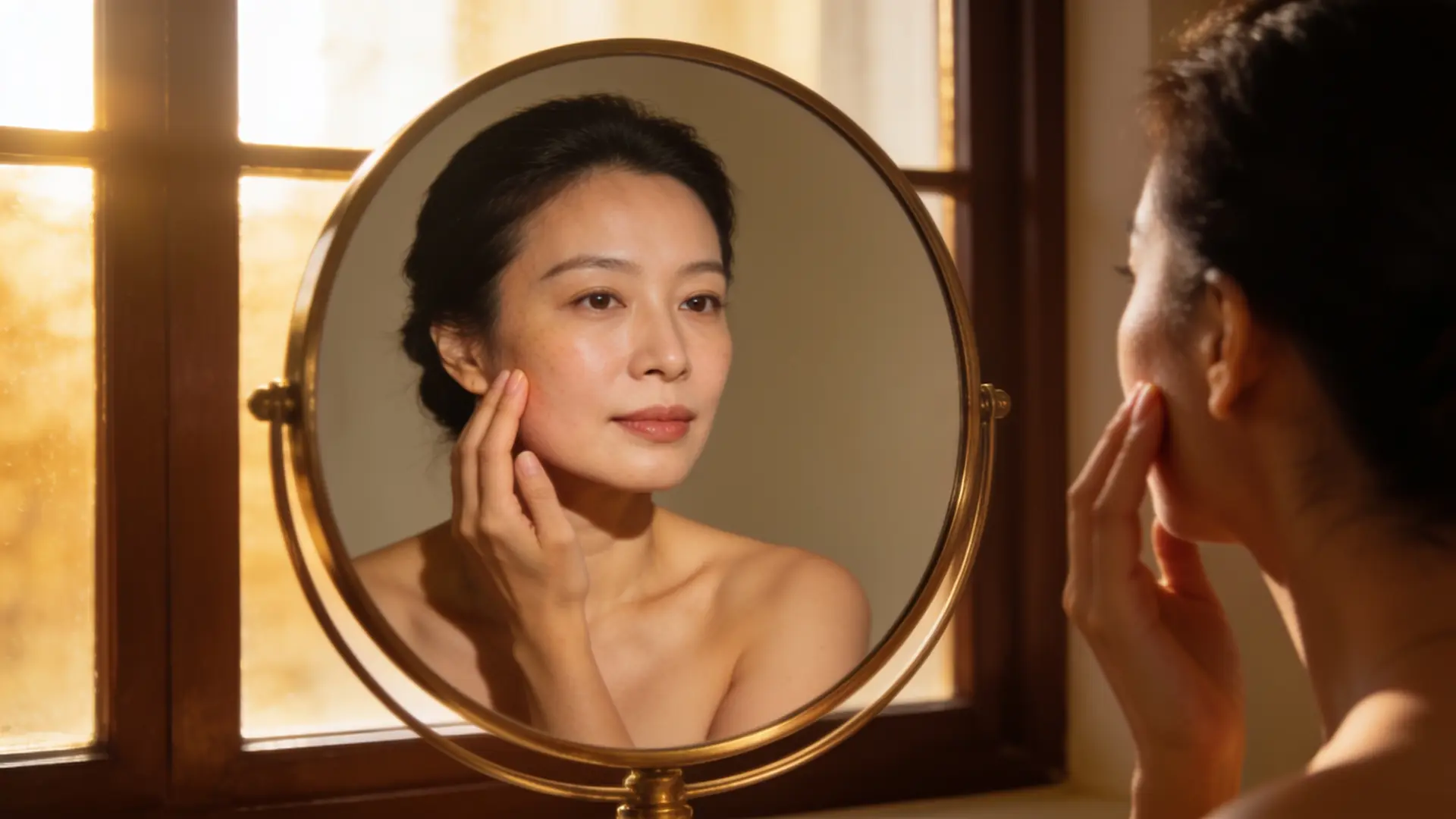
Illustrative image, not a patient.
Where rosacea matters on this site
Rosacea shapes how every redness, sensitivity and laser page on this site is written, because heat is itself a trigger and the wrong energy can make it worse.
Rosacea is a diagnosis, not a skin type; treating it as sensitivity lets the redness settle in.— Dr Sin Yong
Sensitive skin treatment: why sensitive skin is a diagnosis of exclusion, and why a test spot comes before a full-face treatment.
少女光 675 nm laser: the protocol used here for facial redness, with a section on rosacea and redness.
Across those pages, medical management stays central and vessel-directed light treats the vascular component inside that plan. Diffuse inflammatory redness is usually approached with R2 Glow first, with conservative parameters.
Not to be confused with
Rosacea has several look-alikes on the central face, and some of them are worsened by rosacea treatment or the other way round.
Acne. Acne has comedones beside its inflamed spots and no flushing background.
Perioral dermatitis. Small bumps clustered around the mouth, nose or eyes, often after steroid creams, with a clear margin at the lip.
Seborrhoeic dermatitis. Greasy scale in the eyebrows, beside the nose and in the scalp; it can coexist with rosacea.
Demodicosis. Mite overgrowth with itch and fine scale. It overlaps with rosacea and is checked for when rosacea stalls.
Post-inflammatory erythema. Flat red marks left after acne spots. They fade with time and vascular treatment, without the flushing.
Sensitive skin. A description rather than a diagnosis. In Asian skin rosacea often hides behind it.
The distinction matters because acne staples such as benzoyl peroxide and strong acids aggravate rosacea, and steroid creams worsen both rosacea and perioral dermatitis.
What decides how rosacea is treated for you
Rosacea is mapped feature by feature, and each feature has its own part of the plan.
Which features you have. Flushing, persistent redness, thread veins, papules and pustules, thickened skin and eye involvement are planned separately.
Your triggers. Heat, sun, alcohol, spicy food, hot drinks, stress and some skincare actives are identified and reduced first.
Your skincare. Scrubs, acids and acne products are often the hidden drivers, and the routine is simplified before anything else is added.
Medical treatment. Topical and oral options are prescribing decisions made after assessment, for the inflammatory component.
Laser or light. Chosen for the vascular component with conservative parameters, because heat is itself a trigger.
The eyes. Gritty, red or irritated eyes are assessed with an eye specialist.
Dr Sin Yong plans the inflammatory and vascular components separately and reviews the plan rather than fixing it at the start.
Where it fits
Rosacea is routinely filed under 'sensitive skin' and managed like a skin type, and every year it spends there is a year the flushing consolidates into fixed redness and vessels. Dr Sin Yong maps it feature by feature, then plans the inflammatory and vascular components separately: medical management stays central, with topical agents such as azelaic acid, metronidazole or ivermectin and oral treatment for more extensive inflammation as prescribing decisions made after assessment. Acne benzoyl peroxide, scrubs, acids and steroid creams tend to worsen it. Stalled rosacea is checked for Demodex overgrowth. Full page: rosacea and persistent redness; the treatment article on rosacea treatment in Singapore; the laser on R2 Glow.
The yellow laser benefits and limits for rosacea redness are set out in the yellow laser guide.
Frequently Asked Questions
Yes. Eye involvement is one of the recognised features of rosacea, and it can cause grittiness, redness, dryness or irritation of the eyes and eyelids, sometimes before the skin changes are obvious. It is assessed together with an eye specialist rather than managed with skin treatments alone. Mentioning eye symptoms at consultation matters, because they change the plan.
Because it is frequently filed under sensitive skin and managed like a skin type rather than a condition. Redness can be less obvious on darker skin, flushing is put down to the climate, and acne-like bumps are treated with acne products that aggravate it. Every year spent under the wrong label is a year in which flushing can consolidate into fixed redness and vessels, so the diagnosis is worth making.
No. Acne has comedones, the blackheads and whiteheads, alongside its inflamed spots and no flushing background. Rosacea's papules come without comedones, on a flushing, red central face, and several acne staples such as benzoyl peroxide and strong acids aggravate it.
No. Laser and IPL treat the vascular component, the fixed redness and thread veins that creams reach least. They do not switch off the underlying condition, so they sit inside a medical plan with trigger management and prescribed treatment, not in place of it.
References
Mese Say E, Okan G, Gökdemir G. Treatment outcomes of long-pulsed Nd:YAG laser for two different subtypes of rosacea (n=66). J Clin Aesthet Dermatol. 2015;8(9):16-20. source
Recommendations for Rosacea Diagnosis, Classification and Management: Update from the Global ROSacea COnsensus 2019 Panel. British Journal of Dermatology (PubMed), 2019. pubmed.ncbi.nlm.nih.gov