Main guideAcne treatment — what it treats, who it suits, sessions, downtime and what decides the cost, by Dr Sin Yong.
Published 23 October 2026 · Reviewed by Dr Sin Yong
Closed comedones, often called whiteheads, are small skin-coloured bumps made by a hair follicle that is plugged with skin cells and oil beneath a closed surface. They are the earliest, non-inflamed stage of acne. A topical retinoid that keeps the follicle lining shedding normally is the foundation of treatment, and a doctor confirms they are comedones rather than milia or fungal acne first.
Short answerClosed comedones are blocked pores with no visible opening, most often on the forehead, chin and T-zone. They respond to treatment that normalises the follicle, mainly topical retinoids, with azelaic or salicylic acid and careful clinic extraction alongside. Squeezing, scrubbing and heavy products make them worse. See a doctor if they persist, inflame, scar or may be something else.
What are closed comedones, and how do they differ from blackheads?
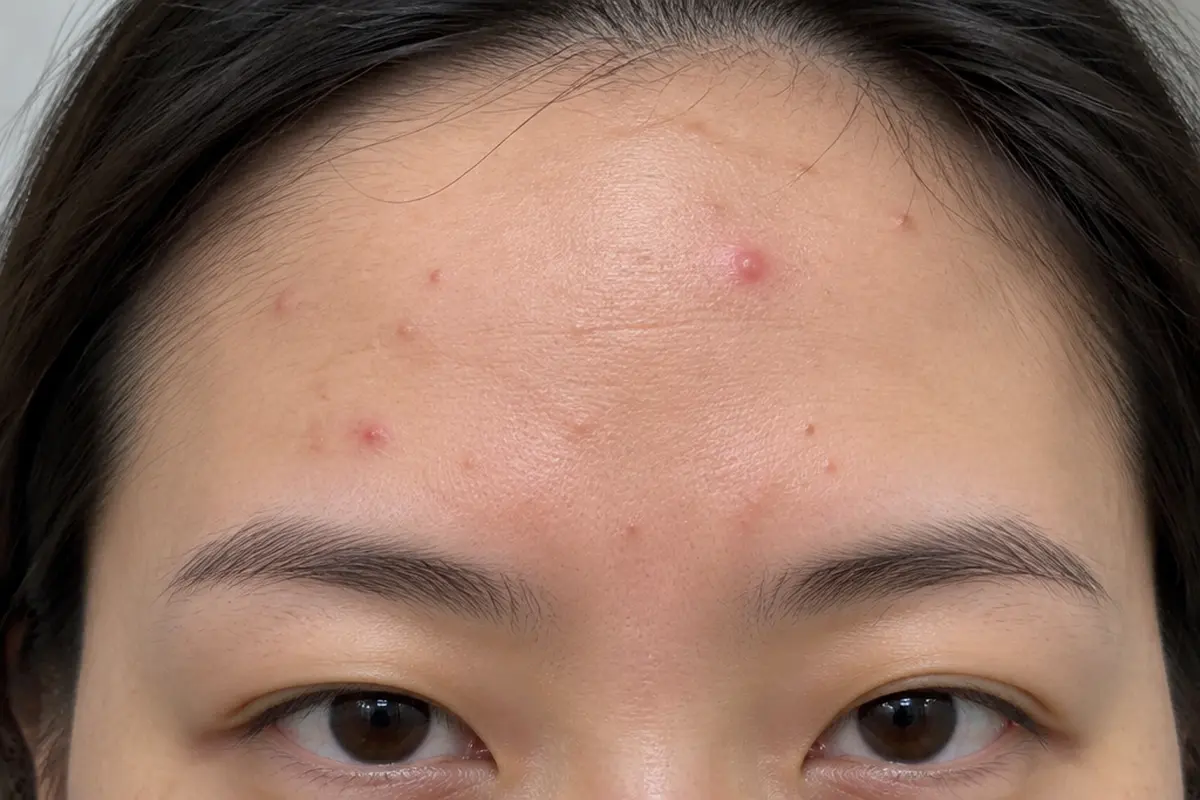
A comedone is a blocked hair follicle. Cells lining the follicle are shed too quickly and stick together, oil production is high, and the mix forms a plug. When the opening of the follicle stays closed over that plug, you see a small, firm, skin-coloured or whitish bump with no visible pore: a closed comedone, or whitehead. When the opening widens and the plug is exposed to air, the keratin and melanin at the surface darken, and you see a blackhead, an open comedone. Both come from the same blocked follicle.
Illustrative image — not a patient.
Closed comedones are often easier to feel than to see. Running a hand across the forehead or chin picks up a rough, bumpy texture, and side lighting shows a field of tiny raised dots. They are not caused by dirt and are not a hygiene problem, which is why scrubbing does not clear them.
Closed comedone (whitehead)
Open comedone (blackhead)
Milium
What it is
Blocked follicle under a closed surface
Blocked follicle with an open, darkened plug
A sealed cyst of keratin with no connection to a pore
Look and feel
Skin-coloured or white, soft to firm, often in clusters
A dark dot at the pore opening
Pearl-white, very firm, pinhead-sized
Where
Forehead, chin, jawline, T-zone
Nose, cheeks, chin
Around the eyes and on the cheeks
Responds to acne treatment
Yes
Yes
No; needs de-roofing and extraction
Comedones matter because they are where acne starts. A comedone whose follicle wall inflames or ruptures becomes a papule, a pustule or a nodule, and inflammation is what drives marks and scars. Treating comedones early is how the later stages are kept from starting; the blackheads page covers the open form in detail.
Illustrative diagram, not to scale.Use this diagram on your site
Free to use with credit and a link. Copy this code:
What causes closed comedones?
Closed comedones form when the four drivers of acne line up in a follicle: abnormal shedding of the cells lining it, oil production driven by androgens, the skin bacterium C. acnes, and low-grade inflammation. Some of these you inherit; others you can influence.
Oil and hormones. Androgen activity raises oil output, which is why comedones often begin in the teenage years and why some adult women notice them along the jaw and chin with hormonal change.
Products that block follicles. Heavy, occlusive creams, some foundations and sunscreens, hair pomades and oils near the hairline can plug follicles directly. Comedones that cluster along the forehead or where a product is applied are a clue.
Friction and picking. Squeezing, abrasive scrubs, masks, helmet straps and phones held against the face irritate the follicle and can rupture plugs into inflamed spots.
Starting a retinoid. In the early phase of a new retinoid, micro-comedones that were already forming can surface faster, a temporary flare known as purging, which settles as the skin adjusts.
Smoking and diet. Smoking is associated with comedonal acne, and high glycaemic-index foods and dairy may contribute in some people, though diet is rarely the whole story.
Singapore's heat and humidity add sweat and occlusion under make-up, masks and sports gear, so lighter textures and cleansing after exercise help some people. None of this means the skin is dirty, and stripping it with harsh cleansers tends to make congestion worse rather than better.
“A closed comedone is the first lesion of acne. Treating it early is how the inflamed spots and the scars that follow are kept from starting.”
Dr Sin YongOn treating comedones early
Closed comedones or something else? The lookalikes
Several small bumps are mistaken for closed comedones, and each is treated differently. This is a common reason an acne routine fails to work: the bumps were never comedones.
Acne is graded by the type and number of spots. Illustrative image, not a patient.
Pearl-white, very firm, sealed, around the eyes and cheeks; no pore to empty
Sterile de-roofing and extraction, not acne treatment
Fungal acne (Malassezia folliculitis)
Itchy, uniform bumps of the same size on the forehead, chest or back, with no blackheads beside them
Antifungal treatment; acne creams do not help
Sebaceous hyperplasia
Yellowish bumps with a tiny central dip on the forehead and cheeks in adulthood
Treated as enlarged oil glands, not as acne
Syringoma
Small skin-coloured bumps clustered under both eyes, from sweat-duct tissue
CO2 or erbium laser after diagnosis; extraction does not clear them
Perioral dermatitis
Small red bumps around the mouth and nose, sparing a rim next to the lips
Stopping triggers such as heavy or steroid creams; acne products can irritate it
The presence of comedones is a useful clue for a doctor: it separates acne from rosacea, perioral dermatitis and fungal folliculitis at a glance. That is also why a single photograph is rarely enough to diagnose acne, and why the first visit is an examination rather than a product recommendation.
Whiteheads and comedones: the types, Asian skin, and what you can do at home
Comedones are blocked hair follicles, and whiteheads are the closed kind. The word comedone covers a family of lesions, and knowing which one you have explains why some respond to a retinoid and others need a doctor.
The types of comedones
Microcomedones: plugs too small to see, the hidden starting point of every acne lesion.
Closed comedones (whiteheads): skin-coloured or white bumps with no visible opening.
Open comedones (blackheads): the same plug with a widened, darkened opening.
Macrocomedones: larger closed comedones that can be slow to respond to creams and may need careful clinic extraction.
Solar comedones: blackheads and whiteheads around the eyes and temples in older, sun-damaged skin, which are not acne at all.
In everyday speech, whiteheads also include milia and small pus spots. That loose use is why a cream that clears one bump does nothing for the bump beside it.
Why Asian skin needs a gentler start
In an Asian Acne Board survey across seven countries, more than half of people seeing a dermatologist for acne had dark marks after their spots. In skin types III to V, irritation from a retinoid started too fast, a harsh scrub or a squeezed whitehead can leave a mark that lasts longer than the comedone. The plan is the same as for any skin, but introduced more slowly. Marks that appear anyway are covered on post-inflammatory hyperpigmentation.
A home routine that works with the follicle
Cleanse gently, morning and night; a salicylic acid cleanser suits oily skin.
Apply a thin layer of retinoid to the whole area, not just the bumps, every second or third night at first, increasing as the skin allows.
Moisturise with a light, non-comedogenic product.
Use sunscreen every morning, because a retinoid raises sun sensitivity.
Review hair products, heavy creams and make-up along the hairline and jaw.
What not to do at home: metal extractors, pore vacuums, steroid creams, or salon extractions on inflamed spots. Retinoids are stopped in pregnancy, so tell your doctor if you are pregnant or planning to be.
If comedones persist after a fair trial, or inflamed spots start to join them, the medical options are set out on acne treatment in Singapore.
Closed comedones treatment: how a doctor treats them
Closed comedones are treated by normalising the follicle so plugs stop forming, then clearing the plugs already there. The retinoid does the first job; clearing treatments do the second. The 2024 acne guideline of the American Academy of Dermatology, built on a systematic review of the evidence, makes a strong recommendation for topical retinoids. Done without the retinoid, clearing gives a brief clean spell and then the same congestion.
Option
What it does
What it cannot do
Topical retinoid (adapalene; tretinoin on prescription)
Normalises shedding inside the follicle, so existing comedones clear and fewer new ones form
Work overnight; dryness and an early flare are common and are managed by adjusting strength and frequency
Azelaic acid
Helps comedones and calms inflammation and post-acne marks; often tolerated by sensitive skin
Replace a retinoid where congestion is heavy
Salicylic acid
Oil-soluble exfoliant that works inside the pore
Clear established comedones on its own
Benzoyl peroxide
Reduces C. acnes where inflamed spots sit beside the comedones
Unblock follicles by itself; it can bleach fabric
Clinic extraction
Plugs are expressed carefully with sterile instruments after the surface is prepared
Stop new comedones forming without home treatment
Oral treatment
Hormonal treatment or isotretinoin, considered by the prescriber when comedones are extensive, resistant or scarring
Replace topical care for mild comedonal acne
Lasers and energy devices are directed at the inflammatory part of acne, not at comedones alone, so they are not the first step for a forehead of whiteheads. Where inflamed spots and post-acne marks are part of the picture, they are planned alongside medical treatment on the acne treatment page. A retinoid increases sun sensitivity, so daily sunscreen is part of using it in Singapore, and retinoids are stopped in pregnancy.
When to see a doctor about closed comedones in Singapore
Many people manage a few comedones with a gentle routine and a non-prescription retinoid. It is worth seeing a doctor when:
comedones persist or spread despite a fair, consistent trial of a retinoid and non-comedogenic products;
inflamed red spots, pustules or deeper lumps start to appear among them;
marks, dark patches or pitted scars are being left behind;
the bumps are itchy, uniform or around the eyes, suggesting fungal acne, milia or syringoma instead;
you are pregnant, planning pregnancy or breastfeeding, which changes which treatments are safe;
comedones appeared suddenly with other signs of hormonal change, such as irregular periods or new hair growth.
Dr Sin Yong, an aesthetic physician, grades acne at the first visit as comedonal, papulopustular or nodulocystic, rules out lookalikes such as fungal folliculitis, and treats congestion early rather than waiting for it to clear, because comedones are where the later stages begin. Medical treatment comes first. Where acne is severe, unusual or not responding, he refers to dermatology. Enquiries on WhatsApp are answered in English and Chinese.
At home: cleanse gently twice a day, choose lighter non-comedogenic products, introduce a retinoid slowly, use sunscreen every morning and leave the comedones alone. Squeezing a closed comedone usually ruptures the plug sideways into the skin, turning a non-inflamed bump into an inflamed spot that can mark.
Your next step
1. MessageWhatsApp +65 8023 7170 with what is bothering you. A reply comes from the clinic, not a bot.
2. AssessmentDr Sin Yong examines you himself on Orchard Road, with ultrasound where earlier filler is involved.
3. A plan in writingWhat he would do, what he would not, the fee factors, and the option of no treatment.
Every treatment is performed by Dr Sin Yong personally. Singapore Medical Council registered · invited to share his clinical expertise internationally for CLASSYS, DEKA, Fotona, Hironic and Ilooda.
Book an assessment with Dr Sin Yong on Orchard Road. Bring the products you use on your face, including sunscreen and make-up. How consultations work.
Comedonal acne is acne made up mainly of comedones, closed whiteheads and open blackheads, with few or no inflamed red spots. It is the earliest, non-inflamed grade of acne and usually sits on the forehead, chin and nose. Comedonal acne is treated by normalising the follicle, mainly with a topical retinoid, because the plugs come first and inflammation follows them.
Closed comedones are one kind of clogged pore: a hair follicle plugged with skin cells and oil beneath a closed surface. Clogged pore is also used for open blackheads, for sebaceous filaments that sit normally in the pore, and for milia, which are not pores at all. Which one you have decides the treatment, so the bumps are examined before a routine is chosen.
Closed comedones can be extracted, but carefully and in clinic, because a closed surface means the plug has no open exit. After the skin is prepared, the plug is expressed with sterile instruments; squeezing at home tends to rupture it sideways and inflame it. Extraction clears comedones already present, so a topical retinoid is still needed to stop new ones forming.
Closed comedones gather on the forehead because it has many oil glands and is where hair products, fringes, caps and helmets sit against the skin. Pomades, oils and heavy sunscreen near the hairline can plug follicles directly, and sweat under a cap adds occlusion in Singapore’s humidity. Clusters that follow a product’s line are a clue, so that product is reviewed first.
Comedones are blocked hair follicles, the first lesion of acne. Skin cells and oil form a plug inside the follicle. If the opening stays closed, you see a whitehead, or closed comedone; if it widens and darkens, you see a blackhead, or open comedone. Comedones are not dirt. They respond to treatment that normalises the follicle lining, such as a topical retinoid.
Closed comedones clear when the follicle stops forming plugs. A topical retinoid used on the whole area is the foundation, with salicylic or azelaic acid alongside and careful clinic extraction for stubborn ones. Avoid squeezing, scrubs and heavy products. Progress is gradual and varies between people, so a doctor reviews it and adjusts the plan if the comedones persist or start to inflame.
Whiteheads are closed comedones: small, skin-coloured or white bumps formed when a hair follicle is plugged with skin cells and oil under a closed surface. They sit mainly on the forehead, chin and T-zone. The word is also used loosely for milia and small pus spots, which need different treatment, so a doctor confirms what the bumps are before a routine is chosen.
Some do, slowly, but many persist or keep forming while the follicles stay blocked and oil production stays high. Without treatment that normalises the follicle lining, new comedones tend to replace the old ones. A topical retinoid used consistently is a dependable way to reduce them, with clinic extraction for stubborn plugs. Comedones that start to inflame or leave marks are worth a doctor's review.
No. A closed comedone has no visible opening, so pressure tends to burst the plug sideways into the surrounding skin instead of out through the pore. That turns a non-inflamed bump into an inflamed spot, and in Asian skin the inflammation often leaves a dark mark that lasts longer than the comedone would have. Extraction, where needed, is done in clinic with sterile instruments after the surface is prepared.
There is no fixed answer. Comedones form slowly beneath the surface, so treatment works gradually, and some people notice a flare when a retinoid is started before the skin settles. Progress depends on the number of comedones, oil production, how consistently treatment is used and whether triggers such as heavy products are removed. It is judged at review, and the plan is adjusted rather than abandoned early.
Closed comedones are blocked pores, appear in clusters of slightly different sizes and sit beside other acne lesions such as blackheads. Fungal acne, or Malassezia folliculitis, is caused by a yeast in the follicles: the bumps are uniform, often itchy, and appear on the forehead, chest and back without blackheads. Fungal acne needs antifungal treatment and does not respond to acne creams.
Comedones that stay non-inflamed rarely scar. The risk comes when a comedone inflames or is squeezed and ruptures, becoming a papule, pustule or nodule, which can leave dark marks and, in deeper lesions, pitted scars. That is why comedones are treated early and why picking is discouraged. Established scars are assessed separately, once the acne itself is under control.
Topical retinoids (vitamin A creams). DermNet, 2021. source
Reynolds RV, Yeung H, Cheng CE, et al. Guidelines of care for the management of acne vulgaris. Journal of the American Academy of Dermatology, 2024. pubmed.ncbi.nlm.nih.gov
Abad-Casintahan F, Chow SK, Goh CL, et al. Frequency and characteristics of acne-related post-inflammatory hyperpigmentation. Journal of Dermatology, 2016. pubmed.ncbi.nlm.nih.gov
About this page: written and medically reviewed by Dr Sin Yong, MBBS (NUS), MRCS (Edinburgh) · Last reviewed 6 November 2026 · Illustrative images only, not patients · Editorial policy