Vbeam is a brand of pulsed dye laser emitting at 595 nm, a wavelength strongly absorbed by blood, used to heat and close small red vessels. Other vascular options include 532 nm KTP, long-pulsed 1064 nm Nd:YAG and intense pulsed light, which differ in depth, pigment heating and bruising. The choice depends on the type of redness and skin type.
Key facts
- Vbeam
- A brand of pulsed dye laser made by Candela, emitting at 595 nm
- Pulsed dye lasers
- Around 585 to 595 nm, strongly absorbed by oxygenated blood; used for fine red vessels and diffuse redness
- 532 nm KTP
- Suits fine, superficial red vessels; the shorter wavelength is absorbed more by epidermal melanin
- Long-pulsed 1064 nm Nd:YAG
- Reaches deeper, suits larger or blue-purple vessels and spares epidermal melanin
- IPL
- Filtered broadband light rather than a laser; used more for diffuse background redness than single vessels
- Purpura
- Temporary purple bruising that some pulsed dye settings produce; purpura-free settings exist, with trade-offs
- Shared principle
- Selective photothermolysis: light absorbed by haemoglobin heats the vessel wall until the vessel closes
What is a pulsed dye laser, and what is Vbeam?
A pulsed dye laser is a laser whose light is generated in a liquid dye, producing yellow light at around 585 to 595 nm. Vbeam is one brand of pulsed dye laser, made by Candela, and works at 595 nm. The name is often used the way people use a brand for a whole product category, but it describes one machine within a family.
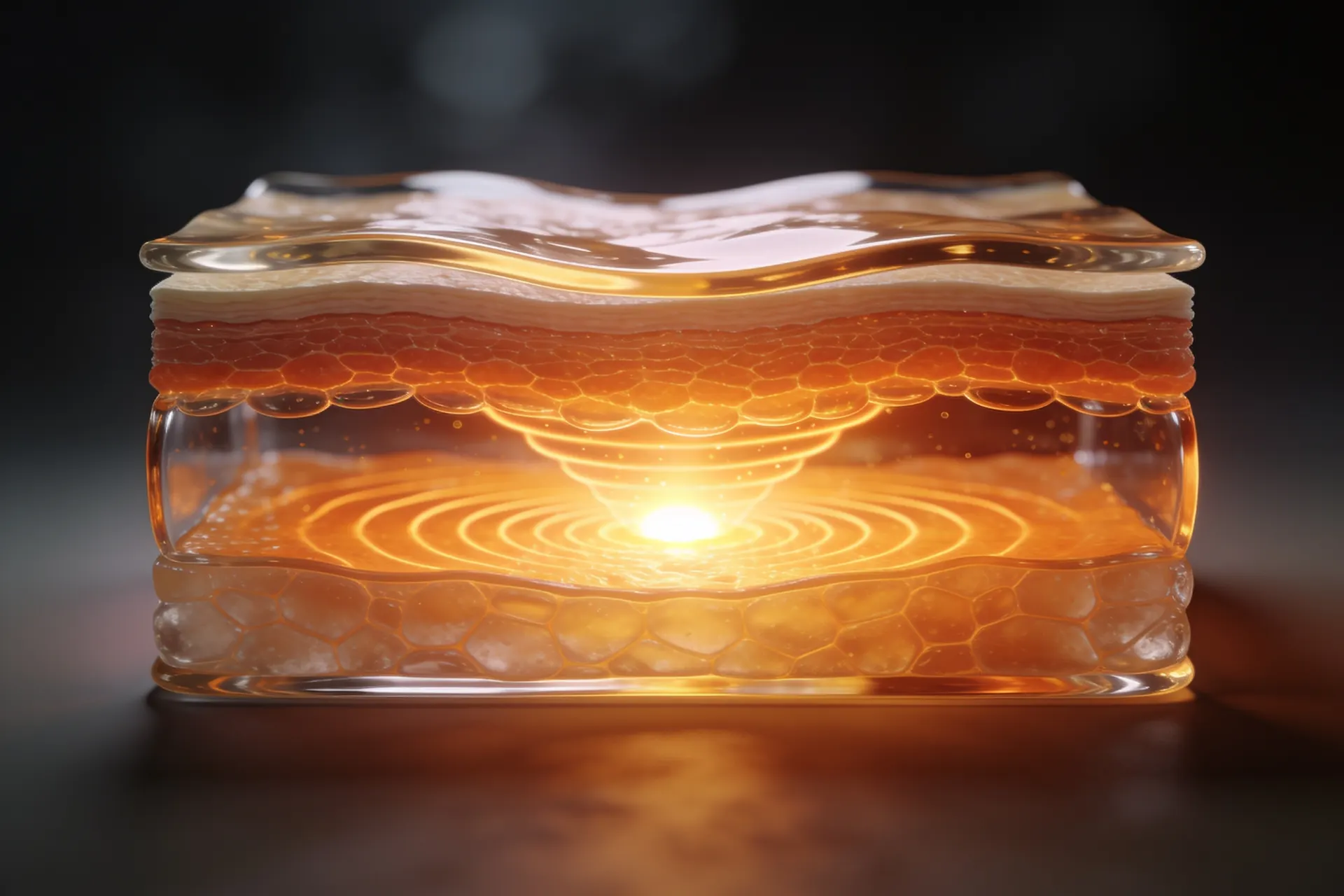
Its wavelength sits close to an absorption peak of oxygenated haemoglobin, the pigment in blood. That is the basis of selective photothermolysis: light absorbed by the blood inside a small vessel heats the vessel wall until it is damaged, closes and is gradually cleared by the body, while the skin around it absorbs comparatively little. Pulse duration is adjustable, which lets the energy be matched to the size of the vessel, and the skin surface is cooled during treatment.
Pulsed dye lasers have a long history in treating vascular birthmarks, and in aesthetic practice they are used for facial thread veins, the fixed redness of rosacea, red acne marks and some red scars. They are one option among several, not the only route to closing a vessel.
How do KTP, Nd:YAG and IPL compare with pulsed dye?
They share the principle and differ in wavelength, depth and pigment interaction. That difference decides which vessels each suits and how each behaves in darker skin.
A 532 nm KTP laser is well absorbed by blood and suits fine, superficial red vessels, particularly around the nose. The shorter wavelength is also absorbed more by melanin in the epidermis, which matters in Fitzpatrick III to V skin. In a split-face study comparing 532 nm KTP with 595 nm pulsed dye for facial telangiectasia and redness, both devices improved the vessels, and the KTP side tended to show more swelling and redness afterwards.
Long-pulsed 1064 nm Nd:YAG penetrates much deeper and is absorbed far less by epidermal melanin, so it suits larger, deeper or blue-purple vessels and is documented specifically in Asian skin. It is less efficient for the finest red vessels, and because it reaches deep, the margin between enough energy and too much is narrower, so settings are chosen with care.
Intense pulsed light is not a laser. It delivers a filtered band of wavelengths and is used more for diffuse background redness than for single threads. In a randomised split-face trial in erythematotelangiectatic rosacea, non-purpuric pulsed dye laser and IPL both reduced redness and visible vessels, with no significant difference between them.
“A visible vessel does not fade with time or with skincare. It is either closed or it is still open — there is no middle state to work toward.”
Dr Sin YongOn why topical treatment cannot reach a vessel
Pulsed dye, KTP and Nd:YAG for redness at a glance| Feature | Pulsed dye (Vbeam, 595 nm) | KTP (532 nm) | Long-pulsed Nd:YAG (1064 nm) |
|---|
| Wavelength | Yellow light at 595 nm, near an oxyhaemoglobin absorption peak | 532 nm, well absorbed by blood | 1064 nm, penetrates much deeper |
| Vessels it suits | Fine thread veins, rosacea fixed redness, red acne marks, some red scars | Fine, superficial red vessels, especially around the nose | Larger, deeper or blue-purple vessels |
| Epidermal melanin absorption | More than 1064 nm; conservative settings in deeper skin tones | Higher; matters in Fitzpatrick III to V skin | Far less; documented specifically in Asian skin |
| After treatment | Purpura at higher energy and short pulses; purpura-free settings possible | Tended to show more swelling and redness in a split-face study | Narrow margin between enough energy and too much |
| Less suited to | Deep or blue vessels | Diffuse redness; darker skin | The finest red vessels |
| None of them treats | Brown pigment or melasma | Brown pigment or melasma | Brown pigment or melasma |
| At this practice | Described for comparison; redness addressed with 675 nm protocol and R2 Glow | Described for comparison | Vessel-directed laser for established thread veins, chosen at assessment |
Why does bruising come into the decision?
Because some pulsed dye settings deliberately cause it. At higher energies with short pulses, the laser can rupture small vessels as well as heat them, leaving purpura: a flat, purple bruise over the treated area that fades over days. For some vessels that is the more effective setting; for many patients it is socially awkward.
Purpura-free treatment uses longer pulses and energies just below the bruising threshold, sometimes with more passes. A small randomised trial comparing settings immediately above and below the purpura threshold found that purpura-level treatment reduced thicker, denser vessels more, while results for fine vessels were closer between the two. In other words, avoiding bruising is often possible, but for some vessels it trades away part of the effect.
This is a choice to discuss before treatment rather than discover afterwards. A patient with a few fine vessels and a busy week may prefer purpura-free settings and accept that more than one treatment may be needed; a patient with dense, ropy vessels may decide differently. Neither choice changes the need to manage the drivers of new vessels.
Which device suits which kind of redness?
The type of redness comes first. Fixed visible threads, diffuse background redness, flushing, red acne marks and cherry angiomas are different problems, and only some of them respond to vessel-directed light.
Facial thread veins are discrete, remodelled vessels. Fine red ones suit pulsed dye or KTP; larger, deeper or bluer ones suit long-pulsed Nd:YAG. Rosacea is a chronic inflammatory condition in which fixed redness and visible vessels are only one part; light-based treatment addresses that vascular part, while papules and pustules need medical treatment and flushing needs trigger management. A laser does not switch the condition off.
Red acne marks, or post-inflammatory erythema, are lingering dilated capillaries where spots used to be. They blanch when pressed, which separates them from brown marks, and the trial literature supports IPL and pulsed dye class lasers for them once active acne is controlled. Cherry angiomas, small red domes of capillaries on the body, may be treated with a vascular laser or with electrocautery, depending on their size and how raised they are.
What none of these devices treats is brown pigment from melanin. Brown marks and melasma are a different target, and treating them with vascular settings, or vice versa, is a common reason a redness plan disappoints.
Who suits pulsed dye laser, and who should be cautious?
Pulsed dye lasers are generally used for fine red vessels and diffuse redness in fair to medium skin. In deeper skin tones, 595 nm light is absorbed by epidermal melanin more than 1064 nm light is, which raises the risk of post-inflammatory hyperpigmentation, so wavelength and energy are chosen more conservatively, and in some cases a longer wavelength is the better fit.
Treatment is usually deferred or reconsidered with a recent tan, active infection or inflammation in the area, photosensitising medication, recent isotretinoin, a tendency to keloid scarring, or pregnancy. Anyone who flushes intensely, or whose skin stings with most products, should have rosacea considered first, because heat is itself a rosacea trigger and aggressive settings can provoke the condition being treated.
Expect swelling and redness for a short period after most vascular treatments, and bruising if purpura-level settings are used. Daily broad-spectrum sun protection protects the result, because ultraviolet exposure is one of the drivers of new vessels.
What does Dr Sin Yong use for facial redness?
Vbeam and other pulsed dye lasers are described here for comparison, as devices used by other clinics. At this practice, facial redness and the vascular presentation of rosacea are addressed with the 675 nm 少女光 protocol on the DEKA RedTouch Pro, a fractional wavelength absorbed preferentially by collagen that also interacts with the vascular component in the dermis.
Where redness is diffuse and mainly inflammatory, R2 Glow, a non-ablative long-pulsed 755 nm and 1064 nm protocol, is directed at inflammatory activity within the skin. Established individual thread veins are a separate target for vessel-directed laser, with the wavelength chosen for vessel colour, depth and skin type at assessment. Medical management of rosacea, topical and sometimes oral, sits alongside any light-based treatment rather than being replaced by it.
Which applies, and in what order, is decided by examination. The aim is to match the tool to the kind of redness in front of him, not to fit the redness to a device.
How should you judge a redness treatment plan?
Start with the diagnosis. A good plan names the redness: thread veins, rosacea with its subtype, red acne marks, steroid-related redness, or something else, and explains how each part will be handled.
Then ask about the device and settings. Which wavelength, why it suits your vessels and your skin type, whether bruising is expected, and what happens if pigment darkens afterwards. For rosacea, ask what is being done about the inflammatory side and the triggers, since closing today's vessels does not stop new ones forming while the condition is active.
This site does not publish fees. Fees depend on what the assessment finds, the area, the approach indicated and how treatment is staged, and they are set out at consultation before anything is agreed. SMC guidelines bar doctors from offering discounts, time-limited offers or other inducements, so the plan should follow the examination rather than a deadline.
Finally, ask what happens after the vessels close. Sun exposure, heat, alcohol and active rosacea all encourage new vessels over time, and steroid creams applied to the face can create redness of their own that rebounds when they are stopped. A plan that includes sun protection, a short and gentle skincare routine and review of any creams being used is more likely to hold than one that consists only of laser appointments.