Published 29 October 2026 · Reviewed by Dr Sin Yong
Tattoo removal results build between visits. The laser fractures ink into particles that your immune system clears gradually, so a tattoo fades in stages, often unevenly and colour by colour. With T2 Laser Tattoo Removal on the DEKA TORO, each ink is matched to its wavelength and the response is read at review. Complete clearance cannot be promised.
Short answerTattoo removal before and after: straight after a session the ink frosts white, which is gas in the skin, not ink leaving. The result comes later, as fragmented ink is cleared between visits, often patchily and colour by colour. This site shows no before-and-after photos; your own tattoo is photographed and compared at each review. This page sits under laser tattoo removal in Singapore; the protocol itself is T2 Laser Tattoo Removal.
Tattoo fading stages: what changes, and in what order
Tattoo fading stages follow the same order in almost every tattoo, though the pace differs between people and inks. Knowing the order helps you tell healing from the result.
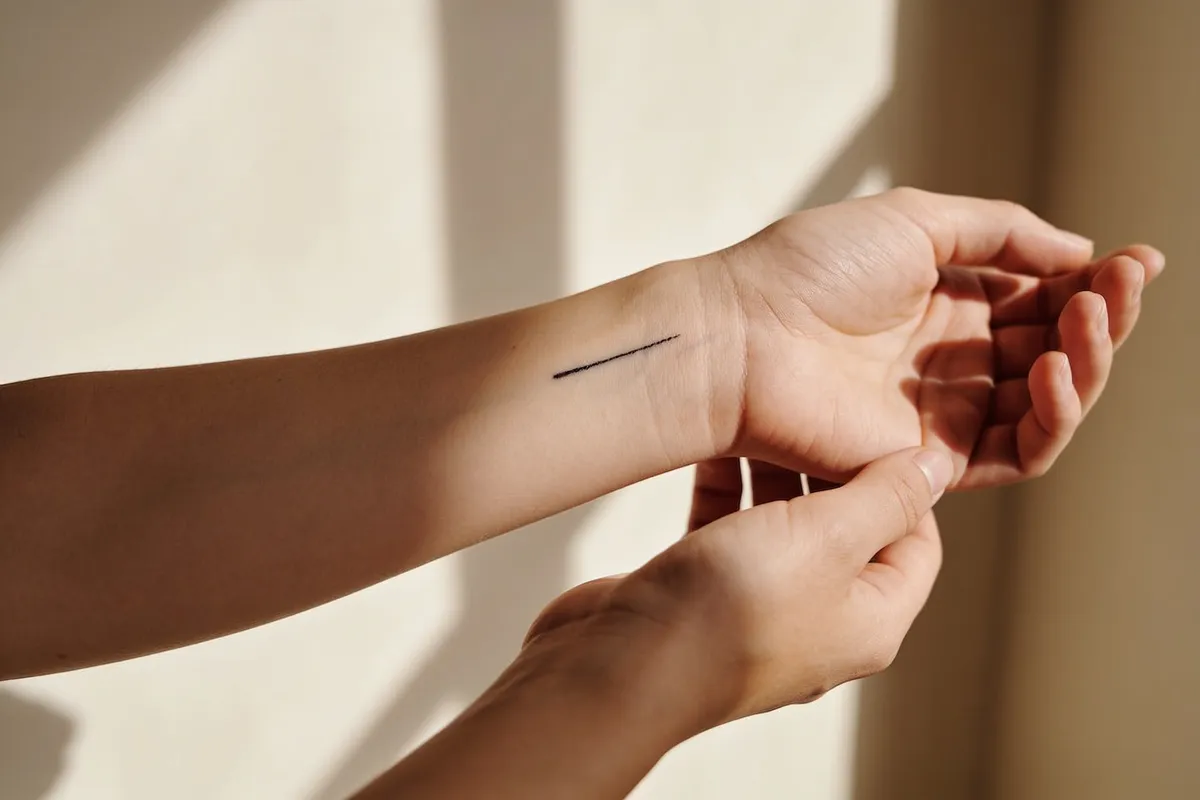
A small dark-ink tattoo on the forearm. Illustrative image, not a patient.Illustrative image — not a patient.
Frosting. As the laser passes, the treated ink turns white: gas released in the dermis by the rapidly heated ink scatters light. It fades and the ink looks much as it did. Frosting is the endpoint the settings aim for, not ink leaving the skin.
Healing. Redness, swelling and sometimes pinpoint bleeding follow, then blisters over heavily inked parts that dry into scabs and come away on their own. Through this phase the tattoo can look unchanged, or slightly darker through the inflammation.
Fading as ink is cleared. The immune system carries the fractured ink away gradually, so fading happens between visits, and the next session waits until the skin has healed.
Uneven fading. Outlines, shading, dense infill and different colours rarely fade at the same rate. A patchy, ghosted look partway through a plan is common and not, on its own, a sign of a problem.
With T2 Laser Tattoo Removal, the wavelength is matched to each ink colour on one platform: 1064 nm nanosecond pulses for black and dark inks, 532 nm nanosecond pulses for red, orange and purple, and 785 nm picosecond pulses for green and blue. Matching the wavelength to the colour is about giving each ink light it can absorb. Colours still respond at different rates, but giving every colour an absorbed wavelength in the same visit makes removal of multicoloured tattoos faster. No number of visits is promised, and complete clearance cannot be promised. Healing, phase by phase, is described on tattoo removal downtime.
Tattoo removal before and after: why this page shows no photos
Tattoo removal before and after photographs are a common search, and this site does not show them. That is in keeping with Singapore's rules on medical advertising, and another person's tattoo cannot tell you how yours will respond anyway. Ink brand, depth, density, layering, location and skin type differ between any two tattoos, and lighting, camera angle, a tan or healing skin all change how a photograph reads.
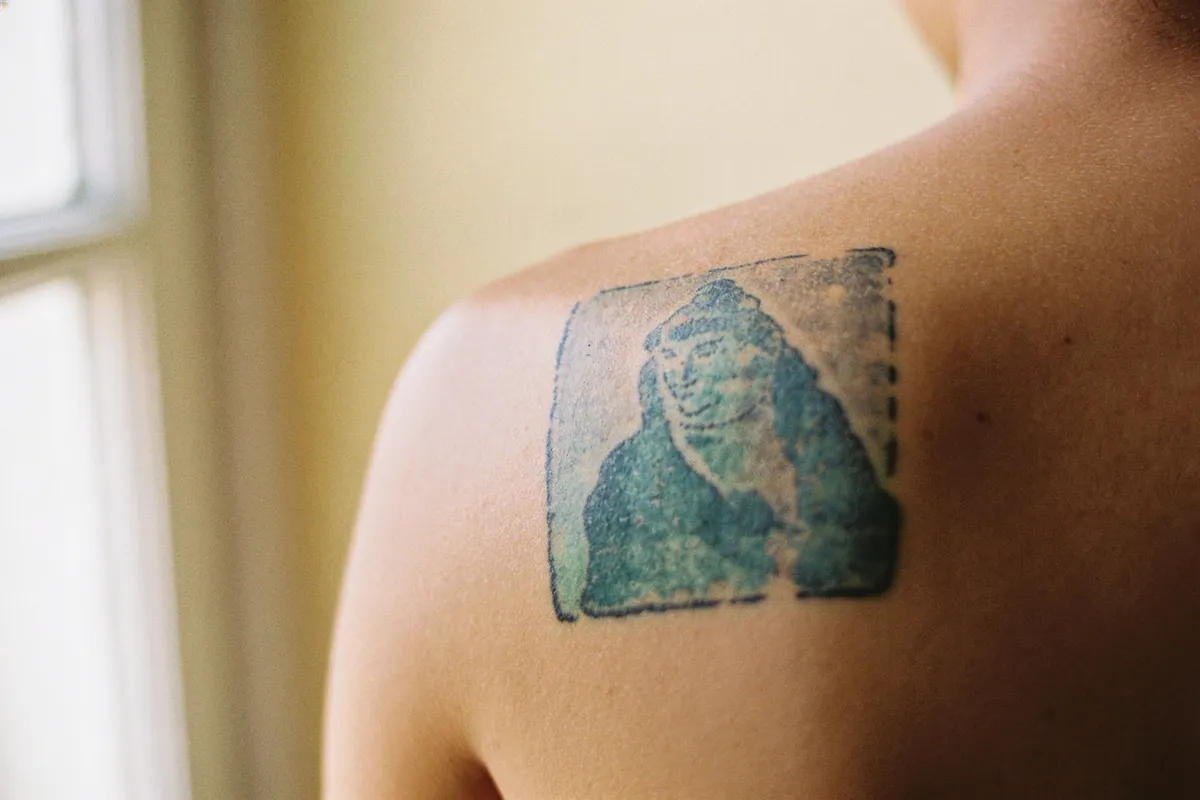
An older tattoo that has faded with time. Illustrative image, not a patient.
What matters is your own record. Your tattoo is photographed under the same conditions for your medical record, and at each review it is photographed the same way and compared, colour by colour and area by area. That comparison, with how the skin has healed, decides the next step.
“A tattoo rarely fades evenly. I review it colour by colour and patch by patch, because the wavelength that suits the black may not be the one the green needs.”
Dr Sin YongOn reading tattoo removal results
What decides tattoo removal results
Tattoo removal results are decided mostly by what is in the skin and by the skin itself. The table sets out the factors Dr Sin Yong evaluates before a wavelength is chosen and reviews at each visit.
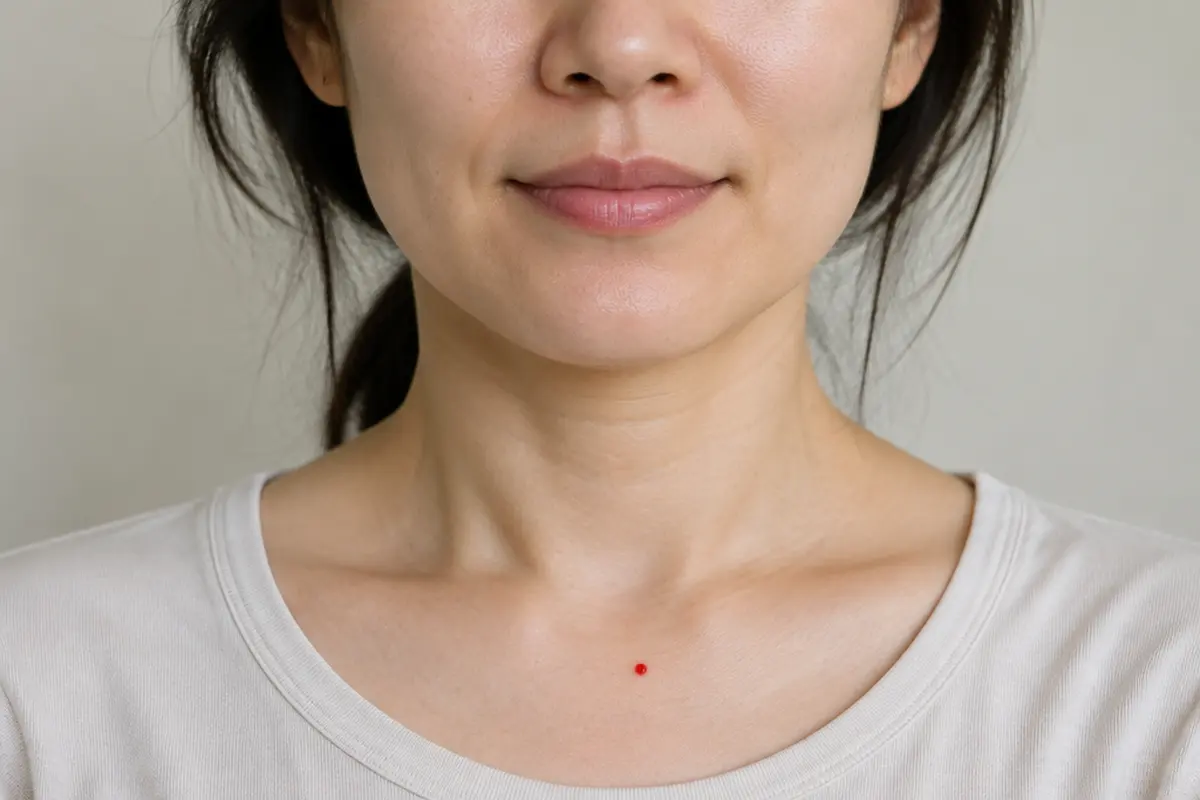
Small red spots of this kind are collections of vessels. Illustrative image, not a patient.
Factor
Why it matters
What it means for the plan
Ink colour
Each colour absorbs light differently; yellow and white are poorly absorbed by most wavelengths
A wavelength is matched to each colour; some colours may lighten rather than clear
Ink density
Dense professional ink holds more pigment per area than sparse amateur work
Dense ink is among the harder cases; amateur ink often responds more readily than expected
Depth
Ink placed deeper is harder to reach and to clear
Wavelength and settings are chosen for where the ink sits
Layering
A cover-up or reworked tattoo holds several pigments at several depths
Layers can respond on their own schedules, so review is area by area
Location
Some sites clear more slowly than others and some need more care per pass
Expectations are set for the site, not for the tattoo's size alone
Skin type
The laser passes through the melanin in your skin to reach the ink
In Fitzpatrick III to V skin, energy is set to limit darkening or lightening
Immune clearance
Fragmented ink is carried away by your own immune system
The pace varies between people, which is why no count is fixed in advance
Cosmetic pigment
Iron oxide or titanium dioxide can turn darker or grey under laser
A small test area is treated and reviewed first
Published scoring systems, such as the Kirby-Desai scale, weigh similar factors, including skin type, location, colour, amount of ink, scarring and layering, to estimate how much treatment a tattoo may need (Kirby 2009). They describe tendencies, not your tattoo. Who suits laser removal at all is set out on am I suitable for tattoo removal.
Why some tattoos fade little, or fade unevenly
When a tattoo fades less than hoped, the reason is usually one of these:
Skin and hair colour decide the laser settings. Illustrative image, not a patient.
The colour is poorly absorbed. Yellow and white respond poorly to most wavelengths, and green is more stubborn than black, so a multicoloured design can lighten in one colour and lag in another. The colour by colour detail is on colour tattoo removal.
The ink is dense, deep or layered. Professional work and cover-ups hold more pigment, at more depths, than a faded amateur tattoo of the same size.
Energy was rightly held back. In medium and darker skin, or after a dark or pale patch, settings stay conservative and the pace follows the skin.
Scarring from the original tattoo. A tattoo that was raised or scarred when it was done changes how both ink and skin behave, and laser cannot undo that scarring. See tattoo removal scarring.
Cosmetic pigment changed colour. Brow, liner or lip ink containing iron oxide or titanium dioxide can darken or turn grey instead of fading (Archives of Dermatology, 1993), which is why a test area comes first.
The skin was not yet ready. Treating again before the skin has healed raises the risk of scarring and pigment change without clearing more ink.
Some tattoos fade a long way but not completely. Complete clearance cannot be promised for any tattoo, and that is said before the first session, not after the last.
How results are reviewed on T2 Laser Tattoo Removal
Each review on T2 Laser Tattoo Removal reads the skin first and the ink second. Dr Sin Yong checks that the blisters and scabs have gone and the skin has closed, looks for any patch darker or paler than the skin around it, and feels for any change in texture. Then the ink is compared with your record photographs, colour by colour. Three questions guide the decision:
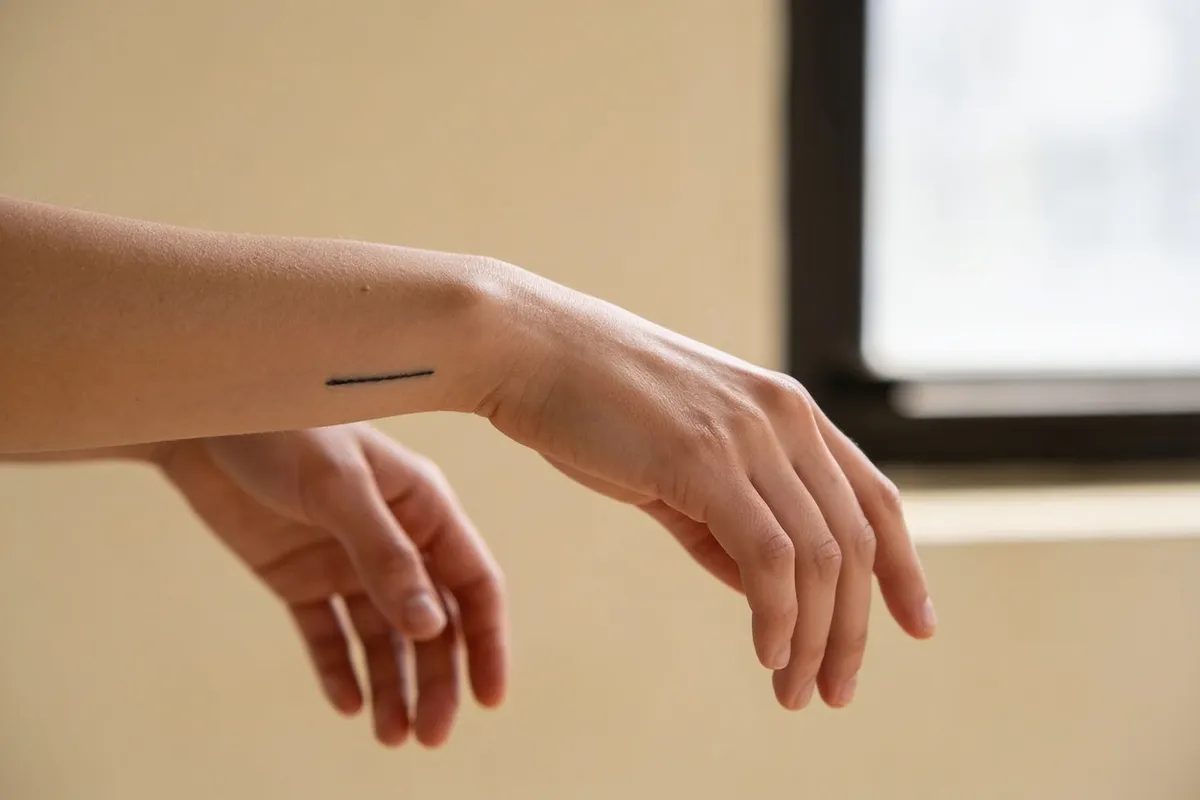
A small dark-ink tattoo on the forearm. Illustrative image, not a patient.Small red spots of this kind are collections of vessels. Illustrative image, not a patient.
Has the skin healed fully, without a change in colour or texture?
Which inks have responded, and which have lagged?
Is the remaining ink still a laser question, or has the goal been reached, such as fading enough for a cover-up?
The next step follows: another session at the same wavelengths, a change of wavelength or energy for a stubborn colour, a pause while a dark or pale patch settles, a stop when the aim has been met, or a referral. Nothing is booked to repeat by default.
When the response is not what you expected
A raised or thickened area, a texture change that does not settle, or a dark or pale patch that persists is reported rather than watched; thick, yellow or oozing crusts, spreading redness or increasing pain need a message the same day. See tattoo removal aftercare.
Your next step
1. MessageWhatsApp +65 8023 7170 with what is bothering you. A reply comes from the clinic, not a bot.
2. AssessmentDr Sin Yong examines you himself on Orchard Road, with ultrasound where earlier filler is involved.
3. A plan in writingWhat he would do, what he would not, the fee factors, and the option of no treatment.
Every treatment is performed by Dr Sin Yong personally. Singapore Medical Council registered · invited to share his clinical expertise internationally for CLASSYS, DEKA, Fotona, Hironic and Ilooda.
Bring a daylight photograph of the tattoo and note any earlier removal attempts and how the skin healed. How consultations work.
Tattoo removal results: timeline and disadvantages
How long it takes to see results
Fading is often visible 4 to 8 weeks after the first session, as the body clears broken ink. Most tattoos need several sessions about 6 to 8 weeks apart.
Can a tattoo be removed fully?
Many tattoos can be cleared or faded until barely visible. Some colours, dense professional work and layered tattoos may leave a faint shadow.
Disadvantages of tattoo removal
Several sessions, temporary redness, swelling and blistering, and a risk of lighter or darker skin or texture change, especially without proper aftercare.
Ask about Tattoo Removal
Leave your name, mobile number and email and the clinic will contact you directly.
Thank you — your enquiry has been received. The clinic will contact you during opening hours (Mon–Fri 10am–8pm, Sat 11am–3pm).
Tattoo ink fades in stages over several sessions. Illustrative video, not a patient.
How to choose a clinic for tattoo removal in Singapore
A brand page or an overseas clinic cannot tell you how tattoo removal is delivered here. These are the points worth checking with any clinic in Singapore.
Who performs it. Ask who will carry out tattoo removal. Medical treatments here are performed by Dr Sin Yong himself and are not delegated.
What is used. Ask for the name of the device or product, and whether it is registered with the Health Sciences Authority.
Assessment first. The plan should follow an in-person assessment, not a package chosen in advance.
The fee in writing. Fees are quoted in Singapore dollars, in writing, before any treatment starts.
Review. Ask when you will be seen again after the treatment, and by whom.
Consultations with Dr Sin Yong are at 9 Scotts Road, Pacific Plaza #12-01, Singapore 228210.
Frequently Asked Questions
Singapore’s medical advertising rules do not allow before and after photos on clinic websites. Dr Sin Yong can discuss expected results at the assessment.
This site does not show before-and-after photographs, in keeping with Singapore's rules on medical advertising. Another person's tattoo would not predict yours: ink, depth, layering, location and skin type differ, and lighting and angle change any photo. Your own tattoo is photographed under the same conditions for your record and compared at each review.
Straight after a session the tattoo frosts white, and when that fades the ink looks much as it did, because the laser fractures ink rather than lifting it out. Inflammation during healing can make it look slightly darker. Fading happens gradually between visits as the immune system clears the fragments, and is judged at review.
Because outlines, shading, dense infill and different colours rarely respond at the same rate. Black and dark inks generally respond more readily than green, yellow and white are poorly absorbed, and layered areas hold ink at several depths. Patchy fading partway through a plan is common, and each review looks at the tattoo colour by colour.
Complete clearance cannot be promised for any tattoo. Some tattoos clear, some fade a long way but leave a trace, and some colours, such as yellow and white, lighten little. Dense professional ink, layered cover-ups and scarred tattoos are harder. The evaluation tells you which applies to your tattoo before treatment, and the plan is revised at each review.
By comparing like with like. At each review, once the skin has healed, your tattoo is photographed under the same conditions as before and compared with your record, colour by colour. The mirror soon after a session shows frosting, redness or scabs, not the result. If a colour has not responded, the review decides whether a different wavelength or setting is tried.
Tattoo removal before after comparisons show fading over staged sessions rather than disappearance in one visit, with black ink clearing fastest and some colours leaving a faint trace. Dr Sin Yong does not publish before and after photographs, so realistic results are discussed at the assessment.
The colours and amount of ink, how deep it sits, where it is on the body, the age of the tattoo, your immune system and the number of sessions. Results between visits are judged after about six to eight weeks.
Fading shows over weeks after each session.
Many can; some leave a faint shadow.
Dense ink, certain colours and deep placement.
Darker skin needs more careful settings.
Some fading, but full removal takes several sessions.
References
The Kirby-Desai Scale: A Proposed Scale to Assess Tattoo-removal Treatments. Journal of Clinical and Aesthetic Dermatology 2(3) (Kirby W et al.), 2009. source
Cosmetic tattoo ink darkening. A complication of Q-switched and pulsed-laser treatment. Archives of Dermatology 129(8), 1993. source
510(k) K240752: DEKA TORO (El.En. S.p.A.), cleared 16 May 2024. US Food and Drug Administration, 510(k) Premarket Notification, 2024. source
Laser tattoo removal: A clinical update. Ho SGY, Goh CL. 8(1):9-15. Journal of Cutaneous and Aesthetic Surgery (PMC4411606), 2015. pmc.ncbi.nlm.nih.gov
Synchrotron-based nu-XRF mapping and mu-FTIR microscopy enable to look into the fate and effects of tattoo pigments in human skin. Schreiver I, Hesse B, Seim C et al. 7:11395. Scientific Reports, 2017. www.nature.com
About this page: written and medically reviewed by Dr Sin Yong, MBBS (NUS), MRCS (Edinburgh) · Last reviewed 6 November 2026 · Illustrative images only, not patients · Editorial policy