Published 21 October 2026 · Reviewed by Dr Sin Yong
A bojin facial is a manual massage drawn from traditional Chinese practice, in which a therapist uses firm, rhythmic strokes, often with a smooth tool of horn, jade or stone, along lines described as meridians. It can feel relaxing and may move fluid for a while. It does not move fat pads, ligaments or bone, tighten skin or treat acne, scars or pigment.
Bojin, written 拨筋 and sometimes translated as tendon-plucking or meridian facial, is a manual technique rooted in traditional Chinese practice. The therapist works across the face, scalp, neck and shoulders with firm, rhythmic strokes, often holding a smooth tool of buffalo horn, jade or stone, and follows lines that traditional practice describes as meridians. The pressure can be intense, particularly along the jaw, the cheekbones and the back of the neck, and many people describe the experience as both uncomfortable and relaxing at once.
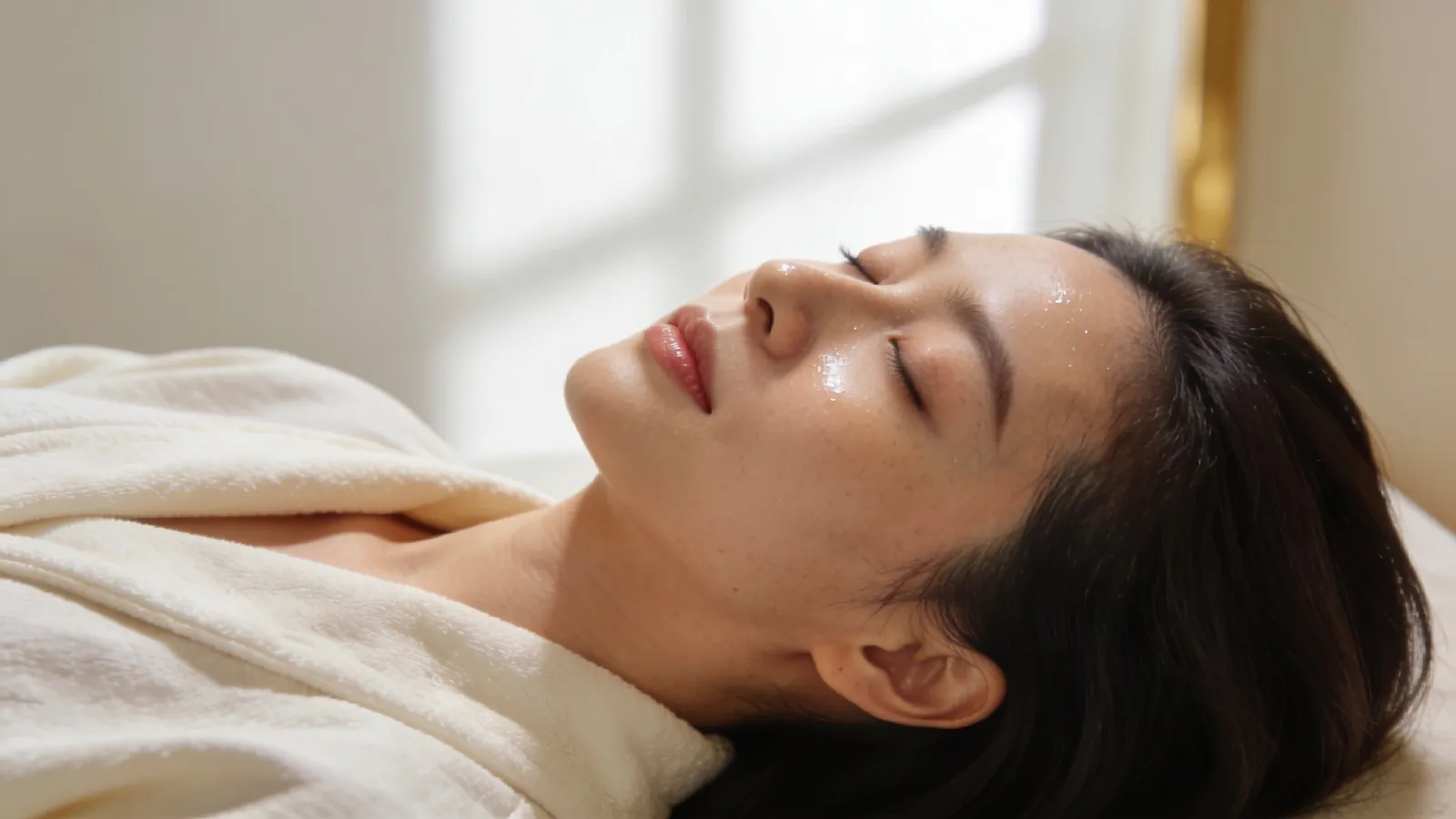
Illustrative image — not a patient.
The aims usually given are to ease tension, reduce puffiness and improve circulation. Some centres go further and describe bojin as slimming, lifting or detoxifying the face. Those are the claims worth examining, because the gap between what massage does and what the face is made of is where expectations go wrong.
Bojin belongs to the same family as gua sha, the scraping technique with a flat tool, and other manual facial massage. It is offered by beauty and wellness centres. It is a beauty treatment rather than a medical procedure, and Dr Sin Yong does not offer it. This article is written to help you judge what it can reasonably do, not to discourage you from enjoying it.
What can a bojin or lymphatic facial massage change?
The honest answer is: how the face feels, and some fluid, for a while.
Fluid
The face holds a little extra fluid after sleep, salty food, alcohol, a long flight or crying, mostly around the eyes and cheeks. The lymphatic vessels that drain it sit close to the surface. Gentle, directed strokes toward the neck can encourage that fluid to move on, which is the idea behind lymphatic drainage massage. The change is real but short-lived, because the fluid returns with the same habits and the same gravity. Firm bojin pressure is not the same as the light touch used in manual lymphatic drainage, and harder is not better for lymph.
Muscle tension and how it feels
Pressure over the masseter and the muscles of the scalp and neck can ease the sense of tightness that comes with clenching or long stretches at a screen. Warmth and a flush follow increased blood flow to the skin, and the face can look rosier for a short time afterwards.
Relaxation
Unhurried touch is pleasant for many people, and that has value in its own right. It simply should not be mistaken for a change in structure.
Nothing in that list is lasting, and none of it is measured in the way medical treatments are. The research on facial massage tools is small and largely short term, which is why no outcome is promised for it here.
“Massage moves fluid for an afternoon. It does not move a fat pad, a ligament or a bone, and a face that has changed shape needs to be examined, not pressed.”
Dr Sin YongOn bojin facials and facial massage
What can a bojin facial not change?
Most of what people notice when they say their face has changed sits deeper than any hand or tool can reach. The table sets out the common claims against what the face is made of.
Claim
What is actually behind the concern
Can massage change it?
Where it is assessed on this site
Face slimming
Masseter muscle bulk, cheek and jowl fat, or bone width
No; fat and bone are not moved by pressure, and muscle bulk is not reduced by massage
This is not a criticism of massage. It is a description of anatomy. A fat pad that has slid below the jaw, a masseter that has grown with clenching, or skin that has lost recoil will look the same after the strokes have stopped, because the structures responsible have not moved.
What does a bojin session feel like, and what is normal afterwards?
A session usually starts with cleansing and an oil or cream so the tool glides, then moves through the scalp, neck and shoulders before the face. Strokes along the jaw, under the cheekbones and around the brow are firm and repeated, and some points are pressed and held. Many people find parts of it sore, particularly over a tight masseter or the back of the neck, and the pressure should always be adjustable on request.
Afterwards it is common for the skin to look flushed and feel warm or tender for a while. Slight puffiness can follow very firm work rather than settle. Small bruises or tiny red dots can appear where pressure was heaviest, especially in people who bruise easily; these are signs of pressure on small vessels, not of toxins leaving the skin. Breakouts can flare if oils or creams block pores in acne-prone skin.
Bruising that is extensive, pain that persists, or swelling that does not settle are worth mentioning to a doctor, and they are a reason to ask for lighter pressure next time.
Who should be careful with firm facial massage?
Firm pressure is not neutral for every face. It is worth pausing or asking first in these situations:
After filler, threads or botulinum toxin. Firm massage over fresh filler, or over the face early after a thread lift, is usually avoided, and the treating doctor's aftercare comes first. After botulinum toxin, rubbing the treated area is avoided at first.
Rosacea and sensitive skin. Heat, friction and pressure are common triggers for flushing. Redness that comes and goes, with stinging, may be rosacea and is worth diagnosing rather than massaging.
Active acne. Pressure over inflamed spots can spread inflammation and leave marks.
Easy bruising or blood-thinning medicines. Firm strokes can leave bruises or broken capillaries.
Recent laser, peel or resurfacing. Skin that is healing needs to be left alone until the treating clinic says otherwise.
Tell any therapist about recent treatments, and tell your doctor about any facials you have booked, so that timings do not collide.
Where does medical treatment start?
Some changes are signals rather than cosmetic concerns. Swelling of the face that persists from morning to evening, keeps returning or comes with redness is not ordinary puffiness. DermNet describes Morbihan disease, a firm, persistent swelling of the upper face often linked to rosacea, which is diagnosed by excluding other conditions and treated medically. Allergy, kidney or thyroid problems and medicines can also cause facial swelling. These need a doctor, not stronger strokes.
Where the concern is structural, the conversation becomes a medical assessment of which layer has changed. Sagging, loss of jawline definition and a wider lower face are assessed by examining fat, muscle, ligament and skin, and the plan follows the layer that leads. Where the wish is for hydrated, calmer skin, device-based options work differently from manual massage. An LDM facial delivers dual-frequency ultrasound after a skin assessment and is directed at hydration and calming reactive skin, and a Hydrafacial cleanses and hydrates the surface. Neither is a lifting treatment either.
Bojin can sit alongside medical care as something pleasant. It cannot stand in for it.
Your next step
1. MessageWhatsApp +65 8023 7170 with what is bothering you. A reply comes from the clinic, not a bot.
2. AssessmentDr Sin Yong examines you himself on Orchard Road, with ultrasound where earlier filler is involved.
3. A plan in writingWhat he would do, what he would not, the fee factors, and the option of no treatment.
Every treatment is performed by Dr Sin Yong personally. Singapore Medical Council registered · invited to share his clinical expertise internationally for CLASSYS, DEKA, Fotona, Hironic and Ilooda.
If your face has changed shape or stays swollen, book an assessment with Dr Sin Yong on Orchard Road. How consultations work.
Not in a lasting way. A face looks wider because of masseter muscle bulk, fat in the cheeks and jowls, or bone width, and massage does not reduce any of these. Moving overnight fluid can make the face look less puffy for a while. If width is the concern, the cause is examined first, because muscle, fat and bone are treated differently.
No. Sagging comes from fat pads that have descended, retaining ligaments that have stretched and skin that has lost recoil. Massage does not reposition fat or tighten ligaments, and very firm pressure does not help skin that is already loose. Lifting is a medical question about which layer has changed, assessed by examination.
Firm massage is usually avoided over fresh filler, early after a thread lift, and over areas just treated with botulinum toxin. Follow the treating doctor's aftercare first, and ask when massage can resume. Tell the therapist what was done and when, and tell your doctor about any facials you have planned.
Bojin is a manual technique from traditional Chinese practice using firm strokes along meridian lines. LDM is a device-based treatment that delivers dual-frequency ultrasound after a medical skin assessment, directed at hydration, barrier support and calming reactive skin. They are not interchangeable, and neither is a lifting treatment.
See a doctor if swelling persists through the day, keeps returning, affects one side, comes with redness, itch or pain, or follows a new medicine. Persistent facial swelling can reflect allergy, rosacea-related conditions such as Morbihan disease, or other medical causes that need diagnosis rather than massage.
References
Morbihan disease. DermNet (Charlton O, Oakley A), 2017. source
Recommendations for rosacea diagnosis, classification and management: update from the global ROSacea COnsensus 2019 panel. British Journal of Dermatology (Schaller M et al.), 2020. source
About this page: written and medically reviewed by Dr Sin Yong, MBBS (NUS), MRCS (Edinburgh) · Last reviewed 21 October 2026 · Illustrative images only, not patients · Editorial policy