Medically reviewed by Dr Sin Yong · Last reviewed · 3 min read
Published 10 October 2026 · Reviewed by Dr Sin Yong
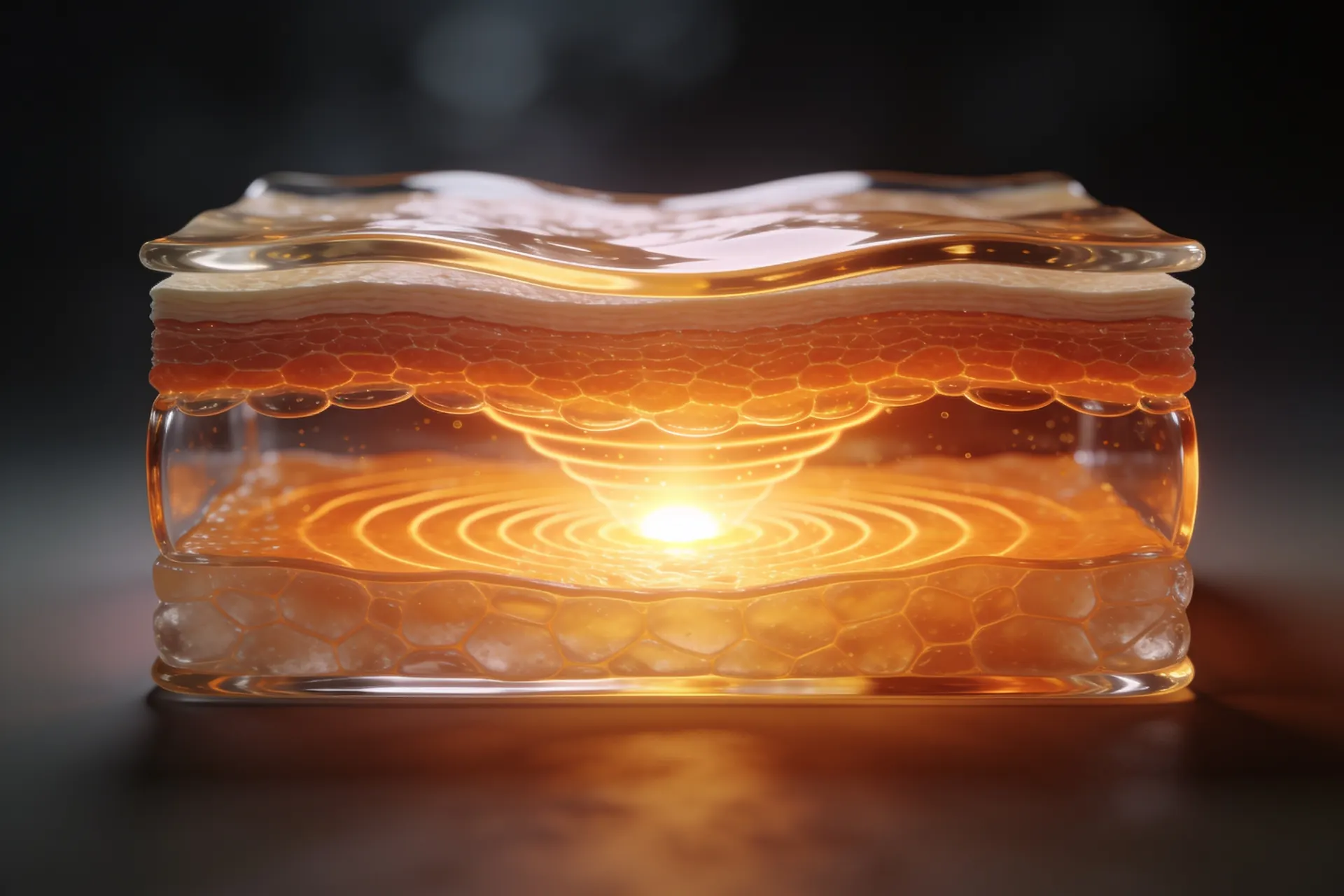
Time Freeze Laser LCLR® is Dr Sin Yong's dual-wavelength laser lifting protocol. Together with VF Lift, it is built to target areas over-stimulated by Sculptra or Ellansé and take away the excess. It is used for the sagging lower face where unwanted volume is part of the picture, for pillow face that is not hyaluronic acid, and for areas over-stimulated by a biostimulator, after ultrasound mapping.
Key facts
Type
Dual-wavelength laser lifting protocol developed by Dr Sin Yong
Built for
Areas over-stimulated by Sculptra or Ellansé; excess volume in the lower face
Pairs with
VF Lift – Vertical Facelift for descent
Not
A dissolving injection; hyaluronidase is used for hyaluronic acid filler
Where Time Freeze Laser LCLR® matters on this site
Time Freeze Laser LCLR® is referred to on every page where the problem is something added or over-stimulated rather than something that has dropped. These are the pages that use it.
Hyaluronidase dissolves what was injected; nothing dissolves the collagen a biostimulator has made, so that excess has to be taken away another way.— Dr Sin Yong
Time Freeze Laser LCLR®: the full protocol page, including how it compares with Ultherapy, Thermage and liposuction.
Pillow face: the overfilled face, and why hyaluronidase answers only the hyaluronic acid part of it.
Fat grafting correction: excess grafted fat near the surface, reduced from the surface after ultrasound mapping.
The name invites comparison with every other lifting and dissolving option. These are the ones it is most often mistaken for, and what separates them.
Hyaluronidase: the enzyme that dissolves hyaluronic acid filler. It has no effect on collagen made after Sculptra or Ellansé, or on grafted fat, which is where Time Freeze is used instead.
Microliposuction: a surgical procedure that suctions fat through small incisions, licensed as liposuction in Singapore. Time Freeze is a surface laser protocol; nothing is suctioned.
VF Lift – Vertical Facelift: radiofrequency on Volnewmer for descent. The two are paired, Time Freeze first to target the excess, VF Lift to lift what remains.
HIFU: focused ultrasound that heats points at set depths for lifting. It is not built for over-stimulated tissue and is not part of the Time Freeze protocol.
FSX Laser: the skin-quality protocol for texture, pores and lax lid skin. It does not address volume.
Published management of biostimulator over-correction has otherwise relied on time, steroid injection and excision, which is the gap the protocol was built for.
What decides whether Time Freeze Laser LCLR® is right for you
The deciding step is the ultrasound map. Dr Sin Yong maps fat, filler and tissue before any correction work, because the treatment follows what is there, not what the injection record says.
Hyaluronic acid filler on the map is dissolved with hyaluronidase; Time Freeze is not the tool for it.
Diffuse over-stimulation after Sculptra or Ellansé, or excess grafted fat close to the surface, is the indication.
A face that is heavy because support has gone, with nothing added, is a lifting question and goes to VF Lift – Vertical Facelift.
A large, stable excess of fat is a surgical question and is referred.
The approved description of the protocol is that it is built to take away the excess with no redness and no downtime; what it cannot do is dissolve filler or replace surgery for volumes that need suction. The ultrasound-guided correction page shows how the map is made.
Where it fits
A heavy lower face can be heavy because support has gone (treated by lifting) or because something was added or over-stimulated (treated by targeting the excess). Time Freeze Laser LCLR® answers the second problem. Published management of biostimulator over-correction has otherwise relied on time, steroid injection and excision (Vleggaar 2014; Lemperle 2009). Full page: Time Freeze Laser LCLR®; see also hyaluronidase vs Time Freeze Laser LCLR®.
No. Laser-assisted liposuction is a surgical procedure that suctions fat through incisions and is regulated as liposuction in Singapore. Time Freeze Laser LCLR® is a surface laser protocol: nothing is suctioned and no incision is made. Where the excess is large and stable, microliposuction by a licensed practitioner is the right route, and Dr Sin Yong says so.
It depends on what the lump is. The protocol is built for areas over-stimulated by Sculptra or Ellansé, which are mapped on ultrasound first. A diffuse over-correction is one picture; a firm, discrete nodule is another and is assessed on its own terms. The map, not the product name, decides the plan.
No. Hyaluronic acid filler is dissolved with hyaluronidase. Time Freeze Laser LCLR® is built to target over-stimulated tissue after biostimulators and take away the excess.
Yes; usually Time Freeze first to target the excess, then VF Lift to lift what remains.
Lemperle G, Gauthier-Hazan N. Foreign body granulomas after all injectable dermal fillers: part 2. Treatment options. Plast Reconstr Surg. 2009;123(6):1864-1873. doi:10.1097/PRS.0b013e3181858f4f. source
Wollina U, Goldman A. Spontaneous and induced degradation of dermal fillers: a review. J Cutan Aesthet Surg. 2024;17(4):273-281. doi:10.4103/JCAS.JCAS_137_23. source
Peng CX, Xv W, Ao YJ. A Review: Causes, Consequences, and Management Strategies of Facial Overfilling. Clinical, Cosmetic and Investigational Dermatology, 2025. pubmed.ncbi.nlm.nih.gov