Main guideDermal fillers — what it treats, who it suits, sessions, downtime and what decides the cost, by Dr Sin Yong.
Published 28 October 2026 · Reviewed by Dr Sin Yong
Time Freeze Laser LCLR®
I want to see the Time Freeze before and after
Singapore's advertising rules do not allow before-and-after photos on a clinic website, so they are not shown here. Tap the button and a WhatsApp message to the clinic opens with the request already written; send it and the team will reply with the Time Freeze Laser LCLR® before-and-after PDF.
WhatsApp +65 8023 7170 · replies within clinic hours · results vary and are assessed in person
Nasolabial fold filler softens a smile line by placing product in or beneath the crease. It helps most when the fold is etched at rest and the cheek above it already has support. When the fold comes from a cheek that has descended or deflated, filling the line alone adds weight beside the mouth. That is why the cheek is assessed first and the line treated last.
Short answerNasolabial fold filler helps a crease that remains once the cheek above has support. It does not fix a fold made by a descending cheek, and too much makes the lower face heavy. In the fold, a soft hyaluronic acid filler is usually preferred because it can be dissolved. Every cause of the fold, and every option, is on nasolabial folds treatment.
Nasolabial fold filler helps when the crease itself is part of the problem. The fold runs from the side of the nose to the corner of the mouth, and every face has it when smiling. With age it can become etched into the skin, so it stays visible at rest. That etched part is what filler in the line is for.
Intimate concerns are common and are discussed privately. Illustrative image, not a patient.
It tends to help in these situations:
A residual crease after cheek work. Once support has been restored above the fold, or descent has been lifted, a line can remain. A small amount of filler softens it.
A fold etched at rest in reasonable skin. The fold is visible when the face is still, and the cheek above has not dropped much.
A deep fold from bone structure. Some younger faces have deep folds because the bone beside the nose sits further back. Deep support at the base of the fold can soften it.
The evidence supports filler for this area. A systematic review and meta-analysis of randomised trials found that tissue fillers improve the nasolabial fold area, and modern technique reads that evidence anatomically: placement and amount decide whether the result looks natural (Aesthetic Plastic Surgery 2021).
What filler cannot do is just as important. It does not lift a cheek that has slid, it does not tighten lax skin, and it should not try to erase the fold. A visible line is part of every adult face; aiming for a creaseless lower face takes so much product that the face looks heavy.
When filling the line makes it worse
Filling the nasolabial fold makes it worse when the fold is a symptom of what is happening above it. Facial fat sits in separate compartments, and with age the compartments of the cheek deflate and slide downward (Rohrich 2007). Descending tissue piles against the fold. Filler placed in the crease lifts the floor of the line towards tissue that keeps arriving, and the shadow returns.
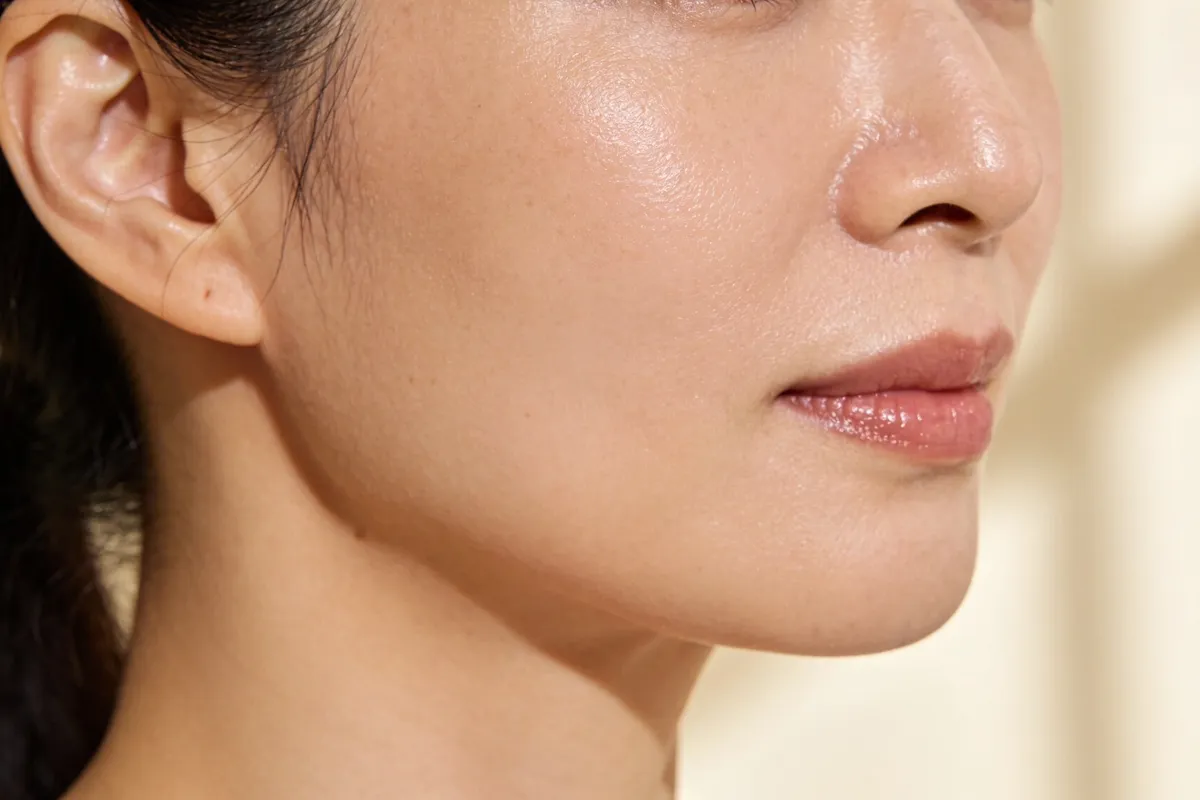
Skin quality is assessed in natural light. Illustrative image, not a patient.
Chasing that shadow with more product causes the problems people fear:
The fold widens into a soft, sausage-shaped ridge beside the nose.
The transition between cheek and upper lip flattens, and the mouth area looks heavy.
Product spreads up into the cheek or out towards the lip, so the fold looks lower or wider than before.
Over repeated top-ups, the whole mid-face becomes rounded, the pattern described on pillow face.
If filler is already in the fold and it looks heavier than before, adding more is not the answer. Ultrasound shows what is there and where it sits, and hyaluronic acid can be dissolved with hyaluronidase. Problems after filler in the folds are covered on smile line filler gone wrong.
“Filler in the fold is the finishing step, never the opening one. If the cheek above is still coming down, the line will come back however much is put in it.”
Dr Sin YongOn nasolabial fold filler
Smile line filler: why the cheek is treated first
Dermal fillers for smile lines are planned with the cheek above treated first. The fold is where the cheek meets the firmer upper lip, so what happens to the cheek decides how deep the fold looks. Restoring support at the cheek reduces how much tissue gathers against the fold, and the line often softens before any product goes near it.
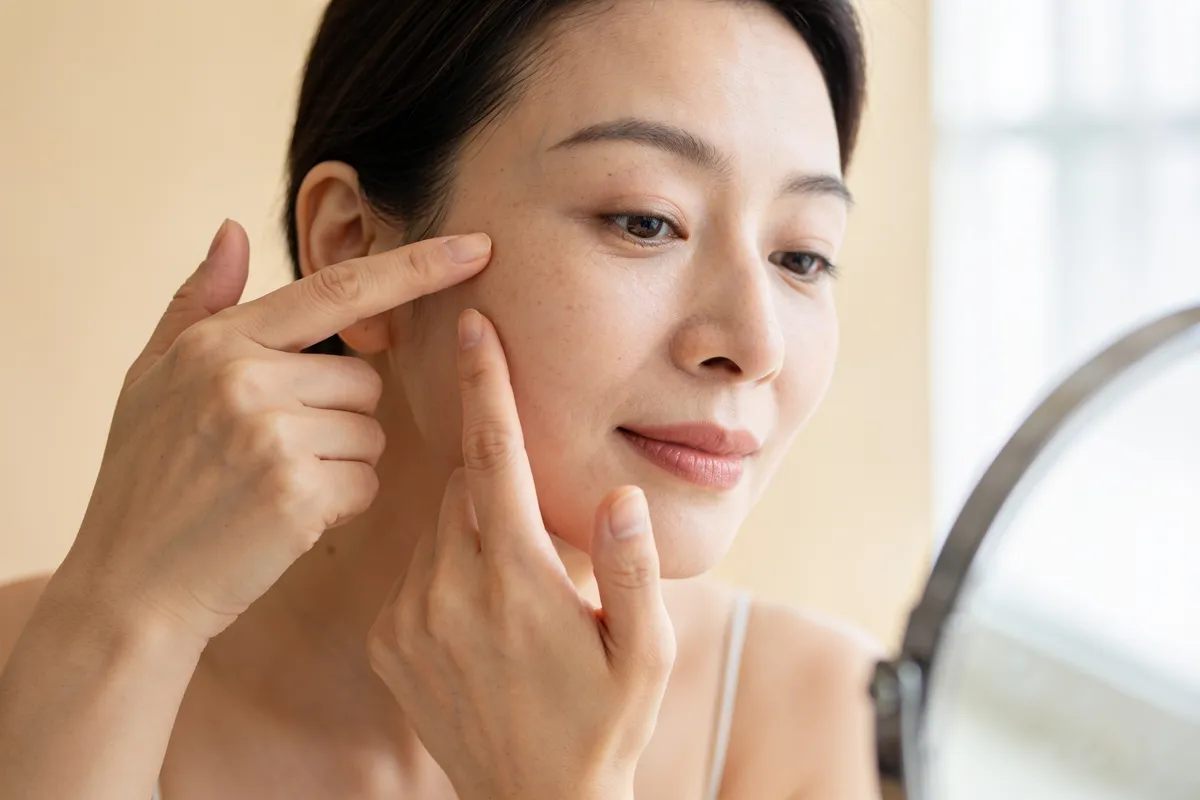
The plan follows what the skin shows on the day. Illustrative image, not a patient.
The cheek is assessed for three things, each with its own answer:
Filler in the fold avoided until descent is addressed
Fullness: the inner cheek is heavy
Reduction, or dissolving if old filler is the cause
More product in the fold avoided
For a fold fed by a descended cheek, Dr Sin Yong's threadless protocol, RVR ProLift, places biodegradable product along mapped vertical vectors to re-support the deeper structure. Why cheeks drop is explained on sagging cheeks.
The principle is the same whichever tools are used: the crease receives the least filler of anywhere in the plan, and it comes last.
Which filler for nasolabial lines: HA, CaHA or PCL
The filler for nasolabial lines depends on where it is going: into the fold itself, or into the support above and beneath it. The materials behave differently, and hyaluronic acid is the one that can be dissolved.
Illustrative image — not a patient.
Material
What it does
Can it be dissolved?
Where it tends to be used
Hyaluronic acid (HA)
A gel that occupies space; softness chosen for the layer
Yes, with hyaluronidase
The fold itself, where reversibility matters
Calcium hydroxylapatite (CaHA)
Firm microspheres that support and prompt the body's own collagen
No
Support on the bone, away from the surface of the fold
Polycaprolactone (PCL)
Microspheres in a gel that act as a scaffold for collagen
No
Support on the bone
PLLA biostimulator
Prompts collagen gradually across an area
No
Broader volume support, planned cautiously
In bone-support areas Dr Sin Yong usually uses CaHA or PCL. In the fold itself, a soft hyaluronic acid filler is usually preferred, because it can be dissolved if it moves, forms a lump or simply is not wanted. Collagen-stimulating products do not dissolve in the same way, which makes conservative planning more important wherever they are considered. How each filler type is used across the face is set out in the guide to dermal fillers in Singapore.
No brand is named here. What matters is the material, the layer it is placed in, and the amount, which are decided at assessment.
Does nasolabial fold filler work? What randomised trials found
Nasolabial fold filler is one of the most thoroughly tested filler uses. A meta-analysis pooled 22 randomised controlled trials with 1,848 participants comparing two families of hyaluronic acid gel. The smoother, single-phase gels gave greater and more lasting improvement from 2 weeks through to 52 weeks, with less pain after injection.
The fold also carries a specific risk. In a review of 48 cases of vision loss after filler, the nose-to-mouth fold was the injection site in 14.6%. The trials show that filler softens the line. They do not test whether the line is the right thing to fill, which is the question the first sections of this page deal with.
Nasolabial fold filler risks: what to know
Nasolabial fold filler is a common treatment, but the area carries real risks, and knowing them helps you choose where and by whom it is done.
Pelvic floor training is the first step for many concerns after childbirth. Illustrative image, not a patient.
Expected and common
Swelling, tenderness and redness at the injection points, which settle.
Bruising, more likely with blood thinners or supplements that affect bleeding.
Less common
A lump or ridge you can feel, from product gathering in one place.
A bluish tint where hyaluronic acid sits too close to the surface, known as the Tyndall effect.
Product moving out of the fold towards the cheek or lip.
Late swelling or a reaction that appears long after the injection.
Rare but serious
The facial artery and its branches run close to the fold, so a blocked blood vessel is a recognised risk here. Skin that turns pale, dusky or mottled beside the nose or on the upper lip, or pain that is getting worse, needs urgent assessment. Any change in vision or eye pain after filler means calling 995 or going to the nearest emergency department straight away. The signs are listed on warning signs after filler.
These risks are reduced by anatomy-led placement, conservative amounts, using hyaluronic acid where reversibility matters, and keeping hyaluronidase on hand. They are reduced, not removed.
Stop asking for more fillers. If your face is looking heavy, filler isn't the fix; it might be the reason. Ageing is descent. The support layer loosens and everything drifts downwards. Adding volume to something that's already falling adds weight to the fall. We train other doctors on placement, and this is the first thing that we teach. The question isn't how much. It's what's actually sagging. Get assessed before anyone injects into your face.
Transcript of Dr Sin Yong's video, lightly edited for reading.
How to choose a clinic for nasolabial fold filler in Singapore
A brand page or an overseas clinic cannot tell you how nasolabial fold filler is delivered here. These are the points worth checking with any clinic in Singapore.
Who performs it. Ask who will carry out nasolabial fold filler. Medical treatments here are performed by Dr Sin Yong himself and are not delegated.
What is used. Ask for the name of the device or product, and whether it is registered with the Health Sciences Authority.
Assessment first. The plan should follow an in-person assessment, not a package chosen in advance.
The fee in writing. Fees are quoted in Singapore dollars, in writing, before any treatment starts.
Review. Ask when you will be seen again after the treatment, and by whom.
Consultations with Dr Sin Yong are at 9 Scotts Road, Pacific Plaza #12-01, Singapore 228210.
Nasolabial fold filler: further questions
These further questions about nasolabial fold filler follow from the anatomy: the fold forms where the cheek meets the upper lip, and a classic anatomical study described the fibres that link its skin to the muscle beneath (Barton 1997), so what happens above the fold decides much of what filling it can do.
Does nasolabial fold filler make your face look heavy?
It can, if it is used to fill a fold that is really caused by a cheek that has dropped. The fold then flattens at rest, but the area beside the mouth looks fuller, especially when smiling, and the lower face can look heavier. Small amounts placed after the cheek has been lifted or supported are less likely to do this. Dr Sin Yong checks the fold at rest and when smiling before deciding.
What are the side effects of nasolabial fold filler?
Swelling, tenderness and bruising are common and settle. Less often, a lump, unevenness or a ridge visible when smiling appears, and filler can spread if large amounts are used. The serious risk is injection into a blood vessel, because the facial artery runs near the fold, which is why the anatomy guides placement and hyaluronidase is kept on hand. Pale or dusky skin, or pain that is getting worse, needs urgent review.
Should I choose filler or a thread lift for nasolabial folds?
They answer different problems. A thread lift repositions mobile tissue of the cheek and jowl along a vector, which can soften the fold from above; filler adds support or volume. Where the cheek has descended, lifting usually comes first, with VF Lift – Vertical Facelift, Time Freeze Laser LCLR® or a thread lift chosen at assessment. Filler in the fold is kept for what remains, in small amounts.
Is nasolabial fold filler suitable for a lean face?
In a lean face the fold often deepens because the cheek has lost both support and volume, and filling the fold alone can look out of place. Dr Sin Yong usually starts with VF Lift – Vertical Facelift to restore and lift, and does not plan HIFU or Ultherapy on lean faces. A small amount of filler is considered afterwards only if a crease remains that lifting has not softened.
Nasolabial fold filler compared with lifting
A nasolabial fold can be softened by filling the crease, by supporting the cheek above it, or by lifting the tissue that has descended. The table shows how each compares.
Lifting is judged along the jawline and neck. Illustrative image, not a patient.
Nasolabial fold options compared
Option
How it works
Who it tends to suit
Watch-outs
Hyaluronic acid in or beneath the fold
Fills the crease directly
A residual crease once the cheek is supported
Too much makes the fold heavier and the smile look full
A fold deepened by cheek descent, including lean faces
Change builds gradually
Time Freeze Laser LCLR®
Laser lifting and tightening
Laxity around the mouth and jowl
Can be combined with the VF Lift
Dr Sin Yong lifts first and uses filler only for what remains, after examining the face at the clinic on Orchard Road, Singapore.
How Dr Sin Yong approaches nasolabial fold filler
Dr Sin Yong assesses and injects himself on Orchard Road. The fold is examined at rest and in a smile, from the front and in profile, together with the cheek above it, the jawline below and the quality of the skin. Earlier filler or threads are recorded, and ultrasound is used where product is already present, because a heavy fold is sometimes old filler rather than ageing.
A gentle lift with the fingers shows where laxity sits. Illustrative image, not a patient.
He treats the cause first and the crease last, and conservatively. Many consultations about the fold end with a plan that starts in the cheek, and some end with no filler in the fold at all.
Who should wait
Pregnancy or breastfeeding.
Infection, a cold sore or inflamed skin around the mouth, or a recent dental infection.
A known allergy to a filler or to local anaesthetic.
Blood thinners or a bleeding tendency, which are reviewed first; do not stop a prescribed medicine on your own.
Afterwards
Expect some swelling and tenderness. Avoid pressing or massaging the area unless you are told to, and avoid strenuous exercise, saunas and facial treatments until you are told it is fine. Call the clinic for skin colour change, increasing pain or swelling, or a lump that becomes red or tender. The fold is reviewed once swelling has settled, and any further step is decided then. Fees follow the plan and are set out after examination; see how fees are quoted.
Your next step
1. MessageWhatsApp +65 8023 7170 with what is bothering you. A reply comes from the clinic, not a bot.
2. AssessmentDr Sin Yong examines you himself on Orchard Road, with ultrasound where earlier filler is involved.
3. A plan in writingWhat he would do, what he would not, the fee factors, and the option of no treatment.
Every treatment is performed by Dr Sin Yong personally. Singapore Medical Council registered · invited to share his clinical expertise internationally for CLASSYS, DEKA, Fotona, Hironic and Ilooda.
Book an assessment with Dr Sin Yong on Orchard Road. Bring the names and dates of any earlier filler in the cheeks or folds. How consultations work.
Time Freeze Laser LCLR®, in one line. Dr Sin Yong uses it to lift every zone of the face and neck, to take away excess filler in the same session, and to reduce loose fat in sagging areas while the skin tightens. The three uses, explained · Sculpting mode for excess filler.
A device is only a device. Ultherapy Prime, Thermage or a filler syringe is a tool, like a suture; technique, experience and customisation to the face decide the result. Why technique, not the device, decides the result.
Filler can soften a deep fold, but the fold is often made deeper by cheek sagging above it. Filling the line alone can make the lower face look heavy, so Dr Sin Yong usually lifts first with the VF Lift or Time Freeze Laser LCLR® and then uses filler sparingly if still needed.
The areas with the highest risk of blocked blood vessels include the nose, the glabella between the brows, the forehead, the nasolabial fold and the temple. Injecting there needs careful technique and a doctor who can manage complications.
Korean clinics often combine lifting treatments, such as RF and focused ultrasound, with small amounts of filler or threads, rather than filling the fold heavily. The same lift-first approach is used here.
The fold looks softer on the day. Mild swelling or bruising settles within one to two weeks, and the result commonly lasts nine to twelve months.
Discuss whether the fold is from volume loss in the cheek, sagging or skin creasing, which product and how much is planned, any earlier filler, and the risks of the area, including the nearby artery.
Avoid pressing on the area, strenuous exercise, alcohol and heat such as saunas for a day or two. Swelling and bruising usually settle within a week. Severe pain or pale, mottled skin needs urgent review.
Yes. Laugh line filler, smile line filler and nasolabial fold filler all describe filler placed in or beneath the crease that runs from the side of the nose to the corner of the mouth. The names differ; the anatomy does not. What matters more than the name is whether the fold comes from the crease itself or from a cheek above it that has descended or deflated, which is decided at examination.
Smile lines filler made of hyaluronic acid can be dissolved with hyaluronidase, which is one reason a soft hyaluronic acid filler is usually preferred in the fold. Calcium hydroxylapatite and poly-L-lactic acid cannot be dissolved, and that is weighed when a product is chosen. Where filler has been placed before, the area is scanned with ultrasound to see what is already there before anything is added or dissolved.
No, and it should not try. Every adult face has a nasolabial line when smiling, and erasing it takes so much filler that the lower face looks heavy. The realistic aim is a softer shadow at rest. That usually comes from supporting or lifting the cheek above first, with a small amount of filler in the fold for any crease that remains.
It depends on the cheek. If the cheek has deflated, support there often softens the fold more naturally than product in the line. If it has descended, lifting is considered before either. Filling the fold alone suits a crease etched at rest in a face whose cheek is still well supported. Most plans start above the fold and treat the line last.
No duration is promised. How long filler stays depends on the product, the layer it is placed in, how much movement the area has, and your own metabolism, and the face continues to age around it. Hyaluronic acid can also persist longer than people expect, which is one reason top-ups are planned at review rather than on a schedule.
Most people feel pressure and a brief sting at the injection points. A numbing cream is commonly used, and many fillers contain a local anaesthetic, which eases discomfort as the product goes in. The area can feel tender and swollen afterwards. Tell the doctor straight away about pain that is severe or getting worse, because that is not expected.
Often, but earlier product is assessed first. Filler can stay longer than expected and can move, so ultrasound is used to see what is already in the fold and the cheek. If the area is heavy with old product, dissolving it comes before anything new. Bring the names and dates of earlier treatments if you have them.
Avoid pressing or massaging the area unless told to, and hold off strenuous exercise, saunas, facials and dental work until you are told it is fine. Keep the area clean and avoid make-up over the injection points at first. Call the clinic for pale or dusky skin, increasing pain, or a lump that becomes red or tender.
Usually about nine to eighteen months, depending on the filler and how mobile the area is. Lifting the mid-face first often means less filler is needed in the fold.
Avoid blood-thinning supplements and alcohol for a few days if your doctor agrees, and plan around events.
Avoid pressing the area, strenuous exercise and heat for a day, and expect mild swelling.
References
Tissue Fillers for the Nasolabial Fold Area: A Systematic Review and Meta-Analysis of Randomized Clinical Trials. Aesthetic Plastic Surgery, 2021. source
The fat compartments of the face: anatomy and clinical implications for cosmetic surgery. Plastic and Reconstructive Surgery, 2007. source
Anatomy of the nasolabial fold. Plastic and Reconstructive Surgery, 1997. doi.org
Huang Y, Zhang Y, Fei X, Fan Q, Mao J. Monophasic and Biphasic Hyaluronic Acid Fillers for Esthetic Correction of Nasolabial Folds: A Meta-Analysis of Randomized Controlled Trials. Aesthetic Plastic Surgery, 2022. doi.org
Beleznay K, Carruthers JDA, Humphrey S, Carruthers A, Jones D. Update on Avoiding and Treating Blindness From Fillers: A Recent Review of the World Literature. Aesthetic Surgery Journal, 2019. doi.org
About this page: written and medically reviewed by Dr Sin Yong, MBBS (NUS), MRCS (Edinburgh) · Last reviewed 7 November 2026 · Illustrative images only, not patients · Editorial policy