A deep, painful nodule may be considered for a cortisone injection, but it does not replace acne treatment.
For severe teen acne, what isotretinoin involves and how it is monitored is set out here.
Published 20 October 2026 · Reviewed by Dr Sin Yong
Teen acne treatment in Singapore is usually sought by a parent, and this page is written for both of you. Some acne between 13 and 19 is normal; acne that is inflamed, painful or leaving marks is the kind a doctor treats early, because scars are made while the acne is active. Consultations for anyone under 18 are held with a parent or guardian present.
Blackheads, whiteheads and occasional spots on the forehead, nose and chin through puberty, driven by rising androgens, affect the large majority of teenagers.
What is not
Painful deeper lumps, spots that leave brown or red marks, dents, or acne that is affecting school, sport or confidence; these warrant a doctor rather than another cleanser.
Why early matters
Scars form while acne is inflamed, and a study of acne scarring found that a delay in effective treatment was associated with a greater degree of scarring.
What a doctor uses
Topical retinoids and benzoyl peroxide as the foundation, a time-limited oral course where the grade calls for it, isotretinoin for severe disease under specialist monitoring, and lasers directed at inflammation alongside medication.
Who is in the room
Dr Sin Yong assesses in person; for anyone under 18 a parent or guardian attends, consents and takes part in the plan.
Teen acne treatment in Singapore is about timing as much as products. Blackheads and occasional spots through puberty are expected; painful lumps, marks or dents warrant a doctor, because delay in effective treatment is associated with more scarring. Topical retinoids and benzoyl peroxide form the base, oral treatment follows the grade, and a parent or guardian attends for anyone under 18.
What is normal teenage acne, and what is not?
Acne begins when rising androgens at puberty enlarge the sebaceous glands and increase their output, follicle cells shed abnormally and block the opening, Cutibacterium acnes multiplies in the blocked follicle, and the immune system responds with inflammation. It usually starts on the forehead, nose and chin, often before any other sign of puberty, and in most teenagers it is comedonal or mildly papulopustular, settles with time and leaves no lasting mark. That is the acne that is normal at 13 to 19. The large majority of teenagers have some of it, and in that group a sensible routine and patience are often enough.
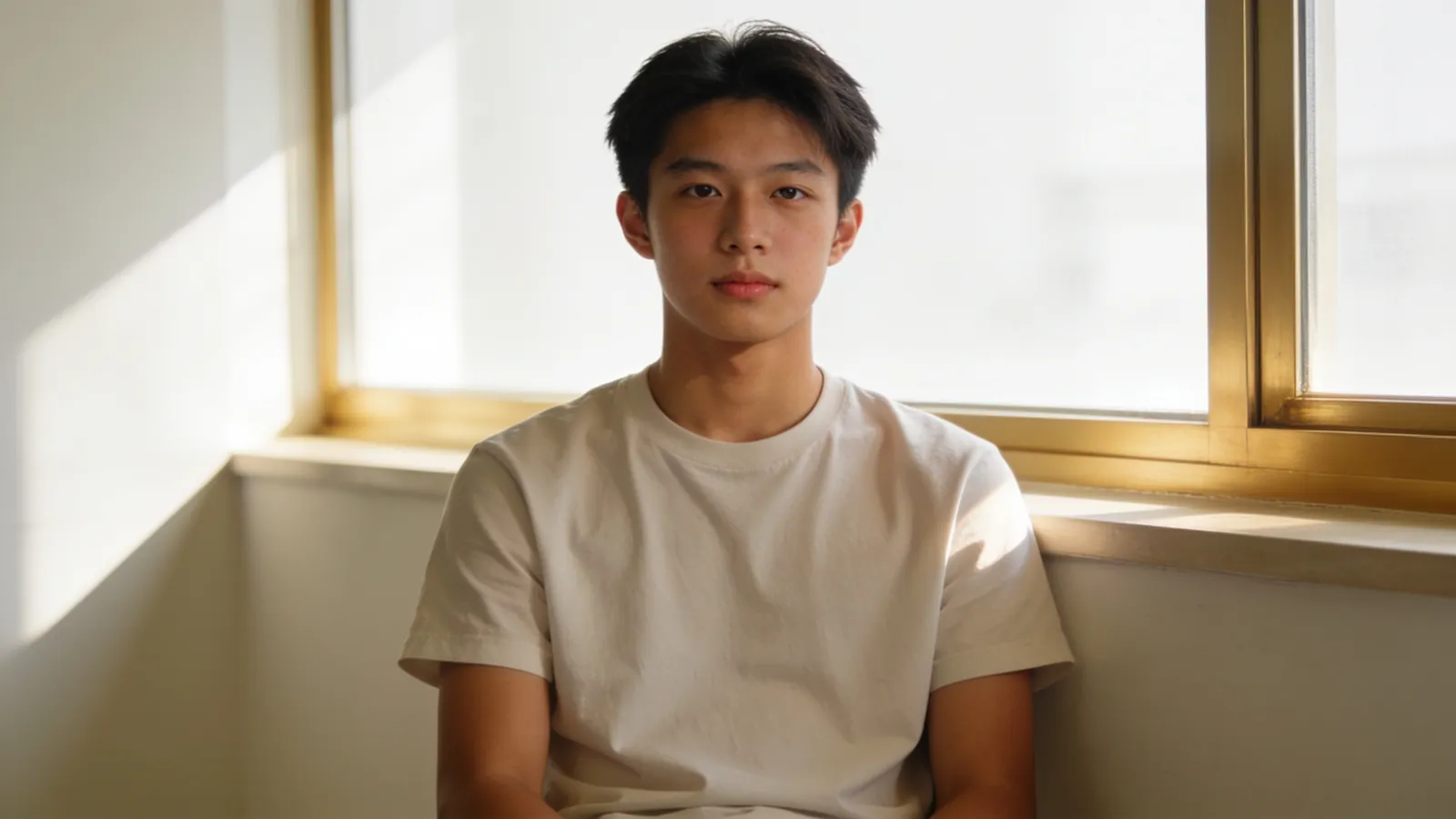
Illustrative image — not a patient.
What is not normal is acne that is inflamed, deep, spreading or leaving marks. Painful lumps under the skin that are slow to settle, spots across the cheeks and jaw and onto the chest or back, red or brown marks that outlast the spot, and any dent the fingertip can feel are the signs that acne has moved past what a routine can manage. So is acne that is changing behaviour: a teenager who is avoiding photographs, sport or friends because of their skin is carrying a burden worth taking seriously, and that is a reason to be assessed.
Grading in plain terms
What you see
Grade
What it means for treatment
Blackheads and whiteheads, few red spots
Comedonal
Follicle blockage dominates; topical treatment is the foundation
Red spots and pus-filled spots alongside blackheads
Papulopustular
Inflammation is now the main feature; marks become a consideration and a doctor's plan is usually worthwhile
Deep, tender lumps and cysts
Nodulocystic
The grade most associated with scarring; early medical management matters most and specialist options are discussed
Two look-alikes are checked at assessment. Uniform, itchy small bumps on the forehead, chest or back may be Malassezia folliculitis, which does not respond to acne treatment, and small white bumps that never come to a head may be milia. The full account of grading is on acne treatment Singapore.
When should teenage acne be treated early to prevent scars?
Scars are made while acne is active. Every inflamed spot is a small wound in the dermis, and whether it heals flat or leaves a dent or a mark depends on how deep the inflammation went, how long it lasted and how the individual's skin heals. A clinical study of acne scarring found that scarring was related to the severity of the acne and that a delay between the onset of acne and adequate treatment was associated with a greater degree of scarring. The practical conclusion is that the time to treat acne that is inflamed is now, not after the exams, and not once it has been left to see whether it settles.
Illustrative image — not a patient.
The threshold for seeing a doctor is therefore lower than many families expect. It is not reserved for severe acne. It is reached when inflamed spots are regular rather than occasional, when marks are being left, when the acne is spreading to the trunk, or when the teenager is picking. In Singapore's Fitzpatrick III to V skin, the brown marks left by inflammation, post-inflammatory hyperpigmentation, can persist far longer than the spot that caused them, which is a second reason to shorten the inflamed period.
Signs that the window for early treatment is open
New inflamed spots most weeks, not just around exams or periods
Marks that are still visible long after the spot has gone
Any dent that can be felt with a fingertip when the skin is stretched
Painful lumps that are slow to settle, or that recur in the same place
Acne on the chest, shoulders or back, which scars more readily than the face
Picking or squeezing that the teenager cannot stop
The sequence of acne, marks and scars, and why each stage is treated in order, is set out on the acne-to-scar pathway. Scar treatment itself is not started while acne is active, because resurfacing skin that is still breaking out treats scars that are still being made.
“I will not resurface a teenager's scars while the acne is still making new ones. Control first; the scars can wait, and they are easier to treat once they have stopped arriving.”
Dr Sin YongOn teenage acne
What does a doctor use for teenage acne: topicals, oral treatment and light?
Medical treatment of acne is first-line, and the current guidelines from the American Academy of Dermatology and the earlier paediatric recommendations agree on the structure: a topical retinoid and benzoyl peroxide as the foundation for nearly every grade, antibiotics used only in combination with benzoyl peroxide and for a limited period, hormonal options in older girls where appropriate, and isotretinoin for severe or scarring acne. Lasers and light are directed at the inflammatory component alongside medication, not instead of it. What is chosen for a given teenager depends on grade, skin type, what has been tried, and what the family can realistically keep up.
Category
What it does
Where it fits
What parents should know
Topical retinoid (adapalene, tretinoin)
Normalises how follicle cells shed, so plugs form less
The foundation for comedonal and inflammatory acne, and for maintenance
Early dryness and flaking are usual; started slowly, used at night, with sunscreen by day
Benzoyl peroxide
Reduces C. acnes without breeding resistance
Alongside a retinoid, and always alongside any antibiotic
Bleaches towels and pillowcases; can irritate at first
Azelaic acid, topical antibiotics
Act on bacteria, inflammation and, for azelaic acid, marks
Where a retinoid is not tolerated, or marks are a problem
Topical antibiotics are not used alone
Oral antibiotic (a tetracycline in those over about eight)
Reduces inflammation and bacteria
Moderate inflammatory acne, for a limited course, with topicals continuing
Older teenage girls with a hormonal pattern, after a history
Decided with the family and sometimes with a gynaecologist
Isotretinoin
Acts on all four drivers of acne
Severe, nodulocystic or scarring acne, or acne that has failed other treatment
Prescription-only with blood tests and monitoring; dosing is individual and decided by the treating doctor; not for anyone who could become pregnant without strict precautions
Act on inflammatory activity within the skin with the surface left intact
Alongside medical treatment in persistent inflammatory acne, after assessment
Not a substitute for medication; settings chosen for the skin type; isotretinoin changes timing
What a doctor also does is subtract. Many teenagers arrive on a routine of five products bought online, each promising to clear skin fast, and the first step is often to remove most of them. Scrubs, harsh cleansers, toothpaste on spots and squeezing all add inflammation, and inflammation is what scars.
How does a consultation for a teenager work, and who gives consent?
Consultations for anyone under 18 are held with a parent or guardian present. The parent or guardian makes the appointment, attends, gives consent to any treatment and is part of every decision, and the enquiry is made by the adult rather than by the teenager. This is not a formality. Acne treatment is a sustained course, it depends on daily habits at home, and some medicines need monitoring; the plan has to be one the family can carry, so the family is in the room when it is made.
What happens at the first visit
History with both of you: when the acne started, what has been tried, periods and any hormonal pattern in girls, family history of acne and scarring, medicines, sport, diet questions and how the acne is affecting daily life
Examination of the face, and of the chest and back where relevant, with grading and a check for look-alikes
A look at the current routine, product by product, and the removal of what is doing harm
A plan explained to the teenager directly, in plain terms, with the parent listening, because the teenager is the one who will apply the cream every night
Written instructions, what side effects to expect at the start and when to get in touch
A review date, because acne treatment is adjusted on response rather than set once
Dr Sin Yong talks to the teenager as the patient and to the parent as the decision-maker, and the two are not in conflict. Where a teenager wants to be examined privately, that is arranged with the parent's agreement and the parent rejoins for the plan. Where the history suggests something beyond acne, such as an endocrine cause or significant distress, referral to the appropriate specialist is discussed with the parent. The general process is described under how consultations work.
What makes teenage acne worse, and what should the family avoid?
Most of what worsens teenage acne is done with good intentions. The list below is the one Dr Sin Yong goes through at the first visit, because stopping these is often the fastest change a family can make.
Squeezing and picking, which drive inflammation deeper and turn a spot that would have healed flat into a mark or a dent
Scrubbing and washing many times a day, which strips the barrier and changes nothing in the gland; twice a day with a gentle cleanser is enough
Layering several acids, a retinoid and spot treatments bought online at once, which irritates the skin and makes it harder to tell what is working
Borrowing a steroid cream from the family cupboard, which calms redness briefly and then rebounds, and can trigger perioral dermatitis
Stopping a prescribed treatment early because it has not worked yet, when most acne treatments are judged over a sustained period
Stopping a prescribed treatment because the skin has cleared, when maintenance is what keeps it clear
Products bought from overseas or online that promise fast clearing, some of which have been found by the Health Sciences Authority to contain undeclared steroids or other prohibited ingredients
Heavy, occlusive make-up and hair products on the forehead and temples, and helmets, caps and masks worn for hours without cleaning
What helps at home
A gentle cleanser twice a day, the prescribed treatment applied as directed, a light non-comedogenic moisturiser and a fluid sunscreen every morning
A clean pillowcase, phone screen and sports kit, and a shower after sport
Patience, with a review booked so adjustments are made rather than given up on
Treating the teenager's distress as real; acne affects confidence at an age when confidence is being built, and that is a reason to treat, not to wait
Diet questions come up at nearly every visit. The evidence linking high-glycaemic diets and, less consistently, skimmed milk to acne is modest and is discussed honestly; no diet replaces treatment, and no teenager is put on a restrictive diet for their skin.
What decides the plan, and what does aftercare look like for a teenager?
The plan is decided by grade, by what is dominant in the follicle, by skin type, by what has been tried and for how long, by whether marks or early scars are already present, by sport and lifestyle, and by what the family can sustain. For girls, a hormonal pattern changes the options. For anyone with nodulocystic disease, the conversation about specialist treatment happens early rather than late. For anyone in whom the look is not acne at all, the plan changes entirely.
What decides the plan
Grade: comedonal, papulopustular or nodulocystic
Skin type, which sets pigment risk and how any laser is run
Whether marks or dents are already present, which raises urgency
Hormonal pattern in girls
Current routine and what has been tried properly
Whether a laser directed at inflammation has a role alongside medication
Aftercare in broad terms
Aftercare is mostly daily life done consistently: the prescribed treatment applied as directed, sunscreen every morning because several acne treatments increase sun sensitivity and because sun deepens marks, no picking, a simple routine and a review before anything is changed. After any laser the routine is simplified for a short period and actives are paused until the skin has settled. Marks are treated once the acne is controlled, and the post-inflammatory hyperpigmentation page explains why brown marks in Asian skin need patience and sun protection rather than exfoliation. Where scars remain after the acne is quiet, the acne scar treatment page describes how they are classified and treated, in order. The aftercare hub has the treatment-specific guidance.
Your next step
1. MessageWhatsApp +65 8023 7170 with what is bothering you. A reply comes from the clinic, not a bot.
2. AssessmentDr Sin Yong examines you himself on Orchard Road, with ultrasound where earlier filler is involved.
3. A plan in writingWhat he would do, what he would not, the fee factors, and the option of no treatment.
Every treatment is performed by Dr Sin Yong personally. Singapore Medical Council registered · invited to share his clinical expertise internationally for CLASSYS, DEKA, Fotona, Hironic and Ilooda.
A parent or guardian books and attends; bring every product the teenager is using so the routine can be reviewed. How consultations work.
There is no minimum age; the trigger is the acne, not the birthday. A doctor is worthwhile when spots are inflamed most weeks, when marks or dents are being left, when there are painful lumps, when acne has spread to the chest or back, or when it is affecting school, sport or confidence. For anyone under 18 the consultation is booked by and attended with a parent or guardian.
No. Consultations and treatment for anyone under 18 require a parent or guardian to attend and give consent, and the enquiry is made by the adult. Dr Sin Yong speaks to the teenager directly as the patient and to the parent as the decision-maker. A private examination can be arranged with the parent's agreement, with the parent rejoining for the plan.
Yes, for severe, nodulocystic or scarring acne, or acne that has not responded to other treatment. It is prescription-only, needs blood tests and monitoring, and the dose and course are individual decisions made by the treating doctor with the family. It is not started lightly and not described in detail here. It also changes the timing of any laser or resurfacing, which is planned around it.
Mild comedonal acne often settles as hormones stabilise, and a sensible routine is enough for many teenagers. Inflamed acne is different: while it is active it can leave marks and scars that do not go away on their own, and the longer it runs the more likely that is. The decision is not whether it will fade but whether it is leaving anything behind while it does.
Lasers such as R2 Glow and the 675 nm 少女光 are directed at the inflammatory component of acne and are used alongside medical treatment, not instead of it, because they do not act on the blocked follicle or the oil gland. They are considered after assessment, with settings chosen for the skin type, and their timing changes if isotretinoin is being taken. Scar lasers wait until the acne is quiet.
References
Guidelines of care for the management of acne vulgaris. Journal of the American Academy of Dermatology 90(5) (Reynolds RV et al.; PubMed 38300170), 2024. source
Evidence-based recommendations for the diagnosis and treatment of pediatric acne. Pediatrics 131 Suppl 3 (Eichenfield LF et al.; PubMed 23637225), 2013. source
A clinical evaluation of acne scarring and its incidence. Clinical and Experimental Dermatology 19(4) (Layton AM, Henderson CA, Cunliffe WJ; PubMed 7955470), 1994. source
European evidence-based (S3) guideline for the treatment of acne: update 2016, short version. Journal of the European Academy of Dermatology and Venereology 30(8) (Nast A et al.; PubMed 27514932), 2016. source
About this page: written and medically reviewed by Dr Sin Yong, MBBS (NUS), MRCS (Edinburgh) · Last reviewed 20 October 2026 · Illustrative images only, not patients · Editorial policy