An overfilled face rarely happens in one visit. It builds up quietly, one top-up at a time, until the cheeks look heavy, the smile looks wide and friends start to say you look tired or puffy. The good news is that most of it can be corrected without surgery, once you know exactly what is under the skin.
Short answerAn overfilled face, also called facial overfilled syndrome or pillow face, is a face carrying more filler than its structure can hold. It looks puffy, wide or swollen, especially when smiling. Dr Sin Yong maps the filler with ultrasound, dissolves only the excess hyaluronic acid with hyaluronidase, and uses the Time Freeze Laser LCLR® for filler that cannot be dissolved, without adding more volume.
An overfilled face is one that holds more injected volume than its bones, fat pads and skin can carry. Instead of restoring a contour, the filler starts to change the shape of the face. In medical writing it is called facial overfilled syndrome; on social media it is called pillow face. Both describe the same thing: a soft, rounded, slightly swollen look that no longer moves like a natural face.
It is not a problem of one bad injection. Most overfilled faces Dr Sin Yong sees in Singapore have had filler from several clinics over several years, often with a mix of products, and nobody has looked at what is still there.
Signs of an overfilled face
Puffy or heavy cheeks that sit forward and make the face look wider.
A wide, stretched smile, with the cheeks bunching up towards the eyes.
Fullness under the eyes that looks like bags, sometimes with a bluish tint.
Lips that protrude or look stiff, with a ridge where the lip meets the skin.
A heavy lower face or square jaw after chin and jawline filler.
Swelling that comes and goes, worse in the morning, after salty food or a long flight.
Friends saying you look tired, even though you have had more filler, not less.
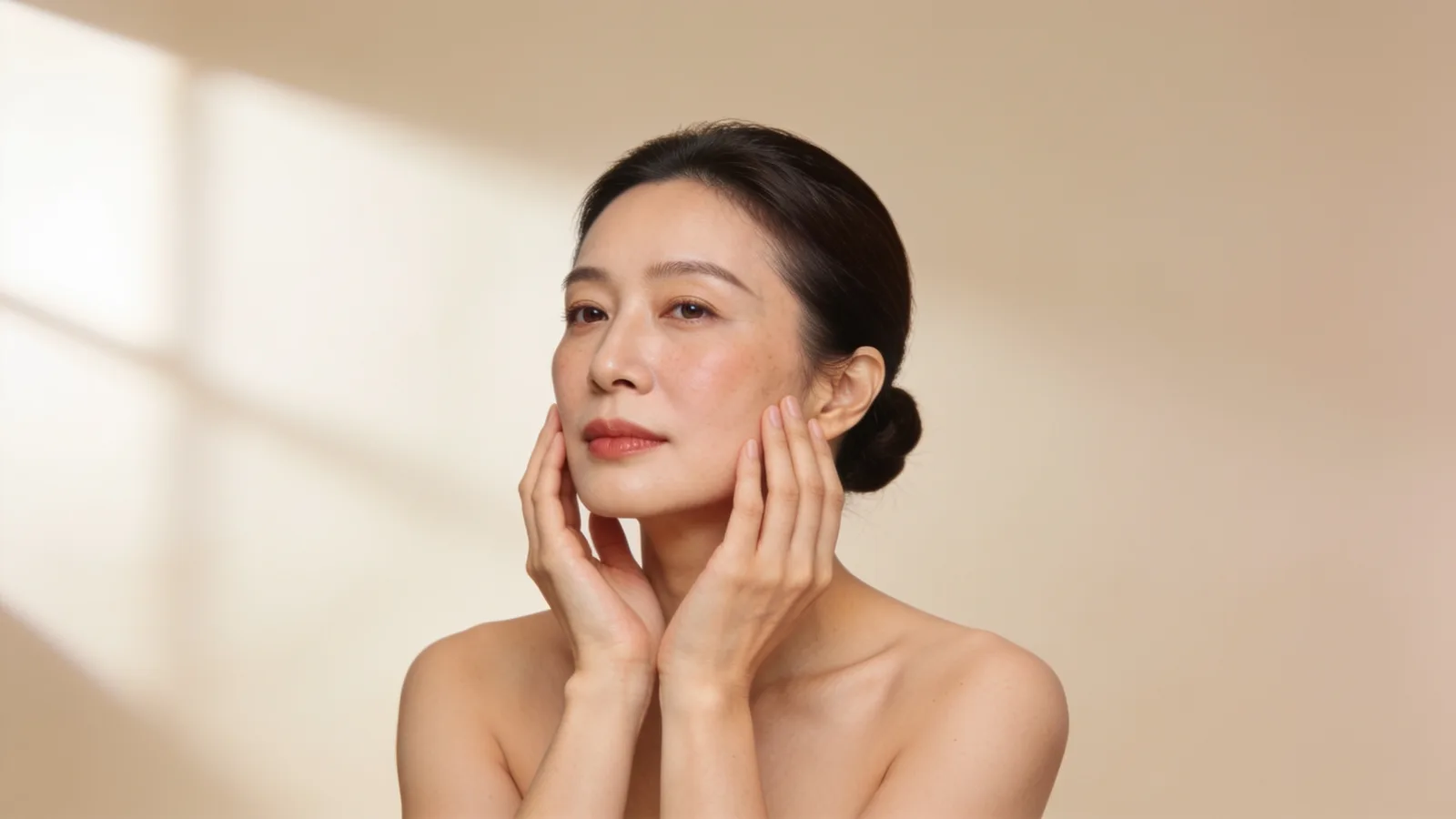
Illustrative image, not a patient. The cheeks and mid-face are where an overfilled look most often starts.
Why faces become overfilled
Filler lasts longer than most people think. Hyaluronic acid filler is often described as lasting months, but ultrasound regularly shows it in the tissue years later. When a top-up is planned on the assumption that the last one has gone, the new filler sits on top of the old.
It holds water. Hyaluronic acid draws in water, so a face with several layers can swell more on some days than others.
It moves. Filler can drift from where it was placed, for example from the cheek into the under-eye or from the lip border into the skin above it.
Volume is used to treat sagging. When the real problem is loose skin or a descending jawline, adding volume to lift it eventually makes the face bigger rather than higher.
Different materials are layered. Hyaluronic acid, Sculptra, Radiesse, Ellansé and fat grafts are often found in the same face. They behave differently and are removed differently, which is why guessing does not work. The fat graft or filler comparison explains how the two most common causes are told apart.
Does an overfilled face go back to normal?
Usually not quickly on its own. Hyaluronic acid filler breaks down slowly and keeps holding water while it does, so many people wait months for a change that does not come, and some are offered more filler in the meantime.
The face can return close to its own shape once the excess is removed. How close depends on how long the filler has been there, whether the skin over it has stretched, and what material it is. That is decided at the assessment, not promised in advance.
How an overfilled face is corrected
Dr Sin Yong’s approach is to see first and treat second, and to take away rather than add.
History. What was injected, where, when and by whom, including treatments overseas. Old photographs help.
Ultrasound mapping. High-frequency ultrasound shows where filler sits, how deep it is, whether it has migrated and whether more than one material is present.
Selective dissolving. Excess hyaluronic acid is dissolved with hyaluronidase, placed into the filler seen on the scan rather than across the whole face. An allergy check is done where needed.
Non-dissolvable filler and fat. Sculptra, Radiesse, Ellansé and grafted fat do not respond to hyaluronidase. Dr Sin Yong reduces them with the Sculpting mode of the Time Freeze Laser LCLR®, without an incision.
Review. The face is reviewed after about two weeks. More is dissolved only if it is needed, so the result is built in steps rather than in one large session.
Support without volume. Where sagging was the original problem, it is treated with lifting rather than more filler, for example the VF Lift – Vertical Facelift.
Illustrative image, not a patient. The aim is the face’s own contour, not an empty one.
“An overfilled face is not fixed by adding more. I map what is there first, then take away only the excess.”
Dr Sin Yong
Receiving the CLASSYS Excellence Award, CLASSYS APAC Symposium, Bangkok 2026
Global Key Opinion Leader · Orchard Road, Singapore
Who corrects your overfilled face
Dr Sin Yong is a Global Key Opinion Leader in aesthetic medicine, recognised by seven device manufacturers including CLASSYS, DEKA, HIRONIC, ilooda and Fotona, and invited to share his clinical expertise with physicians at international meetings in Asia, Europe, South America and the Middle East. Every assessment and treatment is done by him personally.
Qualifications
MBBS (National University of Singapore)
MRCS (Royal College of Surgeons of Edinburgh)
MSc Aesthetic Medicine with Distinction (Queen Mary, University of London)
MSc Practical Dermatology (Cardiff University)
Graduate Diploma in Sports Medicine
Invited to share his clinical expertise
CLASSYS APAC Symposium · Bangkok 2026
AMWC Asia · Taipei 2026
SAM Conference · Singapore 2026
CLASSYS Academy · São Paulo 2026
DEKA Academy · Florence 2026
CLASSYS Global Customer Summit · Seoul 2025
ilooda Meet the Expert · Seoul & Dubai 2024
Hard cases, one rule. Dr Sin Yong has treated hard Ellansé nodules, Juvelook lumps and mixed, encapsulated filler, using a different method for each. The first step is always ultrasound: it shows what the material is, where it sits and whether it has formed a capsule, and that decides the method.
Fresh filler. Swelling in the first two weeks after filler is expected and is not the same as overfilling. Unless there is a warning sign, it is usually judged after it settles.
Pregnancy and breastfeeding, active skin infection, or a known allergy to hyaluronidase mean dissolving is postponed or a different plan is used.
Seek urgent care if, during or soon after any filler injection, the skin turns white, grey or dusky, pain is severe and increasing, or vision changes. These can be signs of a blocked blood vessel and need same-day treatment.
Illustrative image, not a patient. A natural jawline moves and catches light; an overfilled one looks heavy and square.
Frequently Asked Questions
Common signs are cheeks that look wide or heavy from the front, puffiness that shows more when you smile, a face that looks swollen in photographs, lumps or ridges, and features that seem to have drifted from where they were. Friends may say you look tired or different without saying why. An examination with ultrasound helps show whether filler, fat, fluid or sagging is causing the change, because each is corrected differently.
Hyaluronic acid filler draws water, so a face carrying more than its structure can hold can look puffy, especially in the cheeks and under the eyes. Filler can also spread from where it was placed, or settle over many treatments into fullness that no single visit caused. Swelling soon after injection is usually temporary; puffiness that persists is assessed with ultrasound to see what is there before anything is dissolved or added.
Yes. Correction removes the excess rather than balancing it with more product. Hyaluronic acid filler can be dissolved with hyaluronidase, in measured doses placed where ultrasound shows the excess. Fillers that cannot be dissolved, such as collagen stimulators, are treated with Time Freeze Laser LCLR®, which Dr Sin Yong uses to take away excess without injecting. Once the face has settled, lifting such as the VF Lift – Vertical Facelift may be considered.
An overfilled face is a face that has had more filler than its structure can carry, usually built up over several top-ups. It looks puffy, wide or heavy, most of all when smiling. The same picture is called pillow face or facial overfilled syndrome.
Not quickly on its own. Hyaluronic acid filler can stay for years and holds water, so the fullness often persists. Where hyaluronic acid is the cause, it can be dissolved selectively after ultrasound mapping, and the face is reviewed as it settles.
Too much filler can make the face look puffy or unnatural, can drift into nearby areas, and over time can stretch the skin it sits under. The longer layers build up, the more important it is to map what is there before anything else is done.
In most cases, yes. Excess hyaluronic acid is dissolved with hyaluronidase after ultrasound mapping, and filler that cannot be dissolved, such as Sculptra, Radiesse or Ellansé, or grafted fat, is reduced with the Time Freeze Laser LCLR®, without an incision.
Correction is usually staged. Hyaluronidase starts working within hours, swelling settles over a few days, and the face is reviewed after about two weeks before deciding whether more is needed. Several layers of filler may need more than one visit.
Dissolving only the excess is meant to bring back the face’s own contours, not to empty it. Mapping with ultrasound first means filler that is helping can be left in place, and loss of support is treated with tools other than volume.
They describe the same problem. “Pillow face” is the popular term for a soft, puffy, overfilled look; “facial overfilled syndrome” is the term used in the medical literature. The pillow face guide covers it in more detail.
Yes, though not with hyaluronidase, which only breaks down hyaluronic acid. Dr Sin Yong has treated hard Ellansé nodules, Juvelook lumps and mixed, encapsulated filler; excess biostimulator and fat are treated with the Sculpting mode of the Time Freeze Laser LCLR®, always after confirming on ultrasound what is there.
Guideline for the safe use of hyaluronidase in aesthetic medicine, including modified high-dose protocol. 14(8):E69-E75. Journal of Clinical and Aesthetic Dermatology (PubMed 34840662), 2021. pubmed.ncbi.nlm.nih.gov