Key facts
- Ultherapy
- Micro-focused ultrasound with visualisation (MFU-V) by Merz; heats points at 1.5, 3.0 and 4.5 mm
- Thermage FLX
- Monopolar radiofrequency at 6.78 MHz by Solta; heats the dermis and fibrous septae as a volume
- Usually considered for
- Ultherapy: brow, jowl and under-chin laxity with a deeper component. Thermage: skin quality, crepiness and mild laxity, including eyelids
- Not for
- Neither adds volume, removes significant fat or replaces surgery for marked sagging
- Downtime
- Usually little visible downtime with either; tenderness for some days is common after Ultherapy
- Same session?
- Sometimes combined, because they address different layers; decided at assessment
How each one heats the face
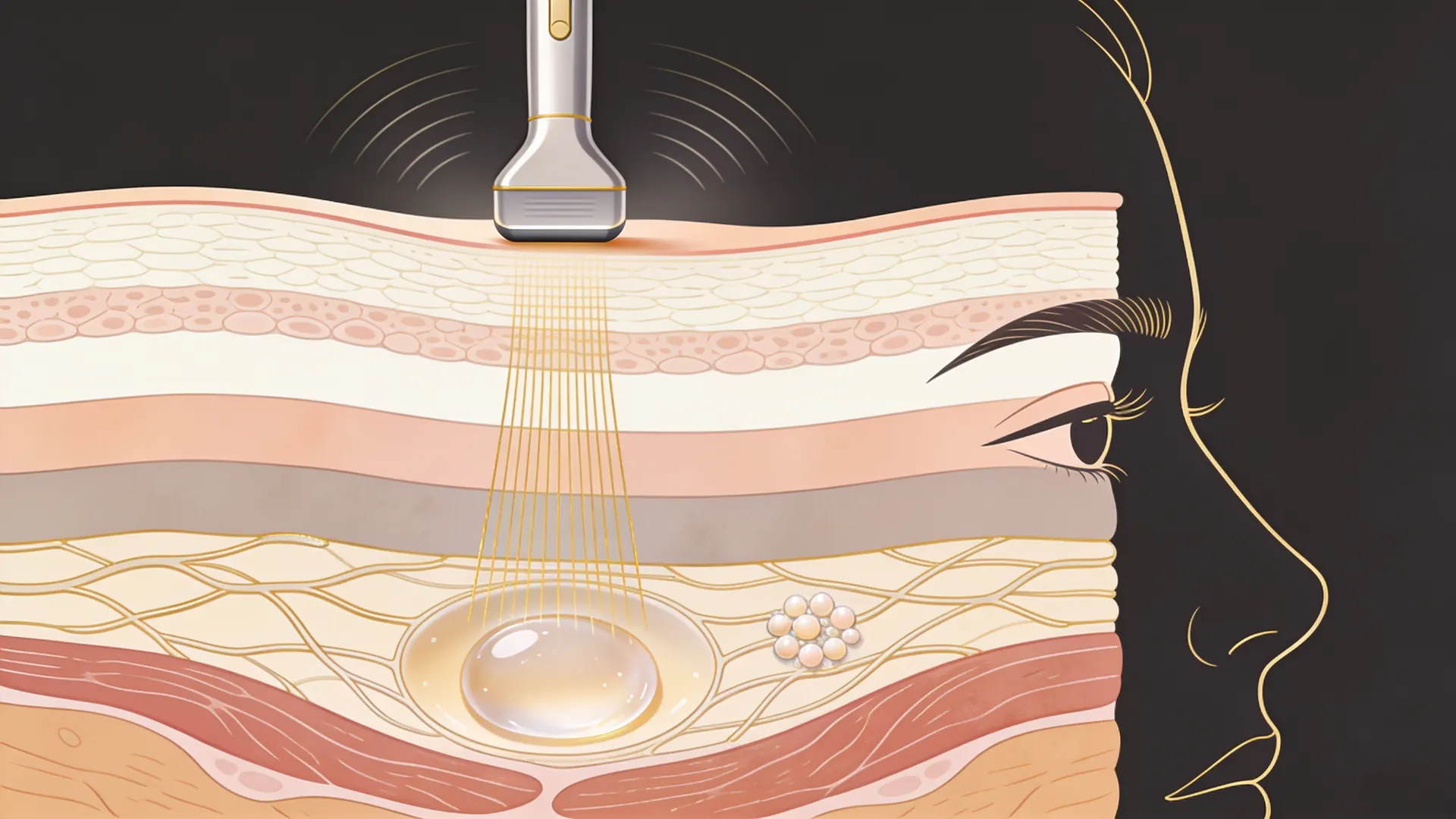
Ultherapy uses an ultrasound transducer that both images and treats. The image lets the operator see the layers and place the heat where intended. Each pulse makes a small zone of coagulation at a fixed depth, typically 4.5 mm for the SMAS, 3.0 mm for the deep dermis and 1.5 mm for the superficial dermis. The FDA has cleared it for lifting the brow, the under-chin and the neck, and for lines on the décolletage.
Thermage FLX passes radiofrequency current from a treatment tip, through the tissue, to a return pad. The current heats the deep dermis and the fibrous strands beneath it across the whole treated zone, while cryogen spray cools the surface so the skin itself is protected. The aim is contraction of existing collagen and remodelling over the following months. There is no imaging, so depth is controlled by the tip and the energy rather than by sight.
Ultherapy and Thermage at a glance | Ultherapy (MFU-V) | Thermage FLX (monopolar RF) |
|---|
| Energy | Micro-focused ultrasound | Monopolar radiofrequency, 6.78 MHz |
| Heating pattern | Discrete points at set depths | Bulk heating of a layer |
| Deepest target | SMAS, about 4.5 mm | Deep dermis and fibrous septae |
| Imaging during treatment | Yes | No |
| Surface protection | Energy focused below the surface | Cryogen cooling |
| Eyelid skin | Not used on the eyelid itself | Has a dedicated eye tip |
| Typical sensation | Deep, brief, bony areas more sensitive | Heat pulses with cooling bursts |
Who each one tends to suit
When the main concern is early descent of the jowl, the brow or the under-chin, with skin that still has reasonable quality, the deeper reach of focused ultrasound is the reason Ultherapy is considered. When the main concern is the skin itself, crepey texture, fine laxity around the eyes and mild loosening across a wide area, the bulk dermal heating of radiofrequency is the reason Thermage is considered. Many faces have both, which is why the two are sometimes planned together.
Some faces suit neither. Marked sagging with heavy skin is a surgical problem. Volume loss is not treated by heat at all. A heavy midface after filler, or after collagen stimulators such as Sculptra or Ellansé, needs a different plan; protocols such as Time Freeze Laser LCLR® and VF Lift – Vertical Facelift are built to target Sculptra and Ellansé and take away the excess, and whether they suit you is decided at assessment.
Comfort, downtime and risks
Both treatments are done without an anaesthetic injection in most cases. Ultherapy pulses are felt as deep, brief heat and are more noticeable over bone; Thermage pulses are felt as heat followed by a cooling burst. After either, redness usually settles within hours. After Ultherapy, tenderness on chewing or touch, mild swelling and occasionally small bruises or temporary numbness can last days to a few weeks.
Uncommon risks for both include burns, small depressions from fat loss when energy reaches fat that should have been spared, and, rarely, temporary nerve weakness after deep ultrasound. These are reasons the energy, depth and number of lines are set by the doctor for each area, and why a thin face is planned more conservatively. The detail is on the Ultherapy side effects and Thermage side effects pages.
Where Volnewmer and VF Lift fit in
Volnewmer by CLASSYS is also monopolar radiofrequency at 6.78 MHz, with continuous water cooling rather than cryogen. It is the platform behind Dr Sin Yong’s VF Lift – Vertical Facelift protocol. It is not focused ultrasound. The Volnewmer vs Thermage page explains how the two radiofrequency platforms differ, and the three-way comparison sets all of them side by side.
“The useful question is not which machine is stronger. It is which layer is loose, and whether heat is the right answer at all.”
Dr Sin YongOn choosing between ultrasound and radiofrequency