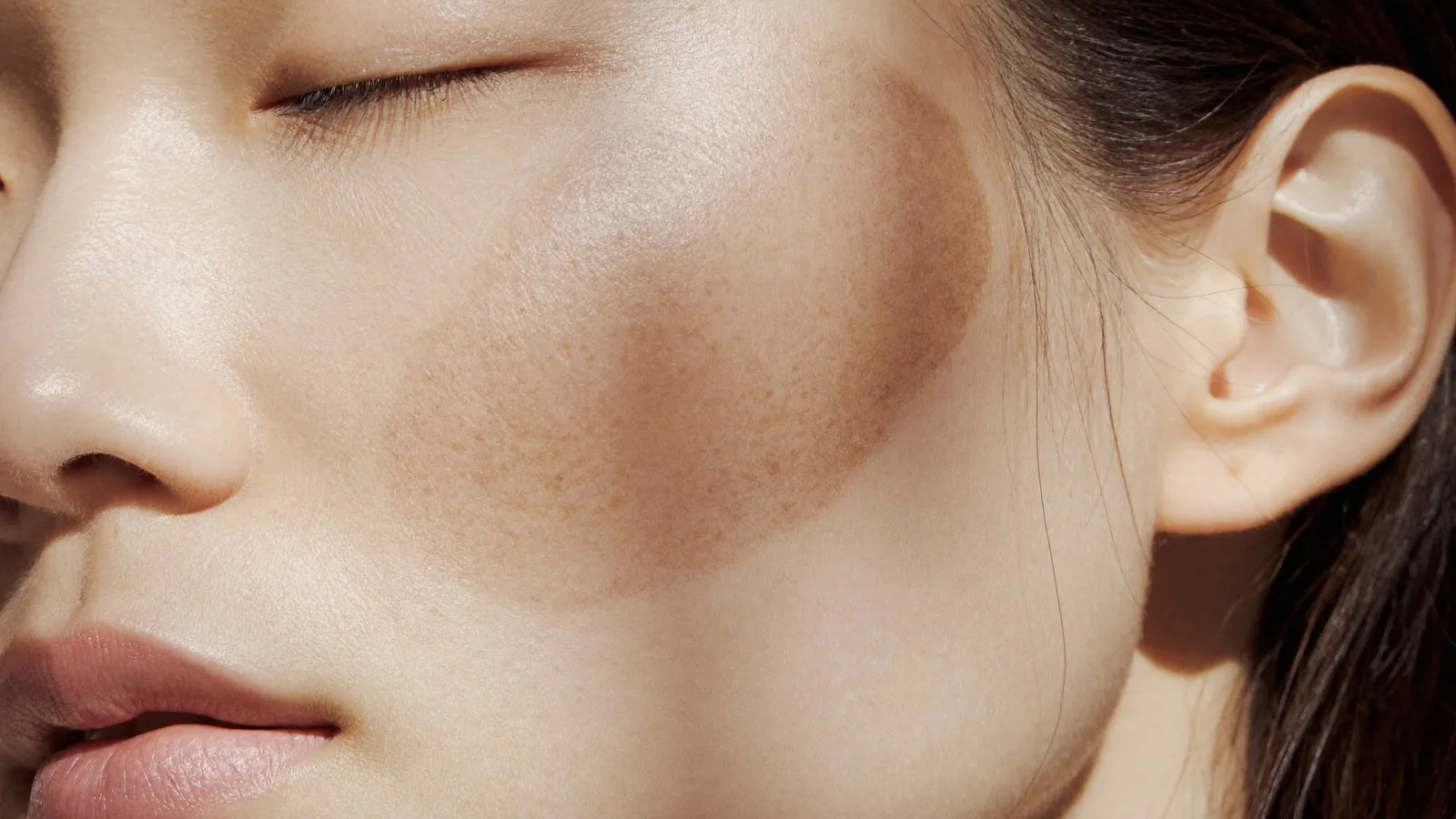
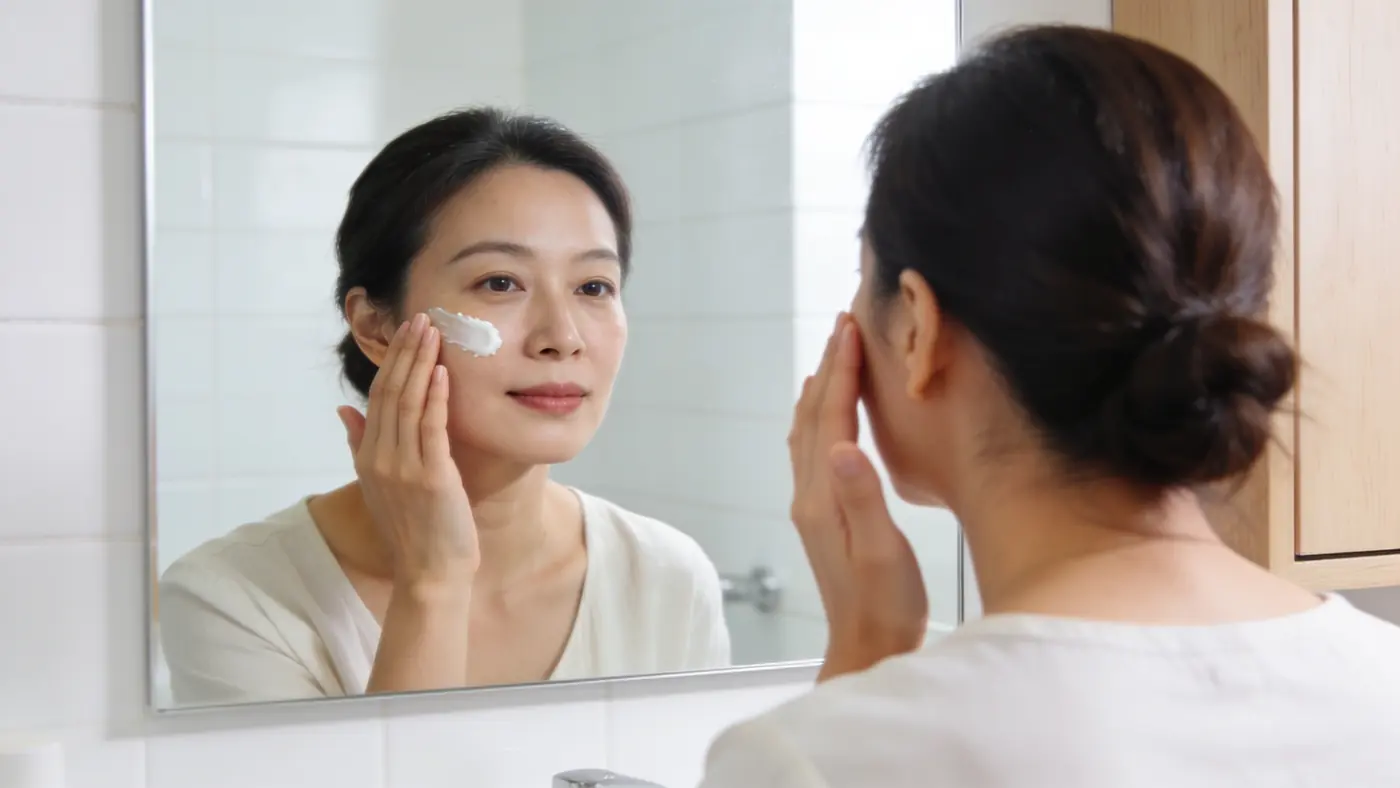
The two commonest pigment problems I see in Singapore look similar enough that patients — and sometimes clinics — treat them as one condition. They are not. One is a discrete deposit that lasers handle well. The other is a chronic, heat-sensitive condition that aggressive lasering reliably makes worse.
The border, the symmetry and the history usually separate melasma from lentigines before any device is switched on.
Melasma and sun spots look alike but are different conditions. Sun spots, or solar lentigines, are discrete, sharply bordered deposits from cumulative UV exposure; melasma is a chronic, heat-sensitive condition driven by hormonal, UV and vascular factors, usually symmetrical with indistinct borders. Telling them apart comes first, because aggressive laser heat can worsen melasma.
Key facts
Melasma drivers
Hormonal, ultraviolet and vascular factors acting together — a chronic, relapsing condition, not a mark
Heat
Thermal stimulus is itself a recognised melasma trigger, which constrains how any energy device can be used
Solar lentigines
Discrete, well-defined pigment deposits from cumulative UV exposure — the classic “sun spot”
PIH
Post-inflammatory hyperpigmentation — pigment produced by melanocytes in response to inflammation or injury
Skin types here
Fitzpatrick III–V predominate in Singapore, with more reactive melanocytes and higher rebound risk
1064 nm low-fluence
The conservative laser approach in melasma — low energy, deeper-penetrating wavelength, minimal epidermal heating
Distribution
Melasma is typically symmetrical with indistinct borders across cheeks, forehead or upper lip; lentigines are asymmetric and sharply bordered
Pigment depth
Epidermal, dermal and mixed patterns occur; depth influences which wavelength can reach the pigment at all
Melasma vs sun spots: two look-alikes treated almost oppositely
Melasma vs sun spots matters because the treatments run in nearly opposite directions. A lentigo is a discrete pigment deposit that tolerates decisive laser energy. Melasma is a heat-sensitive, hormonally driven condition that aggressive lasering reliably makes worse, so it is managed with photoprotection, topicals and, where laser has a role at all, low-fluence 1064 nm work. Dr Sin Yong examines pigment in person before any device is chosen.
Melasma vs sun spots: how to tell
Melasma
Symmetrical, blotchy patches on the cheeks, forehead, upper lip or jaw. Driven by UV, heat, hormones and skin inflammation; the pigment can sit in the epidermis, the dermis or both, and it recurs if the drivers continue.
Sun spots (solar lentigines)
Discrete, flat, well-defined spots on sun-exposed skin: cheeks, temples, hands, shoulders. Epidermal pigment that tends to stay put once removed, provided sun protection continues.
Why it changes the plan
Sun spots suit pigment lasers. Melasma is approached cautiously: strict sun protection and medical treatment first, and if laser is used at all it starts with the inflammation-directed R2 Glow rather than a pigment-shattering pass.
Brown patches on the cheeks. That description covers both conditions, which is exactly the problem. Solar lentigines — sun spots — are discrete deposits of pigment laid down by years of cumulative ultraviolet exposure. Each one is well defined, sharply bordered, and essentially a mark: pigment sitting where the sun put it.
Melasma is a different kind of thing entirely. It is not a mark but a process — a chronic condition in which melanocytes are being actively driven by hormonal, ultraviolet and vascular factors to keep producing pigment. It tends to appear symmetrically across the cheeks, forehead or upper lip, with soft, indistinct borders, and it waxes and wanes with its triggers. You can clear the visible pigment and the condition simply makes more.
The distinction matters because the treatments run in nearly opposite directions. A lentigo tolerates — and responds to — decisive laser energy. Melasma punishes it. Fire an aggressive setting at melasma and the heat itself feeds the condition, which is how patients end up darker than they started. Before any question about devices, the question is which of these you have; the full landscape is mapped in my pigmentation guide.
Melasma vs sun spots at a glance
Feature
Melasma
Sun spots (solar lentigines)
What it is
A chronic process: melanocytes driven to keep producing pigment
A discrete pigment deposit from cumulative UV exposure
Drivers
Hormonal, ultraviolet and vascular factors; heat itself
Years of cumulative ultraviolet exposure
Borders and pattern
Soft, indistinct edges; usually symmetrical on cheeks, forehead, upper lip
Heat-sensitive; aggressive settings can make it darker
Tolerates and responds to decisive laser energy
Approach
Managed: photoprotection, topicals, conservative low-fluence 1064 nm where indicated
Addressed with appropriately chosen laser settings
Course
Relapses with its triggers; managed over time
Treated spot is cleared; new spots can appear with continued sun
How it is confirmed
In-person examination under appropriate lighting, plus history
In-person examination under appropriate lighting, plus history
What melasma actually is
Melasma is better understood as an overactivity of the pigment system rather than an accumulation of pigment. Hormonal influences — pregnancy, oral contraceptives, hormonal shifts — sensitise melanocytes. Ultraviolet exposure activates them. There is also a vascular component: melasma skin shows increased blood vessel activity, and those vessels appear to signal the melanocytes above them.
None of those drivers is removed by any laser. This is the sentence that reframes the whole consultation. A device can reduce the pigment currently visible; it cannot switch off the hormones, undo the ultraviolet environment, or quiet the vasculature. Which is why melasma behaves as a chronic-relapsing condition: it is managed, the way one manages a tendency, not excised like a spot.
It is also why honest melasma care is built in layers — strict photoprotection as the foundation, topical therapy directed at the pigment pathway, and energy devices only in a conservative, supporting role. That structure, rather than any single machine, is what the melasma treatment page describes.
“Melasma is managed, not removed. Anyone promising removal is describing a different condition.”
Dr Sin YongOn the limits of pigment treatment
Why heat — and Singapore — make melasma harder
Melasma is heat-sensitive. Thermal stimulus itself, independent of ultraviolet light, is a recognised trigger — which puts every energy-based device on a leash. The very mechanism most machines rely on to work, heating tissue, is a mechanism this condition answers by making more pigment. That single fact rules out the aggressive, satisfying settings before the consultation has even begun.
Now place that condition one degree north of the equator. Singapore supplies high ultraviolet year-round, ambient heat daily, and humidity that keeps skin warm even in shade. Patients here are also predominantly Fitzpatrick III to V, skin types whose melanocytes are more reactive to begin with and more prone to rebound pigmentation after any inflammation. Every factor stacks in the same direction: towards caution.
This is the context for the settings I use. Where laser has a role in melasma, it is typically low-fluence 1064 nm work — a deeper-penetrating wavelength, deliberately gentle energies, minimal heating of the melanin-rich epidermis — used as one component of a plan whose foundations are photoprotection and topicals. Gentle toning approaches such as the R2 Glow protocol belong to this conservative family. The energy that would clear a lentigo in confident strokes has no place on a melasma cheek.
How the two are told apart
Most of the differential is done with eyes, light and questions before any device is relevant. Borders: lentigines are sharply demarcated, like islands; melasma fades at its edges, like a watermark. Symmetry: melasma is usually bilateral and roughly mirrored; sun spots land where exposure happened to land. History: melasma often reports a hormonal association — onset in pregnancy or with contraceptive use — and a tendency to darken with sun, heat and stress, then partially settle.
Examination under appropriate lighting adds more: it helps judge how superficially or deeply the pigment sits, which changes what any wavelength can reach. And the third player has to be excluded — post-inflammatory hyperpigmentation, pigment made in response to a prior insult such as acne or an over-aggressive treatment, which follows its own timeline and its own rules.
None of this can be done from a product shelf or a promotional menu. It is a diagnostic exercise, and the diagnosis — not the device brochure — should be what selects the treatment. When patients ask which laser suits pigmentation, the honest answer is that the question is premature until the pigment has a name. Get the name right and the rest of the plan largely writes itself; get it wrong and every subsequent decision inherits the error.
Why this page has no before-and-after images
Pigmentation pages usually lean heavily on photo pairs, so the absence here deserves a direct explanation.
Under Singapore’s Healthcare Services Act, before-and-after imagery in advertising for licensable healthcare services is prohibited. No consent form or disclaimer creates an exemption, and after-only images fall under the same rule. The prohibition applies identically to every licensed clinic in Singapore — a site displaying such images is not demonstrating better results, only weaker compliance.
For melasma in particular, photo pairs would also mislead by design: a condition that relapses with its triggers can look excellent in a photograph taken at the right moment. What serves you better is an examination of your own pigment, in person, with a frank account of what management — not removal — would involve.
What determines the cost
Prices for licensable healthcare services cannot be advertised in Singapore, including as ranges or “from” figures. What can be set out is what the cost depends on.
The factors are the area involved, what the assessment finds the pigment to actually be, whether topical therapy alone is indicated or is combined with conservative laser work, and how the plan is staged over time — melasma management being a longer arc than lentigo clearance by its nature. A single sun spot and symmetrical melasma across both cheeks are not comparable undertakings. Fees are set out in full at consultation, once there is a specific plan to cost.
The part worth saying first
If your pigment is lentigines, the outlook is straightforward: discrete deposits, well understood, addressed with appropriately chosen laser settings. If it is melasma, the outlook is different but not hopeless — it asks for management, patience, rigorous sun protection and conservative technique, and it rewards them.
What it does not reward is enthusiasm. The commonest melasma story I hear in this clinic is of pigment made worse by treatment that would have been perfectly reasonable for the condition it was mistaken for. Diagnosis beats device, every time. I examine pigment personally on Orchard Road, and if what you have is melasma, you will hear the word “managed” rather than the word “removed” — because that is the truthful one.
Watch
In his words
Watch
Dr Sin Yong explains
Melasma and sun spots look alike in Singapore, but they are approached almost oppositely. A short video from Dr Sin Yong’s Instagram, with captions.
The usual clinical clues are border, symmetry and history. Melasma tends to be symmetrical across the cheeks, forehead or upper lip with soft, indistinct edges, and often has a hormonal association and a tendency to darken with sun and heat. Solar lentigines are discrete, sharply bordered spots that sit wherever sun exposure accumulated. The distinction is confirmed by in-person examination under appropriate lighting, not by self-diagnosis.
No. Melasma is a chronic condition driven by hormonal, ultraviolet and vascular factors, and no device removes those drivers. Visible pigment can be reduced, but the condition retains the capacity to make more, which is why melasma is managed over time — with photoprotection, topical therapy and conservative energy-based work where indicated — rather than removed in the way a sun spot can be.
Melasma is heat-sensitive: thermal stimulus is itself a trigger for pigment production. Settings that suit a solar lentigo deposit too much heat for melasma, and in Fitzpatrick III to V skin the inflammatory response readily produces rebound pigmentation. Worsening after laser usually means the condition was treated as if it were sun spots, and the useful next step is reassessment rather than more energy.
It can be, in a deliberately conservative role. Low-fluence 1064 nm work is the usual approach — a deeper-penetrating wavelength at gentle energies that minimises heating of the melanin-rich epidermis — used alongside photoprotection and topical therapy rather than instead of them. Whether it is appropriate for a given face is an assessment decision, and response varies between individuals.
Ultraviolet exposure is the principal one, and in Singapore it is high year-round, including through cloud. Heat itself is a trigger independent of UV, which is relevant in a hot, humid climate. Hormonal shifts — pregnancy, oral contraceptives — are common contributors, and inflammation from over-aggressive skincare or treatment can also provoke it. Daily broad-spectrum sun protection addresses the largest single factor.
A treated lentigo is a cleared deposit, but the skin that made it remains under the same equatorial sun, so new lentigines can appear with continued exposure. That is not treatment failure; it is ultraviolet doing what it does. Consistent broad-spectrum sun protection is what slows the accumulation of new spots, whatever was done about the old ones.
Sometimes it settles substantially when a driver recedes — melasma that appears in pregnancy, for instance, often improves after delivery. But the underlying tendency usually persists, and pigment can return with sun, heat or hormonal change. That relapsing pattern is why management is framed as ongoing rather than as a single course with an end date.
Come with your history: when the pigment appeared, any link to pregnancy or contraceptive use, what treatments or products have been tried, and how the pigment behaves with sun and heat. If possible, avoid heavy makeup at the visit so the pigment can be examined properly. The consultation establishes what the pigment is before any discussion of what to do about it.
Yes, and it is common after forty. The spots can be lasered; the melasma around them needs a gentler, staged plan or the laser makes it worse. Dr Sin Yong maps both at the first visit under polarised light before any device is used.
Border, symmetry and history separate them before any device is switched on. Melasma is a chronic process: symmetrical, blotchy patches with soft edges across the cheeks, forehead or upper lip, often with a hormonal association, that darken with sun and heat. Sun spots (solar lentigines) are discrete, sharply bordered deposits sitting wherever cumulative UV exposure landed. The distinction is confirmed by examination under appropriate lighting; see melasma treatment.